
vip@mingyuforklift.com
+86-0535-2090977

Introduction
The forklift, also known as a powered industrial truck, stands as one of the most ubiquitous and essential pieces of material handling equipment across global supply chains. From bustling warehouse floors to construction sites, manufacturing plants to shipping terminals, these versatile machines enable the efficient movement of goods that underpins modern commerce. However, beneath their seemingly straightforward operation lies a complex mechanical system capable of causing catastrophic injury, property damage, and operational disruption when handled improperly. This reality forms the foundation of why forklift licensing isn't merely a bureaucratic checkbox—it's a critical safety imperative grounded in engineering principles, regulatory frameworks, and risk management strategies.
This article examines the technical, legal, and operational reasons why forklift operator certification is mandatory, exploring the physics of forklift stability, the statistical realities of workplace incidents, the regulatory landscape governing operator qualification, and the economic rationale behind standardized training programs.
The Physics of Forklift Instability: Understanding the Technical Risks
Center of Gravity Dynamics
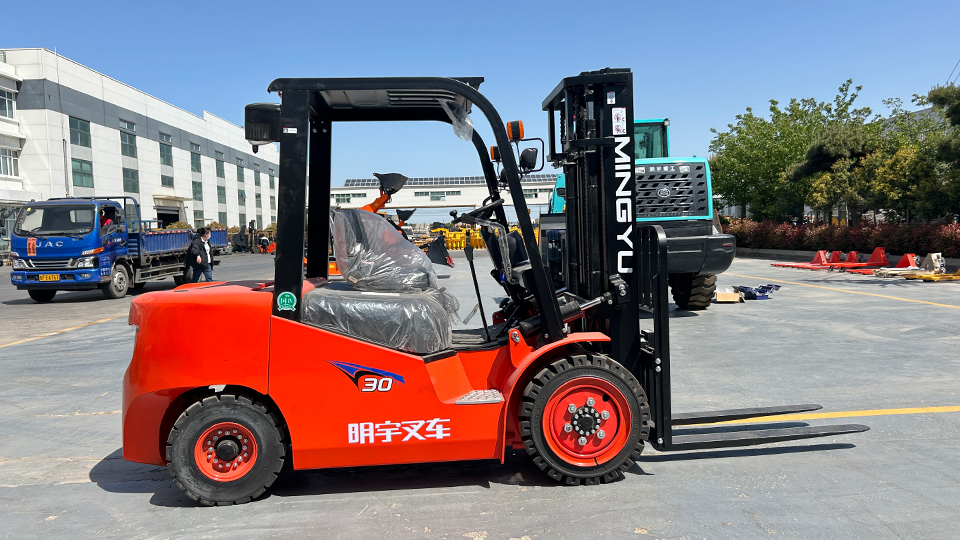
Forklifts operate on fundamentally different stability principles than conventional vehicles. Unlike cars, which maintain a fixed center of gravity relative to their wheelbase, forklifts experience dramatic shifts in their center of gravity as loads are lifted, lowered, and transported. When a forklift raises a load to maximum height, the combined center of gravity of the vehicle and its cargo moves significantly forward and upward, reducing the stability triangle—the imaginary area connecting the front and rear wheels that determines whether the forklift remains upright.
The stability triangle concept represents a critical engineering principle that licensed operators must understand. As long as the combined center of gravity remains within this triangular boundary, the forklift maintains equilibrium. However, factors such as load weight distribution, mast tilt angles, travel speed, and surface gradients can shift this center of gravity beyond the stability triangle's boundaries, resulting in tip-over incidents. Licensed training programs provide operators with the mathematical and practical understanding of these dynamics, enabling them to calculate load capacities, assess stability risks, and make informed operational decisions.
Load Moment and Capacity Calculations
Forklift operation requires understanding load moments—the product of load weight multiplied by the distance from the fulcrum point (typically the front wheels). A 2,000-pound load positioned 24 inches from the fulcrum creates the same tipping moment as a 1,000-pound load at 48 inches. Licensed operators learn to read and interpret load capacity charts, which specify maximum safe loads at various load centers and lift heights. Without this technical knowledge, operators routinely overload their equipment or position loads incorrectly, creating dangerous instability conditions that unlicensed operators often fail to recognize until it's too late.
Mast Geometry and Visibility Constraints
The three-stage or four-stage masts found on modern forklifts create complex visibility challenges. As loads are elevated, they obstruct the operator's forward view, necessitating specific travel techniques such as driving in reverse or using spotters. Licensed training addresses these visibility limitations, teaching operators how to navigate tight spaces with impaired sightlines and when to implement additional safety measures. The technical understanding of mast geometry also includes awareness of free lift, maximum lift heights, and overhead guard limitations—all critical factors in preventing crushing injuries and structural damage.
Regulatory Framework and Legal Compliance
OSHA Standards and Enforcement
In the United States, the Occupational Safety and Health Administration (OSHA) establishes mandatory requirements for forklift operation through Standard 1910.178, titled "Powered Industrial Trucks." This comprehensive regulation specifies that "only trained and authorized operators shall be permitted to operate a powered industrial truck." The standard mandates specific training components including formal instruction, practical training, and performance evaluation, with refresher training required every three years or following specific triggering events such as accidents or observed unsafe operation.
OSHA's enforcement of these standards carries significant financial implications for non-compliant employers. Violations can result in penalties ranging from thousands to hundreds of thousands of dollars, depending on severity and willfulness. More critically, employers who allow unlicensed operation face substantial liability exposure in the event of accidents, often finding their insurance coverage voided and facing personal injury lawsuits with enhanced damages due to regulatory non-compliance.
International Regulatory Harmonization
Beyond U.S. jurisdictions, forklift licensing requirements exist across virtually all developed nations, reflecting global recognition of operational risks. The European Union's Machinery Directive, Canada's CSA Standard B335, Australia's Work Health and Safety Regulations, and similar frameworks worldwide establish comparable training and certification requirements. This regulatory harmonization facilitates international supply chain operations while maintaining consistent safety standards. Organizations operating across multiple jurisdictions benefit from standardized licensing programs that satisfy diverse regulatory requirements through mutually recognized training curricula.
Liability and Due Diligence
From a legal perspective, forklift licensing serves as documented evidence of due diligence. When accidents occur involving licensed operators, employers can demonstrate compliance with recognized safety standards, potentially limiting negligence claims. Conversely, incidents involving unlicensed operators create presumptions of negligence and reckless disregard for safety, exposing organizations to punitive damages and criminal liability in severe cases. The licensing process creates auditable records of training, evaluation, and authorization that prove invaluable in legal defense and insurance claim processes.
Statistical Realities: The Cost of Inadequate Training
Incident Frequency and Severity
The Bureau of Labor Statistics consistently identifies forklift-related incidents among the leading causes of workplace fatalities and serious injuries. Approximately 85 forklift-related fatalities and 34,900 serious injuries occur annually in the United States alone. Analysis of these incidents reveals that inadequate operator training represents a contributing factor in the majority of cases. Tip-overs account for approximately 25% of fatalities, while pedestrian strikes, falls from elevated platforms, and crushing incidents between masts and structures constitute other major accident categories.
These statistics translate into substantial economic costs. The National Safety Council estimates the average direct cost of a forklift-related injury at $38,000, with indirect costs—including lost productivity, equipment damage, and administrative burden—multiplying this figure by four to ten times. Fatalities carry average comprehensive costs exceeding $1 million when accounting for legal settlements, regulatory penalties, and reputational damage. Licensed operator programs demonstrate measurable reductions in incident rates, with studies indicating 30-70% decreases in accidents following implementation of comprehensive training and certification systems.
The Human Cost Beyond Statistics
Behind every statistical data point lies human suffering—permanent disabilities, chronic pain, psychological trauma, and family devastation. Forklift incidents frequently result in amputations, spinal cord injuries, traumatic brain injuries, and death. Licensed operators receive training in hazard recognition and risk mitigation strategies that protect not only themselves but also their coworkers, pedestrians, and the broader workplace community. The moral imperative of preventing human suffering provides perhaps the most compelling argument for rigorous licensing requirements, transcending economic and regulatory considerations.
Operational Efficiency and Equipment Longevity
Productivity Optimization
Contrary to perceptions that licensing requirements create operational burdens, properly trained operators demonstrate superior productivity metrics compared to their untrained counterparts. Licensed operators understand efficient load handling techniques, optimal travel paths, and equipment capabilities, enabling them to complete tasks more quickly while reducing product damage. They recognize when mechanical issues require maintenance intervention, preventing minor problems from escalating into major equipment failures that disrupt operations.
Training programs emphasize operational best practices including smooth acceleration and braking, proper load positioning, and efficient stacking techniques. These skills reduce cycle times, minimize fuel or battery consumption, and extend equipment service intervals. Organizations investing in comprehensive licensing programs typically realize return on investment through improved operational metrics within months of implementation.
Equipment Preservation
Forklifts represent significant capital investments, with industrial models ranging from $20,000 to over $100,000 depending on capacity and specifications. Licensed operators understand equipment limitations and proper operating procedures that prevent premature wear and catastrophic damage. They recognize symptoms of mechanical problems—unusual noises, hydraulic leaks, steering irregularities—that untrained operators often ignore until catastrophic failure occurs.
Proper operation techniques taught during licensing programs reduce stress on transmissions, brakes, hydraulic systems, and structural components. Mast and fork damage, frequently caused by improper loading and travel practices, represents particularly expensive repair categories avoidable through trained operation. The extended equipment lifespan and reduced maintenance costs associated with licensed operator programs provide substantial financial returns that offset training investments.
The Comprehensive Nature of Modern Licensing Programs
Curriculum Components
Contemporary forklift licensing programs encompass far more than basic vehicle operation. Standard curricula include detailed instruction in pre-operational inspections, stability principles, load handling techniques, refueling and battery maintenance procedures, and workplace-specific hazard recognition. Operators learn to navigate ramps and inclines, operate on uneven surfaces, and manage loads in confined spaces—scenarios that present distinct technical challenges requiring specialized knowledge.
Classroom instruction covers regulatory requirements, company policies, and accident case studies that reinforce safety principles through real-world examples. Practical training progresses from basic maneuvering in open areas to complex operations involving stacking, unstacking, and transport in realistic workplace conditions. This comprehensive approach ensures operators possess both theoretical understanding and demonstrated competency before receiving authorization.
Evaluation and Continuous Improvement
Licensing programs incorporate rigorous evaluation mechanisms including written examinations and practical skills assessments. Operators must demonstrate proficiency in pre-operational inspections, safe startup procedures, load calculation, maneuvering, stacking operations, and emergency response. These evaluations create objective benchmarks for operator qualification while identifying individuals requiring additional training before authorization.
The three-year recertification requirement ensures operators maintain current knowledge and skills, incorporating updates to equipment technology, regulatory changes, and lessons learned from incident investigations. Refresher training following accidents or near-misses creates opportunities for organizational learning and continuous safety improvement. This structured approach to competency maintenance distinguishes professional licensing from informal training that lacks systematic evaluation and updating mechanisms.
Technological Evolution and Training Adaptation
Advanced Equipment Features
Modern forklifts incorporate sophisticated technologies including stability control systems, load weight indicators, cameras and sensors, and telematics systems that monitor operator behavior and equipment performance. While these technologies enhance safety, they also introduce complexity requiring specialized training. Licensed operators learn to interpret and respond to electronic warnings, understand the limitations of automated safety systems, and maintain situational awareness despite technological assistance.
The transition from internal combustion to electric powertrains, the adoption of lithium-ion battery technology, and the emergence of automated guided vehicles (AGVs) and autonomous mobile robots (AMRs) create evolving training requirements. Licensing programs adapt to incorporate these technological advances, ensuring operators possess relevant competencies for contemporary equipment rather than outdated operational paradigms.
Data-Driven Safety Management
Telematics systems and fleet management software enable unprecedented visibility into operator behavior and safety metrics. Licensed operators understand that their actions are monitored and recorded, creating accountability that reinforces training principles. Organizations utilize this data to identify additional training needs, recognize exemplary performance, and address risky behaviors before they result in incidents. The licensing framework establishes the foundation for this data-driven safety culture by ensuring all operators possess baseline competencies before entering monitored environments.
Conclusion
The requirement for forklift licensing emerges from a convergence of engineering realities, regulatory mandates, statistical evidence, and operational necessities. The complex physics of forklift stability, the severe consequences of operational errors, and the economic imperatives of safe, efficient material handling create an unassailable case for comprehensive operator certification. Far from representing bureaucratic burden, licensing programs provide the technical foundation for workplace safety, equipment protection, and operational excellence.
Organizations that view forklift licensing as a compliance checkbox miss the broader strategic value of professional operator development. Those embracing comprehensive training and certification as core safety investments realize measurable returns through reduced incidents, improved productivity, extended equipment life, and enhanced regulatory standing. As material handling technology continues evolving and regulatory expectations intensify, the importance of robust licensing programs will only increase, cementing their role as essential components of responsible business operations.
The question is not whether organizations can afford to implement forklift licensing programs, but whether they can afford the consequences of failing to do so. The evidence overwhelmingly demonstrates that proper operator certification represents not merely legal compliance, but sound business practice and moral obligation to protect human life and organizational viability.
Name: selena
Mobile:+86-13176910558
Tel:+86-0535-2090977
Whatsapp:8613181602336
Email:vip@mingyuforklift.com
Add:Xiaqiu Town, Laizhou, Yantai City, Shandong Province, China