
vip@mingyuforklift.com
+86-0535-2090977

Introduction
The forklift license—more formally known as a powered industrial truck operator certification—represents one of the most common vocational credentials in logistics, manufacturing, and construction sectors. However, its acceptance for job applications varies dramatically across employment contexts, jurisdictional boundaries, and organizational policies. This technical analysis examines the multifaceted question of whether forklift licenses constitute acceptable qualifications for employment, exploring regulatory frameworks, employer requirements, cross-industry recognition, limitations, and strategic positioning of this credential within broader career development pathways.
Understanding the acceptability of forklift certification requires distinguishing between legal compliance, employer preference, industry standards, and job-specific requirements. While possessing a valid forklift license undoubtedly enhances employability in material handling roles, its applicability extends beyond obvious warehouse positions into unexpected sectors. Conversely, significant limitations exist regarding license portability, reciprocity, and sufficiency as a standalone qualification. This article provides a comprehensive technical examination of these dynamics to guide both job seekers and hiring managers in navigating credential evaluation.
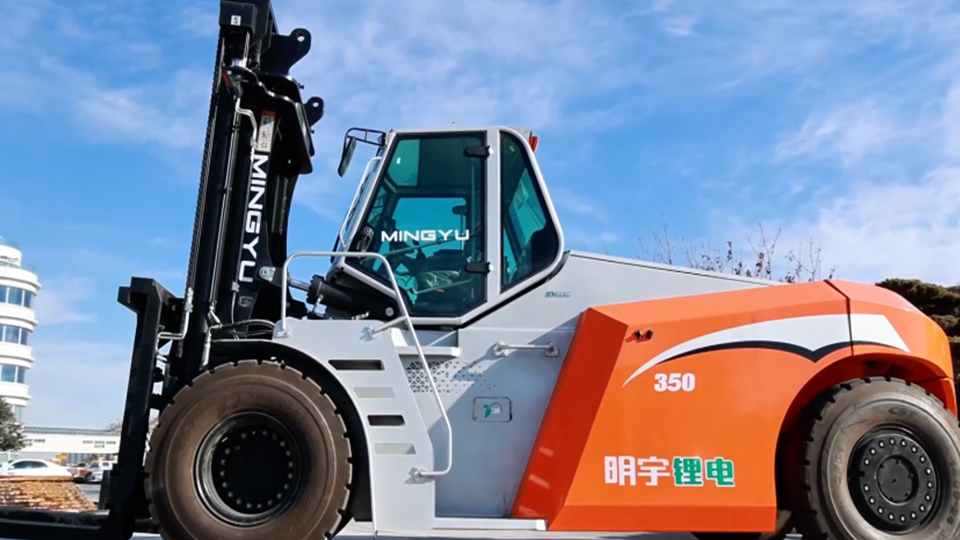
Regulatory Framework: When Licenses Are Legally Mandated vs. Preferred
Mandatory Certification Requirements
Under OSHA Standard 1910.178 in the United States, employers cannot legally permit untrained operators to operate powered industrial trucks. This regulation creates a de facto licensing requirement for specific job functions—positions involving forklift operation legally require valid certification. In these contexts, a forklift license transitions from "acceptable" to "mandatory" for job application consideration. Employers hiring for warehouse associates, shipping/receiving clerks, production operators, and construction equipment operators typically list valid forklift certification as a non-negotiable prerequisite.
The legal imperative creates distinct application categories: positions explicitly requiring forklift operation demand current certification, while roles where forklift operation represents a potential secondary duty may accept applications from uncertified candidates with training provided post-hire. Job seekers must carefully analyze position descriptions to determine whether their license status affects legal employability versus competitive advantage.
Regulatory Limitations on License Portability
A critical technical consideration affecting acceptability involves license portability across employers and jurisdictions. Unlike driver's licenses, which benefit from interstate reciprocity agreements, forklift certifications are employer-specific and site-specific under OSHA regulations. When an operator changes employers, the new organization must provide site-specific training and evaluation before authorization, even if the operator holds current certification from a previous position or third-party training provider.
This regulatory reality significantly impacts job application acceptability. While candidates can list previous certification on applications, employers cannot legally accept this credential as sufficient for immediate operation. The certification demonstrates prior competency and reduces training burden, but employers must still conduct formal evaluation and authorization. Job seekers should understand that their license makes them attractive candidates but doesn't guarantee immediate operational authorization.
Industry-Specific Acceptance Patterns
Logistics and Warehousing: Universal Acceptance
Within third-party logistics (3PL) providers, distribution centers, and warehousing operations, forklift certification represents a baseline qualification with near-universal acceptance. Major employers including Amazon, FedEx Supply Chain, DHL, and regional warehousing operations explicitly require certification for material handling positions. In these contexts, applicants without current certification face automatic disqualification or mandatory placement into pre-employment training programs.
The acceptance extends beyond traditional forklift operation to encompass related equipment including reach trucks, order pickers, pallet jacks, and turret trucks. Comprehensive certification covering multiple equipment classes significantly enhances application strength, demonstrating versatility that single-equipment certification cannot match. Industry leaders increasingly specify certification through recognized providers such as the National Safety Council, Raymond Corporation, or Crown Equipment Corporation, adding layers of credential evaluation beyond basic regulatory compliance.
Manufacturing: Context-Dependent Acceptance
Manufacturing environments present more nuanced acceptance patterns. Heavy manufacturing, automotive production, and aerospace operations typically require forklift certification for material handling roles, with acceptance rates approaching those of dedicated logistics facilities. However, light manufacturing, assembly operations, and specialized production environments may prioritize other competencies, accepting forklift certification as supplementary rather than primary qualification.
In manufacturing contexts, forklift licenses often accompany machining certifications, quality control credentials, or technical trade qualifications. The acceptability depends on the specific production environment's material flow complexity—high-volume operations with extensive raw material and finished goods movement prioritize forklift competency, while lean, cellular manufacturing layouts may emphasize flexibility over specific equipment certification.
Construction and Outdoor Operations: Specialized Acceptance
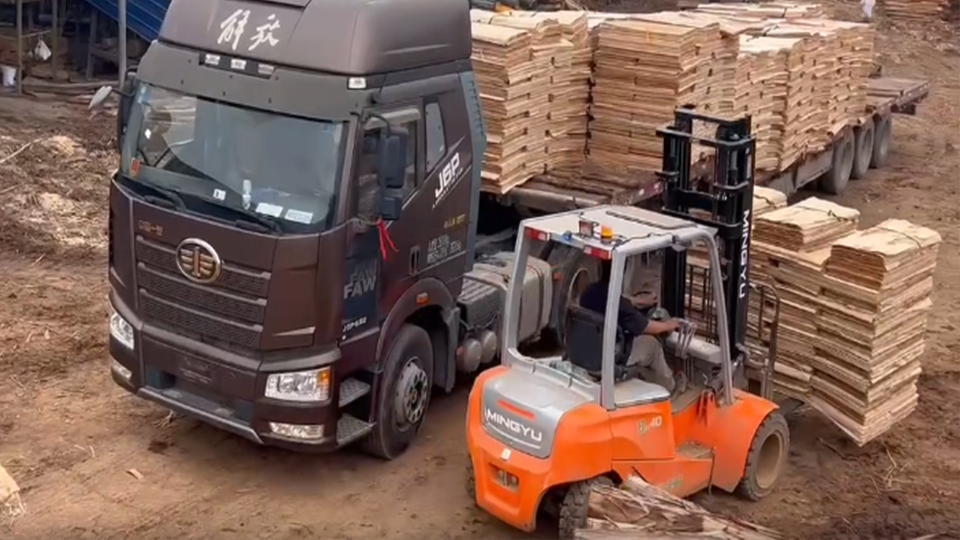
Construction industry acceptance of forklift licenses follows distinct patterns reflecting equipment diversity and operational environments. Rough terrain forklifts, telehandlers, and all-terrain material handlers require specialized certification beyond standard warehouse forklift training. While standard OSHA-compliant certification provides foundational acceptability, construction employers typically require additional rough terrain-specific training and evaluation.
The construction sector's project-based nature creates unique acceptance dynamics. Unionized construction environments often recognize journey-level certifications through apprenticeship programs, while non-union contractors may accept diverse credentialing sources with varying evaluation rigor. Large general contractors increasingly mandate third-party verification through organizations like the National Center for Construction Education and Research (NCCER), limiting acceptance of employer-specific or informal training documentation.
Cross-Industry Transferability and Limitations
Adjacent Sector Applications
Forklift certification demonstrates surprising acceptability in sectors beyond obvious material handling roles. Agriculture operations, particularly large-scale commercial farming and food processing, recognize forklift competency for equipment operation in processing facilities and storage operations. Recycling and waste management facilities value certification for material sorting and processing equipment operation. Even retail backroom operations and event logistics companies increasingly specify forklift certification for inventory management positions.
However, significant limitations exist regarding acceptance in professional services, information technology, healthcare (outside of materials management), and financial services. While certification demonstrates mechanical aptitude and safety consciousness transferable to any operational environment, these sectors typically lack equipment requiring such specific credentialing, rendering the license irrelevant for application consideration.
International Employment Considerations
Global employment mobility introduces complex acceptance variables. Forklift certification obtained in the United States under OSHA standards generally lacks automatic recognition in European Union jurisdictions governed by the Machinery Directive and country-specific implementations. Similarly, Australian Work Health and Safety Regulations, Canadian CSA standards, and Asian regulatory frameworks maintain distinct training requirements and evaluation criteria.
International employers may accept foreign certification as evidence of prior training while requiring local regulatory compliance before operational authorization. Multinational corporations with standardized training programs sometimes achieve broader acceptance through internal certification systems recognized across their global facilities. Job seekers pursuing international opportunities should anticipate additional training requirements regardless of current certification status.
Employer Evaluation Criteria Beyond Certification Possession
Recency and Currency Requirements
Employer acceptance of forklift certification depends heavily on recency and maintenance of credentials. OSHA requires refresher training every three years, but many employers implement stricter internal policies requiring annual or biennial recertification. Applications listing certification obtained several years previously without recent refresher training face rejection or mandatory retraining requirements.
Similarly, employers evaluate the comprehensiveness of certification coverage. Basic sit-down counterbalance forklift certification may prove insufficient for positions requiring stand-up reach truck operation, order picker use, or specialized attachment operation. Applications demonstrating broad equipment class certification receive preferential consideration over narrow, single-equipment qualifications.
Training Provider Recognition
The source of certification significantly influences employer acceptance. Training conducted through equipment manufacturers (Toyota, Hyster-Yale, Crown, Raymond), recognized third-party safety organizations (National Safety Council, Industrial Truck Association), or accredited community college programs typically receives universal acceptance. Conversely, informal on-the-job training without documented evaluation, online-only certification without practical assessment, or unrecognized training provider credentials may face employer skepticism or rejection.
Large employers and staffing agencies increasingly utilize verification services to authenticate certification validity, checking training records against provider databases. Falsified or inflated certification claims discovered during background verification result in immediate application disqualification and potential blacklisting from future opportunities.
Strategic Positioning: Maximizing License Value in Job Applications
Resume Integration Strategies
Effective job application positioning requires strategic integration of forklift certification within broader qualification narratives. Rather than simply listing "Forklift Certified" in skills sections, sophisticated applicants specify equipment classes mastered (Class I-VII), certification dates and expiration, training provider credentials, and safety records including accident-free operation periods.
Quantifying operational experience enhances acceptability—documenting hours operated, loads handled, or efficiency metrics demonstrates competency beyond basic certification possession. Applications should align certification presentation with specific position requirements, emphasizing relevant equipment experience and operational environments matching prospective employer needs.
Complementary Credential Development
Maximizing forklift license acceptability requires developing complementary qualifications that expand applicable position categories. OSHA 10-hour or 30-hour General Industry safety certifications pair naturally with forklift credentials, demonstrating comprehensive safety commitment. Hazardous materials handling certification (HAZMAT), first aid/CPR certification, and quality management system training create qualification packages acceptable across diverse industrial positions.
Technical credentials including basic mechanical maintenance skills, inventory management system proficiency (WMS, ERP platforms), and lean manufacturing certification transform forklift operators into versatile material handling professionals acceptable for supervisory and specialist positions beyond basic equipment operation.
Limitations and Misconceptions
Common Application Mistakes
Job seekers frequently misunderstand forklift license acceptability, creating application errors that reduce employment prospects. Assuming certification substitutes for relevant experience represents a critical misconception—employers prioritize demonstrated safe operation history over mere credential possession. Similarly, believing certification guarantees employment ignores the competitive nature of material handling positions where multiple qualified candidates vie for limited opportunities.
Another misconception involves assuming certification satisfies all employer training requirements. As previously noted, site-specific evaluation remains mandatory regardless of prior certification. Applicants presenting certification as eliminating further training requirements demonstrate regulatory misunderstanding that concerns hiring managers regarding safety culture comprehension.
When Certification Proves Insufficient
Certain high-risk operational environments require qualifications exceeding standard forklift certification. Nuclear facility material handling, aerospace component transportation, pharmaceutical cleanroom operations, and explosive materials handling demand specialized security clearances, contamination control training, or hazardous materials certifications that supersede basic forklift credentials.
Similarly, positions involving equipment operation near aviation facilities, railroad operations, or maritime environments require Federal Aviation Administration, Federal Railroad Administration, or Coast Guard certifications respectively. Standard forklift certification proves insufficient for these specialized applications regardless of operator competency.
Economic and Labor Market Dynamics
Certification as Employment Barrier or Enabler
Economic analysis reveals complex relationships between forklift certification and employment accessibility. Pre-employment certification requirements can create barriers for entry-level workers lacking resources for training program enrollment. However, once obtained, certification significantly expands employment opportunities and earning potential compared to uncertified labor pool competitors.
Staffing agency models increasingly address this dynamic by providing certification training as employment placement services, removing upfront cost barriers while ensuring credential acceptability to client employers. Union apprenticeship programs similarly combine certification with paid training, creating accessible pathways to qualified status.
Market Demand Fluctuations
Forklift certification acceptability fluctuates with economic cycles and sector-specific demand patterns. E-commerce expansion has dramatically increased demand for certified operators in fulfillment centers, raising certification value and acceptability. Conversely, manufacturing automation and autonomous mobile robot adoption may reduce future demand for traditional forklift operation, potentially limiting long-term certification value in specific sectors.
Labor market analytics indicate persistent demand for certified operators across diverse industries, suggesting continued acceptability despite technological disruption. However, job seekers should monitor automation trends and develop complementary technical skills ensuring continued employability as operational technologies evolve.
Conclusion
The acceptability of forklift licenses for job applications depends on complex interactions between regulatory requirements, industry norms, employer policies, and specific position characteristics. Within material handling, logistics, manufacturing, and construction sectors, valid certification often represents mandatory qualification for application consideration. However, acceptance rarely constitutes automatic employment authorization, with site-specific evaluation, recency requirements, and complementary qualifications influencing hiring decisions.
Job seekers maximize certification value through strategic credential presentation, continuous competency maintenance, and complementary skill development. Understanding regulatory limitations on license portability prevents unrealistic application expectations while highlighting the importance of selecting recognized training providers ensuring broad employer acceptance.
For employers, forklift certification serves as valuable screening criteria indicating baseline safety competency and regulatory awareness. However, effective hiring requires evaluation beyond credential possession, assessing practical skills, safety records, and cultural fit alongside formal certification status.
Ultimately, forklift licenses prove highly acceptable for appropriate job applications while maintaining clear limitations regarding portability, sufficiency, and universal applicability. Success requires matching certification investment to career objectives, maintaining current credentials, and positioning qualifications strategically within comprehensive professional development frameworks. As material handling technologies and regulatory frameworks evolve, adaptive certification strategies ensuring continued employability become increasingly critical for sustained career success in industrial operations.
Name: selena
Mobile:+86-13176910558
Tel:+86-0535-2090977
Whatsapp:8613181602336
Email:vip@mingyuforklift.com
Add:Xiaqiu Town, Laizhou, Yantai City, Shandong Province, China
