
vip@mingyuforklift.com
+86-0535-2090977

Introduction
The global urban landscape is undergoing unprecedented transformation as cities confront aging infrastructure, climate adaptation imperatives, and the aftermath of decades of deferred maintenance. This convergence of challenges has generated explosive demand for urban operation and maintenance (O&M) activities that require safe, efficient access to elevated work zones across complex built environments. Aerial work platforms (AWPs) have emerged as critical enablers of this urban maintenance revolution, offering capabilities that align precisely with the spatial constraints, safety requirements, and productivity demands of modern city management. The market prospect for AWPs in urban O&M applications extends far beyond traditional construction markets, creating sustainable, recurring demand patterns that promise to reshape equipment utilization and industry economics.
The Urban Maintenance Crisis and Access Challenges
Cities worldwide face a maintenance crisis rooted in infrastructure age, intensifying utilization, and budget constraints that have prioritized new construction over preservation. In the United States, the average age of commercial building stock exceeds 50 years, with critical systems—facades, roofing, mechanical equipment, and electrical infrastructure—requiring systematic inspection and renewal. European cities confront similar challenges with historic building stock demanding specialized preservation approaches. Rapidly urbanizing Asian and African cities face accelerated deterioration from environmental stress and construction quality variations.
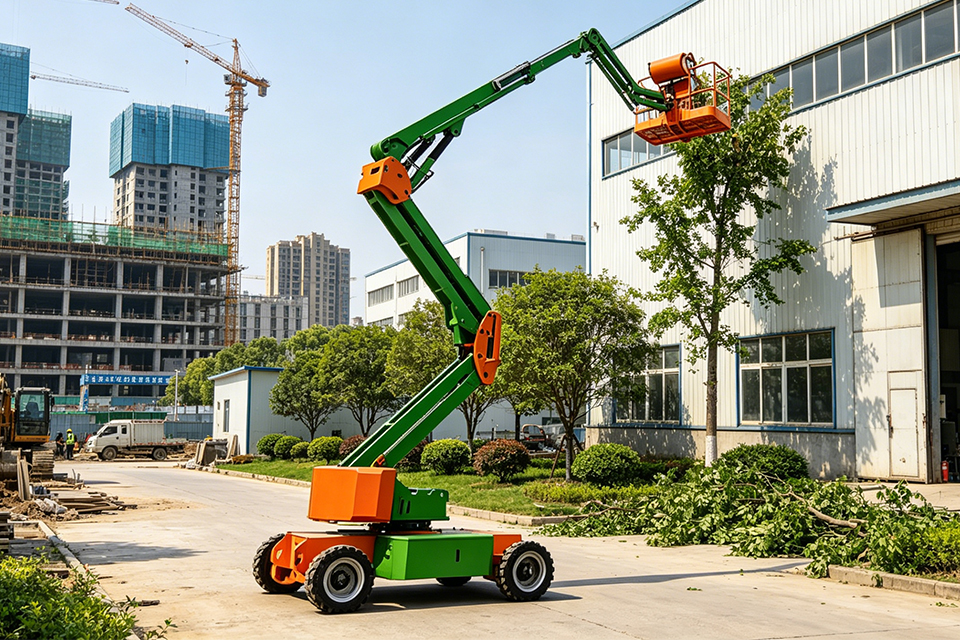
The access challenge for urban maintenance is fundamentally different from new construction. Maintenance activities must occur within operational environments—buildings remain occupied, streets stay active, and adjacent properties continue functioning. Traditional scaffolding systems, appropriate for construction sites with established work zones, prove economically and operationally impractical for maintenance requiring rapid deployment, minimal footprint, and immediate mobility. The disruption costs of extensive scaffolding erection in active urban environments often exceed the direct maintenance costs, creating barriers to necessary preservation activities.
Spatial constraints intensify in dense urban cores where building setbacks are minimal, street widths are narrow, and overhead obstructions from power lines, transit infrastructure, and adjacent structures limit vertical access options. Maintenance of building facades in canyon-like street environments requires equipment capable of positioning workers precisely while navigating complex three-dimensional space with limited maneuvering room. Standard construction equipment, designed for open sites with generous staging areas, faces severe capability gaps in these constrained environments.
Safety and regulatory requirements for urban maintenance exceed construction site standards due to public exposure. Maintenance activities occur adjacent to pedestrian traffic, vehicle movement, and occupied spaces, requiring fall protection, debris containment, and emergency access provisions that complicate traditional access approaches. Urban regulatory frameworks increasingly mandate minimal disruption methodologies that favor mobile, rapid-deployment access systems over fixed installations.
AWP Technology Alignment with Urban O&M Requirements
Aerial work platforms offer technological characteristics that directly address urban maintenance challenges, creating natural market alignment that drives adoption growth. The mobility and rapid deployment capabilities of modern AWPs transform the economics of urban maintenance access. Self-propelled scissor lifts and boom lifts can be transported on standard vehicles, positioned within minutes, and relocated between work locations without extensive setup or dismantling. This operational flexibility enables maintenance programs to address distributed building portfolios with optimized crew utilization rather than fixed scaffolding investments per location.
Compact design evolution has produced AWP formats specifically optimized for urban constraints. Narrow-width scissor lifts under 0.8 meters enable passage through standard doorways and operation in corridors and atriums. Low-weight machines with distributed ground pressure operate on elevated structures, interior floors, and landscape features impossible for heavier equipment. Zero-tail-swing boom configurations navigate tight street environments without encroaching on traffic lanes or pedestrian zones. These specialized formats expand the addressable maintenance market to include applications previously inaccessible to mechanized solutions.
Electric and hybrid power systems address urban environmental and operational requirements. Battery electric AWPs eliminate exhaust emissions for indoor maintenance, tunnel work, and air-quality-sensitive environments. Reduced noise levels enable nighttime maintenance operations that minimize business disruption and traffic impact. The elimination of hydraulic fluid leak risks protects sensitive interior finishes and water features. Electrification aligns with municipal sustainability mandates that increasingly restrict diesel equipment in urban cores.
Intelligent control systems enhance urban operation safety and precision. Load management systems prevent overload in applications where material weights may be uncertain. Stability monitoring enables operation on uneven urban surfaces including crowned streets, sidewalks with utility covers, and landscaped areas. Collision avoidance and proximity sensing protect pedestrians, vehicles, and adjacent structures in congested environments. Position memory and automatic leveling reduce operator burden during repetitive maintenance cycles.
Reach and positioning capabilities address the specific geometries of urban maintenance. Articulating boom lifts provide up-and-over capability for building setbacks, architectural projections, and overhead obstructions. Telescopic booms achieve horizontal reach that minimizes street occupancy while accessing upper facade zones. Multi-axis positioning enables precise alignment with specific maintenance targets including individual facade panels, mechanical equipment, and architectural details. These capabilities enable comprehensive maintenance access without the street closure and traffic control requirements of scaffolding systems.
Market Segment Analysis and Growth Dynamics
The urban O&M AWP market segments into distinct applications with specific equipment requirements and growth trajectories. Building facade maintenance represents the largest volume segment, driven by glass curtain wall cleaning, sealant replacement, coating application, and inspection requirements. High-rise residential and commercial towers generate continuous demand as building envelopes require systematic renewal on 10-15 year cycles. The aesthetic and energy performance implications of facade maintenance create owner investment willingness that supports professional service provision and equipment utilization.
Infrastructure maintenance encompasses bridges, tunnels, transit systems, and utility structures that require systematic inspection and repair. Bridge inspection and maintenance programs, mandated by transportation authorities on regular cycles, generate substantial boom lift demand for under-deck access, bearing inspection, and coating renewal. Transit infrastructure including elevated rail, stations, and signaling equipment requires specialized access solutions that AWPs increasingly provide. The infrastructure maintenance segment benefits from government funding stability and regulatory mandate that create predictable demand patterns.
Industrial and institutional facility maintenance within urban boundaries includes manufacturing plants, hospitals, universities, and government complexes with complex building stock requiring ongoing preservation. These facilities often maintain internal maintenance crews with dedicated equipment fleets, creating steady replacement demand and upgrade cycles. The technical sophistication of institutional maintenance programs drives adoption of advanced AWP features including telematics integration, specialized attachments, and precision positioning capabilities.
Urban tree care and landscaping represents an emerging AWP application as cities recognize the value of urban forest maintenance for climate resilience and quality of life. Traditional tree care relied on climbing techniques with significant skill requirements and safety risks. AWPs enable more systematic pruning, inspection, and treatment programs with reduced labor cost and improved safety outcomes. The arboricultural AWP segment favors compact, highly maneuverable boom configurations with precise control characteristics.
Emergency response and disaster recovery create episodic but high-value AWP demand. Urban search and rescue operations, storm damage assessment, and infrastructure failure response require rapid deployment of elevated access capabilities. Specialized emergency response vehicles with integrated AWPs address these requirements, while rental fleet surge capacity supports extended recovery operations. Climate change intensification of extreme weather events suggests expanding demand in this segment.
Service Model Evolution and Rental Market Development
The urban O&M AWP market has catalyzed sophisticated rental service model development that enables adoption by organizations lacking capital investment capability or fleet management expertise. Professional rental operators provide equipment access with comprehensive service bundles including transport, setup, operator training, maintenance, and technical support. This service model transformation has been critical to market expansion, enabling maintenance contractors and facility managers to utilize advanced AWP capabilities without capital commitment or technical risk.
Rental fleet composition reflects urban O&M specialization with high concentrations of electric and hybrid machines, compact formats, and specialized configurations. Fleet investment patterns show increasing preference for intelligent machines with telematics connectivity that enable remote monitoring, predictive maintenance, and utilization optimization. The asset management sophistication of major rental operators drives manufacturer innovation in durability, serviceability, and data integration.
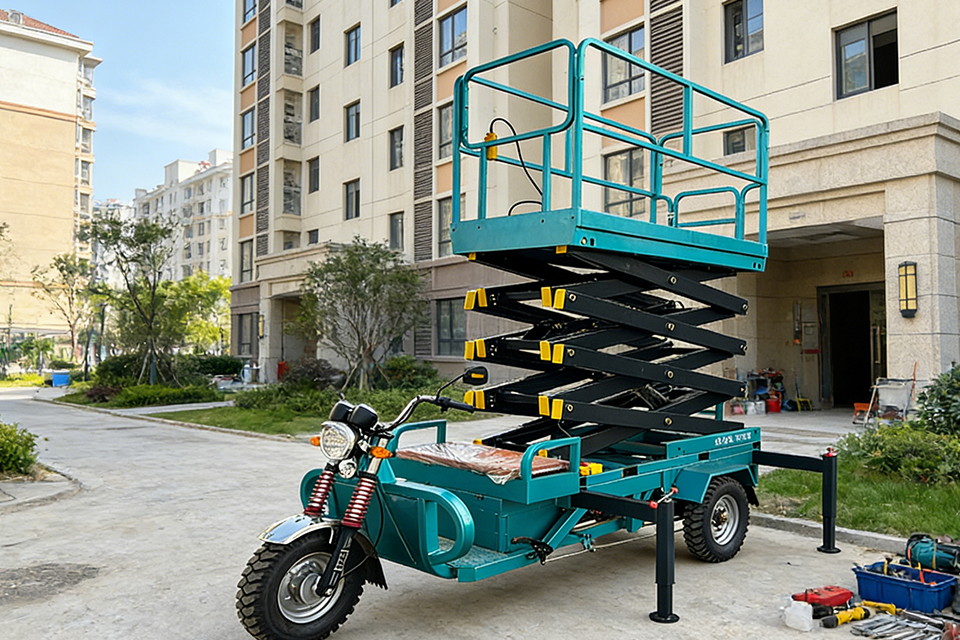
Rental rate structures have evolved to address urban O&M operational patterns. Short-term and hourly rental options accommodate brief maintenance interventions and inspection activities. Transport-inclusive pricing addresses the logistics complexity of urban equipment movement. Damage waiver and insurance products mitigate customer risk exposure in high-traffic environments. These service innovations reduce barriers to AWP utilization for maintenance applications with sporadic or unpredictable timing.
The rental market concentration in urban O&M has created competitive dynamics favoring scale and specialization. Regional rental operators with deep urban market knowledge and rapid response capability compete effectively against national chains through service differentiation. Equipment manufacturers have established captive rental operations to secure market presence and demonstrate product capabilities. The rental ecosystem maturity supports continued market expansion by ensuring equipment availability and service quality.
Technological Development Priorities for Urban Applications
Urban O&M requirements drive specific AWP technology development priorities distinct from construction market demands. Electrification advancement focuses on extended runtime for full-shift maintenance operations, rapid charging infrastructure compatibility, and battery system durability under frequent cycling. Energy recovery systems that capture descent energy show promise for urban applications with frequent elevation changes. Solar panel integration for trickle charging during outdoor operation addresses sustainability positioning and runtime extension.
Autonomous and semi-autonomous capabilities address urban labor constraints and safety requirements. Automatic positioning systems that navigate to pre-programmed maintenance locations reduce operator skill requirements and setup time. Collision avoidance systems with pedestrian and vehicle recognition address urban traffic complexity. Remote operation capabilities enable maintenance in hazardous environments without operator exposure. These intelligent features transform AWP economics by reducing labor cost components and enabling operation in expanded application scenarios.
Attachment and tooling integration enhances AWP versatility for specific maintenance tasks. Pressure washing systems for facade cleaning, material handling attachments for component replacement, and inspection sensor platforms for condition assessment expand the work scope addressable from AWP platforms. Standardized attachment interfaces enable rapid configuration change between maintenance activities, improving equipment utilization efficiency.
Data integration and building information modeling (BIM) connectivity support systematic maintenance program management. AWP-mounted sensors can capture facade condition data, structural measurements, and environmental readings that feed facility management databases. Position data integration with BIM enables precise work location documentation and progress tracking. These digital integration capabilities position AWPs as data collection platforms supporting predictive maintenance and asset lifecycle management.
Regulatory Environment and Safety Standards
Urban AWP operation occurs within complex regulatory environments that influence equipment design, operation practices, and market development. Occupational safety regulations establish operator qualification requirements, equipment inspection protocols, and operational safety standards that AWP manufacturers and users must address. The alignment of AWP safety systems with regulatory requirements—load limiting, stability monitoring, fall protection—enables compliance demonstration that supports market adoption.
Traffic and public safety regulations increasingly address mobile elevated work in street environments. Permit requirements, traffic control obligations, and pedestrian protection mandates influence equipment selection and operation planning. Equipment characteristics that minimize regulatory burden—compact footprint, rapid setup, quiet operation—gain competitive advantage in urban markets. Regulatory engagement by industry associations shapes standards development to enable effective AWP utilization while maintaining public safety.
Environmental regulations drive emissions and noise standards that favor electric equipment in urban cores. Low-emission zones and equipment restrictions create market segments where electric AWPs possess exclusive or preferred access. Sustainability certification and green building standards recognize maintenance methodology environmental impact, creating preference for AWP-based approaches over scaffolding with higher material consumption and waste generation.
International standards harmonization supports equipment market globalization while enabling technology transfer. ISO standards for AWP design, testing, and safety provide common frameworks that facilitate manufacturer market entry and user confidence. Regional adaptation of international standards addresses specific climatic, operational, or regulatory requirements while maintaining core safety and performance benchmarks.
Economic Analysis and Investment Attractiveness
The urban O&M AWP market presents compelling economic characteristics for equipment investment and industry participation. Demand stability distinguishes maintenance applications from cyclical construction markets. Infrastructure maintenance obligations persist through economic downturns, providing demand floor that supports fleet utilization and manufacturer revenue stability. The non-discretionary nature of safety-critical maintenance creates price inelasticity that protects margins during market stress.
Total cost of ownership economics favor AWP-based maintenance approaches when comprehensive cost accounting includes direct access costs, labor efficiency, schedule acceleration, and disruption mitigation. Comparative studies demonstrate 30-50% cost reduction for AWP-based facade maintenance versus scaffolding approaches when indirect costs are incorporated. These economics drive adoption conversion and support rental rate structures that enable equipment investment recovery.
Asset utilization rates in urban O&M applications often exceed construction utilization due to demand stability and application diversity. Rental fleet operators report annual utilization rates of 60-75% for urban maintenance-focused fleets compared to 45-55% for construction-oriented fleets. Higher utilization accelerates capital recovery, supports investment in advanced equipment, and enables competitive pricing that further drives market expansion.
The urban O&M market structure supports diverse business model participation. Equipment manufacturers benefit from steady replacement demand and technology upgrade cycles. Rental operators capture service value from customers preferring operational expenditure models. Maintenance contractors achieve competitive differentiation through advanced access capabilities. Facility owners and managers optimize asset preservation costs through professional maintenance program implementation. This value distribution enables ecosystem sustainability and continuous improvement investment.
Regional Market Development Patterns
Regional urban O&M AWP markets demonstrate distinct development patterns reflecting urbanization stage, infrastructure age, regulatory environment, and economic structure. Mature markets in North America and Western Europe emphasize replacement demand, technology upgrade, and efficiency optimization. Aging urban infrastructure and stringent maintenance regulations create steady demand for sophisticated equipment with advanced safety and environmental features. Market growth derives from application expansion and methodology conversion rather than volume acceleration.
Emerging markets in Asia-Pacific and Middle East regions combine new infrastructure construction with rapidly developing maintenance requirements. Massive urbanization creates building stock that will require systematic maintenance programs within the AWP equipment lifecycle. Market development emphasizes fleet building, operator training infrastructure, and rental market establishment. Government infrastructure investment programs increasingly incorporate maintenance equipment provision, recognizing lifecycle cost optimization.
Developing markets in Africa and Latin America face infrastructure maintenance backlogs that create pent-up demand as economic development enables investment. Informal maintenance practices transition toward professional methodologies as urban property values increase and regulatory enforcement intensifies. Market development requires equipment financing solutions, technical training programs, and service infrastructure investment that enable AWP utilization despite capital constraints.
Climate vulnerability creates regional market variations with coastal cities, flood-prone areas, and extreme weather zones requiring enhanced maintenance capabilities for resilience investment. Storm damage response, flood recovery, and climate adaptation infrastructure generate specific AWP demand patterns with episodic intensity and specialized equipment requirements.
Future Market Evolution and Strategic Implications
The urban O&M AWP market trajectory points toward sustained expansion with structural characteristics that differentiate from traditional construction equipment markets. The maintenance focus creates recurring, predictable demand that supports long-term planning and investment. Technology evolution toward intelligent, autonomous, and electric systems aligns with urban sustainability and efficiency requirements. Service model development enables market participation by diverse customer segments without capital barriers.
Strategic implications extend across the equipment value chain. Manufacturers must prioritize urban application requirements in product development, emphasizing electrification, compact design, and intelligent features. Rental operators should develop specialized urban service capabilities including rapid response logistics, technical support, and application consulting. Maintenance contractors can achieve competitive differentiation through AWP utilization expertise and systematic maintenance program development. Facility owners benefit from total cost optimization through professional maintenance approach adoption.
The urban O&M market prospect for aerial work platforms represents a fundamental expansion of addressable demand beyond construction cycle dependence. As cities worldwide confront maintenance imperatives, AWPs emerge as essential infrastructure for urban preservation and resilience. The equipment industry that serves this market will shape and be shaped by the evolving requirements of sustainable urban management, creating opportunities for innovation, growth, and societal contribution through enabling safe, efficient, and sustainable maintenance of the built environment.
Name: selena
Mobile:+86-13176910558
Tel:+86-0535-2090977
Whatsapp:8613181602336
Email:vip@mingyuforklift.com
Add:Xiaqiu Town, Laizhou, Yantai City, Shandong Province, China