
vip@mingyuforklift.com
+86-0535-2090977

Introduction
The global aerial work platform (AWP) industry has witnessed a dramatic shift in competitive dynamics over the past decade, with Chinese manufacturers emerging from regional suppliers to become dominant forces in international markets. This transformation represents one of the most significant developments in construction equipment manufacturing, challenging established Western and Japanese incumbents through rapid technological advancement, aggressive pricing strategies, and comprehensive product portfolio expansion. Understanding this breakthrough requires examining the technological innovations driving domestic Chinese AWP capabilities, the evolving market landscape shaped by these developments, and the strategic implications for global construction equipment ecosystems.
Historical Context: From Import Dependence to Export Leadership
China's relationship with aerial work platform technology began with near-total dependence on imported equipment. Prior to 2010, domestic demand for AWPs was served primarily by international manufacturers including JLG, Genie, Haulotte, and Skyjack, with Chinese contractors paying premium prices for equipment that often faced extended delivery timelines and limited local service support. The domestic manufacturing base was confined to rudimentary scissor lift production with limited reach and capacity, unable to compete with international standards for safety, reliability, or performance.
The inflection point came through policy intervention and market opportunity alignment. China's 12th Five-Year Plan (2011-2015) identified high-end construction equipment as a strategic industry for domestic capability development, with specific support for AWP manufacturing through tax incentives, R&D subsidies, and preferential financing. Simultaneously, accelerating urbanization and infrastructure investment created massive domestic demand growth, providing scale opportunities that attracted entrepreneurial investment and enabled rapid learning curves.
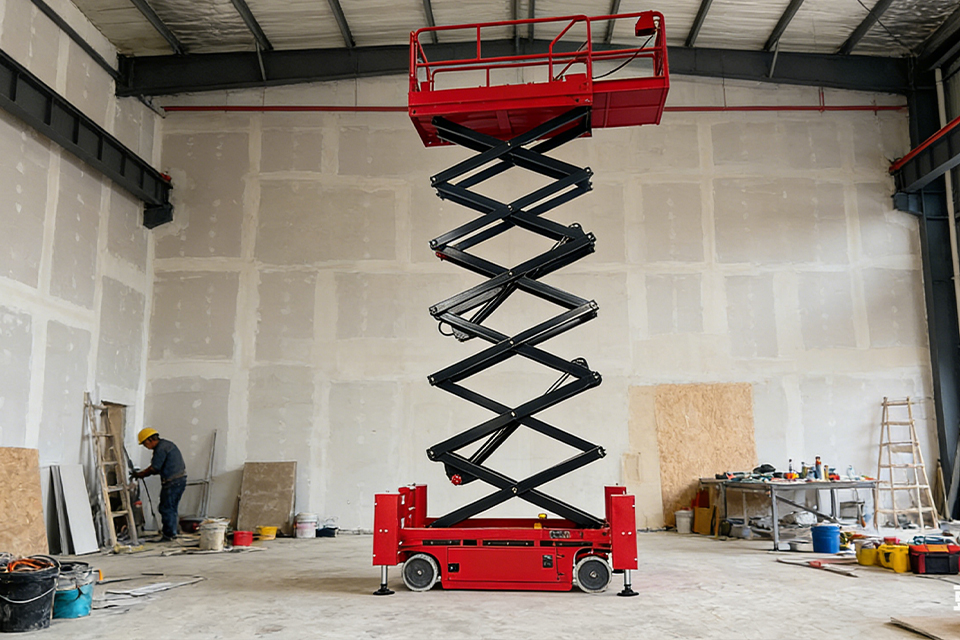
The period 2015-2020 marked explosive domestic production growth, with Chinese AWP output increasing from approximately 10,000 units annually to over 100,000 units. This expansion was led by emerging manufacturers including Dingli, JLG (Chinese operations), Sinoboom, and Liugong, who invested heavily in manufacturing automation, quality systems, and product development. By 2020, Chinese production exceeded domestic demand, triggering aggressive export expansion that has since reshaped global market structures.
Technological Innovation Trajectories
Chinese AWP manufacturers have pursued technological advancement across multiple dimensions, achieving parity or leadership in several critical areas. The innovation strategy has emphasized practical performance optimization, manufacturing efficiency, and rapid adaptation to emerging market requirements rather than purely theoretical research leadership.
Structural optimization and lightweight design represent areas of significant advancement. Through extensive application of high-strength steel alloys, aluminum extrusions, and composite materials, domestic manufacturers have achieved substantial weight reductions while maintaining or improving load capacity and stability. Dingli's BT series electric scissor lifts demonstrate 15-20% weight reduction compared to equivalent conventional designs, enabling transport efficiency improvements and expanded application on surfaces with limited load-bearing capacity. Advanced finite element analysis capabilities developed through academic-industrial collaboration enable optimized structural designs that minimize material usage while satisfying stringent safety factors.
Electrification and energy system innovation have progressed rapidly, with Chinese manufacturers achieving leadership in battery electric AWP deployment. The domestic supply chain advantages in lithium-ion battery production, established through electric vehicle industry development, translate directly to AWP applications. Contemporary domestic electric AWPs incorporate battery systems with energy densities exceeding 180 Wh/kg, supporting full-shift operation without intermediate charging. Fast-charging capabilities enable 80% capacity restoration within 45 minutes, minimizing downtime for high-utilization applications. Some manufacturers are piloting solid-state battery systems promising further energy density improvements and enhanced safety profiles.
Intelligent control system development has accelerated through partnerships with automotive electronics suppliers and proprietary software development. Domestic AWPs now incorporate comprehensive sensor suites including load cells, inclination sensors, proximity detectors, and cameras feeding centralized control systems with real-time stability management, collision avoidance, and autonomous positioning capabilities. The integration density and processing power of these systems match or exceed international competitors, benefiting from China's broader electronics manufacturing ecosystem. Telematics platforms developed domestically provide fleet management, predictive maintenance, and remote diagnostics with user interfaces optimized for Chinese and international market requirements.
Manufacturing process innovation has been equally critical to competitive positioning. Chinese AWP facilities have implemented extensive robotic welding, automated assembly lines, and digital quality management systems that achieve production efficiencies difficult to replicate in higher-cost manufacturing environments. The scale of domestic production—exceeding 150,000 units annually by 2024—enables learning curve effects and supplier development that continuously reduce production costs while improving quality consistency.
Product Portfolio Expansion and Specialization
The technological maturation of domestic manufacturers has enabled comprehensive product portfolio expansion addressing the full spectrum of AWP applications. Initial concentration on electric scissor lifts has diversified to include diesel-powered rough-terrain scissors, articulating and telescopic boom lifts across all size classes, truck-mounted platforms, and specialized configurations for unique applications.
Boom lift development illustrates the progression from imitation to innovation. Early domestic articulating booms closely followed established Western designs, but current generation products incorporate distinctive engineering solutions including optimized kinematic arrangements, enhanced rough-terrain capabilities, and intelligent control features developed through domestic R&D. The largest domestic boom lifts now achieve working heights exceeding 58 meters with platform capacities above 450 kg, specifications competitive with the highest-reach international products.
Specialized applications have driven targeted product development responding to Chinese market requirements. Heavy-load scissor lifts designed for construction material handling rather than personnel access address the specific needs of China's building finishing trades. Narrow-width machines optimized for urban renovation work in dense environments reflect domestic urbanization patterns. Explosion-proof configurations for petrochemical applications, low-noise designs for hospital and school maintenance, and high-altitude cold-weather specifications demonstrate responsiveness to diverse operational requirements.
The modular platform strategy adopted by leading manufacturers enables rapid product customization without complete redesign. Standardized chassis, boom sections, and control systems can be configured into diverse product variants, supporting market segmentation while maintaining manufacturing economies of scale. This architectural approach facilitates rapid response to emerging market opportunities and specific customer requirements that would challenge more rigid product structures.
Quality Evolution and Certification Achievement
Early skepticism regarding Chinese AWP quality has been systematically addressed through comprehensive quality management system implementation and international certification achievement. Leading domestic manufacturers have obtained ISO 9001 quality management certification, ISO 14001 environmental management certification, and OHSAS 18001/ISO 45001 occupational health and safety management certification, demonstrating organizational capability alignment with international standards.
Product safety certification has progressed from national GB standards to comprehensive international approvals. CE marking for European market access, ANSI compliance for North American applications, and specific national certifications for Australia, Japan, and Middle Eastern markets have been obtained through extensive testing, documentation, and third-party verification. The certification investment represents substantial cost and time commitment, indicating strategic commitment to international market participation rather than exclusive domestic focus.
Field reliability data increasingly supports quality claims. Warranty claim rates for leading domestic manufacturers have converged toward international competitor levels, with some product categories demonstrating superior mean time between failures for electrical and electronic systems. The installed base expansion within China provides extensive operational data that drives continuous improvement and validates design decisions under diverse application conditions.
The perception gap between demonstrated quality and market recognition persists in some segments, requiring sustained performance demonstration and brand building. However, the economic value proposition—typically 20-40% price advantage at equivalent specifications—has proven sufficient to overcome residual quality concerns for price-sensitive customers and rental fleet operators focused on total cost of ownership.
Domestic Market Dynamics and Demand Drivers
China's domestic AWP market has experienced extraordinary growth, becoming the world's largest national market by volume and increasingly significant in value terms. Annual domestic sales exceeded 100,000 units by 2023, compared to approximately 15,000 units in the United States and 12,000 in European markets. This scale provides domestic manufacturers with foundational demand supporting production economies and enabling export pricing flexibility.
Demand drivers reflect China's ongoing economic transformation. Construction labor cost escalation—wage rates for skilled workers have increased 8-12% annually—makes mechanized access increasingly cost-competitive versus manual scaffolding. Safety regulation enforcement has intensified, with provincial and municipal authorities implementing stricter elevated work requirements that mandate AWP utilization for applications previously addressed through traditional scaffolding. The aging construction workforce creates demand for equipment that reduces physical strain and enables continued employment of experienced workers.
Application expansion beyond traditional construction drives market diversification. Manufacturing facility maintenance, logistics center operation, urban tree care, and infrastructure inspection create steady demand across economic cycles. The rental market development, with professional fleet operators replacing contractor equipment ownership, concentrates purchasing power among sophisticated buyers who drive standardization and service capability requirements.
Government infrastructure stimulus programs provide cyclical demand amplification. Major investments in transportation, energy, and urban development create concentrated AWP demand that domestic manufacturers are positioned to serve with minimal logistics friction. The alignment of domestic production capacity with domestic demand peaks enables inventory optimization and cash flow management that supports aggressive export pricing during demand troughs.
Global Market Penetration and Competitive Response
Chinese AWP manufacturers have executed systematic global expansion, progressing from peripheral markets to direct competition with established incumbents in their home territories. Initial export concentration in Southeast Asia, Africa, and Latin America—markets price-sensitive and less brand-loyal—provided international operational experience and reference installations. Subsequent expansion into Europe, North America, and Australia represents direct challenge to traditional market structures.
The European market has proven most receptive to Chinese AWP penetration, with domestic manufacturers achieving 15-20% market share in scissor lift categories by 2024. CE certification equivalence, established distribution partnerships, and compelling total cost of ownership economics have overcome initial resistance. Rental industry concentration in Europe, with large fleet operators making rational purchasing decisions based on financial analysis rather than brand preference, facilitates market entry.
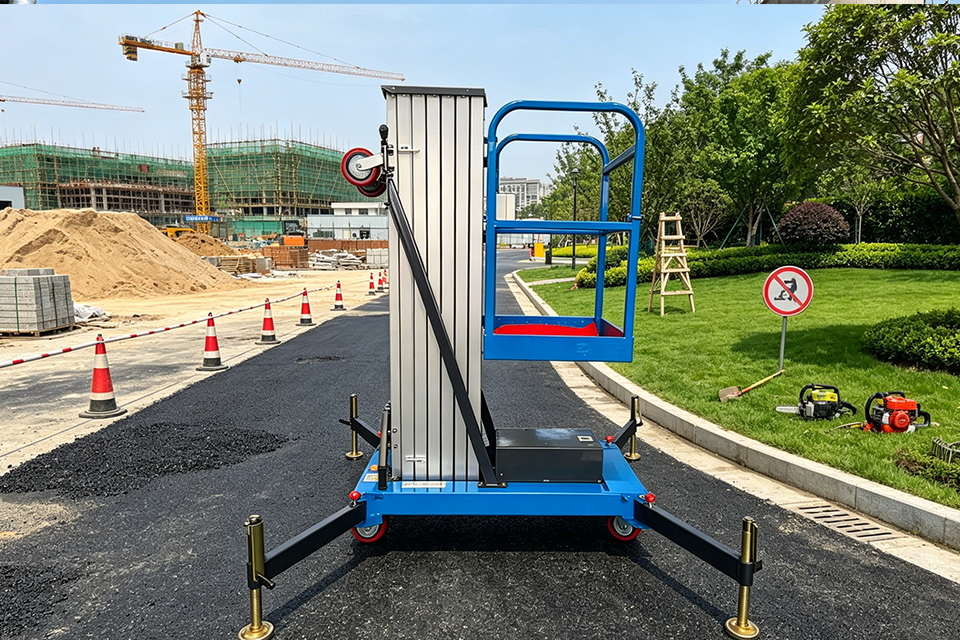
North American penetration has proceeded more gradually, reflecting strong brand loyalty to JLG and Genie, established dealer networks, and tariff barriers. However, price-sensitive segments including small contractors, municipal purchasers, and specialized applications have increasingly adopted Chinese alternatives. The potential for trade policy relaxation or circumvention through third-country manufacturing creates strategic uncertainty for incumbent market defense.
Competitive response from established manufacturers has included accelerated cost reduction, increased localization in lower-cost manufacturing regions, and emphasis on service capabilities and brand equity that differentiate from price-based competition. Some incumbents have pursued strategic partnerships with Chinese manufacturers, licensing technology or sourcing components to access cost advantages while maintaining brand positioning. The competitive dynamics continue evolving as technological parity reduces differentiation opportunities and forces competition on service, financing, and total solution provision.
Supply Chain and Manufacturing Ecosystem
The Chinese AWP industry benefits from comprehensive domestic supply chain development that extends competitive advantage beyond individual manufacturers. Steel mills provide high-strength structural materials optimized for AWP applications. Hydraulic component suppliers, initially serving construction machinery and agricultural equipment markets, have developed specialized expertise for AWP requirements. The electric vehicle industry ecosystem provides battery cells, battery management systems, and electric drive components with performance and cost characteristics superior to available alternatives in other regions.
Manufacturing equipment suppliers have developed specialized capabilities for AWP production automation, including robotic welding systems for boom fabrication, precision machining centers for hydraulic component production, and assembly automation for high-volume scissor lift manufacturing. This equipment supply capability enables continuous manufacturing technology advancement without dependence on imported production technology.
The geographic concentration of AWP manufacturing in Zhejiang, Jiangsu, and Hunan provinces creates industrial cluster effects with shared supplier networks, skilled labor pools, and logistics infrastructure. The concentration facilitates rapid technology diffusion, competitive supplier development, and operational benchmarking that drives continuous improvement across the industry ecosystem.
Challenges and Strategic Vulnerabilities
Despite remarkable progress, domestic Chinese AWP manufacturers face significant challenges and vulnerabilities. Intellectual property protection in international markets remains problematic, with design and technology appropriation threatening returns on innovation investment. Patent litigation from established competitors, while manageable through legal defense and design-around strategies, creates business uncertainty and costs.
Brand equity development requires sustained investment and time accumulation that may conflict with short-term financial performance pressures. The discount positioning that enables market entry may create perception constraints that limit premium segment participation and margin expansion. Transitioning from value to volume to value-plus branding represents a critical strategic challenge.
Geopolitical tensions and trade policy volatility create market access risks. Tariff escalation, import restrictions, or discriminatory procurement policies in major markets could significantly impact export growth trajectories. Supply chain security concerns may drive reshoring or friend-shoring policies that disadvantage Chinese equipment regardless of commercial merits.
Technology transition risks include potential disruption from autonomous systems, alternative lift technologies, or construction methodology changes that reduce AWP demand. The current technological and manufacturing advantages may prove less relevant in future competitive landscapes, requiring continued innovation investment and strategic flexibility.
Future Trajectories and Industry Outlook
The domestic Chinese AWP industry appears positioned for continued growth and global market share expansion, though the trajectory may moderate from the explosive rates of the past decade. Domestic market maturation will likely slow volume growth while increasing replacement demand and premium segment participation. Export markets will continue expanding, with potential for 30-40% international market share in volume terms by 2030.
Technological development will emphasize intelligent systems, autonomous capabilities, and electrification where domestic supply chain advantages are most pronounced. The integration of AWPs with broader construction digitalization and smart city infrastructure represents frontier opportunities for value creation and differentiation.
Industry consolidation among domestic manufacturers is likely as growth rates moderate and scale requirements increase. The current fragmented structure with numerous regional competitors will likely evolve toward oligopoly with 3-5 dominant manufacturers possessing comprehensive product portfolios and global service capabilities.
The breakthrough of domestic Chinese AWPs represents a case study in industrial development through market scale, supply chain integration, and targeted technology development. The transformation from import dependence to export leadership within fifteen years demonstrates the potential for rapid capability building when market opportunity, policy support, and entrepreneurial execution align. The ongoing evolution of this industry will significantly influence global construction equipment markets and construction methodology development for decades to come.
Name: selena
Mobile:+86-13176910558
Tel:+86-0535-2090977
Whatsapp:8613181602336
Email:vip@mingyuforklift.com
Add:Xiaqiu Town, Laizhou, Yantai City, Shandong Province, China
