
vip@mingyuforklift.com
+86-0535-2090977

Introduction: The Counterintuitive Steering Paradox
Walk into any Sam's Club distribution center across Southern Illinois—from the Metro East facilities near Belleville to the regional warehouses serving Springfield and Carbondale—and you'll encounter a steering configuration that initially baffles new operators. Unlike the intuitive "turn left to go left" mechanics of conventional automobiles, these stand-up forklifts employ what's technically termed "reverse steering" or "reversed steering": turning the control tiller left causes the forklift to pivot right, and vice versa . This design choice, far from being arbitrary or "insane" as one frustrated operator described it, represents decades of ergonomic research, accident analysis, and operational optimization specific to warehouse environments .
Understanding why Sam's Club and similar high-volume warehouse operations utilize reversed steering requires examining the intersection of forklift engineering, operator psychology, and the unique demands of narrow-aisle warehousing. This technical analysis explores the mechanical foundations of rear-wheel steering, the cognitive ergonomics of control orientation, the safety implications of steering configuration standardization, and the operational contexts that make reversed steering the preferred configuration for stand-up forklift operations.
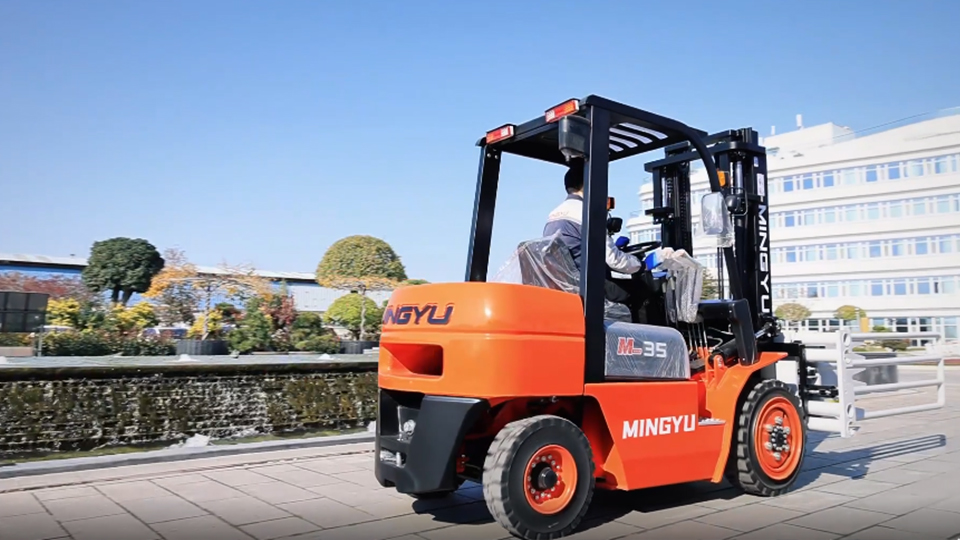
The Mechanical Foundation: Rear-Wheel Steering Physics
All forklifts, including those operated by Sam's Club, utilize rear-wheel steering rather than the front-wheel steering familiar from automotive design . This fundamental architectural choice stems from the operational requirements of material handling environments. In rear-wheel steering configurations, the front axle remains rigid while the rear wheels pivot, allowing the forklift to rotate around its front axle with minimal turning radius .
The physics behind this design reveals why it's essential for warehouse operations. When a forklift carries a load on its front-mounted forks, the majority of the combined weight (forklift plus load) concentrates over the front wheels . If the front wheels were also responsible for steering, the mechanical complexity would increase substantially, and the steering components would be subjected to tremendous stress from load-bearing duties . By concentrating the steering function at the rear, where weight loads are lighter, the design achieves several critical objectives: reduced mechanical complexity, improved stability during turns, and enhanced maneuverability in confined spaces .
The rear-wheel steering mechanism enables turning radii that would be impossible with front-wheel steering. As the rear wheels pivot, the forklift's rear end swings outward—creating what safety professionals term "tail swing"—while the front remains relatively stationary . This allows operators to execute tight turns in narrow warehouse aisles, sometimes rotating the vehicle nearly in place around the front axle . For Sam's Club facilities, where aisle widths may be minimized to maximize storage density, this maneuverability proves essential for operational efficiency.
The Cognitive Ergonomics of Control Orientation
While rear-wheel steering explains the mechanical pivot point, it doesn't fully account for the "reversed" control orientation that perplexes new Sam's Club operators. The reversed steering phenomenon emerges from how stand-up forklift operators position themselves relative to the direction of travel.
In stand-up forklift designs common at Sam's Club, operators stand sideways in the compartment, facing perpendicular to the direction of fork travel . This side-stance configuration allows operators to easily enter and exit the vehicle during high-volume picking operations, but it creates a complex cognitive mapping challenge. When traveling with forks trailing (the most common direction for travel between picks), the operator faces the rear of the forklift while the vehicle moves backward .
Crown Equipment Corporation, a major manufacturer of material handling equipment used in warehouse environments, conducted extensive ergonomic research that fundamentally shaped modern steering configurations. Their research determined that when operators travel forks trailing—which they perceive as "forward" movement from their backward-facing perspective—reversed steering produces fewer operator errors . The cognitive logic operates as follows: when an operator turns the steering tiller clockwise (to the right), they intuitively expect the vehicle to turn clockwise from their perspective. With reversed steering, this clockwise tiller movement produces a clockwise vehicle rotation, aligning control input with expected outcome .
This finding represents a crucial insight into human factors engineering. European operators, accustomed to standard steering where left tiller movement produces left vehicle turn, often struggle when transitioning to American warehouse environments using reversed steering . The cognitive dissonance is so significant that experienced operators may require complete retraining, as one European technician noted: "I can't understand someone came up with the great idea to reverse this system, for me it is very hard to operate a truck in the states and I need to be retrained like a rookie" .
The Sam's Club Operational Context
Sam's Club distribution centers operate under specific constraints that make stand-up forklifts with reversed steering optimal for their material handling workflows. As membership warehouse clubs, these facilities handle high volumes of palletized merchandise through narrow-aisle racking systems designed for maximum storage density. The operational profile involves frequent direction changes, short travel distances between picks, and rapid entry/exit cycles—all conditions where stand-up forklifts outperform sit-down counterbalance designs .
The stand-up configuration allows operators to quickly step on and off the forklift during order picking, a workflow essential to Sam's Club operations. The reversed steering, while initially counterintuitive, optimizes the most common travel pattern: forks trailing while operators face backward, scanning for obstacles and navigating aisle intersections . When operators need to travel forks leading (forward from the vehicle's perspective), they simply rotate their position within the compartment or utilize the forklift's directional controls to reverse the travel direction while maintaining the same steering orientation.
Toyota's Stand-Up Rider Forklift, a model commonly deployed in warehouse environments like Sam's Club, exemplifies this design philosophy. The control handle integrates steering with travel, lift, and horn functions, allowing one-handed operation while the other hand manages hydraulic controls . This ergonomic integration assumes the reversed steering configuration that aligns with forks-trailing travel patterns.
Safety Implications and Accident Analysis
The steering configuration debate extends beyond ergonomics into critical safety considerations. OSHA regulations mandate that employers ensure forklift operators are competent to operate equipment safely, but the standards do not specify steering direction requirements . This regulatory gap places responsibility on employers to standardize configurations within facilities to prevent catastrophic confusion.
A documented fatal accident in Kansas City illustrates the lethal potential of steering configuration changes. In this incident, an operation converted all forklifts from reversed to standard steering over a weekend . Operators adapted superficially during normal operations, but when a forklift drifted during aisle travel, an experienced operator instinctively steered to correct—applying the reversed steering muscle memory developed over years of operation. The vehicle turned sharply into a rack beam, resulting in a fatality .
This tragedy underscores why Sam's Club and similar operations must maintain consistent steering configurations across their entire stand-up forklift fleets. Mixing reversed and standard steering within the same facility creates an unacceptable safety risk, as operators cannot reliably switch between cognitive models during high-pressure operational moments . The Kansas City incident demonstrates that steering intuition becomes deeply ingrained, and violations of that intuition during emergency responses prove deadly.
Safety protocols for reversed steering configurations must address the "tail swing" phenomenon inherent to rear-wheel steering. When operators turn the tiller, the rear of the forklift swings outward in the opposite direction of the turn . In reversed steering configurations, this means that turning left (tiller right) causes the rear to swing right—a movement that can strike racking, pedestrians, or adjacent equipment if operators don't position the vehicle properly at turn initiation . Sam's Club facilities mitigate this risk through aisle design, speed limitations, and operator training that emphasizes starting turns from the inside corner to accommodate rear swing .
Technical Implementation and Configuration Options
Modern stand-up forklifts offer configurable steering systems, allowing dealers to specify reversed or standard steering based on operational requirements and regional preferences . The configuration is typically established during equipment ordering, though some models allow software-based changes through manufacturer-specific diagnostic tools .
For Toyota reach trucks and similar equipment, steering configuration involves hydraulic system plumbing or electronic control parameters. Some manufacturers, such as BT (now part of Toyota Material Handling), include factory parameters allowing steering inversion through proprietary software like BT Truck Com, though these settings are typically region-locked—designated "for JAPAN only" in some configurations .
The physical implementation of reversed steering involves either hydraulic line routing to the steering cylinder or electronic control of electric steering motors. In hydraulic systems, swapping lines at the steering gearbox inverts the steering response . Electric steering systems, increasingly common in modern equipment, allow software-based configuration changes that modify the relationship between tiller position and wheel angle .
Sam's Club facilities likely specify reversed steering during equipment procurement, ensuring fleet standardization. This standardization extends across all stand-up forklifts within a facility, including reach trucks, order pickers, and stand-up counterbalance models, preventing the dangerous configuration mixing that contributed to the Kansas City fatality .
Training and Operator Adaptation
New operators at Sam's Club facilities undergo training that specifically addresses reversed steering mechanics. The OSHA-compliant certification process requires practical evaluation of operator competence, including steering control in confined spaces . Training curricula emphasize that forklift steering differs fundamentally from automotive experience, requiring operators to abandon car-driving intuitions entirely .
Effective training for reversed steering incorporates several pedagogical strategies. First, trainers establish the conceptual framework: the tiller controls the rear wheels, and the operator typically travels facing the rear of the vehicle . Second, practical exercises in open areas allow operators to develop muscle memory without collision risks. Third, supervised operation in actual aisle environments reinforces spatial awareness regarding tail swing and turning radius .
Experienced operators transitioning to Sam's Club from facilities using standard steering face significant relearning challenges. The cognitive interference between steering models can persist for weeks, requiring patient supervision and restricted operational authorization during adaptation periods. Some operators never fully adapt, performing adequately during normal operations but reverting to incorrect steering responses during stress or emergency situations .
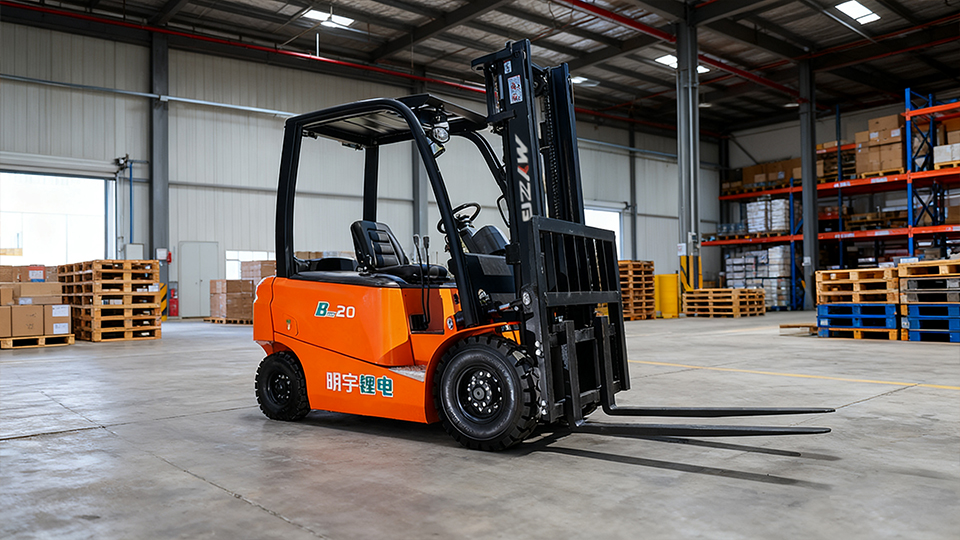
Comparative Analysis: Reversed vs. Standard Steering
The debate between reversed and standard steering configurations reflects broader tensions in global material handling standardization. European operations predominantly utilize standard steering, while American warehouse environments, particularly those influenced by Crown Equipment's ergonomic research, favor reversed steering for stand-up applications .
Standard steering offers intuitive alignment with automotive experience: left tiller movement produces left vehicle turn. This reduces initial training time for operators with driving experience and facilitates easier international operator mobility. However, in stand-up configurations where operators travel facing backward, standard steering creates cognitive dissonance—the operator turns left to go left while facing right, a spatial mapping that increases error rates according to Crown's research .
Reversed steering optimizes for the dominant operational mode in high-volume warehousing: forks-trailing travel with backward-facing operators. The cognitive alignment between tiller direction and perceived vehicle rotation reduces steering errors and improves operational efficiency. However, it creates training barriers for operators with automotive or European forklift experience and requires strict fleet standardization to prevent dangerous configuration mixing .
For Sam's Club, the operational profile—high-volume order picking, narrow aisles, frequent direction changes, predominantly forks-trailing travel—makes reversed steering the ergonomically optimal choice despite training complexities. The productivity and safety benefits of reduced steering errors outweigh the initial training investment and adaptation challenges for transferred operators.
Maintenance and Technical Considerations
Reversed steering configurations introduce specific maintenance requirements for Sam's Club facilities. The steering systems, whether hydraulic or electric, require periodic calibration to ensure tiller input accurately translates to wheel angle. Drift in steering response—where neutral tiller position doesn't correspond to straight wheel alignment—can disorient operators and create safety hazards.
Hydraulic steering systems utilize steering cylinders, linkages, and orbital valves that require inspection for leaks, wear, and proper response timing . Electric steering systems, found in advanced reach trucks, demand diagnostic monitoring of position sensors, control modules, and electric motors . Both systems benefit from regular maintenance that ensures consistent steering feel, as variable response can disrupt operator muscle memory developed during training.
Tire maintenance also impacts steering performance. Rear steering wheels, subject to significant side loads during tight turns, require inspection for wear patterns that might indicate alignment issues or overloading . Polyurethane steering wheels, common in warehouse applications, must maintain proper hardness and profile to ensure precise steering response in narrow aisles .
Future Developments and Automation
The steering configuration question may evolve as automation penetrates warehouse operations. Automated guided vehicles (AGVs) and autonomous mobile robots (AMRs) eliminate operator steering entirely, replacing human control with programmed pathfinding. However, manual override capabilities and maintenance modes will likely retain steering tillers, preserving the reversed/standard configuration question for hybrid operations.
Advanced steering technologies, such as HUBTEX's 360-degree continuous steering or Linde's adjustable steering resistance, offer operator-customizable response characteristics . These systems may eventually allow individual operators to select preferred steering orientations, though such flexibility would require robust interlock systems preventing configuration changes during operation.
For Sam's Club and similar operations, the immediate future likely retains reversed steering for stand-up forklifts, given the substantial fleet standardization and training infrastructure investments. Any transition to alternative configurations would require comprehensive fleet replacement and retraining programs, with safety risks during the transition period similar to the Kansas City incident .
Conclusion: Engineering for the Human Factor
Sam's Club forklifts utilize reversed steering not because of regulatory mandate or manufacturer default, but because decades of ergonomic research demonstrates that this configuration reduces operator errors in high-volume, narrow-aisle warehouse environments . The design acknowledges that stand-up forklift operation differs fundamentally from automotive driving, requiring control systems optimized for backward-facing, forks-trailing travel patterns rather than intuitive alignment with car-driving experience.
This engineering choice reflects sophisticated understanding of human factors in material handling. The reversed steering configuration accepts higher initial training complexity in exchange for reduced error rates during operational hours, improved safety through cognitive alignment, and enhanced productivity in the specific workflow patterns of membership warehouse clubs. For Southern Illinois Sam's Club facilities, where operational efficiency and workplace safety directly impact membership pricing and service levels, this optimization represents sound industrial engineering.
However, the reversed steering configuration also imposes critical obligations: fleet standardization to prevent dangerous mixing, comprehensive training that addresses the counterintuitive nature of the controls, and vigilant supervision during operator adaptation periods. The Kansas City fatality serves as sobering reminder that steering configuration changes can have lethal consequences when they violate deeply ingrained operator muscle memory .
As warehouse automation advances, the human steering question may eventually become obsolete. Until then, Sam's Club operators in Southern Illinois and across the nation will continue mastering the counterintuitive art of reversed steering—turning left to go right—as they navigate the narrow aisles that define modern distribution center operations.
Name: selena
Mobile:+86-13176910558
Tel:+86-0535-2090977
Whatsapp:8613181602336
Email:vip@mingyuforklift.com
Add:Xiaqiu Town, Laizhou, Yantai City, Shandong Province, China