
vip@mingyuforklift.com
+86-0535-2090977

Introduction
Fuel consumption represents one of the most significant operational cost factors for diesel forklift fleets, directly impacting profitability, environmental compliance, and equipment selection decisions. For fleet managers, procurement specialists, and operations engineers, understanding the hourly diesel consumption rate of a typical forklift is not merely an academic exercise—it is a critical component of budgeting, operational planning, and strategic decision-making. Yet arriving at a precise figure is deceptively complex, as consumption rates fluctuate based on a web of interdependent variables including load characteristics, operating intensity, engine specifications, hydraulic demands, and environmental conditions.
This technical examination explores diesel forklift fuel consumption from engineering, operational, and economic perspectives, providing data-driven insights for equipment specification, fleet management, and cost optimization strategies. Rather than offering a single definitive number, this analysis establishes consumption ranges across equipment classifications, identifies the primary drivers of fuel use, and presents methodologies for accurate measurement and optimization.
Baseline Consumption Rates by Forklift Classification
Diesel forklift fuel consumption varies substantially across equipment categories, with classification based primarily on load capacity and intended application environment. Understanding these classifications provides the foundation for accurate consumption estimation.
Compact and Light-Duty Forklifts (1.5–3.5 Ton Capacity)
Compact diesel forklifts in the 1.5 to 3.5-ton capacity range represent the entry point for diesel-powered material handling. These units typically feature smaller displacement engines—ranging from 2.0 to 2.8 liters—and are designed for light-duty applications where fuel efficiency takes precedence over maximum lifting performance. Under normal operating conditions, these forklifts consume approximately 2.0 to 4.0 liters per hour. A 2.5-ton model operating in a warehouse environment with moderate loads and minimal inclines typically burns around 2.5 to 3.8 liters hourly. The smaller engine displacement and reduced vehicle mass contribute to these relatively modest consumption figures, making compact diesel forklifts economical for operations where heavy-duty capability is unnecessary.
Standard Warehouse Forklifts (3.0–5.0 Ton Capacity)
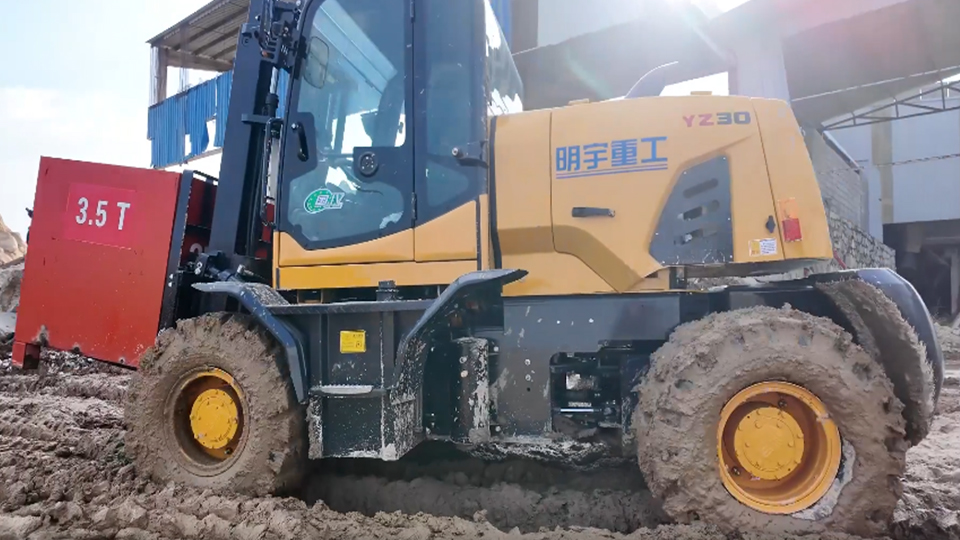
The most common diesel forklift category, standard warehouse models with 3.0 to 5.0-ton load capacities, typically consume between 2.5 to 5.0 liters of diesel per hour under normal operating conditions. The 3.0-ton model, representing an industry workhorse specification, averages approximately 2.5 to 3.5 liters per hour during mixed-duty operation combining travel, lifting, and idle periods. A 3.5-ton diesel forklift under standard working conditions generally falls within the 3.0 to 5.0 liters per hour range, depending on duty cycle intensity.
Engine power output in this classification ranges from 50 to 75 horsepower, with fuel consumption directly correlated to engine displacement and power density. Modern Tier 4 Final emission-compliant engines demonstrate improved fuel efficiency compared to older Tier 3 models, achieving 10–15% consumption reductions through advanced electronic fuel injection, variable geometry turbochargers, and optimized combustion chamber designs.
Heavy-Duty Forklifts (5.0–10.0 Ton Capacity)
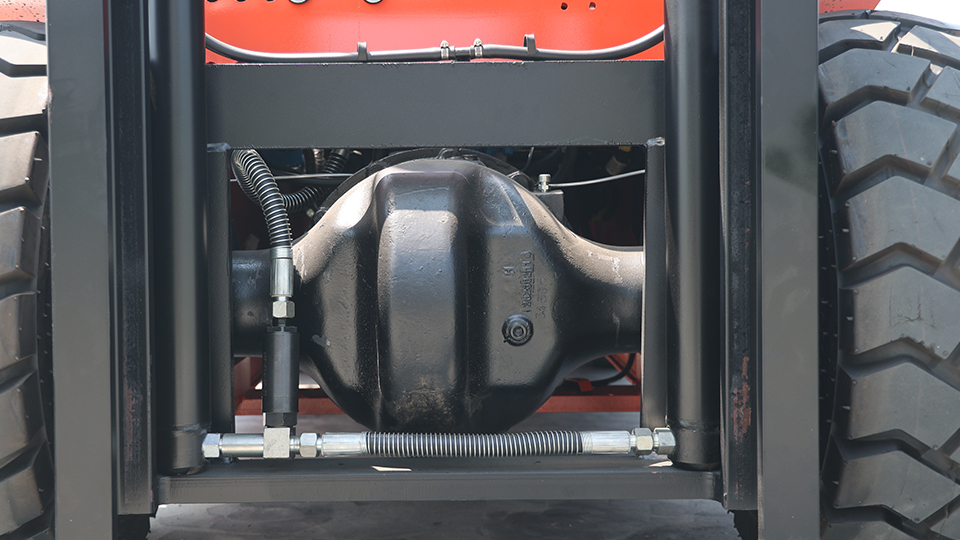
Larger diesel forklifts designed for heavy manufacturing, lumber handling, steel distribution, and port operations exhibit proportionally higher fuel consumption. Equipment in the 5.0 to 10.0-ton capacity range typically consumes 4.5 to 8.0 liters per hour, with 5.0-ton capacity models averaging 4.5 to 6.0 liters per hour under standard duty cycles. A 7.0-ton diesel forklift may consume 6.5 to 8.0 liters per hour under normal conditions.
These forklifts incorporate engines producing 90 to 130 horsepower, with fuel systems designed for high-torque output at low RPM rather than maximum efficiency. The increased mass of these vehicles—often exceeding 15,000 pounds unloaded—requires substantial energy for acceleration and grade climbing, directly impacting hourly consumption rates. In heavy-duty continuous applications, consumption can exceed 10 liters per hour, particularly when operating near maximum rated capacity on rough terrain.
Ultra-Heavy-Duty and Specialized Forklifts (10+ Ton Capacity)
At the upper end of the diesel forklift spectrum, ultra-heavy-duty models designed for container handling, steel mills, and specialized industrial applications consume 10 to 20+ liters per hour. These machines feature engines exceeding 150 horsepower and are engineered for sustained high-output operation rather than fuel economy. Fuel cost dominates total cost of ownership in this segment, prompting some operators to evaluate alternative power systems despite diesel's torque advantages.
The Engineering Fundamentals of Fuel Consumption
Understanding why diesel forklifts consume fuel at their observed rates requires examination of the underlying thermodynamic and mechanical principles governing diesel engine operation in material handling applications.
The Specific Fuel Consumption Formula
The foundational approach to estimating a diesel forklift's fuel consumption begins with the specific fuel consumption (SFC) formula used in internal combustion engineering. It is commonly estimated that a diesel forklift engine will consume approximately between 2.0 to 3.5 liters of fuel per hour for every 100 horsepower it produces. For a more precise calculation, the formula states that fuel consumption per hour (in liters) equals the engine's horsepower multiplied by a specific fuel consumption factor (typically 0.3 to 0.4 pounds of fuel per horsepower per hour), then multiplied by a conversion factor of approximately 0.173 to translate pounds into liters.
For instance, a 100-horsepower diesel forklift would theoretically consume: 100 HP × 0.35 lb/HP/hr × 0.173 = 6.055 liters per hour under ideal, steady-state conditions. However, this theoretical value rarely aligns with real-world consumption because forklift operation involves highly variable loads, frequent acceleration and deceleration, and substantial hydraulic power demands that steady-state formulas do not capture.
Energy Conversion Efficiency
Diesel engines achieve thermal efficiencies of approximately 28–32% in forklift applications, meaning roughly two-thirds of the fuel's chemical energy dissipates as heat through exhaust, cooling systems, and radiation. The remaining mechanical energy must then overcome internal friction, drive the hydrostatic transmission, power the hydraulic pump for lifting operations, and propel the vehicle. Each of these energy conversion steps introduces additional losses, with the hydraulic system alone consuming 15–25% of engine output during intensive lifting cycles.
The high compression ratio of diesel engines—typically 15:1 to 23:1—contributes to their superior thermal efficiency compared to spark-ignition alternatives. This compression-ignition design enables diesel forklifts to extract more usable work per liter of fuel than gasoline or propane equivalents, a fundamental advantage that underlies their continued popularity in heavy-duty outdoor applications.
Operational Variables Driving Consumption Variability
While baseline consumption rates provide useful reference points, actual fuel use in operational environments deviates significantly from theoretical values. Multiple interdependent variables influence real-world consumption, and understanding their individual and combined effects is essential for accurate estimation and optimization.
Duty Cycle Intensity
Duty cycle—defined as the percentage of operating time spent in productive work versus idle—represents the single most influential factor affecting hourly consumption. Light-duty cycles characterized by intermittent operation with substantial idle periods may see consumption at the lower end of baseline ranges, with fuel burn rates of 1.5 to 2.0 gallons per hour (5.7 to 7.6 liters per hour) for standard forklifts. Medium-duty cycles typical of warehouse distribution operations with continuous but varied activity align with manufacturer baseline specifications of approximately 2.0 to 2.5 gallons per hour (7.6 to 9.5 liters per hour). Heavy-duty cycles in port operations, lumber mills, or multi-shift manufacturing with minimal idle time push consumption 30–50% above baseline, reaching 2.6 to 3.0 gallons per hour (9.8 to 11.4 liters per hour) for standard forklifts due to reduced cool-down periods and sustained hydraulic demands.
Critically, idle time consumes fuel without productive output. A diesel engine at idle burns approximately 0.8 to 1.2 gallons per hour (3.0 to 4.5 liters per hour) depending on displacement, representing pure waste. In operations where operators leave engines running during breaks, lunches, or between tasks, idle consumption can account for 15–25% of total fuel use. Automatic engine shutdown systems that stop engines after 3–5 minutes of idle time reduce annual consumption by 8–15% in typical applications.
Load Characteristics and Hydraulic Demands
Load weight directly impacts fuel consumption through increased engine workload. Operating at maximum rated capacity can increase fuel usage by 20–40% compared to handling lighter loads, as the engine works harder to generate the hydraulic pressure necessary for lifting and the torque required for acceleration under load. The relationship is not strictly linear—consumption increases disproportionately as loads approach maximum capacity due to higher hydraulic pump demands and reduced transmission efficiency under stress.
Lift height and frequency also matter. Frequent lifting to maximum mast height requires sustained high hydraulic flow rates, pushing the engine toward peak power output where specific fuel consumption is least efficient. Operations involving continuous stacking at height consume measurably more fuel than ground-level transport applications, even when total tonnage moved remains constant.
Travel Patterns and Surface Conditions
Travel distance and speed requirements significantly influence consumption. Forklifts operating in large distribution centers with 500+ foot travel distances between pick and deposit locations consume substantially more fuel than compact manufacturing floor applications where travel is minimal. Average travel speed affects consumption through rolling resistance, which becomes significant on poor surfaces even at forklift operating speeds.
Surface conditions create measurable consumption variations. Smooth, sealed concrete warehouse floors minimize rolling resistance, while rough asphalt, gravel, or dirt surfaces in outdoor yards increase consumption by 10–20%. Grade climbing presents the most demanding condition, with 5% grades increasing fuel consumption by 25–30% and 10% grades potentially doubling consumption during ascent periods. The diesel engine's high-torque characteristics at low RPM partially mitigate these penalties compared to spark-ignition alternatives, but the energy requirement for lifting mass against gravity remains immutable.
Engine Operating Parameters and Operator Behavior
Modern diesel engines incorporate electronic control modules (ECMs) that optimize fuel injection timing and quantity based on operating conditions. However, operator behavior significantly influences actual consumption. Operating at maximum rated engine speed—typically 2,600 to 2,800 RPM—increases fuel consumption by 15–25% compared to mid-range operation at 1,800 to 2,200 RPM when power demands permit lower speeds. Electronic governor systems prevent overspeed, but operators selecting inappropriate travel speeds impact efficiency materially.
Cold start operation represents another consumption penalty. Diesel engines operate less efficiently during warm-up periods, with fuel consumption potentially 50% higher per unit of work for the first 10–15 minutes of operation. Block heater usage in cold climates reduces this penalty by maintaining engine temperature during shutdown periods, though this introduces auxiliary energy costs that must be factored into total consumption calculations.
Aggressive acceleration and braking can increase fuel consumption by up to 40% compared to smooth operation. Within short periods, the engine cannot fully burn the excess fuel delivered during aggressive throttle applications, causing incomplete combustion and emissions increases of up to five times normal levels. Proper operator training emphasizing smooth acceleration, anticipatory braking, and optimal travel path selection delivers fuel savings of 15–25% per shift.
Environmental and Technical Factors
Ambient conditions exert measurable influence on diesel forklift fuel consumption, often in ways that operators and fleet managers underestimate.
Temperature Effects
Temperature extremes affect consumption through multiple mechanisms. Cold weather increases fuel viscosity, requiring additional energy for pumping and injection. Engine warm-up periods extend, and cab heater usage in enclosed cabs creates auxiliary power demands. Winter operation typically increases consumption by 10–20% compared to moderate temperature conditions. Conversely, hot weather impacts consumption primarily through cooling system demands and air conditioning loads. Engine cooling fans operate more frequently, consuming horsepower directly. Operator compartment air conditioning can increase fuel consumption by 5–10% in enclosed cab models, though this factor is negligible in standard open-operator-compartment warehouse forklifts.
Altitude Considerations
Diesel engine performance degrades at elevation due to reduced air density and oxygen availability. At 5,000 feet elevation, naturally aspirated diesel engines lose approximately 15% of sea-level power output, with turbocharged engines experiencing 5–8% reduction. To maintain performance, engines consume proportionally more fuel per unit of work, with consumption increases of 8–12% at moderate elevations and 15–25% above 8,000 feet. Turbocharged engines mitigate but do not eliminate these effects, and fleet managers operating in mountainous regions must adjust consumption estimates accordingly.
Engine Technology and Emission Tier Levels
The evolution of diesel emission standards has significantly influenced fuel consumption characteristics, creating a complex trade-off between environmental compliance and operational efficiency.
Tier 3 Engines (Pre-2012)
Mechanical fuel injection systems with fixed timing provided baseline fuel efficiency but limited optimization capability. Typical consumption for standard forklifts ranged from 2.2 to 2.4 gallons per hour (8.3 to 9.1 liters per hour). These engines, while simpler and less expensive to maintain, lacked the electronic controls necessary for real-time fuel optimization.
Tier 4 Interim (2012–2015)
The introduction of electronic control and exhaust gas recirculation (EGR) improved combustion efficiency but added parasitic loads. Net consumption remained similar or marginally improved, ranging from 2.0 to 2.3 gallons per hour (7.6 to 8.7 liters per hour). The addition of EGR systems, while reducing NOx emissions, introduced complexity and maintenance requirements that offset some efficiency gains.
Tier 4 Final (2015–Present)
Advanced selective catalytic reduction (SCR) systems and optimized combustion achieve 10–15% fuel efficiency improvements over Tier 3 baselines, with typical consumption of 1.8 to 2.1 gallons per hour (6.8 to 8.0 liters per hour) for equivalent applications. However, diesel exhaust fluid (DEF) consumption adds 2–4% to total fluid costs, and the complexity of after-treatment systems increases maintenance requirements. The net economic benefit depends heavily on duty cycle intensity and local DEF pricing.
Comparative Context: Diesel Versus Alternative Power Systems
Understanding diesel forklift fuel consumption requires contextual comparison with alternative power systems, as the choice of fuel type fundamentally shapes operational economics.
Diesel Versus Propane (LPG)
Propane forklifts typically consume 2.0 to 3.0 gallons per hour (7.6 to 11.4 liters per hour equivalent), with volumetric consumption rates higher than diesel due to propane's lower energy density. However, propane's lower per-gallon cost often offsets this volumetric disadvantage. On a cost-per-hour basis at 2026 pricing, diesel and propane are roughly competitive, with diesel holding a slight edge in heavy-duty continuous applications where its torque characteristics shine.
Diesel Versus Electric
Electric forklifts, measured in kilowatt-hours rather than liters, typically draw 6.0 to 10.0 kWh per hour. Converting to equivalent energy costs reveals a stark disparity: at $0.12 per kWh, an electric forklift costs approximately $0.72 to $1.20 per hour to operate, while a diesel forklift consuming 2.0 gallons per hour at $3.80 per gallon costs $7.60 per hour—more than six times the energy cost. This differential drives the accelerating transition to electric power for indoor applications, despite diesel's superior energy density and refueling speed.
Diesel Versus Gasoline
Gasoline forklifts consume 4.0 to 6.0 gallons per shift (approximately 0.5 to 0.75 gallons per hour under continuous operation), with lower energy density and thermal efficiency than diesel. Gasoline forklifts have largely been displaced from industrial applications due to safety concerns, higher fuel costs, and inferior torque characteristics, though they persist in certain niche markets.
Calculating Fleet Fuel Requirements and Costs
Accurate fuel budgeting requires translating consumption rates into financial terms, accounting for operational schedules and regional pricing.
Hourly Operating Cost Analysis
Determining total hourly fuel costs requires combining consumption rates with regional diesel pricing. Using a baseline 2.0 gallons per hour (7.6 liters per hour) consumption rate and $3.80 per gallon diesel price (2026 U.S. average):
Base Fuel Cost: 2.0 gallons/hour × $3.80/gallon = $7.60 per operating hour
Adding DEF consumption at 3% of diesel volume (0.06 gallons DEF equivalent per hour) at $3.00 per gallon:
DEF Cost: 0.06 gallons/hour × $3.00/gallon = $0.18 per operating hour
Total Fluid Cost: $7.78 per operating hour
For a single forklift operating 2,000 hours annually (single-shift, five-day operation):
Annual Fuel Consumption: 2.0 gallons/hour × 2,000 hours = 4,000 gallons (15,140 liters)
Annual Fuel Cost: 4,000 gallons × $3.80 = $15,200
Total Annual Fluid Cost: $15,560 including DEF
Multi-Shift and High-Utilization Scenarios
Intensive operations dramatically increase fuel requirements. A forklift operating 4,000 hours annually (two-shift operation) with elevated 2.5 gallons per hour (9.5 liters per hour) consumption due to heavy-duty cycles:
Annual Consumption: 2.5 gallons/hour × 4,000 hours = 10,000 gallons (37,850 liters)
Annual Cost: 10,000 gallons × $3.80 = $38,000
For a 50-unit forklift fleet under these conditions, annual diesel expenditure exceeds $1.9 million, excluding DEF, maintenance, and storage infrastructure costs.
Fuel Monitoring and Optimization Strategies
Effective fuel management requires systematic measurement and targeted optimization rather than reliance on manufacturer specifications.
Onboard Fuel Measurement Systems
Modern diesel forklifts increasingly incorporate telematics systems that track fuel consumption in real time, providing granular data on consumption patterns, idle time, and operator-specific efficiency. These systems enable fleet managers to identify outliers, target training interventions, and validate optimization efforts with empirical data. The return on investment for telematics typically materializes within 12–18 months through fuel savings alone in fleets exceeding 10 units.
Maintenance-Driven Efficiency Preservation
Preventive maintenance directly impacts fuel consumption. Clogged air filters can increase fuel consumption by 10–15% by restricting airflow to the engine. Under-inflated tires increase rolling resistance, forcing the engine to work harder and consuming approximately 6% more fuel. Worn tires exceeding prescribed standards consume an additional 0.4% of fuel. Regular oil changes, fuel filter replacements, and injector calibration preserve the engine's designed efficiency and prevent the 10–20% consumption increases associated with deferred maintenance.
Operational Best Practices
Route optimization reduces unnecessary travel distance, directly lowering fuel consumption per unit of work. Load consolidation—maximizing the weight per lift within rated capacity—improves ton-miles per liter metrics. Engine shutdown during breaks exceeding three minutes eliminates idle waste. Collectively, these operational measures can reduce consumption by 15–25% below unoptimized baselines.
Environmental Implications and Regulatory Context
Fuel consumption directly correlates with environmental impact, an increasingly important consideration in fleet management.
Emissions Profile
Diesel forklifts emit approximately 2.68 kg of CO₂ per gallon consumed, compared to 1.51 kg for propane. Over 2,000 annual operating hours, a diesel forklift consuming 2.0 gallons per hour generates 10,720 kg of CO₂ annually. Additionally, diesel combustion produces nitrogen oxides (NOx), particulate matter (PM), and carbon monoxide—emissions that have driven increasingly stringent regulatory standards and indoor use restrictions.
Regulatory Trajectory
The trajectory of emissions regulation suggests continued pressure on diesel forklift economics. Carbon pricing mechanisms, emissions reporting requirements, and indoor air quality standards increasingly influence fuel selection and equipment specification decisions. Some organizations now accept higher operating costs for reduced-emission alternatives, recognizing that regulatory compliance and corporate sustainability goals carry economic value beyond direct fuel pricing.
Future Trends in Diesel Forklift Efficiency
Despite competitive pressure from electrification, ongoing technological development continues improving diesel forklift fuel efficiency.
Hybrid Systems
Integrated electric-hybrid forklifts capture regenerative energy during braking and lowering, reducing diesel engine workload. Early commercial systems demonstrate 20–30% fuel consumption reductions in high-cycle applications, though capital cost premiums currently limit adoption. As battery costs decline and hybrid systems mature, this technology may bridge the gap between diesel's operational advantages and electric efficiency.
Advanced Combustion Research
Research into homogeneous charge compression ignition (HCCI) and other advanced combustion modes promises further efficiency gains by combining diesel-like compression ratios with gasoline-like emissions profiles. Commercial implementation in off-highway equipment remains 5–10 years from widespread availability, but the trajectory suggests diesel engines will continue evolving rather than stagnating.
Alternative Diesel Fuels
Renewable diesel (hydrotreated vegetable oil) and biodiesel blends provide drop-in replacements with reduced lifecycle carbon emissions. B20 biodiesel (20% biodiesel, 80% petroleum diesel) reduces CO₂ emissions by 15–20% with minimal consumption rate impact, though cold-weather operability requires consideration. As renewable fuel infrastructure expands, diesel forklifts may achieve improved environmental profiles without fundamental technology changes.
Conclusion
The hourly diesel consumption rate for a typical forklift ranges from 2.0 to 6.0 liters per hour for light-duty to medium-duty applications, extending to 10.0+ liters per hour for heavy-duty and specialized equipment. This broad range reflects the multiplicity of factors influencing consumption: load capacity, duty cycle intensity, operator behavior, maintenance quality, environmental conditions, and engine technology all exert measurable effects.
For the most common industrial application—the 3.0 to 3.5-ton diesel forklift operating in mixed indoor/outdoor warehouse environments—a reasonable planning estimate is 2.5 to 4.0 liters per hour under normal conditions, with consumption increasing to 5.0+ liters per hour under heavy-duty cycles. This consumption translates to approximately $7.60 to $15.20 per hour in fuel costs at 2026 pricing, making fuel the dominant operating expense for diesel forklift fleets.
Effective fuel management requires moving beyond manufacturer specifications to empirical measurement, systematic optimization, and contextual comparison with alternative power systems. While diesel forklifts retain compelling advantages in torque output, refueling speed, and outdoor durability, their fuel consumption economics are increasingly challenged by electric alternatives in applications where charging infrastructure and battery technology can meet operational demands. Fleet managers must weigh these trade-offs against specific operational requirements, recognizing that the "typical" consumption rate is merely a starting point for site-specific analysis rather than a universal constant.
Name: selena
Mobile:+86-13176910558
Tel:+86-0535-2090977
Whatsapp:8613181602336
Email:vip@mingyuforklift.com
Add:Xiaqiu Town, Laizhou, Yantai City, Shandong Province, China