
vip@mingyuforklift.com
+86-0535-2090977

Introduction
The material handling industry stands at a critical juncture where operational efficiency, environmental compliance, and total cost of ownership converge to shape fleet procurement decisions. Among the most debated questions in warehouse and logistics management is whether diesel-powered forklifts offer superior fuel efficiency compared to their electric, propane (LPG), and gasoline counterparts. This analysis examines the technical, economic, and operational dimensions of forklift fuel efficiency, drawing on empirical data and engineering studies to provide a comprehensive evaluation of diesel's position in the modern forklift landscape.
Fuel efficiency in forklifts cannot be assessed through a single metric. It encompasses energy conversion efficiency, fuel consumption rates per operating hour, total cost of energy delivery, and the broader context of application-specific requirements. Understanding these multifaceted parameters is essential for fleet managers seeking to optimize both performance and expenditure.
Energy Density and Theoretical Efficiency
Diesel fuel possesses the highest energy density among common forklift fuels, containing approximately 128,700 British Thermal Units (BTU) per gallon, compared to roughly 91,500 BTU per gallon for propane and 114,000 BTU per gallon for gasoline. This inherent energy advantage means that, theoretically, diesel engines can deliver more work per unit volume of fuel consumed. However, theoretical energy density does not directly translate to operational efficiency, as conversion losses, engine design, and duty cycles significantly influence real-world performance.
According to a comprehensive fuel-cycle analysis conducted by Argonne National Laboratory, diesel combustion engines achieve thermal efficiencies of approximately 28.5%, slightly higher than the 28.0% typical of propane engines and 26.7% for gasoline engines under comparable load conditions. This marginal efficiency advantage, combined with diesel's superior energy density, suggests that diesel forklifts should consume less fuel by volume than alternatives when performing equivalent work. The same study notes that diesel forklifts demonstrate approximately 20% lower fuel consumption on a BTU-equivalent basis compared to spark-ignition alternatives, though this advantage must be weighed against other operational factors.
Real-World Fuel Consumption Metrics
Empirical data from industry sources reveals consistent patterns in forklift fuel consumption. Diesel forklifts typically consume between 1.5 and 2.5 gallons per operating hour, with heavy-duty applications approaching the upper end of this range. Propane forklifts average 2.0 to 3.0 gallons per hour, while gasoline models consume 4.0 to 6.0 gallons per shift (approximately 0.5 to 0.75 gallons per hour under continuous operation). Electric forklifts, measured in kilowatt-hours, typically draw 6.0 to 10.0 kWh per hour, though this metric requires conversion to enable direct comparison.
When normalized for energy content, diesel forklifts demonstrate clear volumetric efficiency advantages. A diesel forklift consuming 1.8 gallons per hour utilizes approximately 231,660 BTU of fuel energy hourly. A propane forklift consuming 2.5 gallons per hour draws roughly 228,750 BTU, placing the two systems in near parity on a gross energy basis. However, accounting for diesel's slightly higher thermal efficiency, the diesel system delivers more usable mechanical energy per hour, translating to superior fuel efficiency in heavy-load, continuous-duty applications.
The engineering economics literature provides a standardized comparison framework. One widely-cited analysis examines four forklift types operating 260 shifts annually, with each shift representing eight hours of operation. In this model, diesel forklifts consume 7 gallons per shift, compared to 12 gallons for propane and 11 gallons for gasoline. When multiplied across annual operating schedules, these consumption differentials compound significantly: a diesel forklift operating 2,080 hours annually consumes approximately 1,820 gallons, while a propane equivalent consumes 3,120 gallons—a 71% increase in fuel volume.
Total Cost of Ownership: Beyond Pump Prices
While diesel forklifts exhibit favorable fuel consumption rates, total cost of ownership (TCO) calculations reveal a more nuanced picture. Current market data indicates diesel fuel prices averaging $3.80 per gallon, compared to $2.50 for propane and varying electricity rates. At these prices, a diesel forklift consuming 1.8 gallons per hour incurs hourly fuel costs of approximately $6.84, while a propane forklift consuming 2.5 gallons per hour costs $6.25 hourly. Electric forklifts, at $0.12 per kWh and 8.0 kWh consumption, cost merely $0.96 per hour—an order of magnitude lower than liquid fuel alternatives.
Over a five-year ownership period with 2,000 annual operating hours, diesel forklifts accumulate fuel costs of approximately $68,400, compared to $62,500 for propane and $9,600 for electric models. When combined with maintenance expenses—diesel engines typically requiring $2,500 to $4,000 annually due to complex emissions control systems including Diesel Particulate Filters (DPF) and Diesel Exhaust Fluid (DEF)—the total operating cost disparity widens further. One TCO analysis calculates five-year ownership costs at $121,400 for diesel, $108,500 for propane, and $59,600 for electric forklifts, positioning diesel as the most expensive option despite its volumetric fuel efficiency.
Application-Specific Efficiency Considerations
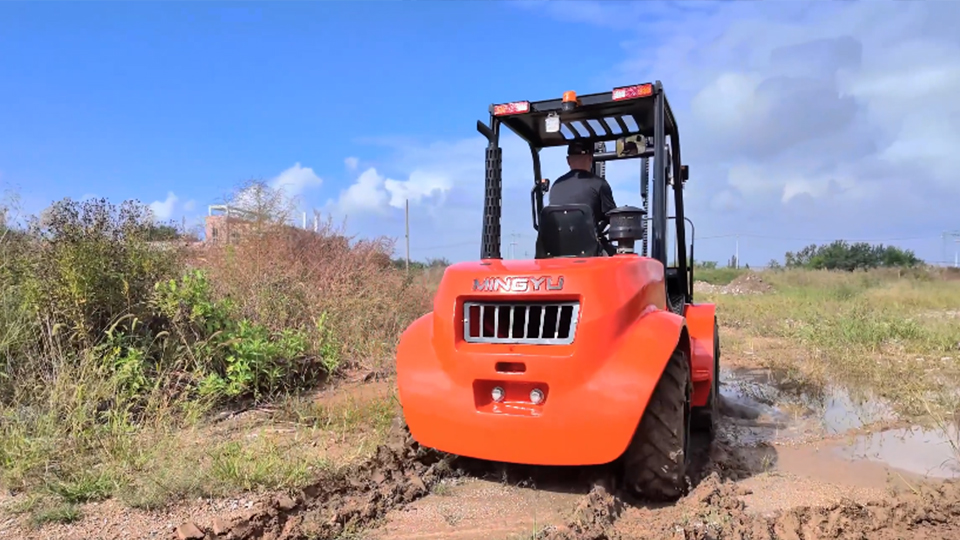
Diesel forklifts achieve peak efficiency in specific operational contexts that leverage their engineering strengths. Outdoor applications in lumber yards, construction sites, and port facilities benefit from diesel's high torque output, enabling rapid acceleration under heavy loads and superior performance on inclines. The diesel engine's compression-ignition design delivers maximum torque at low RPMs, reducing fuel consumption during high-load lifting cycles that would strain spark-ignition alternatives.
Conversely, diesel efficiency deteriorates in intermittent-duty applications characterized by frequent starts, stops, and idling. Unlike electric forklifts, which consume negligible energy when stationary, diesel engines must maintain combustion to preserve operational readiness, consuming fuel without productive output. Additionally, diesel exhaust after-treatment systems require periodic regeneration cycles that increase fuel consumption by 3-5% while elevating exhaust temperatures to burn accumulated particulate matter.
Indoor applications present fundamental constraints that negate diesel's efficiency advantages. Regulatory standards prohibit diesel forklift operation in enclosed spaces without extensive ventilation systems, due to emissions of nitrogen oxides (NOx), particulate matter (PM), and carbon monoxide. The heat release from diesel combustion—ranging from 57,000 to 114,000 BTU per hour per unit—imposes additional HVAC loads in climate-controlled facilities, indirectly increasing energy costs. These restrictions relegate diesel forklifts primarily to outdoor or semi-enclosed environments where their efficiency advantages can be realized without compromising air quality.
Comparative Analysis: Electric Forklifts
Electric forklifts represent the most significant challenge to diesel's efficiency claims in modern fleet management. Lithium-ion battery systems achieve energy conversion efficiencies exceeding 90% from battery to motor, compared to the 28.5% thermal efficiency of diesel engines. When accounting for power generation and transmission losses, electric forklifts still demonstrate well-to-wheel efficiencies approximately three times higher than diesel alternatives.
The operational characteristics of electric forklifts further enhance their effective efficiency. Regenerative braking systems recover energy during deceleration and lowering operations, reducing net energy consumption by 10-15% in high-cycle applications. The absence of idle fuel consumption and the ability to opportunity-charge during breaks eliminate the energy waste inherent in combustion engines. However, electric forklifts face limitations in heavy-duty outdoor applications where battery capacity, charging infrastructure, and cold-weather performance create operational constraints that diesel systems handle effortlessly.
Environmental and Regulatory Efficiency
Modern efficiency analysis must incorporate environmental externalities that increasingly influence operational costs. Diesel forklifts emit approximately 2.68 kg of CO₂ per gallon consumed, compared to 1.51 kg for propane. Over 2,000 annual operating hours, a diesel forklift producing 1.8 gallons hourly generates 9,648 kg of CO₂ annually—substantially exceeding propane's equivalent emissions. Regulatory trends toward carbon pricing and emissions restrictions may further erode diesel's economic efficiency through compliance costs and operational limitations.
Propane forklifts offer an intermediate position, producing 60-70% less carbon monoxide than gasoline and fewer particulate emissions than diesel, though they still rely on fossil fuel combustion. Electric forklifts produce zero point-of-use emissions, though their environmental profile depends on grid composition. In regions with renewable energy-dominated grids, electric forklifts achieve near-zero lifecycle emissions, while coal-heavy grids diminish this advantage.
Maintenance Efficiency and Equipment Longevity
Diesel engines are engineered for durability, with robust construction designed to withstand high compression ratios and sustained heavy loads. This durability translates to extended service lifespans, often exceeding 20,000 operating hours with proper maintenance. However, the complexity of modern diesel emissions control systems—incorporating selective catalytic reduction (SCR), diesel oxidation catalysts (DOC), and particulate filters—increases maintenance intervals and costs. DPF regeneration failures, DEF contamination, and sensor malfunctions can trigger costly downtime that undermines operational efficiency.
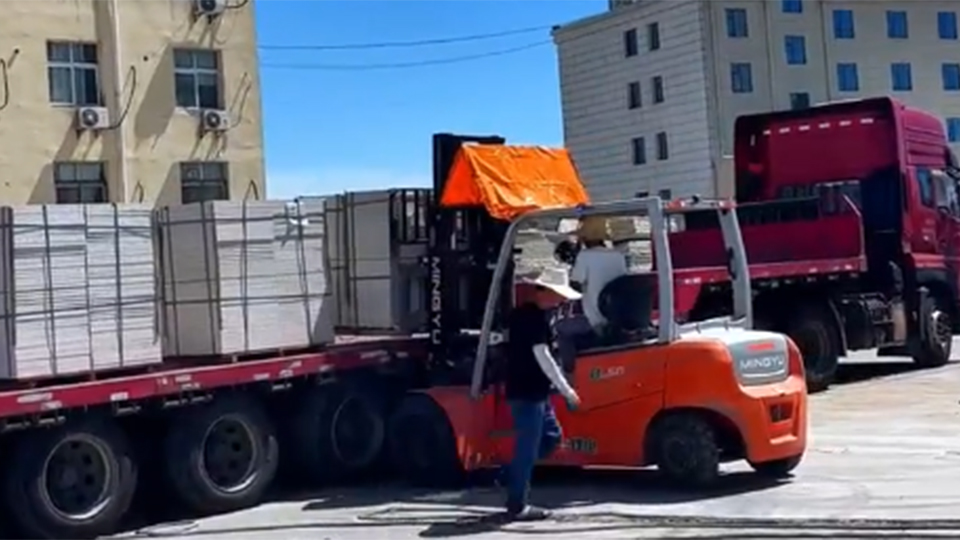
Propane engines, operating on spark-ignition principles with simpler emissions controls, typically incur lower maintenance complexity but require more frequent service intervals. Electric forklifts minimize mechanical maintenance by eliminating engines, transmissions, and exhaust systems, though battery replacement every 5-7 years represents a significant capital expense. The maintenance efficiency equation thus favors electric forklifts for high-utilization indoor operations, while diesel maintains advantages in uncontrolled outdoor environments where electrical infrastructure is impractical.
Conclusion
The question of whether diesel forklifts are fuel-efficient compared to other types yields a qualified affirmative: diesel forklifts demonstrate superior volumetric fuel efficiency and energy density advantages that translate to lower fuel consumption per unit of work in appropriate applications. Their compression-ignition engines achieve marginally higher thermal efficiency than spark-ignition alternatives, and their high-torque characteristics excel in heavy-duty, continuous-operation outdoor environments.
However, this technical fuel efficiency does not confer overall economic or operational superiority. When evaluated through the lens of total cost of ownership, diesel forklifts rank as the most expensive option due to high fuel costs, complex maintenance requirements, and emissions control system upkeep. Their prohibition from indoor environments and substantial carbon footprint further limit their applicability in modern logistics operations prioritizing sustainability and workplace safety.
For fleet managers, the optimal choice depends on operational context rather than abstract efficiency metrics. Diesel forklifts remain the preferred solution for outdoor heavy-duty applications where torque, durability, and fuel energy density outweigh cost and emissions considerations. For indoor operations, mixed indoor/outdoor use, or facilities prioritizing total cost optimization, electric and propane alternatives offer superior comprehensive efficiency. The evolution of battery technology and charging infrastructure continues to expand electric forklifts' operational envelope, potentially relegating diesel to increasingly specialized niche applications despite its inherent thermodynamic advantages.
Ultimately, fuel efficiency in material handling must be understood as a multidimensional optimization problem balancing energy conversion, operational requirements, regulatory compliance, and lifecycle economics—dimensions in which diesel's technical merits are increasingly offset by systemic disadvantages in the contemporary industrial landscape.
Name: selena
Mobile:+86-13176910558
Tel:+86-0535-2090977
Whatsapp:8613181602336
Email:vip@mingyuforklift.com
Add:Xiaqiu Town, Laizhou, Yantai City, Shandong Province, China
