
vip@mingyuforklift.com
+86-0535-2090977

Introduction
Forklifts are the backbone of modern material handling operations, powering warehouses, distribution centers, manufacturing plants, and logistics yards across every industrial sector. Yet beneath their indispensable utility lies a sobering reality: these machines are among the deadliest pieces of equipment in any workplace. In the United States alone, forklifts are responsible for approximately 84 work-related deaths annually and over 25,000 DART (Days Away, Restricted, or Transferred) cases every year . The National Safety Council estimates that roughly 34,900 serious forklift injuries occur annually, with OSHA reporting that powered industrial truck violations consistently rank among the agency's top 10 most-cited standards .
The critical question facing safety professionals and operations managers is whether a causal relationship exists between maintenance rigor and accident prevention, or whether these statistics reflect primarily operator error and environmental factors. This article examines the technical, regulatory, and statistical dimensions of forklift maintenance as a safety intervention, evaluating whether systematic maintenance programs materially reduce incident rates and what organizational frameworks best support this objective.
The Regulatory Foundation: OSHA 29 CFR 1910.178
The Occupational Safety and Health Administration's standard for powered industrial trucks, codified at 29 CFR 1910.178, establishes the baseline legal framework connecting maintenance to safety. The regulation is explicit: "Industrial trucks shall be examined before being placed in service and shall not be placed in service if the examination shows any condition adversely affecting the safety of the vehicle" . This mandate requires daily pre-shift inspections—or shift-by-shift inspections for 24/7 operations—and immediate removal of defective equipment from service until repairs are completed.
The regulatory architecture extends beyond inspection frequency to encompass specific maintenance obligations. Employers must maintain forklifts in safe operating condition, ensure that repairs are performed by authorized personnel, and retain documentation of all maintenance activities. The 2026 enforcement environment has intensified these requirements through two active National Emphasis Programs: the Warehousing NEP (CPL 03-00-026) and the Heat NEP (CPL 03-00-024). The Warehousing NEP authorizes unannounced, comprehensive inspections at facilities with elevated injury rates, while the Heat NEP enables proactive inspections when indoor heat indices reach 80°F—conditions particularly relevant to forklift operations near heat-generating equipment .
Penalty structures have escalated correspondingly. Serious violations now carry maximum penalties of $16,550 per instance, while willful or repeated violations can reach $165,514. The July 2025 Field Operations Manual update restructured penalty reductions, creating new incentives for rapid hazard correction and clean inspection histories, but the fundamental financial exposure for non-compliance has never been higher .
Statistical Analysis: Maintenance Deficiency as a Causal Factor
Understanding whether maintenance directly influences safety outcomes requires disaggregating accident causation data. OSHA and industry analyses identify several primary accident mechanisms, each with distinct maintenance relevance:
Tip-Over Incidents (42% of fatalities): The single deadliest forklift accident category involves the vehicle overturning, typically crushing the operator. While operator behavior—excessive speed, improper load positioning, and turning with elevated loads—contributes significantly, maintenance factors play a critical role. Worn or improperly inflated pneumatic tires reduce stability margins. Degraded hydraulic systems can cause unexpected mast movement during turns. Malfunctioning brakes may prevent operators from slowing appropriately before cornering. A 2024 analysis by the Material Handling Equipment Distributors Association (MHEDA) confirmed that regular maintenance is essential not merely for performance but as a proactive step in identifying and addressing potential hazards before they lead to incidents .
Pedestrian Collisions (36% of fatal incidents): Approximately 36% of all forklift accidents involve pedestrians, with RIDDOR data from the UK showing that 43% of reported forklift incidents involve impact with a third person . Of these pedestrian victims, 65% were workers performing unrelated tasks, 20% were co-workers in shared work areas, and 15% were delivery drivers unfamiliar with site layouts . Maintenance relevance here centers on visibility and warning systems: malfunctioning backup alarms, inoperative blue safety lights, degraded horn functionality, and obscured operator sightlines due to damaged overhead guards or dirty mirrors all directly increase pedestrian strike probability.
Struck-By and Crushing Incidents: Ground workers struck by forklifts account for 20% of fatalities in historical NIOSH data, while victims crushed by falling loads or equipment components represent 16% . These incidents frequently trace to maintenance failures: worn fork heels that allow load slippage, cracked mast channels that fail under stress, degraded hydraulic seals that cause sudden load drops, and compromised overhead guards that collapse under impact.
Falls from Forklifts (9% of fatalities): While primarily behavioral, fall incidents can be exacerbated by maintenance deficiencies including damaged steps, loose grab handles, and malfunctioning presence-sensing systems that fail to prevent operation with operators in unsafe positions.
The aggregate picture suggests that while operator training and environmental controls are indispensable, a substantial proportion of forklift accidents have maintenance-relevant causal chains. Industry estimates suggest that up to 70% of forklift accidents could be prevented through better operator training and stricter adherence to safety protocols—a category that includes rigorous maintenance compliance .
The Maintenance-Safety Mechanism: Technical Pathways
Understanding how maintenance prevents accidents requires examining the specific technical systems where degradation creates hazard conditions.
Hydraulic System Integrity
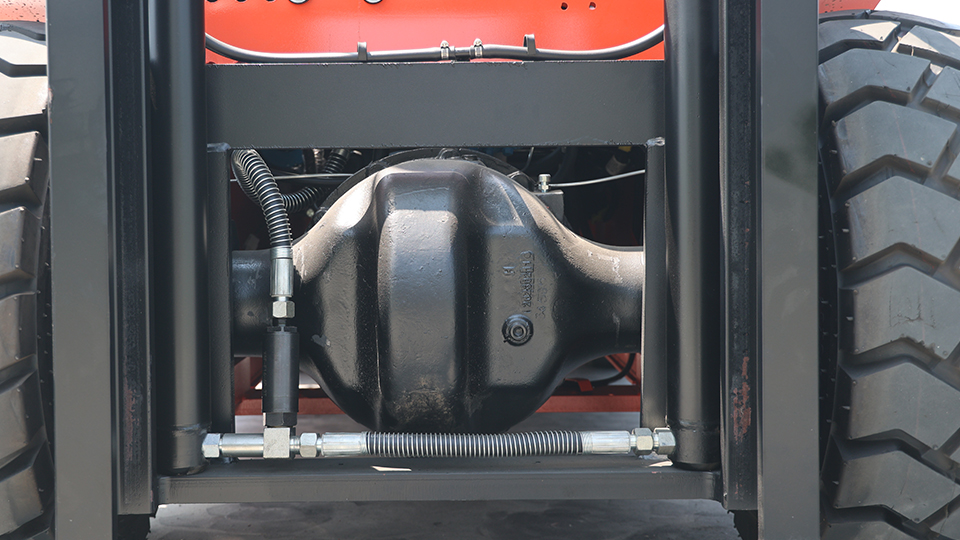
Forklift hydraulic systems operate under extreme pressure—typically 2,000–3,000 PSI—to lift loads weighing several tons. System degradation manifests through multiple failure modes: hose fatigue and cracking create leak hazards and sudden pressure loss; seal deterioration causes creep or drift in elevated loads; and valve wear produces uncommanded movements. A pre-shift inspection protocol that verifies hydraulic fluid levels, inspects hoses for chafing and bulging, and tests lift/lower functionality can identify developing failures before they produce catastrophic load drops. ASME B56.1-2020 standards require fork removal when blade thickness wears to 90% of original specification—a maintenance criterion directly tied to load security .
Braking System Performance
Brake degradation in forklifts is particularly dangerous because these vehicles operate in confined spaces with frequent stop-start cycles. Worn brake pads, contaminated brake fluid, and air in hydraulic lines all increase stopping distances. In warehouse environments where aisles may be only inches wider than the forklift itself, even marginal increases in stopping distance can convert near-misses into collisions. The OSHA-mandated operational check requires testing service brakes for straight-line stopping and verifying parking brake hold on slight grades—a maintenance-relevant test that should trigger immediate out-of-service tagging for deficiencies .
Tire Condition and Stability
Forklift tires—whether pneumatic, solid rubber, or polyurethane—directly influence stability, traction, and load capacity. Solid tire chunking reduces shock absorption and increases vibration stress on structural components. Pneumatic tire underinflation alters steering geometry and reduces stability margins. Worn tires increase the risk of tip-over on uneven surfaces or during cornering. The daily visual inspection requirement to check for chunking, flat spots, and debris accumulation serves as a critical safety checkpoint.
Electrical and Battery Systems
The accelerating shift toward electric forklifts—now representing 67.73% of all forklift shipments—introduces new maintenance-safety linkages . Lithium battery systems require thermal management monitoring; thermal runaway events can produce fires and toxic gas releases. Lead-acid batteries demand watering protocols, ventilation verification, and acid splash protection. Charging station maintenance—including fire prevention equipment verification and proper ventilation assurance—represents a commonly overlooked OSHA requirement that carries significant citation exposure . Electrical system faults can also produce unexpected power loss during operation, creating control hazards in elevated load scenarios.
Structural Integrity
The overhead guard, load backrest, and mast assembly form the primary structural safety systems. Broken welds, missing bolts, or bent components compromise operator protection during tip-over events and load dislodgement scenarios. The pre-shift inspection mandate to verify overhead guard structural integrity and backrest security directly addresses these failure modes.
The Documentation Imperative: From Compliance to Prevention
OSHA's 2026 enforcement posture elevates maintenance documentation from administrative burden to strategic safety asset. The Warehousing NEP specifically targets gaps in daily inspection documentation and equipment maintenance records during unannounced inspections. Facilities relying on paper-based systems face heightened risk of producing incomplete records—or no records at all—during audits .
Digital inspection systems have emerged as the industry response to this documentation challenge. These systems tie every inspection to a specific operator ID and timestamp, require photo uploads for damaged components, integrate with vehicle CAN bus systems to enforce inspection-before-ignition interlocks, and generate queryable data assets for trend analysis. Tier-1 facilities including Amazon, DHL Supply Chain, and Prologis have mandated digital pre-shift inspections, embedding compliance verification into operational infrastructure .
The preventive value of digital documentation extends beyond compliance defense. Analytics capabilities enable identification of equipment-specific wear patterns, operator behavioral trends, and maintenance interval optimization. A facility observing repeated brake deficiencies on a specific forklift can proactively schedule brake system overhaul before failure produces an incident. This shift from reactive to predictive maintenance represents the frontier of maintenance-safety integration.
Maintenance Program Architecture: Best Practice Frameworks
Effective maintenance programs that deliver safety outcomes require systematic architecture rather than ad hoc repair.
Preventive Maintenance Scheduling
Preventive maintenance intervals should be calibrated to operational intensity rather than calendar time alone. A forklift operating 2,000 hours annually in a dusty manufacturing environment requires more frequent servicing than one operating 500 hours in a clean warehouse. Manufacturer recommendations provide baseline intervals, but operational data should drive optimization. Key preventive maintenance actions include:
Hydraulic fluid analysis and filter replacement
Brake system inspection and adjustment
Tire condition assessment and replacement
Battery maintenance (watering for lead-acid, thermal monitoring for lithium)
Mast and chain lubrication and tension verification
Electrical system diagnostics
Safety device functionality testing (alarms, lights, horns, presence sensors)
Corrective Maintenance Response
The OSHA requirement for immediate removal of defective equipment from service demands robust corrective maintenance response capabilities. Organizations must establish clear protocols for defect reporting, maintenance triage, repair execution, and return-to-service verification. The lag time between defect identification and repair completion represents a critical vulnerability window during which equipment may remain in unauthorized use.
Predictive Maintenance Integration
Emerging technologies enable predictive maintenance approaches that anticipate failures before they produce safety hazards. Vibration analysis identifies bearing degradation; thermal imaging detects electrical hot spots; and oil analysis reveals internal engine wear. While these technologies require capital investment, they can prevent catastrophic failures that paper-based inspections cannot anticipate.
Operator-Maintenance Interface
Operators represent the frontline maintenance detection system. Their daily pre-shift inspections are legally mandated safety checks, but their effectiveness depends on training quality, time allocation, and organizational culture. A 5–10 minute inspection conducted without time pressure, with clear defect reporting channels, and with management reinforcement of out-of-service compliance, generates safety value that rushed or pencil-whipped inspections cannot replicate .
Emerging Dimensions: Automation and Safety Integration
The proliferation of Automated Guided Vehicles (AGVs) and Autonomous Mobile Robots (AMRs) introduces new maintenance-safety complexities. OSHA has proposed incorporating ANSI/ITSDF B56.5 standards for driverless industrial vehicles into federal regulations, establishing requirements for obstacle detection, braking systems, path clearances, and emergency stop functionality .
Mixed-fleet environments—where human-operated forklifts and autonomous vehicles share operational space—demand maintenance protocols that address both categories. AGV maintenance extends beyond mechanical systems to sensor calibration, software updates, and navigation system integrity. A malfunctioning LiDAR sensor or degraded obstacle detection algorithm in an AGV creates collision risks comparable to brake failure in a conventional forklift. The maintenance-safety connection thus expands to encompass digital system health monitoring alongside traditional mechanical inspection.
Economic Analysis: The Cost of Maintenance Neglect
The financial calculus of maintenance investment versus accident cost provides compelling justification for systematic programs. Direct costs of forklift accidents include medical expenses, workers' compensation claims, equipment damage, and regulatory penalties. Indirect costs—typically 3–10 times direct costs—encompass production disruption, replacement labor, training for replacement operators, incident investigation, legal defense, and reputational damage.
With willful OSHA violations reaching $165,514 per instance and serious violations at $16,550, a single maintenance-related citation can exceed the annual cost of a comprehensive preventive maintenance program. The National Safety Council estimates that serious non-fatal injuries in the warehousing sector cost employers approximately $84 million per week across the industry . Against this backdrop, maintenance investment represents risk mitigation with quantifiable return.
Conclusion
The evidence establishes that forklift maintenance and workplace safety are not merely correlated but causally interconnected through multiple technical pathways. Hydraulic system integrity, brake performance, tire condition, electrical system health, and structural soundness all directly influence accident probability. Regulatory frameworks codify this connection through mandatory inspection and maintenance requirements, with enforcement intensity escalating through 2026.
The indispensable nature of this connection lies not in any single maintenance action but in the systematic integration of maintenance programs into organizational safety culture. Digital documentation, predictive analytics, operator training, and corrective maintenance response collectively form an ecosystem where maintenance investment produces measurable safety returns. Organizations that treat maintenance as a cost center rather than a safety intervention will continue contributing to the 84 annual fatalities and 34,900 serious injuries that define the current state of forklift safety. Those that embrace maintenance as a strategic safety pillar will position themselves on the declining slope of these statistics.
The question is not whether maintenance and safety are connected—they indisputably are. The question is whether individual organizations possess the operational discipline, technological infrastructure, and cultural commitment to translate that connection into protected lives.
Name: selena
Mobile:+86-13176910558
Tel:+86-0535-2090977
Whatsapp:8613181602336
Email:vip@mingyuforklift.com
Add:Xiaqiu Town, Laizhou, Yantai City, Shandong Province, China
