
vip@mingyuforklift.com
+86-0535-2090977

In 2026, AI-powered pedestrian detection and connected forklift safety are among the most discussed material-handling topics. Industry reporting increasingly links intelligent sensing, telematics and operator assistance with safer, more productive mixed-traffic operations. This article explains the practical value, limitations and implementation steps for warehouse and yard managers.
Forklift safety is moving from passive warnings toward connected prevention. Warehouses, distribution centers, factories and logistics yards are processing more orders while people, lift trucks, delivery vehicles and autonomous equipment increasingly share the same space. In this environment, a painted walkway and a horn remain essential, but they cannot identify every blind-corner conflict. AI-assisted pedestrian detection adds another layer by analysing camera, radar, ultrasonic or proximity-sensor signals and warning the operator when a person enters a defined risk zone.
The important 2026 shift is connectivity. A local warning light can help during one event, while a connected system can also record where, when and under what operating conditions the alert occurred. Telematics platforms can combine pedestrian alerts with speed, impact, direction, operator identity and equipment utilisation. Safety managers can then identify repeated near-misses, redesign traffic routes and focus training on actual risk patterns instead of relying only on memory or incomplete incident reports.
AI does not remove the operator's responsibility to observe the travel path, maintain a safe speed and yield to pedestrians. Its value is assistance. A correctly configured system can distinguish human shapes from racks, pallets and fixed structures, then prioritise warnings according to distance and direction. Some installations use graduated zones: an early visual warning at longer range, a stronger audible or vibration warning as distance closes, and an optional controlled speed reduction in the highest-risk zone. The exact response must suit local regulations and the site's risk assessment.
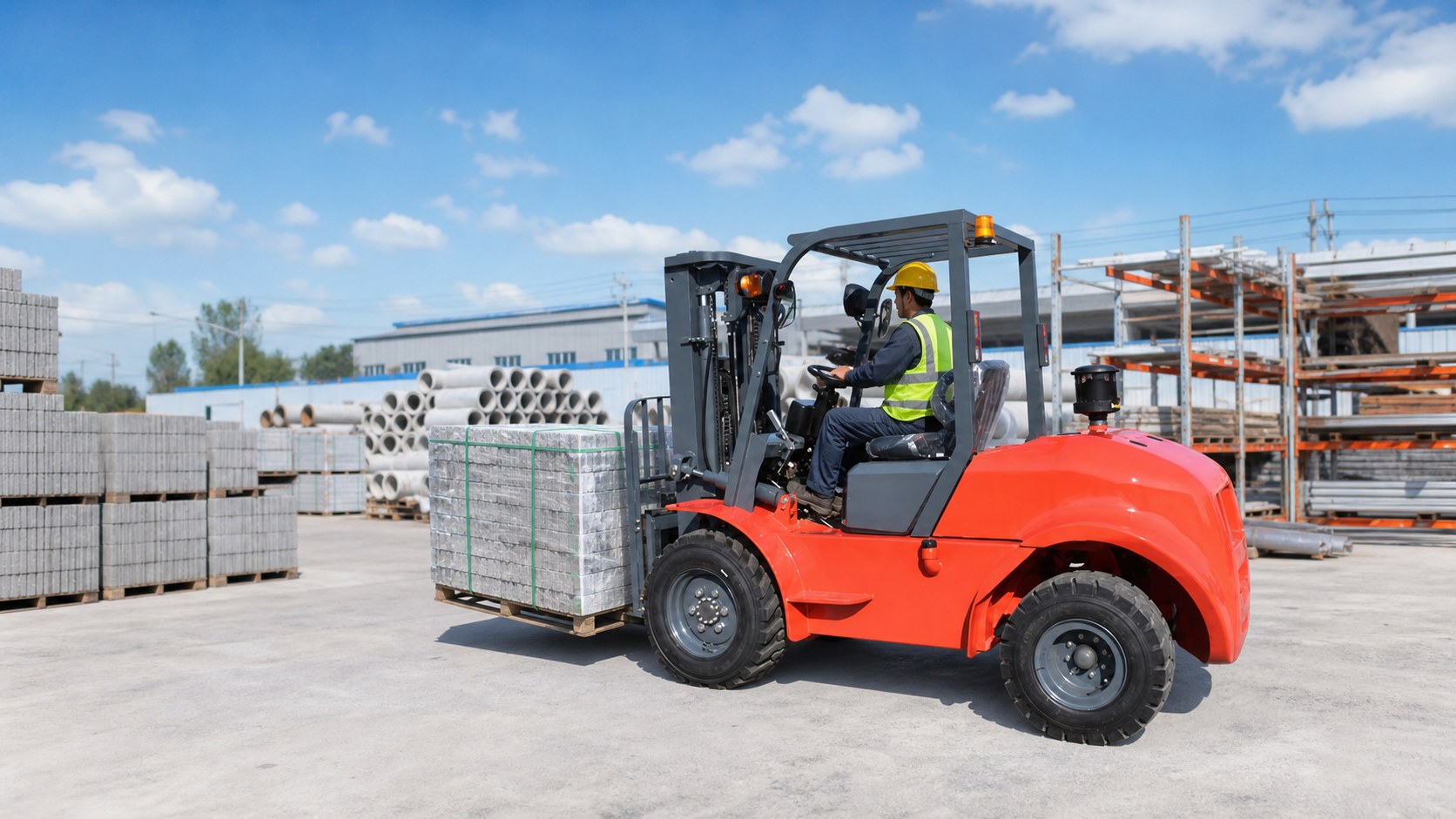
Related ZGFORKLIFT/MYZG product: CPC30SY 3 Ton Diesel Off-Road Forklift - view specifications and request a quotation.
Rough-terrain forklift operations introduce dust, sunlight changes, uneven ground, larger turning circles and mixed vehicle traffic. Sensors must be positioned and protected for those conditions. A system calibrated only inside a clean warehouse may produce false alarms or miss important targets outdoors. Buyers should discuss operating temperature, rain protection, vibration resistance, camera cleaning, night lighting and the size of required detection zones. The forklift itself must still be selected for load capacity, ground conditions, gradeability and stability.
Connected safety creates useful information, but it also creates responsibilities. Companies should define who can access operator records, how long event data is retained and how software updates are controlled. Networked equipment should use managed credentials, documented update procedures and clear separation between safety-critical controls and general reporting systems. The goal is actionable visibility without unnecessary surveillance. Policies should explain that data is used to improve traffic design, maintenance and training, not simply to punish operators.
A successful project begins with a traffic survey. Map pedestrian doors, blind corners, loading docks, battery areas, rack intersections and outdoor crossings. Observe different shifts because congestion patterns change during receiving, picking and dispatch peaks. Next, define warning zones and performance expectations, then test with representative clothing, lighting and loads. Start with a controlled pilot, collect feedback from operators and pedestrians, adjust nuisance alerts and document the final configuration before wider deployment.
Detection technology cannot compensate for an unsuitable truck. Capacity, load centre, lift height, visibility, braking, tyre type and turning radius remain fundamental. Outdoor sites may require higher ground clearance, robust tyres, weather protection and a stable chassis. ZGFORKLIFT and MYZG recommend providing the manufacturer with load dimensions, surface conditions, aisle or road width, gradients, daily hours and attachment requirements. This application data supports a safer equipment and sensor configuration.
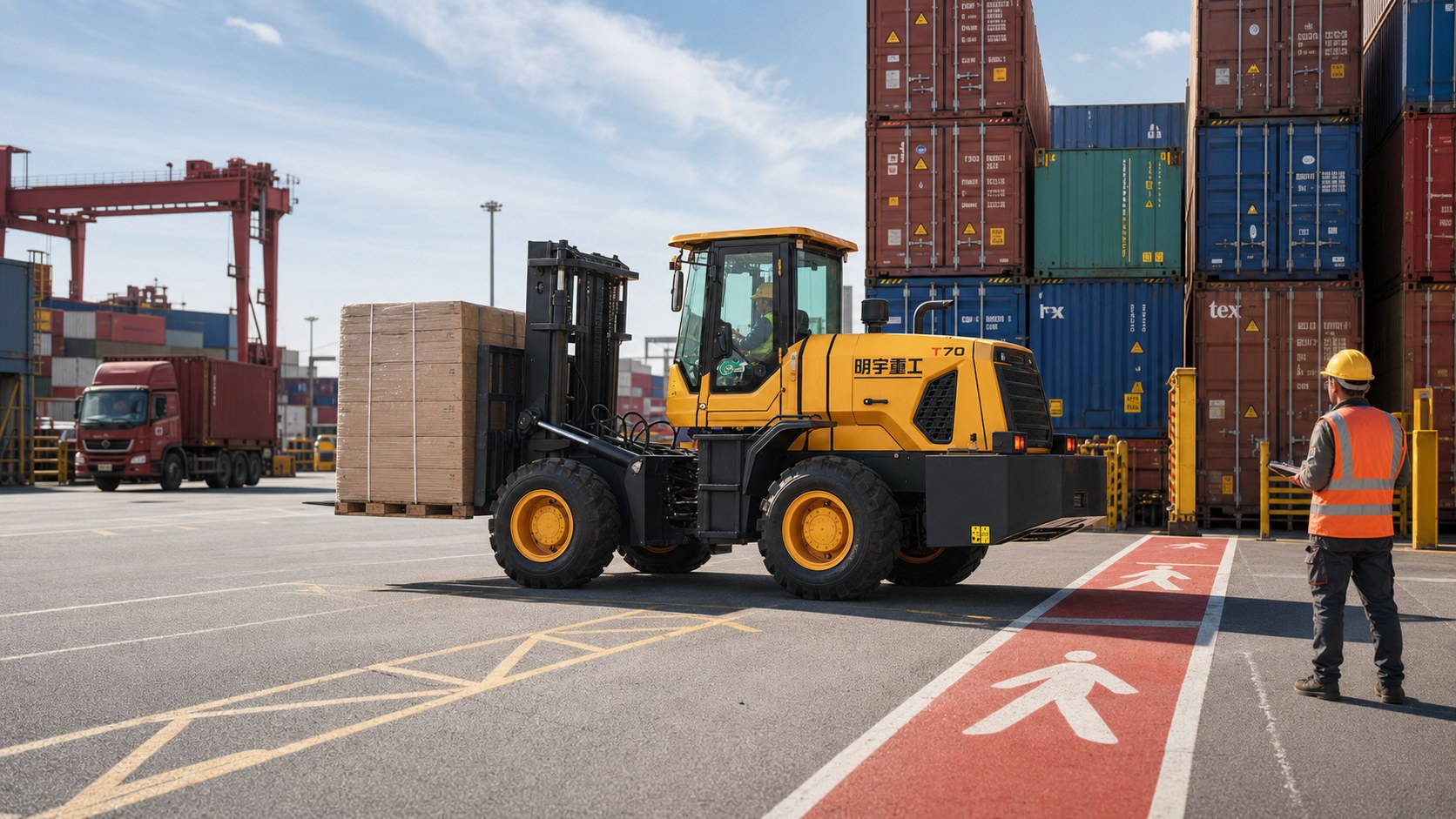
Related ZGFORKLIFT/MYZG product: MYZG 7T Off-Road Forklift - view specifications and request a quotation.
Operators need to understand what the warning system can and cannot detect. Training should cover sensor blind spots, alert meanings, cleaning requirements, startup checks and the correct response to a warning. Pedestrians also need instruction: detection technology is not permission to enter a forklift's operating envelope. Daily checks should confirm that cameras and sensors are clean, warning devices operate, mirrors are adjusted, tyres and brakes are serviceable, and no unauthorised object blocks the detection field.
A reduction in recorded alerts can mean safer behaviour, but it can also indicate a blocked sensor or disabled system. Safety teams should review several measures together, including alert locations, repeat events, impact frequency, speed compliance, inspection completion and operator feedback. The best outcome is not zero data; it is credible data that leads to fewer high-risk interactions. Trend reviews should be scheduled, and any layout or workflow change should trigger a fresh risk assessment.
Technology works best within a layered safety system. Barriers, marked aisles, controlled crossings, mirrors, lighting, speed limits, one-way routes and loading-dock procedures remain important. Authoritative guidance such as the OSHA powered industrial truck resources emphasises maintaining clear passageways and managing pedestrian traffic. Connected alerts should strengthen those controls, not replace them. Facilities should also maintain incident reporting and preventive maintenance processes even when advanced sensors are installed.
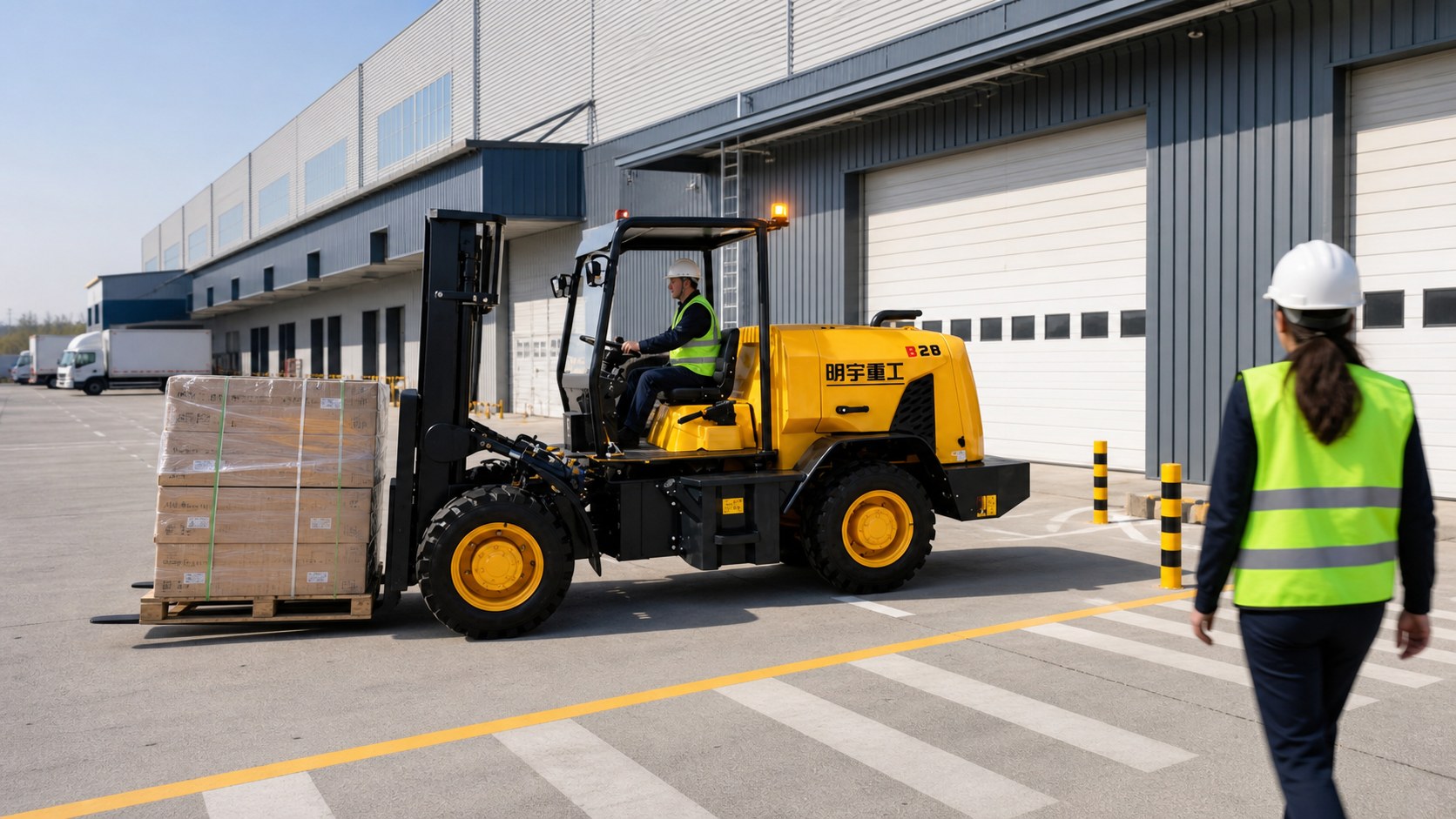
Related ZGFORKLIFT/MYZG product: MYZG B28 3.0T Rough Terrain Forklift - view specifications and request a quotation.
For international procurement, request a complete forklift specification, load chart, safety-device list, wiring information, software description and commissioning checklist. Clarify whether warnings are advisory or connected to speed control, which components are included, and who is authorised to change settings. Ask for installation photographs, test records, manuals and spare-parts recommendations. Confirm local radio, electrical and workplace requirements before shipment. Clear acceptance criteria reduce delays and prevent assumptions about functions that were never included.
AI-assisted pedestrian detection, telematics and operator-assistance systems are becoming practical tools rather than exhibition concepts. The near-term opportunity is not a fully autonomous warehouse in every application. It is a safer connected fleet that helps people recognise hazards earlier, learns from near-miss data and supports consistent operating standards. Shandong Zhuogong Machinery equipment Co.,Ltd works with international customers to match ZGFORKLIFT and MYZG equipment to real warehouse, yard and construction-material handling requirements.
For general forklift pedestrian-traffic principles, see the OSHA powered industrial truck pedestrian traffic guidance. Site-specific rules, risk assessments and local regulations always take priority.
Shandong Zhuogong Machinery equipment Co.,Ltd
Brands: ZGFORKLIFT / MYZG
Website: www.vavforklift.com
Email: vip@mingyuforklift.com
Tel: +86-0535-2090977
WhatsApp: +86 131 8160 2336
Address: Xiaqiu Town, Laizhou, Yantai City, Shandong Province, China.
Name: selena
Mobile:+86-13176910558
Tel:+86-0535-2090977
Whatsapp:8613181602336
Email:vip@mingyuforklift.com
Add:Xiaqiu Town, Laizhou, Yantai City, Shandong Province, China