
vip@mingyuforklift.com
+86-0535-2090977

1. Introduction
The modern warehousing and distribution landscape has been fundamentally transformed by the relentless pursuit of vertical space utilization. As real estate costs in urban logistics hubs continue to escalate, facility managers and supply chain engineers have increasingly turned to high-rack storage systems—often exceeding ten meters in height—to maximize inventory density without expanding building footprints. This architectural shift has placed extraordinary demands on material handling equipment, creating a operational environment where conventional counterbalance forklifts face significant limitations in terms of maneuverability, stability, and aisle width requirements.
Enter the reach truck: a purpose-built forklift category specifically engineered for high-density, high-bay warehouse operations. Unlike standard counterbalance forklifts, which rely on rear-mounted ballast to offset front loads, reach trucks employ a telescoping mast carriage that extends forward to engage loads while the truck chassis remains stationary within a narrow aisle. This fundamental design distinction unlocks a cascade of operational advantages that have made reach trucks the dominant equipment choice in modern distribution centers, cold storage facilities, and automated warehouses worldwide.
This article provides a comprehensive technical analysis of the advantages reach trucks offer in high-rack stacking operations. By examining structural design, stability engineering, spatial efficiency, operator ergonomics, and economic factors, we establish why reach trucks have become indispensable for facilities seeking to optimize vertical storage capacity while maintaining safety and throughput standards.
2. The High-Rack Storage Operational Environment
High-rack stacking—typically defined as storage operations exceeding six meters in rack height—presents a unique set of engineering and operational challenges that distinguish it from conventional low-bay warehousing. At these elevations, load placement accuracy becomes critical; even minor horizontal misalignment can result in pallet engagement failures, product falls, or structural rack damage. Furthermore, the psychological and physical demands on operators increase proportionally with lift height, as precise load positioning at ten meters or above requires exceptional visibility and control sensitivity.
Traditional counterbalance forklifts, while versatile in open yard and dock operations, encounter severe constraints in high-rack environments. Their requirement for wide turning radii—typically 3.5 to 4.5 meters—translates directly into wider warehouse aisles, reducing available pallet positions by 20 to 30 percent compared to narrow-aisle configurations. Additionally, the counterbalance design places the heaviest structural mass at the rear of the truck, creating a long load moment arm that compromises stability when lifting to extreme heights with the mast tilted forward.
Reach trucks address these constraints through a fundamentally different mechanical architecture. By eliminating the rear counterweight in favor of a pantograph or telescoping reach mechanism, these machines achieve stability through chassis-integrated battery mass and a low center of gravity, while reducing aisle width requirements to as little as 2.5 to 2.8 meters.
3. Narrow Aisle Compatibility and Space Optimization
Perhaps the most quantifiable advantage of reach trucks in high-rack operations is their ability to function effectively in narrow aisles (NA) and very narrow aisles (VNA). Aisle width directly determines the number of pallet storage positions within a fixed warehouse footprint; reducing aisle width from 3.8 meters (required by counterbalance forklifts) to 2.7 meters (standard for reach trucks) can increase storage density by 25 to 35 percent.
This spatial efficiency is achieved through two primary design features. First, reach trucks employ rear-wheel steering with articulation angles up to 90 degrees or more, enabling the truck to pivot within its own wheelbase when maneuvering at rack faces. Second, the reach mechanism allows the mast carriage to extend forward to engage or deposit pallets while the truck chassis remains perpendicular to the rack aisle, eliminating the need for angled approach positioning.
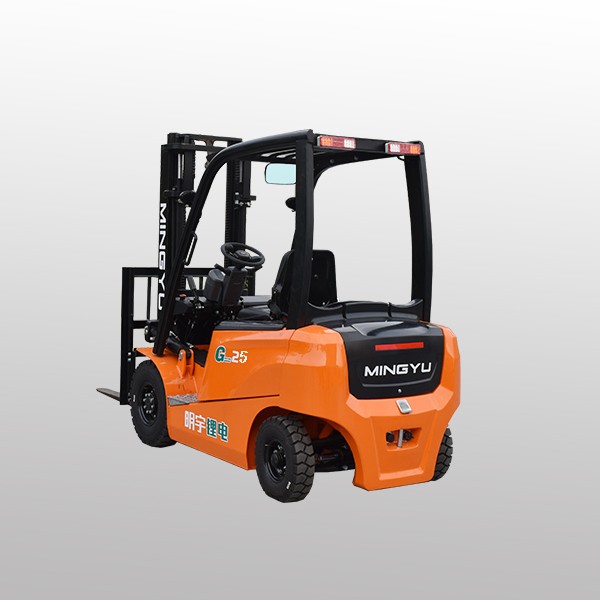
Related product: CPD25-B Electric Forklift — specifications and quotation.
The economic implications of this narrow-aisle capability are substantial. In a 10,000-square-meter distribution center, aisle width reduction can yield 1,500 to 2,000 additional pallet positions without structural expansion. At prevailing warehousing costs, this additional capacity represents capital avoidance value that often exceeds the incremental equipment cost differential between reach trucks and counterbalance forklifts within the first year of operation.
4. Mast Engineering and High-Lift Stability
The defining technical feature of reach trucks is the reach mechanism itself, which enables the load carriage to extend forward via a pantograph linkage or telescoping rail system. When retracted, the load sits directly above the front chassis, aligning the center of gravity with the wheelbase for maximum stability during travel. When extended, the pantograph projects the load into the rack while the battery mass and operator position remain within the stability envelope.
This dynamic center-of-gravity management contrasts sharply with counterbalance forklifts, where the load center moves forward of the front axle as soon as the mast tilts or elevates, creating an overturning moment that the rear counterweight must resist. In reach trucks, the chassis-mounted battery—often weighing 1,500 to 2,500 kilograms—provides the stabilizing mass directly beneath the operator, resulting in superior residual capacity at height.
Modern reach truck masts achieve lift heights exceeding 12 meters, with some specialized models reaching 13.5 meters. At these elevations, mast deflection and oscillation become critical engineering concerns. Manufacturers address this through triplex or quad-mast configurations with nested channel sections, precision roller bearings, and hydraulic cushioning systems that dampen mast sway during elevation and lowering. The reach mechanism further enhances high-lift precision by allowing fine lateral adjustments without moving the truck chassis, enabling operators to align pallets with rack beams at full height with minimal correction cycles.
5. Load Handling Precision and Throughput Efficiency
High-rack stacking demands exceptional precision in both horizontal and vertical load placement. Misalignment at 10 meters elevation can result in pallet hang-ups, beam impact, or catastrophic product drops. Reach trucks provide superior placement accuracy through several integrated design elements.
The reach mechanism itself functions as a fine-positioning tool. Once the truck is roughly aligned with the target rack location—typically using floor-mounted guide rails or wire guidance systems—the operator can extend or retract the pantograph to achieve precise depth alignment without repositioning the entire vehicle. This eliminates the back-and-forth correction cycles common with counterbalance forklifts in high-bay applications, reducing single-cycle time by 15 to 25 percent.
Furthermore, many modern reach trucks incorporate tilting fork carriages with side-shift functionality as standard equipment. The side shifter enables 100 to 150 millimeters of lateral adjustment, allowing operators to correct minor alignment errors during load engagement without steering corrections. When combined with camera systems or laser alignment aids, these features enable consistent pallet placement accuracy within ±5 millimeters—essential for automated storage and retrieval system (AS/RS) integration and fragile product handling.
6. Operator Ergonomics and Visibility
High-rack operations place unique physical and cognitive demands on forklift operators. Extended periods of upward gaze to monitor load placement at 10+ meters create neck strain and fatigue, while the psychological stress of elevated load handling increases operator error rates if cabin design is inadequate. Reach truck manufacturers have invested heavily in ergonomic engineering to address these human factors.
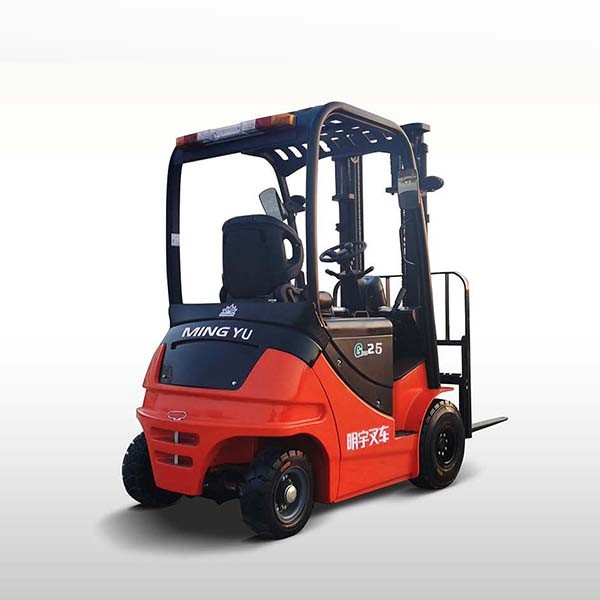
Related product: CPD25-A Electric Forklift — specifications and quotation.
Modern reach trucks feature low-profile chassis designs that position the operator close to the ground during travel, with elevated operator compartments that rise during stacking operations to maintain eye-level visibility with elevated rack locations. This "floating cabin" concept—available on premium models—reduces neck extension angles by 40 to 60 percent compared to fixed-cabin designs, significantly reducing musculoskeletal strain during high-rack operations.
Visibility engineering extends beyond cabin positioning. Narrow mast profiles, optimized hydraulic hose routing, and transparent overhead guards maximize the operator's sight lines to both the load and rack structure. Some manufacturers incorporate glass-bottom cabin floors or camera-monitor systems that provide direct visibility of fork engagement at high elevations, eliminating blind spots that traditionally required spotter assistance.
7. Energy Efficiency and Environmental Suitability
High-rack warehouse environments—particularly those in food, pharmaceutical, and electronics sectors—often operate as controlled-atmosphere facilities where emissions, noise, and heat generation are strictly regulated. Reach trucks, being exclusively electric-powered, offer inherent environmental advantages over internal combustion alternatives.
The energy efficiency of reach trucks stems from their optimized duty cycle design. Unlike counterbalance forklifts, which frequently travel long distances between docks and storage racks, reach trucks typically operate within defined aisle zones, minimizing unnecessary travel. Regenerative braking systems capture and return energy to the battery during mast lowering and deceleration events, reducing net energy consumption by 10 to 15 percent compared to non-regenerative systems.
Battery technology has advanced significantly, with lithium-ion (LiFePO₄ and NMC) systems now offering opportunity charging capabilities that eliminate the battery change-out requirements of traditional lead-acid systems. In high-rack operations where downtime is costly, opportunity charging—topping up batteries during operator breaks and shift changes—ensures continuous availability without dedicated battery rooms or handling equipment.
8. Safety Systems for Elevated Operations
High-rack stacking introduces elevated risk profiles that demand sophisticated active and passive safety systems. Reach trucks incorporate multiple engineered safeguards specifically designed to prevent the accident scenarios most prevalent in high-bay environments.
Speed limitation systems automatically restrict travel speed based on mast elevation, load weight, and steering angle. At full lift height, travel speed may be electronically limited to 3 to 5 km/h to prevent dynamic instability caused by mast sway or sudden directional changes. Load weight indicators and height selectors prevent operators from attempting to lift loads beyond rated capacity at extended load centers or elevated heights.
Anti-rollback systems maintain position on inclined dock plates or sloped warehouse floors, while automatic parking brakes engage when the operator exits the cabin or during extended stationary periods. Overhead guard designs for reach trucks must accommodate both operator protection and the structural clearances required in high-rack aisles, leading to compact yet robust overhead protection structures certified to ISO 6055 impact standards.
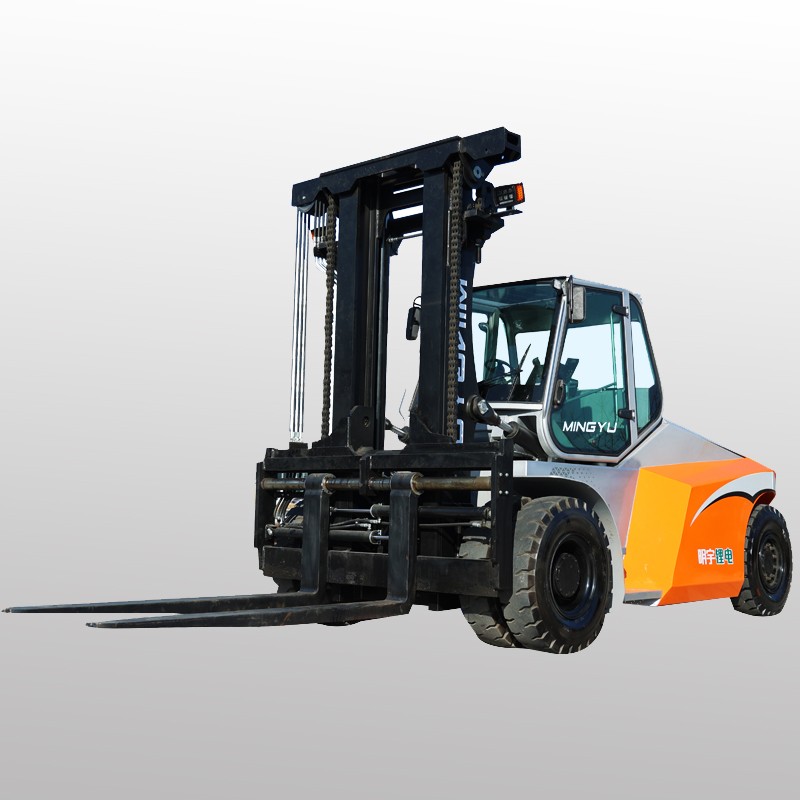
Related product: CPD160 Heavy-Duty Electric Forklift — specifications and quotation.
Advanced stability control systems monitor real-time center-of-gravity position using tilt sensors and load moment indicators. If the system detects approach to stability limits—such as when a heavy load is extended at maximum height with mast forward tilt—it automatically restricts further destabilizing movements and alerts the operator.
9. Total Cost of Ownership Analysis
While reach trucks typically command higher initial capital investment than standard counterbalance forklifts, their total cost of ownership (TCO) in high-rack applications demonstrates compelling economic advantages. The TCO calculation must incorporate equipment acquisition, facility space costs, energy consumption, maintenance, and productivity gains.
Facility space savings represent the most significant TCO driver. As previously noted, narrow-aisle capability can increase storage density by 25 to 35 percent, effectively reducing the cost per pallet position by a proportional amount. In leased facilities, this translates to either reduced square footage requirements or deferred expansion capital. In owned facilities, the additional capacity generates revenue potential that amortizes equipment costs rapidly.
Maintenance costs for reach trucks are generally favorable due to reduced tire wear—solid rubber tires on reach trucks experience lower abrasion rates than counterbalance forklifts because of limited travel distances and smooth warehouse floors. Electric drive systems eliminate engine-related maintenance (oil changes, exhaust systems, air filters), while the pantograph mechanism—though requiring periodic inspection—experiences lower stress than counterbalance mast assemblies because loads are not cantilevered during travel.
Productivity gains from faster cycle times and reduced rack damage further enhance TCO. Rack damage incidents in high-bay facilities can cost thousands of dollars per incident in structural repairs and inventory loss; the precision handling characteristics of reach trucks significantly reduce these incidents compared to less maneuverable alternatives.
10. Conclusion
Reach trucks represent the convergence of mechanical engineering, operational efficiency, and spatial economics in modern warehouse design. Their advantages in high-rack stacking operations extend far beyond simple lift height capability, encompassing narrow-aisle maneuverability, dynamic stability management, load placement precision, operator ergonomics, and favorable total cost of ownership profiles.
As warehouse automation, e-commerce fulfillment velocity, and urban land scarcity continue to drive facility design toward ever-higher rack configurations, the technical and economic case for reach trucks becomes increasingly compelling. For operations managers and facility engineers evaluating material handling strategies for high-bay environments, reach trucks offer a proven, mature technology platform that directly addresses the core challenges of vertical space utilization.
The future evolution of reach truck technology—incorporating automation assistance, telematics integration, and advanced energy systems—promises to further extend these advantages. However, even in their current state, reach trucks remain the definitive equipment solution for high-rack stacking operations, delivering measurable returns on investment through enhanced capacity, safety, and operational efficiency.
Shandong Zhuogong Machinery equipment Co.,Ltd
Brand: ZGFORKLIFT / MYZG
Website: www.vavforklift.com
Email: vip@mingyuforklift.com
Tel: +86-0535-2090977
WhatsApp: +86 131 8160 2336
Address: Xiaqiu Town, Laizhou, Yantai City, Shandong Province, China.
Name: selena
Mobile:+86-13176910558
Tel:+86-0535-2090977
Whatsapp:8613181602336
Email:vip@mingyuforklift.com
Add:Xiaqiu Town, Laizhou, Yantai City, Shandong Province, China
