
vip@mingyuforklift.com
+86-0535-2090977

Published: November 1, 2026
HTML Meta Description: Configure electric stacker replenishment for micro-fulfillment cells with measured aisle geometry, load stability and charging windows.
Keywords: micro fulfillment replenishment, electric stacker, small footprint pick cell, narrow aisle handling, urban order fulfillment, pallet replenishment, warehouse labor flexibility, stacker route planning, ZGFORKLIFT, MYZG
Micro-fulfillment operations place fast-moving inventory close to order picking, often inside a compact footprint with short replenishment windows. Electric stackers can move pallets or unit loads between reserve storage, pick cells and dispatch buffers when aisle geometry, floor condition and load stability support the task. The most useful design begins with SKU dimensions, replenishment frequency and pedestrian flow rather than the assumption that a compact machine automatically fits.
Map inbound receipt, reserve stock, pick faces, exception handling, empty-pallet return and dispatch staging. Protect order-picker crossings and keep evacuation routes available. Coordinate replenishment waves with demand peaks so that lift activity does not block tote or conveyor flow. Identify where the operator needs clear visibility, where loads must be staged and how replenishment signals are issued. Record the space required for turning, battery checks and maintenance access as part of the aisle plan.
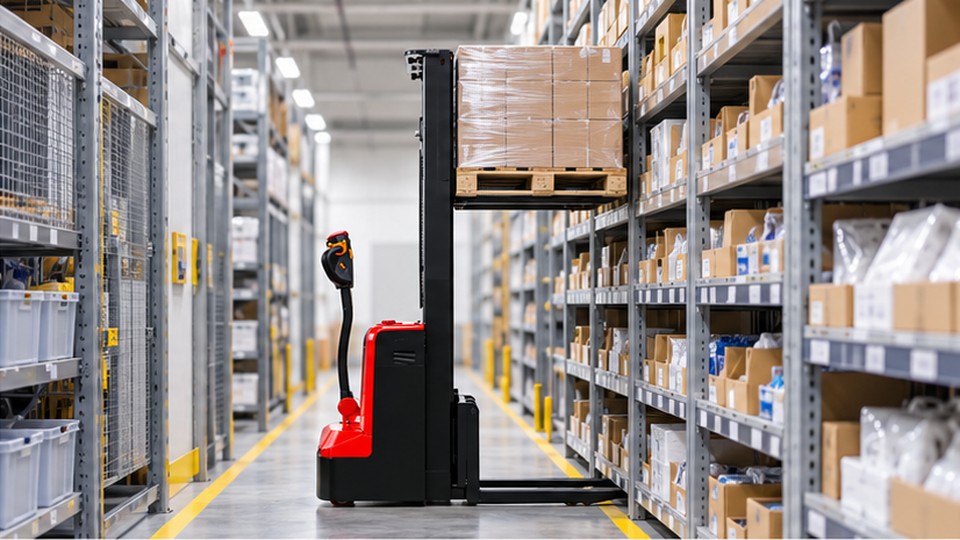
Configuration and route survey: Measure pallet width, load mass, center of gravity, rack beam height and clear aisle width, including the stacker turning envelope. Verify residual capacity at the intended elevation and with attachments. Check floor joints, slopes, thresholds, dock plates and rack protection. Match battery capacity and charger access to shift duration and opportunity-charge windows. Confirm tiller or platform clearance, mast height, lowered height and visibility through the actual pick-cell layout before selecting a model.
Review the CDD15G stand-on stacker as an initial product reference. Verify capacity, attachment, load center and operating limits for the proposed task.
Operating and safety controls: Separate pedestrian and powered-equipment paths with visible markings and controlled crossings. Train operators on pedestrian interaction, turning, travel speed and load placement at height. Keep the load within the rated envelope, lower it while traveling and never use the stacker to carry people. Inspect forks, wheels, brakes, controls, mast, chains, battery and emergency stop before use. Establish rack-impact reporting and quarantine damaged loads or pallets. Stop if an aisle is obstructed, a rack is damaged or visibility is compromised.
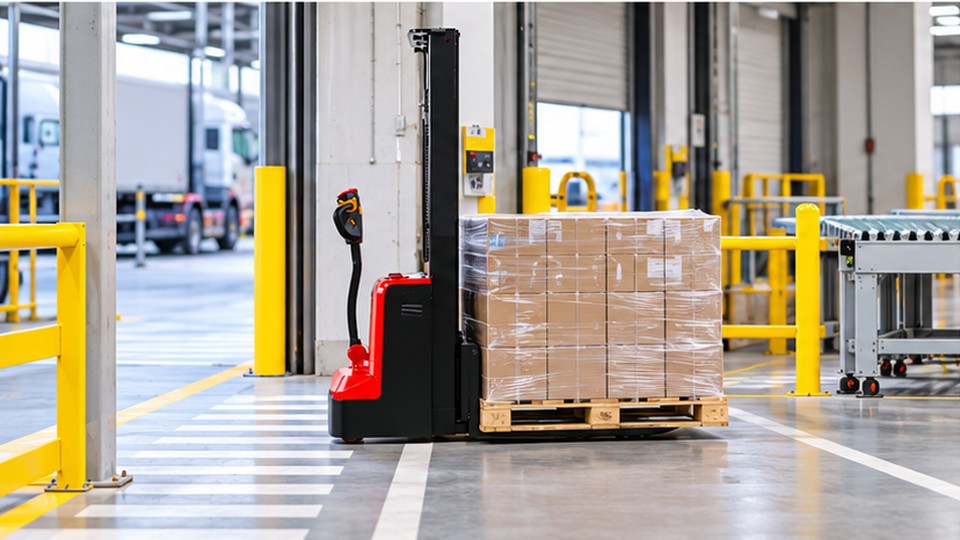
Compare the CQDH20 reach stacker for another configuration view and confirm current technical information with the supplier.
Performance and total cost: Track replenishment response, pick-face availability, travel distance, battery charging, pallet damage, congestion and operator effort. Include rack changes, floor repair, battery lifecycle, maintenance and charging infrastructure in the total cost. Test representative order waves and heavy-load cases before changing the layout. If the main constraint is replenishment timing or inaccurate inventory, better slotting and system signals may deliver more value than a higher-capacity truck.
Supplier review: Share a scaled layout, pallet specifications, rack heights, shift profile, order-wave data and route photographs with the supplier. Request residual capacity, turning dimensions, battery and charger details, service interval and any required operator qualifications. Shandong Zhuogong Machinery equipment Co.,Ltd supports ZGFORKLIFT and MYZG reviews for electric stacker applications. Final selection should follow a site trial and local workplace safety review.
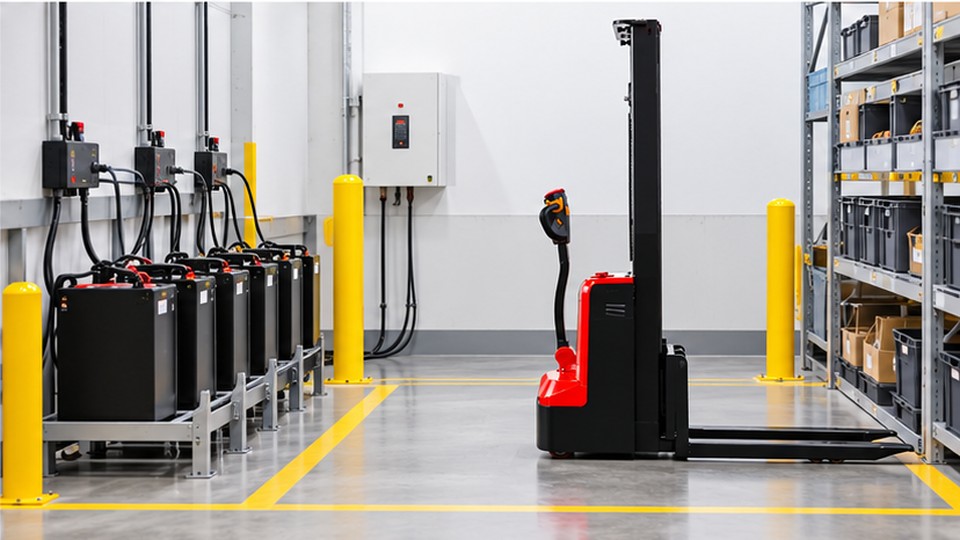
The CDD15D electric stacker is a third product reference. Specifications and availability may vary by market; verify details before purchase or operation.
Contact Shandong Zhuogong Machinery equipment Co.,Ltd for an application review. ZGFORKLIFT / MYZG sales: vip@mingyuforklift.com; telephone +86-0535-2090977; WhatsApp +86 131 8160 2336. Address: Xiaqiu Town, Laizhou, Yantai City, Shandong Province, China.
For a practical recommendation, send destination country, maximum load, load-center distance, route width, lift height, ground or floor condition, operating hours and work environment. These details let the engineering team review a specific duty rather than rely on a catalogue-only answer.
Name: selena
Mobile:+86-13176910558
Tel:+86-0535-2090977
Whatsapp:8613181602336
Email:vip@mingyuforklift.com
Add:Xiaqiu Town, Laizhou, Yantai City, Shandong Province, China