
vip@mingyuforklift.com
+86-0535-2090977

Published: November 1, 2026
HTML Meta Description: Design electric forklift routes for solar module recycling with documented loads, battery planning and traceable reverse logistics.
Keywords: solar module recycling, electric forklift, reverse logistics, battery recycling line, traceable material flow, warehouse electrification, solar panel recovery, recycling plant handling, ZGFORKLIFT, MYZG
Solar module recycling operations receive mixed consignments that may include intact panels, frames, junction boxes, glass fractions and packaged components. An electric forklift can support indoor and covered-yard transport between receiving inspection, quarantine, sorting, processing and outbound staging when loads are correctly contained. The equipment selection should begin with the module packaging and route, not a general assumption that all panel material behaves like a standard pallet.
Document lot identity from the unloading point through inspection, sorting and downstream processing. Mark damaged or suspect modules and keep them separate according to site rules. Protect barcode labels, chain-of-custody records and customer data during each transfer. Map clean routes for intact material and defined routes for broken or contaminated loads. Coordinate forklift cycles with conveyors, roll-off containers and processing lines so that a machine does not block an emergency aisle or a worker inspection station.
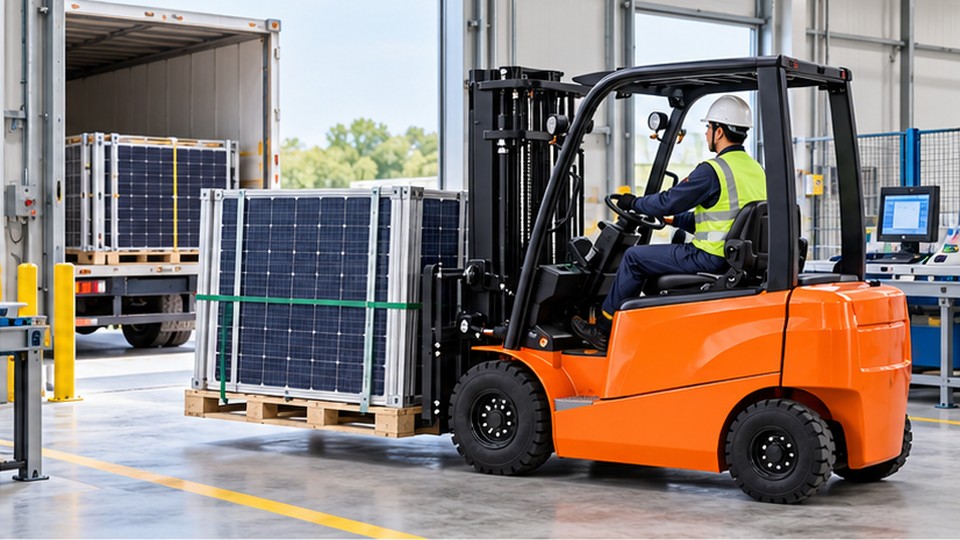
Configuration and route survey: Measure pallet dimensions, panel overhang, packaging strength, stack height and actual load mass. Verify rated capacity at the load center and lift height, including attachments and any nonstandard fork arrangement. Check aisle width, turning space, dock plates, floor loading, thresholds and access to charging stations. Evaluate battery capacity over the intended shift, charging windows, opportunity-charging policy and ventilation requirements for the chosen chemistry. Where loads are fragile, select handling aids only after checking manufacturer guidance and packaging design.
Review the B20 electric forklift as an initial product reference. Verify capacity, attachment, load center and operating limits for the proposed task.
Operating and safety controls: Use load containment that prevents panels or glass fractions from sliding, and never travel with a load that blocks the operator view. Establish pedestrian separation around sorting and cutting zones. Inspect forks, mast, tires, brakes, horn, lights and hydraulic lines each shift, and follow the battery maker instructions for charging, isolation and maintenance. Dust, sharp edges and damaged modules may require specific PPE and housekeeping controls. Use a spotter for long loads, dock transfers and any move with restricted sightlines; stop if packaging shifts or floor conditions are uncertain.
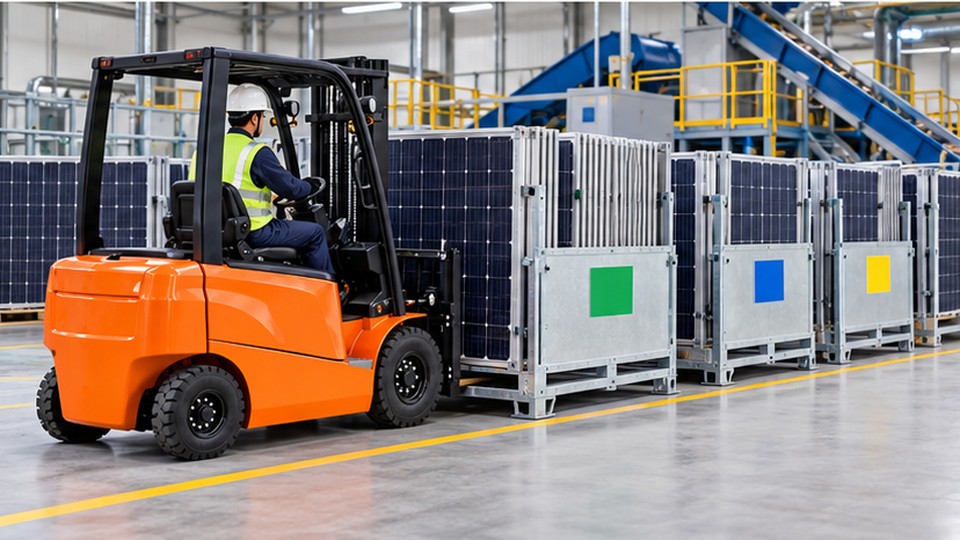
Compare the B50 electric forklift for another configuration view and confirm current technical information with the supplier.
Performance and total cost: Track loads moved per labor hour alongside battery energy, charging downtime, module breakage, line starvation, aisle congestion and equipment maintenance. Include battery replacement assumptions, charging infrastructure, protective attachments, training and recycling process changes in the total-cost model. A pilot should cover representative package types and peak arrival periods. Compare alternative layouts before adding equipment, since one-way routes, buffer capacity and scheduled inbound windows may reduce travel distance more effectively than a larger truck.
Supplier review: Prepare sample packaging dimensions, weight ranges, shift pattern, route drawings, charging conditions and process photographs for a supplier review. Ask for duty-cycle assumptions, capacity at the planned load center, battery and charger details, attachments and service intervals. Shandong Zhuogong Machinery equipment Co.,Ltd supports ZGFORKLIFT and MYZG application discussions for electric material-handling fleets. Product information is a reference; the recycling operator must verify local waste handling, electrical and workplace safety requirements.
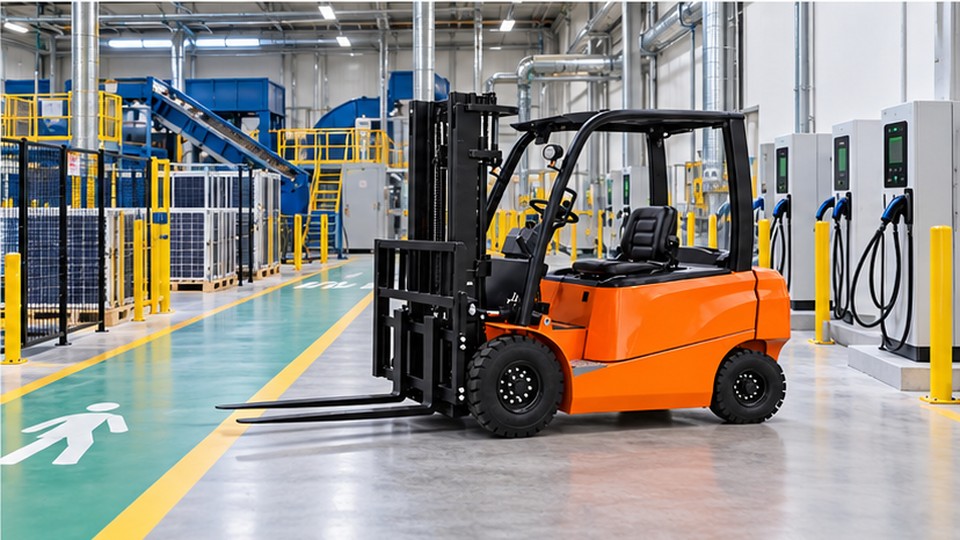
The B30 electric forklift is a third product reference. Specifications and availability may vary by market; verify details before purchase or operation.
Contact Shandong Zhuogong Machinery equipment Co.,Ltd for an application review. ZGFORKLIFT / MYZG sales: vip@mingyuforklift.com; telephone +86-0535-2090977; WhatsApp +86 131 8160 2336. Address: Xiaqiu Town, Laizhou, Yantai City, Shandong Province, China.
For a practical recommendation, send destination country, maximum load, load-center distance, route width, lift height, ground or floor condition, operating hours and work environment. These details let the engineering team review a specific duty rather than rely on a catalogue-only answer.
Name: selena
Mobile:+86-13176910558
Tel:+86-0535-2090977
Whatsapp:8613181602336
Email:vip@mingyuforklift.com
Add:Xiaqiu Town, Laizhou, Yantai City, Shandong Province, China