
vip@mingyuforklift.com
+86-0535-2090977

Introduction
In the landscape of industrial and warehouse operations, the powered industrial truck—commonly known as the forklift—represents one of the most ubiquitous yet potentially hazardous pieces of equipment in daily use. The question of whether certification is required to operate a forklift is not merely a matter of workplace policy preference; it is a matter of federal law, industry consensus standards, and occupational safety imperatives. This article provides a thorough technical examination of the certification requirements governing forklift operation, with particular emphasis on the regulatory framework established by the Occupational Safety and Health Administration (OSHA), the complementary role of American National Standards Institute (ANSI) standards, and the practical implications for employers and operators across diverse industrial sectors.
The short answer to the titular question is unequivocal: yes, certification is required. However, the nature, scope, and enforcement mechanisms of this requirement are nuanced and merit detailed exploration. Understanding these requirements is essential not only for legal compliance but also for the prevention of the approximately 85 fatalities and 34,900 serious injuries attributed to forklift incidents annually in the United States.
The Regulatory Foundation: OSHA 29 CFR 1910.178(l)
The cornerstone of forklift operator certification in the United States is OSHA's Powered Industrial Trucks standard, codified at 29 CFR 1910.178. Subsection (l) of this regulation specifically addresses operator training, evaluation, and certification. Enacted in its current form following a comprehensive revision in 1998, this standard represents OSHA's response to decades of incident data demonstrating that inadequate operator training was a primary contributing factor in forklift-related accidents.
The regulation mandates that every employer must ensure that each powered industrial truck operator is competent to operate a vehicle safely, as demonstrated by the successful completion of training and evaluation. This requirement applies to all classes of powered industrial trucks, which encompass not only conventional counterbalance forklifts but also reach trucks, order pickers, pallet jacks, and rough-terrain telehandlers. The scope is intentionally broad, covering any mobile power-propelled truck used to carry, push, pull, lift, stack, or tier materials.
It is critical to note a common misconception: OSHA does not issue forklift "licenses" in the manner of state driver's licenses. Rather, the regulatory framework establishes a certification system wherein the employer bears the primary responsibility for ensuring that operators are properly trained, evaluated, and documented as competent. This employer-centric model distinguishes forklift certification from many other forms of occupational licensing and has significant implications for liability and compliance management.
The Three-Pillar Training Framework
OSHA's certification requirements are structured around three mandatory components, none of which may be omitted or substituted. This tripartite framework ensures that operators possess both theoretical knowledge and practical competence before being authorized to operate equipment unsupervised.
Formal Instruction (Theoretical Component)
The first pillar requires formal instruction covering the principles of safe forklift operation. This component may be delivered through various modalities, including classroom lectures, video presentations, interactive online modules, or written study materials. OSHA does not prescribe a specific delivery method, provided the content is comprehensible to the operator and effectively conveys the required knowledge domains.
The mandated topics for formal instruction are extensive and include: operating instructions, warnings, and precautions for the types of trucks the operator will be authorized to operate; differences between automobiles and forklifts; forklift controls and instrumentation; engine or motor operation; steering and maneuvering; visibility considerations; fork and attachment adaptation, operation, and use limitations; vehicle capacity and stability principles; vehicle inspection and maintenance requirements; refueling and recharging procedures; operating limitations; and any special operating instructions or warnings designated by the manufacturer.
Additionally, the training must address workplace-specific topics, including: surface conditions where the vehicle will be operated; composition and stability of loads; load manipulation, stacking, and unstacking; pedestrian traffic; narrow aisle and restricted place operation; operating in hazardous classified locations; operating on ramps and sloped surfaces; potentially hazardous environmental conditions; and closed environments and other areas where insufficient ventilation or poor vehicle maintenance could cause carbon monoxide or diesel exhaust buildup.
The flexibility in delivery method has facilitated the proliferation of online training programs that satisfy the formal instruction component. However, employers must ensure that such programs are comprehensive and that operators can demonstrate comprehension, particularly when language barriers exist.
Practical Training (Hands-On Component)
The second pillar mandates practical, hands-on training in which the operator performs actual forklift operations under the direct supervision of a qualified trainer. This component cannot be satisfied through simulation or virtual reality alone; it requires physical operation of the specific types of equipment the operator will be using in the workplace.
Practical training must cover the same topical areas as formal instruction but in an applied context. Operators must demonstrate proficiency in pre-operational inspections, startup procedures, maneuvering in confined spaces, load handling and stacking, operation on inclines, and proper shutdown and parking. The training must be conducted in an environment that approximates actual workplace conditions, including the specific surfaces, aisle configurations, and traffic patterns the operator will encounter.
This requirement for equipment-specific and site-specific practical training is a frequent source of compliance failures. An operator trained on a sit-down counterbalance forklift in a warehouse setting is not certified to operate a stand-up reach truck or a rough-terrain telehandler without additional training and evaluation. Similarly, an operator certified at one facility cannot automatically be deemed competent at another facility with different conditions without an evaluation of their ability to operate safely in the new environment.
Performance Evaluation (Competency Verification)
The third pillar requires that the employer—or a designated qualified evaluator—observe the operator performing typical job tasks and assess their competence. This evaluation is not a written test; it is a performance-based assessment of the operator's ability to apply their training in actual or simulated work conditions.
The evaluator must be a person who has the knowledge, training, and experience to train powered industrial truck operators and evaluate their competence. OSHA does not require evaluators to hold a specific certification or credential, but they must possess demonstrable expertise in the equipment types and operational conditions being assessed. Many employers utilize "train-the-trainer" programs to qualify internal personnel as evaluators, though third-party training providers are also commonly engaged.
Upon successful completion of the evaluation, the employer must document the operator's certification. This documentation must include the operator's name, the date of training, the date of evaluation, and the identity of the person(s) performing the training or evaluation. These records must be maintained and made available to OSHA inspectors upon request.
Recertification and Refresher Training Requirements
Certification is not a lifetime credential. OSHA requires that operators undergo a performance evaluation at least every three years, regardless of whether any incidents or concerns have arisen. This triennial re-evaluation serves as a mechanism to identify skill degradation, address bad habits that may have developed, and ensure continued competence.
More importantly, refresher training—including both theoretical and practical components—is required whenever specific triggering events occur. These triggers include: the operator has been observed operating the vehicle in an unsafe manner; the operator has been involved in an accident or near-miss incident; the operator has received an evaluation that reveals unsafe operation; the operator is assigned to operate a different type of truck; or workplace conditions change in a manner that could affect safe operation.
This event-driven refresher requirement is particularly significant in dynamic work environments. A forklift operator who has operated exclusively in a warehouse and is subsequently assigned to a construction site with rough terrain and outdoor conditions would require refresher training addressing the new hazards. Similarly, the introduction of new attachments, changes in racking configurations, or modifications to traffic patterns may all trigger the need for additional training.
ANSI B56.1 and Industry Consensus Standards
While OSHA regulations establish the legal minimum for forklift certification, the American National Standards Institute (ANSI), in cooperation with the Industrial Truck Standards Development Foundation (ITSDF), publishes the B56 series of consensus standards that provide more detailed technical guidance. ANSI/ITSDF B56.1, the Safety Standard for Low Lift and High Lift Trucks, is particularly relevant to operator training and certification.
ANSI standards are not federal law; however, they carry substantial weight in the regulatory and legal landscape. OSHA frequently references ANSI standards as evidence of recognized industry practice, and compliance with ANSI standards is often used to demonstrate that an employer has met the "general duty clause" obligation to provide a workplace free from recognized hazards. Furthermore, OSHA has incorporated portions of earlier ANSI B56.1 editions directly into the 29 CFR 1910.178 regulation.
The B56.1 standard addresses design, construction, and maintenance requirements for forklifts, as well as operational safety practices that inform training curricula. Training providers and employers who align their programs with both OSHA requirements and ANSI standards achieve a higher level of safety assurance and legal defensibility.
Equipment Classification and Type-Specific Certification
A critical yet frequently misunderstood aspect of forklift certification is its type-specific nature. Powered industrial trucks are categorized into seven classes, and certification applies only to the class(es) for which the operator has received training and evaluation:
Class 1: Electric Motor Rider Trucks (sit-down electric counterbalance forklifts)
Class 2: Electric Motor Narrow Aisle Trucks (reach trucks, order pickers, turret trucks)
Class 3: Electric Motor Hand or Hand/Rider Trucks (pallet jacks, walkie stackers)
Class 4: Internal Combustion Engine Trucks, Cushion Tires (propane/diesel indoor forklifts)
Class 5: Internal Combustion Engine Trucks, Pneumatic Tires (outdoor forklifts)
Class 6: Electric and Internal Combustion Engine Tractors (tow tractors)
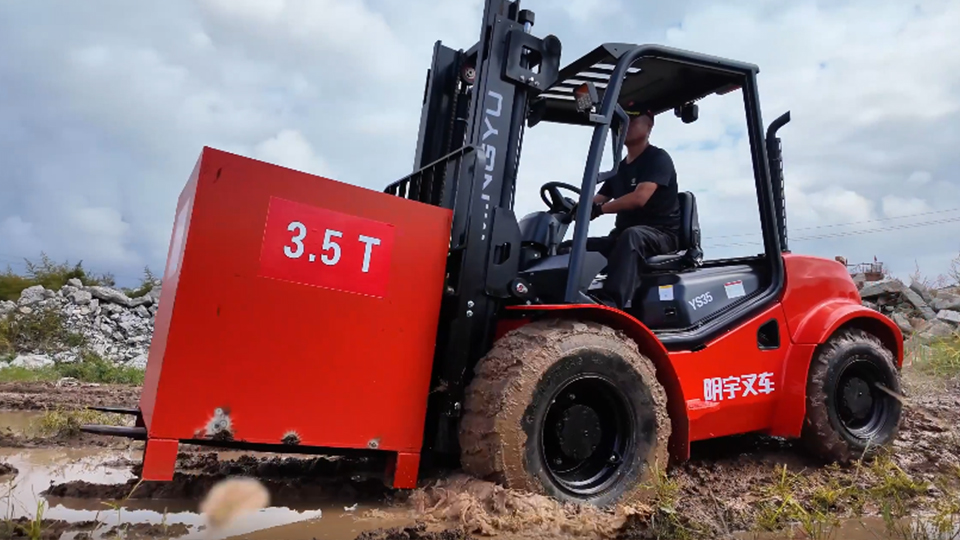
Class 7: Rough Terrain Forklift Trucks (telehandlers, all-terrain forklifts)
An operator certified on a Class 1 electric counterbalance forklift is not authorized to operate a Class 7 telehandler without additional training and evaluation. The operational characteristics, stability profiles, and hazard exposures differ substantially between classes. Employers who fail to ensure type-specific certification expose themselves to citation and liability, particularly in industries such as construction where multiple equipment classes are commonly used.
Employer Responsibilities and Liability Exposure
The employer-centric nature of OSHA's forklift certification framework places significant obligations on employers. These obligations extend beyond merely providing training to encompass recordkeeping, hazard assessment, equipment maintenance, and enforcement of safe operating practices.
Employers must maintain certification records for each operator, including documentation of training completion, evaluation results, and refresher training. These records must be available for inspection by OSHA compliance officers. In the event of an incident, inadequate or missing documentation can result in severe penalties and increased liability exposure.
The financial consequences of non-compliance are substantial. As of 2026, OSHA can assess penalties of up to $16,550 per serious violation and up to $165,514 per willful or repeated violation. Each untrained operator can be cited as a separate violation, meaning that a facility with multiple uncertified operators could face penalties exceeding $80,000 for serious violations alone. Beyond regulatory penalties, employers face workers' compensation costs, civil litigation, and reputational damage following forklift incidents involving uncertified operators.
Employers are also responsible for ensuring that only trained and authorized personnel operate forklifts. This includes implementing access controls, such as key management systems, and enforcing disciplinary measures for unauthorized operation. The presence of uncertified operators on the floor—whether due to inadequate supervision or intentional circumvention of procedures—is a significant compliance risk.
The Certification Process: A Practical Walkthrough
For organizations seeking to establish or maintain compliant forklift certification programs, the following process provides a practical framework:
Step 1: Needs Assessment and Equipment Audit
Identify all powered industrial trucks in the fleet and classify them according to the seven equipment classes. Determine which operators require initial certification versus refresher training. Assess workplace-specific hazards, including surface conditions, traffic patterns, and environmental factors.
Step 2: Trainer Qualification
Designate or hire qualified trainers who possess the knowledge, training, and experience required by 1910.178(l)(2)(iii). Consider train-the-trainer programs for internal personnel or engage third-party providers for specialized equipment classes.
Step 3: Training Delivery
Implement the three-pillar training framework: formal instruction (which may include online components), practical hands-on training with actual equipment, and performance evaluation. Ensure training is conducted in the language and at the literacy level of the operators.
Step 4: Documentation and Recordkeeping
Create certification records for each operator, including name, training dates, evaluation dates, equipment types, and evaluator identity. Maintain these records for the duration of employment plus a reasonable retention period.
Step 5: Ongoing Monitoring and Recertification
Establish a system for tracking certification expiration dates and scheduling triennial re-evaluations. Implement procedures for identifying triggering events that require refresher training. Conduct regular observations of operator performance to identify unsafe practices before they result in incidents.
Step 6: Integration with Safety Management Systems
Link forklift certification data with incident reporting systems, near-miss tracking, and equipment inspection programs. Modern fleet management and learning management systems can automate certification tracking and generate audit-ready documentation.
Common Misconceptions and Compliance Pitfalls
Several persistent misconceptions undermine forklift certification compliance:
Misconception 1: "A state driver's license satisfies the requirement."
A standard automobile driver's license does not meet OSHA's forklift certification requirements. Forklift operation involves fundamentally different stability characteristics, control systems, and hazard exposures than automobile operation.
Misconception 2: "Online certification alone is sufficient."
While online training can satisfy the formal instruction component, it cannot replace the mandatory practical training and performance evaluation. Operators who complete only online courses without hands-on evaluation are not compliant.
Misconception 3: "Certification is transferable between employers."
Forklift certification is employer-specific and, to a significant extent, site-specific. A new employer must evaluate the operator's competence in their specific workplace environment and with their specific equipment, even if the operator holds a certificate from a previous employer.
Misconception 4: "Once certified, always certified."
Certification expires after three years and can be invalidated sooner by triggering events. Operators and employers who treat initial certification as a one-time event are in violation of the standard.
Misconception 5: "Only full-time operators need certification."
Any employee who operates a forklift, even occasionally or in an emergency, must be certified. There is no "casual use" exception in the regulation.
Emerging Trends and Future Considerations
The forklift certification landscape continues to evolve in response to technological advancements and regulatory developments. The integration of telemetry systems, real-time location tracking, and automated pre-shift inspection platforms is transforming how employers monitor compliance and operator behavior. These digital tools generate continuous audit trails that support OSHA documentation requirements while enabling proactive safety management.
The proliferation of automated guided vehicles (AGVs) and autonomous mobile robots (AMRs) introduces new considerations for training and certification. While ANSI/ITSDF B56.5 addresses safety requirements for driverless industrial vehicles, the interaction between human operators and autonomous systems presents novel training challenges that existing standards are only beginning to address.
Additionally, OSHA's Warehousing National Emphasis Program (NEP), extended through mid-2026, has intensified inspection activity in distribution and logistics facilities. This program includes comprehensive evaluation of powered industrial truck operations, operator certification records, and equipment maintenance documentation, elevating the compliance stakes for warehouse operators.
Conclusion
The requirement for certification to operate a forklift is not merely a bureaucratic formality—it is a legally mandated, evidence-based safety measure rooted in decades of incident analysis and industry consensus. Under OSHA's 29 CFR 1910.178(l), every employer must ensure that forklift operators complete comprehensive training encompassing formal instruction, practical hands-on experience, and performance evaluation. Certification is type-specific, employer-specific, and subject to triennial renewal and event-driven refresher requirements.
Failure to comply with these requirements exposes organizations to substantial regulatory penalties, civil liability, and—most critically—the human cost of preventable injuries and fatalities. Conversely, robust certification programs, aligned with both OSHA regulations and ANSI consensus standards, provide a foundation for operational excellence, risk reduction, and a culture of safety consciousness.
For employers, the imperative is clear: invest in qualified trainers, implement rigorous training and evaluation protocols, maintain meticulous documentation, and integrate certification management into broader safety and compliance systems. For operators, certification represents not only a legal prerequisite for employment but a professional credential affirming their competence to operate powerful machinery safely and effectively.
In an era of intensified regulatory scrutiny, technological transformation, and evolving workplace dynamics, the question is no longer whether certification is required, but rather how organizations can most effectively implement and sustain certification programs that protect workers, ensure compliance, and support operational success.
Name: selena
Mobile:+86-13176910558
Tel:+86-0535-2090977
Whatsapp:8613181602336
Email:vip@mingyuforklift.com
Add:Xiaqiu Town, Laizhou, Yantai City, Shandong Province, China
