
vip@mingyuforklift.com
+86-0535-2090977

Introduction
Exporting industrial trucks to the European Union and other international markets is not merely a matter of manufacturing quality equipment and shipping it abroad. It is a complex regulatory exercise that demands comprehensive understanding of the certification landscape, technical standards, and conformity assessment procedures that govern market access. For forklift manufacturers—particularly those in emerging industrial economies such as China—the difference between a successful export operation and a costly regulatory failure often hinges on the precision with which certification requirements are navigated.
The European Union represents one of the most demanding regulatory environments for industrial equipment. CE marking, the mandatory conformity marking for products placed on the EU market, is not a quality certification but a legal declaration that the product meets the essential health and safety requirements of applicable EU directives. For forklifts, this framework is anchored in the Machinery Directive (historically 2006/42/EC, now transitioning to Regulation (EU) 2023/1230) and supported by a hierarchy of harmonized European standards, with EN ISO 3691 serving as the foundational technical specification for industrial truck safety.
This article provides a detailed technical guide to the certification requirements for exported forklifts, with particular focus on CE marking under the Machinery Directive and the EN ISO 3691 standard series. It examines the regulatory architecture, the specific technical requirements, the conformity assessment pathways, and the practical considerations that manufacturers must address to achieve and maintain compliance.
The Regulatory Architecture: CE Marking and the Machinery Directive
From Directive to Regulation: The Evolution of EU Machinery Law
The legal framework governing forklift exports to the European Union has undergone a significant transformation. The Machinery Directive 2006/42/EC, which governed the market for nearly two decades, established the essential health and safety requirements (EHSRs) that industrial trucks must satisfy. Compliance with this directive was demonstrated through CE marking, supported by a technical file, risk assessment, and—where applicable—third-party intervention by a Notified Body.
As of January 20, 2027, Regulation (EU) 2023/1230 fully replaces the Machinery Directive, introducing a more robust regulatory framework with enhanced requirements for digital instructions, conformity assessment procedures, and market surveillance. Equipment placed on the EU market before this date can continue to be assessed under the Machinery Directive, but all new forklifts shipped from 2027 onwards must comply with the new regulation. For manufacturers, this transition demands careful attention to the evolving requirements, as the regulation introduces stricter documentation standards and expanded obligations for high-risk machinery categories.
The practical effect for forklift exporters is that the Declaration of Conformity and operator manual must be available in the official language of the deployment country, and the technical file must be maintained within the European Economic Area (EEA). The regulation applies uniformly across Germany, France, Italy, Spain, Poland, and all other EU member states without national derogation, creating a single regulatory market but one with stringent and uniform requirements.
The Harmonized Standard Hierarchy
CE marking for forklifts is supported by a structured hierarchy of standards that provide the technical means of demonstrating conformity with the essential requirements of the Machinery Directive and Regulation. At the apex of this hierarchy sits EN ISO 3691, the comprehensive standard series for industrial truck safety requirements and verification. This series is organized into multiple parts, each addressing specific categories of industrial trucks:
EN ISO 3691-1: Self-propelled industrial trucks, excluding driverless trucks, variable-reach trucks, and burden carriers. This is the primary standard for conventional counterbalance forklifts, reach trucks, pallet stackers, and similar equipment.
EN ISO 3691-2: Self-propelled variable-reach trucks.
EN ISO 3691-3: Trucks with operator position elevated up to 1,200 mm and high-lift order pickers.
EN ISO 3691-4: Driverless industrial trucks and their systems—critical for autonomous forklift exports.
EN ISO 3691-5: Pedestrian-propelled trucks.
EN ISO 3691-6: Burden and personnel carriers.
EN ISO 3691-7: Regional requirements for EU countries (technical specifications).
EN ISO 3691-8: Regional requirements for countries outside the EU (technical specifications).
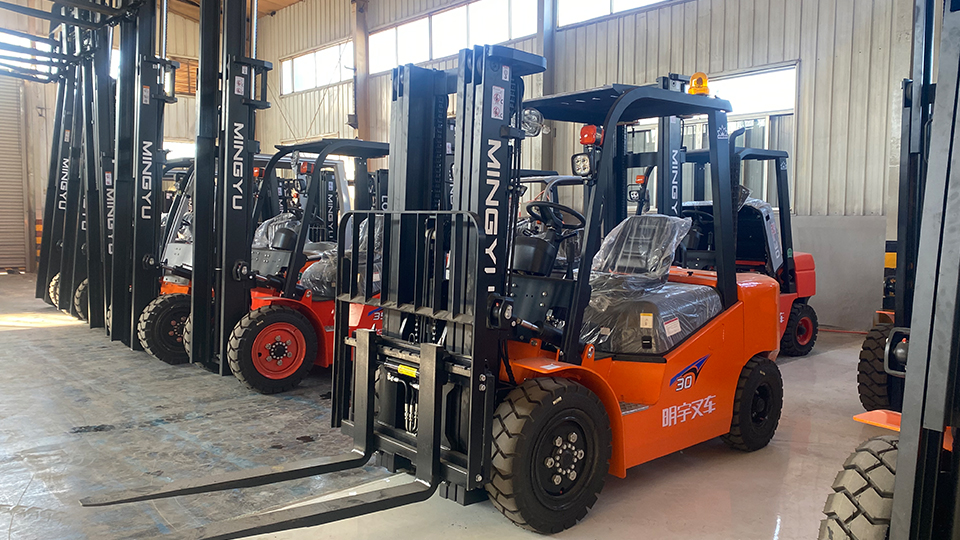
For the vast majority of exported forklifts—counterbalance electric forklifts, reach trucks, pallet stackers, and similar conventional equipment—EN ISO 3691-1 is the governing harmonized standard. Compliance with the clauses of this standard, with the exception of clause 6.2.7 and references to ISO/TS 3691-8, confers a presumption of conformity with the relevant essential requirements of the Machinery Directive. This presumption is the legal foundation upon which manufacturers base their CE marking declarations.
EN ISO 3691-1: Technical Safety Requirements and Verification
Scope and Applicability
EN ISO 3691-1:2015+A1:2020 applies to self-propelled industrial trucks as defined in ISO 5053-1, with a rated capacity up to and including 50,000 kg. The standard covers trucks powered by internal combustion engines, batteries, and other energy sources, including diesel, gasoline, liquefied petroleum gas (LPG), and electric battery systems. Notably, compressed natural gas (CNG) is not currently addressed, with plans to incorporate this fuel type in future revisions.
The standard's scope encompasses the full range of forklift types: counterbalanced lift trucks, reach trucks, straddle carriers, pallet stackers, high-lift platform trucks, side-loading trucks, bi-directional and multi-directional trucks, and rough-terrain counterbalanced forklifts. For each category, the standard prescribes specific safety requirements and verification methods.
Structural and Mechanical Requirements
The standard mandates comprehensive structural integrity verification through a combination of calculation and testing. Manufacturers must demonstrate that the forklift chassis, mast assembly, fork carriage, and lifting mechanisms can withstand the stresses imposed by rated load operations at maximum lift heights. The verification methodology includes:
Static and dynamic load testing: Forklifts must undergo testing with loads at 1.25 times the rated capacity to verify structural adequacy with appropriate safety margins.
Fatigue analysis: Critical load-bearing components, particularly the mast and carriage assemblies, must be evaluated for fatigue life under cyclic loading conditions representative of operational duty cycles.
Stability testing: The standard specifies stability tests that simulate the most adverse loading conditions, including load elevation, travel with elevated loads, and operation on specified gradients. For counterbalanced forklifts with rated capacity up to 5,000 kg, EN 16203 provides additional dynamic lateral stability testing requirements.
The mast assembly represents one of the most critical safety components. The standard requires that lifting chains possess documented breaking load certificates from the chain supplier, with safety factors (K1) established for the lifting mechanism. The rated load descent speed must not exceed 0.6 m/s, and over-lift limiting devices must be installed to prevent mechanical damage from excessive mast extension.
Braking and Control Systems
Braking performance requirements under EN ISO 3691-1 are stringent and performance-based. The standard requires:
Service braking systems: Capable of stopping the forklift within specified distances from maximum travel speed, with performance verified under both loaded and unloaded conditions.
Parking brake systems: Must be mechanically applied and capable of holding the forklift stationary on specified gradients. For sit-down counterbalance forklifts, the parking brake must be manually or foot-operated from the normal operating position, or automatically applied when the operator leaves the seat.
Emergency braking: Stand-on and pedestrian-controlled trucks must incorporate automatic braking systems that function as both service and parking brakes.
Control system design must prevent unauthorized starting through key, password, or magnetic card systems. For sit-down forklifts, power travel must only be possible when the operator is in the correct operating position—a requirement typically satisfied by operator presence sensing (OPS) systems that disable travel when the operator leaves the seat.
Electrical and Electromagnetic Compatibility
Electrical safety requirements for electric forklifts are governed by EN ISO 3691-1 in conjunction with EN 1175, the dedicated standard for electrical safety of industrial trucks. The EN 1175:2025 revision, which became fully effective on May 31, 2026, introduces significantly strengthened requirements for electrical protection and safety control systems. This revision mandates enhanced insulation coordination, improved fault protection, and more robust emergency stop circuit designs.
Electromagnetic compatibility (EMC) requirements are addressed through compliance with EN 12895, which specifies emission and immunity limits for industrial trucks. Electric forklifts must demonstrate that their electrical systems do not generate electromagnetic interference that could affect other equipment, and that they maintain safe operation when subjected to external electromagnetic fields. This is particularly critical for forklifts equipped with electronic control systems, battery management systems, and wireless communication modules.
Visibility, Lighting, and Operator Protection
EN ISO 3691-1 establishes comprehensive requirements for operator visibility and protection. For counterbalanced forklifts with maximum lift heights exceeding 1,800 mm, overhead guards (falling object protective structures, FOPS) must be installed in accordance with ISO 6055. These guards must withstand impact testing with specified energy levels to protect operators from falling objects.
Load backrests are mandatory for forklifts with lift heights exceeding 1,800 mm when equipped with forks. The standard specifies that the backrest opening dimensions must not exceed 150 mm in either direction, preventing loads from falling backward onto the operator.
Visibility requirements address both forward and rearward sightlines, with provisions for mirrors, cameras, and proximity sensing systems where direct visibility is obstructed by mast structures or elevated loads. Lighting requirements include headlamps, tail lamps, and warning beacons, with specifications for intensity, color, and placement.
Environmental and Noise Requirements
The standard specifies operational environmental conditions, including temperature ranges, humidity limits, and altitude restrictions. Forklifts must maintain safe operation within the declared environmental envelope, with particular attention to battery performance degradation in extreme temperatures.
Noise emission requirements are governed by the Outdoor Equipment Noise Directive 2000/14/EC (for equipment used outdoors) and general machinery noise limits (for indoor equipment). Sound power level testing must be conducted in accordance with standardized procedures, with declared values included in the technical documentation.
Supplementary Standards and Specialized Requirements
EN 16307: Safety of Non-Powered Industrial Trucks
While EN ISO 3691-1 addresses self-propelled trucks, EN 16307 governs non-powered industrial trucks such as hand pallet trucks and manual stackers. For manufacturers exporting a comprehensive product range, compliance with both standards is necessary. EN 16307-1 covers general requirements, while subsequent parts address specific truck types.
EN 1175: Electrical Safety
EN 1175 is the dedicated standard for electrical safety of battery-powered and mains-powered industrial trucks. The 2025 revision introduces enhanced requirements for:
Insulation coordination: Strengthened requirements for creepage and clearance distances, particularly in battery compartments and high-voltage systems.
Battery safety: Enhanced protection against electrolyte spillage, gas venting, and thermal runaway, with specific provisions for lithium-ion battery systems.
Emergency stop circuits: More robust design requirements for emergency stop functionality, including redundancy and fault detection.
Motor protection: Enhanced overload protection requirements for drive motors, pump motors, and steering motors.
For electric forklift exports to the EU, compliance with EN 1175:2025 is now mandatory. Products certified under earlier versions of the standard must be reassessed to ensure conformity with the revised requirements.
EN ISO 12100: Risk Assessment Framework
EN ISO 12100 provides the overarching risk assessment methodology that underpins all machinery safety standards. Forklift manufacturers must conduct comprehensive risk assessments covering the full lifecycle of the product—from design and manufacture through operation, maintenance, and decommissioning. The risk assessment must identify all significant hazards, evaluate risks, and implement protective measures following the hierarchy of controls: inherently safe design, safeguarding, and information for use.
The risk assessment documentation forms a critical component of the technical file and must be available for inspection by market surveillance authorities. Common hazards addressed include crushing, shearing, entanglement, cutting, impact, falling objects, electrical shock, thermal hazards, noise, and vibration.
EN ISO 13849-1: Safety Control Systems
For forklifts incorporating safety-related control systems—such as operator presence sensing, emergency stop circuits, and stability control systems—EN ISO 13849-1 specifies performance level (PL) requirements. The standard requires that safety functions be designed to achieve specified reliability levels, with verification through fault analysis, testing, and documentation.
Modern electric forklifts with electronic control systems, CAN bus networks, and integrated safety functions must demonstrate compliance with the PL requirements appropriate to the severity of the hazards addressed. This typically requires PL d or PL e for functions related to braking, travel interlock, and load handling safety.
The Conformity Assessment Pathway
Module Selection and Notified Body Involvement
The Machinery Directive and Regulation provide multiple conformity assessment modules, with the appropriate pathway determined by the risk classification of the machinery. For most forklifts—particularly those within standard capacity ranges and conventional designs—Module A (internal production control) is applicable. Under this module, the manufacturer:
Conducts a risk assessment and designs the product to meet essential requirements.
Prepares technical documentation, including design drawings, calculations, test reports, and risk assessment records.
Verifies compliance through internal testing and, where applicable, testing by accredited laboratories.
Issues the EU Declaration of Conformity and affixes the CE marking.
For higher-risk categories or when harmonized standards are not fully applied, Module B (EU type examination) plus Module C (conformity to type) may be required, involving a Notified Body in the assessment process. While most standard forklifts fall under Module A, manufacturers should verify the classification of their specific products, as autonomous forklifts and specialized variants may trigger Notified Body involvement.
The Technical File
The technical file is the comprehensive documentation package that demonstrates conformity with the essential requirements. For forklift exports, the technical file must include:
General product description: Including model designation, capacity ratings, dimensions, and intended use conditions.
Design drawings and calculations: Chassis, mast, hydraulic system, electrical schematic, and control system diagrams.
Risk assessment report: Documenting hazard identification, risk evaluation, and protective measures in accordance with EN ISO 12100.
Test reports: Results from structural testing, stability testing, braking performance testing, electrical safety testing, and EMC testing.
Standards compliance evidence: Documentation demonstrating compliance with applicable harmonized standards, including EN ISO 3691-1, EN 1175, EN 12895, and others.
Instruction handbook: Operating, maintenance, and safety instructions in the language of the destination country.
Declaration of Conformity: The manufacturer's formal declaration that the product meets all applicable requirements.
The technical file must be maintained for at least ten years after the last unit of the product has been placed on the market and must be available to market surveillance authorities upon request.
The EU Declaration of Conformity
The EU Declaration of Conformity is the legal document that accompanies each forklift shipment and serves as the manufacturer's formal attestation of compliance. The declaration must:
Identify the manufacturer and authorized representative within the EU.
Specify the product model and serial number range.
List all applicable directives and regulations (Machinery Directive/Regulation, EMC Directive, Noise Directive where applicable).
Reference the harmonized standards applied.
Include the manufacturer's signature and date.
For forklifts, the declaration typically references the Machinery Directive 2006/42/EC (or Regulation 2023/1230 from 2027), the EMC Directive 2014/30/EU, and the applicable harmonized standards including EN ISO 3691-1:2015+A1:2020, EN 1175:2025, and EN 12895:2015+A1:2019.
Practical Considerations for Export Manufacturers
Certification Body Selection
The selection of a certification body for testing and verification is a critical decision. Manufacturers should prioritize:
Accredited laboratories: Testing must be conducted by laboratories accredited to ISO/IEC 17025 for the relevant test methods. Accreditation by European accreditation bodies (e.g., DAkkS in Germany, UKAS in the United Kingdom) provides the highest level of recognition.
Notified Bodies: Where Notified Body involvement is required, the body must be designated under the Machinery Directive/Regulation by an EU member state. The NANDO database provides the official list of designated Notified Bodies.
Experience with industrial trucks: Bodies with specific experience in forklift certification can provide valuable guidance on standard interpretation and testing protocols.
Documentation in Local Languages
A frequently overlooked requirement is the language of the instruction handbook and safety markings. The Machinery Directive and Regulation require that the instruction handbook be supplied in the official language(s) of the country where the forklift will be used. For exports to multiple EU countries, this may require translated versions in German, French, Italian, Spanish, Polish, and other languages. Safety decals and warning labels must also be in the appropriate language or use internationally recognized graphical symbols.
Market Surveillance and Post-Market Obligations
CE marking is not a one-time event but an ongoing obligation. Manufacturers must maintain quality management systems that ensure production conformity, address non-conformities, and manage product recalls if necessary. EU market surveillance authorities conduct random inspections, and non-compliant products can be subject to withdrawal from the market, fines, and reputational damage.
The transition from the Machinery Directive to the new Regulation introduces additional post-market obligations, including digital product passports and enhanced traceability requirements. Manufacturers must prepare for these evolving requirements to maintain market access beyond 2027.
Regional Variations and Non-EU Markets
While CE marking is specific to the European Economic Area, the EN ISO 3691 standard series has broader international applicability. Many non-EU markets recognize ISO 3691 compliance as evidence of product safety, even where formal CE marking is not required. However, manufacturers must verify the specific requirements of each target market:
North America: UL/CSA certification for electrical safety, with ANSI/ITSDF B56 series standards governing forklift design.
Australia/New Zealand: Compliance with AS 2359 series standards, with some acceptance of ISO 3691 testing.
Middle East: Gulf Standardization Organization (GSO) requirements, often referencing ISO standards.
Southeast Asia: National standards that may reference ISO 3691 with additional local requirements.
Conclusion
Exporting forklifts to the European Union and international markets demands a rigorous, systematic approach to certification that extends far beyond product quality. CE marking under the Machinery Directive—and from 2027, the Machinery Regulation—is a legal obligation that requires comprehensive technical documentation, verified compliance with harmonized standards, and ongoing quality assurance.
EN ISO 3691-1 serves as the foundational standard for conventional forklift safety, establishing requirements for structural integrity, stability, braking, control systems, electrical safety, and operator protection. Supplementary standards including EN 1175 for electrical safety, EN 12895 for electromagnetic compatibility, and EN ISO 12100 for risk assessment provide the comprehensive technical framework within which compliant products must be designed and manufactured.
For manufacturers, the certification process is not merely a regulatory hurdle but a strategic investment in market access and product credibility. The 15–20% cost premium associated with full EU compliance is offset by the market credibility and competitive positioning that certification provides in high-value logistics sectors. As the regulatory landscape evolves—with the Machinery Regulation introducing enhanced digital requirements and EN 1175:2025 strengthening electrical safety mandates—manufacturers that maintain proactive compliance programs will be best positioned to capitalize on the growing global demand for certified, safe, and reliable material handling equipment.
The path to successful forklift export is clear: begin with thorough understanding of the regulatory architecture, invest in accredited testing and certification, maintain meticulous technical documentation, and prepare for the ongoing obligations that CE marking entails. In an increasingly regulated global market, certification is not just a ticket to entry—it is the foundation of sustainable international business.
Name: selena
Mobile:+86-13176910558
Tel:+86-0535-2090977
Whatsapp:8613181602336
Email:vip@mingyuforklift.com
Add:Xiaqiu Town, Laizhou, Yantai City, Shandong Province, China
