
vip@mingyuforklift.com
+86-0535-2090977

Abstract
The aerial work platform industry is experiencing a paradigm shift characterized by the simultaneous advancement of safety systems and operational efficiency. This dual improvement trajectory, driven by regulatory evolution, technological innovation, and market demands, is fundamentally reshaping mobile elevating work platform (MEWP) design and application. This article examines the integrated development of safety technologies—including load sensing, anti-entrapment systems, and intelligent controls—alongside efficiency enhancements such as predictive maintenance, ergonomic optimization, and smart diagnostics. Through analysis of recent standards updates, technological implementations, and industry case studies, we demonstrate how modern aerial work machinery achieves unprecedented levels of performance while maintaining the highest safety standards, creating a new operational paradigm for elevated access equipment.
1. Introduction: The Convergence of Safety and Efficiency
The aerial work platform industry has historically faced an apparent dichotomy: enhancing safety often implied operational compromises, while pursuing efficiency sometimes necessitated risk acceptance. This paradigm has been fundamentally transformed in recent years. Contemporary MEWP development demonstrates that safety and efficiency are not merely compatible objectives but mutually reinforcing imperatives that drive holistic equipment evolution .
Market data validates this integrated approach. The global AWP market, valued at $11.96 billion in 2025 and projected to reach $24.31 billion by 2034, is increasingly driven by innovations that simultaneously address safety enhancement and productivity optimization . Industry analysis indicates that in 2024, nearly 35% of market activity was driven by safety upgrades—a proportion expected to increase as regulatory requirements become more stringent—while efficiency improvements through automation and smart features constitute parallel growth vectors .
This dual improvement trend reflects deeper industry maturation. As aerial work platforms transition from simple mechanical lifting devices to sophisticated cyber-physical systems, the integration of sensors, data analytics, and intelligent controls enables safety systems that actively enhance rather than constrain operational performance.
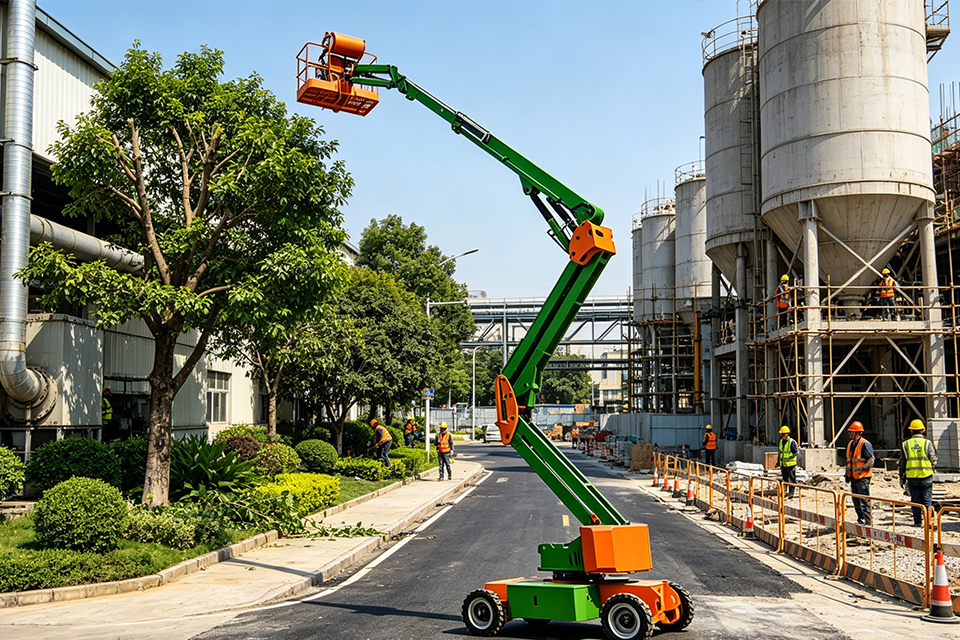
2. Regulatory Evolution: Establishing the Framework for Dual Improvement
2.1 The ANSI A92 Standards Transformation
The 2020 implementation of the ANSI A92 suite of standards—encompassing A92.20 (Design), A92.22 (Safe Use), and A92.24 (Training)—established the regulatory foundation for integrated safety-efficiency development . These standards, which replaced previous A92.3, A92.5, and A92.6 requirements, introduced mandatory technological features that simultaneously address accident prevention and operational optimization.
Key design requirements under A92.20 include load sensing systems that actively monitor platform loading and inhibit normal operation when capacity is exceeded, tilt alarm sensors with limited movement capabilities, and enhanced wind load calculations that reduce outdoor capacity ratings . These features prevent the hazardous conditions that cause tip-overs and structural failures while simultaneously optimizing machine configuration for specific application environments.
The standards mandate elimination of chain gates in favor of self-closing gated entrances with toe boards, increased guardrail heights to 43.5 inches (previously 39 inches), and puncture-resistant foam-filled tires for rough terrain applications . While primarily safety-focused, these requirements drive design innovations that improve operational efficiency—self-closing gates prevent workflow interruption from manual securing, while foam-filled tires eliminate downtime from puncture-related failures.
2.2 Global Harmonization Through ISO 21455
The 2020 publication of ISO 21455, addressing operator control standardization, represents a critical step toward global harmonization of MEWP interface design . This standard mandates consistent control actuation, displacement, and operation across manufacturers, ensuring that machine movement consistently matches control input—for example, pulling a joystick back raises the platform while pushing forward lowers it.
Australia is leading implementation, with AS/NZS 1418.10 revision incorporating ISO 21455 requirements effective September 2025, while Europe's EN 280 and North America's ANSI A92 are expected to follow within five to seven years . This standardization reduces operator confusion when switching between equipment types, decreasing training time and error rates while improving operational fluidity. Manufacturers including JLG and Skyjack, which participated in the ISO working group, are already incorporating these requirements into current production .
3. Intelligent Safety Systems: Technology and Implementation
3.1 Load Sensing and Active Stability Control
Modern MEWPs incorporate sophisticated load sensing systems that continuously monitor platform weight distribution and automatically adjust operational parameters to maintain stability. These systems represent a fundamental advance from passive capacity placards to active safety management that prevents overload conditions before they create hazardous situations .
The technology extends beyond simple weight measurement. Advanced systems integrate load data with tilt sensors, wind speed indicators, and chassis angle measurements to calculate real-time stability margins. When sensors detect conditions approaching stability limits, the system can restrict boom extension, limit elevation height, or inhibit movement functions—maintaining safety while providing operators with clear feedback about operational boundaries .
For efficiency, these systems eliminate the productivity losses associated with conservative operational assumptions. Rather than applying blanket restrictions based on worst-case scenarios, intelligent load sensing enables maximum utilization within actual safety margins, optimizing equipment performance for specific conditions.
3.2 Anti-Entrapment and Proximity Detection
Anti-entrapment systems have emerged as critical safety features, particularly for boom-type platforms where operators may become trapped between the platform and overhead obstacles. These systems utilize pressure-sensitive edges, proximity sensors, or computer vision to detect potential entrapment scenarios and automatically halt platform movement .
The aftermarket for such sensors is expanding rapidly, with proximity alarms, anti-entrapment devices, and tilt detectors gaining traction as construction sites prioritize proactive risk mitigation . Companies like Skyjack and Haulotte are integrating smart sensors into aftermarket kits, offering predictive diagnostics and automated alerts that enhance both safety and equipment uptime .
These systems improve efficiency by preventing accidents that cause project delays, equipment damage, and regulatory intervention. The automatic intervention capability allows operators to work with confidence in confined spaces, maintaining productivity without compromising safety margins.
3.3 Enhanced Control Systems and Ergonomics
ISO 21455's ergonomic requirements address control actuation force, spacing, and grouping to reduce operator error and fatigue . Computer-controlled valve systems, such as those implemented by Posi+ on cable placers, allow independent speed control for each function while programming familiar control patterns that reduce training time .
These ergonomic optimizations directly enhance efficiency. Reduced operator fatigue enables longer productive periods, while intuitive controls decrease error rates and accelerate task completion. The standardization of control layouts across manufacturers further reduces the cognitive load when operators transition between equipment types.
4. Efficiency Optimization Through Intelligent Systems
4.1 Predictive Maintenance and Smart Diagnostics
One of the most significant technological breakthroughs in modern AWPs is the integration of smart diagnostics systems that continuously monitor machine condition and provide real-time updates on potential issues before they cause downtime . These systems leverage the same sensor networks that enable safety monitoring to optimize maintenance scheduling and resource allocation.
Predictive maintenance alerts notify operators or maintenance teams when specific components approach end-of-life or require servicing, preventing sudden breakdowns that halt productivity . Real-time monitoring of operational conditions—from fuel levels to engine performance and battery health—reduces unexpected malfunctions and enables proactive intervention .
The economic impact is substantial. Research indicates that organizations implementing predictive maintenance through connected systems achieve equipment failure reductions of up to 70% and maintenance cost decreases of approximately 25% . For rental fleet operators, where downtime represents lost revenue and customer disruption, these improvements translate directly to enhanced profitability.
4.2 Telematics and Fleet Optimization
Telematics integration enables comprehensive fleet management that optimizes equipment deployment, utilization, and maintenance across distributed operations. Remote monitoring capabilities allow fleet managers to track equipment location, operational hours, and performance metrics in real-time, supporting data-driven decision-making .
Geofencing capabilities define virtual boundaries for equipment, generating alerts if machines are moved outside authorized zones—simultaneously preventing theft and ensuring compliance with operational parameters . Usage analytics identify patterns that support optimization of fleet composition, deployment strategies, and replacement scheduling.
These systems create efficiency gains through reduced downtime, optimized asset utilization, and streamlined maintenance logistics. The ability to monitor battery life, fuel consumption, and operational patterns enables proactive resource management that keeps projects on schedule and within budget .
4.3 Automation and Assisted Operation
Modern AWPs incorporate automated functions that enhance both safety and productivity. Self-leveling platforms automatically adjust to ground conditions, eliminating setup time and ensuring stability. Automatic height adjustment systems optimize positioning precision, while obstacle detection systems prevent collisions that cause damage and delays .
Computer-controlled systems can prioritize fluid flow to functions requiring immediate response, enabling simultaneous operation of multiple functions—going up, rotating, and auxiliary operations—while the computer manages resource allocation . Engine RPM optimization based on actual power requirements reduces fuel consumption and noise while maintaining responsive performance.
These automated capabilities reduce the skill threshold for efficient operation while enabling experienced operators to achieve higher productivity levels. The systems handle routine adjustments and safety monitoring, allowing operators to focus on task execution rather than equipment management.
5. Integrated Design Philosophy: Case Studies and Applications
5.1 Electric Platform Innovation
The development of electric and hybrid aerial platforms exemplifies the dual improvement paradigm. XCMG's XGS40ACK, a 125-foot all-electric telescopic rough terrain boom lift launched in January 2025, demonstrates how electrification simultaneously addresses safety and efficiency . The electric drivetrain eliminates emissions and noise, enabling indoor operation without ventilation requirements, while the four-section telescopic boom with 130-degree jib articulation provides versatile access capabilities.
Electric platforms generate operational data that enables optimization of battery management, charging schedules, and energy consumption patterns. Telematics systems track energy usage across fleets, identifying opportunities for efficiency improvement while supporting sustainability reporting requirements . The elimination of hydraulic fluids in some systems reduces environmental contamination risks and maintenance requirements.
5.2 Compact Design with Enhanced Capability
TIL's Snorkel A62JRT articulating boom lift, launched in December 2024, illustrates how safety and efficiency improvements enable compact designs with enhanced capabilities . The platform delivers 20.8-meter working height with zero tail swing, while the spacious platform accommodates two operators with tools—the largest in its class. The compact stowed length facilitates transport between job sites, improving logistical efficiency.
Versalift's VST-55-HDI demonstrates similar principles in the utility sector, providing nearly 60-foot working height on a Ford F-600 chassis (Class 6), eliminating the need for commercial driver's licenses while maintaining safety standards . The lighter tower design with fewer internal moving parts reduces working weight without compromising stability or load capacity.
6. Training and Human Factors: Enabling Safe Efficiency
The dual improvement paradigm extends to operator development. The ANSI A92.24 training requirements mandate comprehensive instruction encompassing theory and practical components, with specific familiarization requirements for equipment makes and models . This structured approach ensures that operators can leverage advanced safety and efficiency features effectively.
Supervisor training under A92.22 requires understanding of MEWP classification, risk assessment procedures, and safe use plan development . This elevated competency level ensures that operational planning integrates safety and efficiency considerations from project inception.
Occupant training—required for all personnel in the platform—addresses fall protection, stability factors, and emergency descent procedures . By ensuring that all platform occupants understand safety systems and operational constraints, these requirements prevent the human errors that compromise both safety and productivity.
The integration of familiarization requirements with equipment delivery ensures that operators understand specific machine features and capabilities, maximizing the benefits of advanced safety and efficiency technologies .
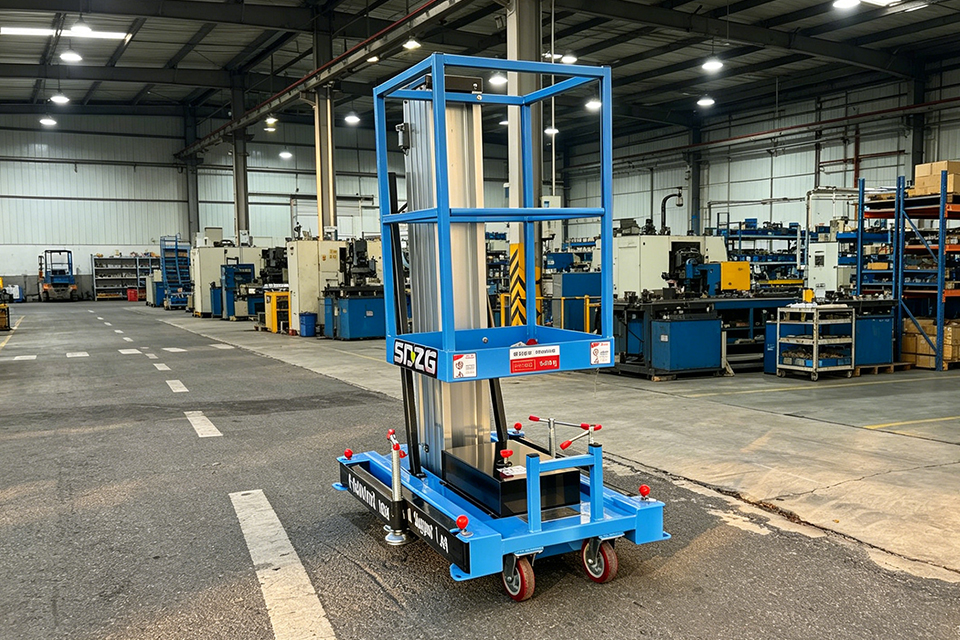
7. Future Trajectories: Toward Autonomous Operation
The trajectory of dual improvement points toward increasingly autonomous aerial platforms. Current implementations feature automated functions including self-leveling, automatic height adjustment, and obstacle detection . These capabilities reduce cognitive load on operators while improving safety and efficiency, particularly in hazardous environments.
Research suggests that construction robots will predict 45% fewer delays by 2030 through anticipatory intervention and error correction . For AWPs, this evolution implies platforms capable of autonomous positioning, self-diagnostics, and potentially independent operation in controlled environments such as warehouse maintenance or repetitive construction tasks.
The integration of artificial intelligence with sensor networks and control systems will enable predictive safety interventions that anticipate hazardous conditions before they materialize, while simultaneously optimizing operational parameters for maximum productivity. This convergence of safety intelligence and operational optimization represents the ultimate expression of the dual improvement paradigm.
8. Conclusion
The aerial work platform industry has successfully transcended the traditional safety-efficiency trade-off, establishing a new paradigm where these objectives are mutually reinforcing. Through regulatory evolution, technological innovation, and integrated design philosophy, modern MEWPs achieve unprecedented levels of performance while maintaining the highest safety standards.
The ANSI A92 and ISO 21455 standards provide the regulatory framework for this integration, mandating technologies that simultaneously prevent accidents and optimize operations. Intelligent safety systems—including load sensing, anti-entrapment devices, and stability monitoring—enable maximum utilization within actual safety margins rather than conservative assumptions. Efficiency optimization through predictive maintenance, telematics, and automation reduces downtime and operational costs while enhancing safety through continuous monitoring and proactive intervention.
As the industry progresses toward autonomous capabilities, the dual improvement trajectory will accelerate. The same sensor networks and intelligent systems that prevent accidents will optimize performance, while the data analytics that enable predictive maintenance will inform safety interventions. The future of aerial work machinery lies not in choosing between safety and efficiency, but in their complete integration—creating equipment that is simultaneously safer and more productive than ever before.
This transformation positions the AWP industry at the forefront of construction modernization, demonstrating how technological innovation can address fundamental industry challenges while creating new value propositions for equipment manufacturers, rental companies, and end users. The dual improvement era has arrived, and its impact will resonate throughout the construction ecosystem for decades to come.
Name: selena
Mobile:+86-13176910558
Tel:+86-0535-2090977
Whatsapp:8613181602336
Email:vip@mingyuforklift.com
Add:Xiaqiu Town, Laizhou, Yantai City, Shandong Province, China
