
vip@mingyuforklift.com
+86-0535-2090977

Introduction
Forklifts are indispensable workhorses in warehouses, manufacturing facilities, construction sites, and distribution centers worldwide. Yet these powerful machines—capable of lifting thousands of pounds while maneuvering in tight spaces—also represent one of the most significant sources of workplace injuries and equipment downtime when improperly maintained. Regulatory bodies across the globe, including the Occupational Safety and Health Administration (OSHA) in the United States, mandate that powered industrial trucks undergo thorough inspections at regular intervals. While daily pre-operational checks are the responsibility of the operator, the annual forklift inspection is a comprehensive, documented evaluation that delves into structural integrity, mechanical systems, safety devices, and operational performance.
This article provides a 2,000-word technical guide to conducting an annual forklift inspection. It covers the essential documentation framework, a detailed inspection checklist organized by system, and the most common pitfalls that inspectors encounter—along with strategies to avoid them. Whether you are a fleet manager, a certified technician, or a safety officer, this guide will help you establish a repeatable, compliant, and effective annual inspection program.
Part 1: The Regulatory and Documentation Framework
1.1 Understanding the Regulatory Landscape
In the United States, OSHA Standard 1910.178(l) requires that all powered industrial trucks be examined at least daily or after each shift if used around the clock. More critically, the standard mandates that "every industrial truck shall be examined before being placed in service, and shall not be placed in service if the examination shows any condition adversely affecting the safety of the vehicle." While OSHA does not explicitly prescribe an annual inspection in the same manner as some European or Canadian jurisdictions, industry best practice—and many insurance underwriters—demand a documented annual evaluation that goes far beyond the operator's daily walk-around.
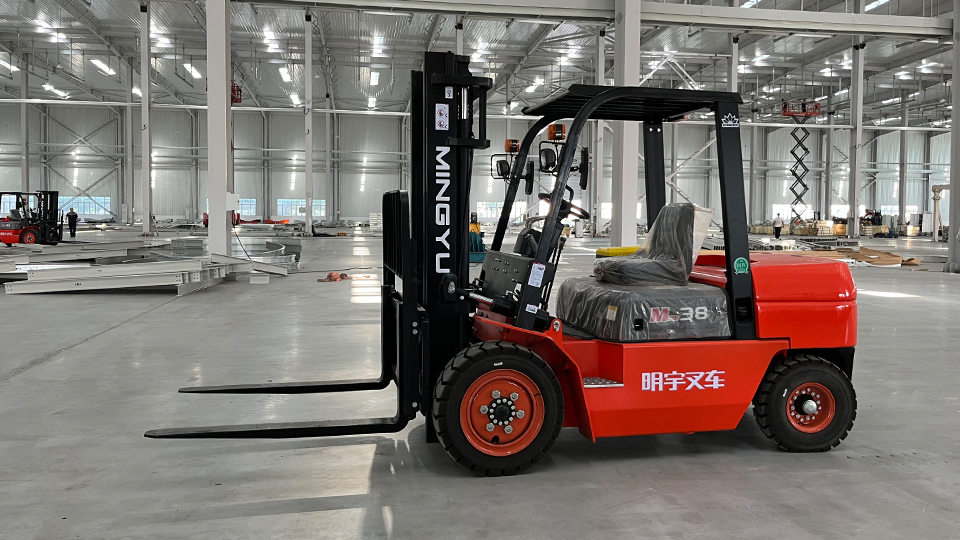
The American National Standards Institute (ANSI) and the Industrial Truck Standards Development Foundation (ITSDF) provide additional guidance through standards such as ANSI B56.1, which outlines safety requirements for low and high lift trucks. Similarly, the Canadian Standards Association (CSA) B335 standard requires annual inspections by a "competent person" and mandates that records be retained for a minimum of two years. Understanding which regulatory framework applies to your jurisdiction is the first step in designing a compliant inspection program.
1.2 The Documentation Trail
Documentation is not merely bureaucratic paperwork; it is the legal and operational backbone of fleet safety management. A robust annual inspection program generates four categories of records:
1. Inspection Schedules and Assignments
Maintain a master calendar that tracks each unit's annual inspection due date, the assigned technician's certification number, and the estimated downtime required. Digital fleet management systems can automate reminders and prevent units from operating past their inspection deadline.
2. Standardized Inspection Forms
Every inspection must be conducted using a standardized checklist form—either paper-based or digital—that covers all mandatory inspection points. The form should include fields for the unit's serial number, model, operating hours, date of inspection, technician name, and a pass/fail determination for each item. Space for photographic evidence of defects is increasingly common in modern digital platforms.
3. Deficiency Reports and Corrective Action Logs
When an inspector identifies a deficiency, a separate deficiency report must be generated. This report should describe the defect, classify its severity (critical, major, minor), assign a corrective action, and establish a completion deadline. The unit must be tagged out of service until critical deficiencies are resolved.
4. Final Certification and Archival
Upon successful completion of the inspection and any necessary repairs, a certification sticker or plate should be affixed to the forklift indicating the inspection date and the next due date. All records—inspection forms, deficiency reports, repair invoices, and final certifications—should be archived for a minimum of two years, or longer if required by local regulations or corporate policy.
Part 2: The Annual Inspection Checklist
The annual inspection must be systematic, repeatable, and exhaustive. The following checklist is organized by major system and is applicable to internal combustion (diesel, gasoline, LPG) and electric forklifts, with annotations where system-specific procedures diverge.
2.1 Structural and Overhead Guard Integrity
Begin with the forklift's primary protective structures. The overhead guard (or roll cage) is designed to protect the operator from falling objects, but it is also a structural member that absorbs energy in the event of a tip-over. Inspect all welds for cracks, particularly at the base plates where the guard attaches to the chassis. Check for evidence of prior impacts—dents, bent tubing, or repainted sections that may conceal damage. The load backrest extension must be securely fastened and free from deformation.
Examine the chassis and counterweight for cracks or separation. The counterweight, often a massive cast-iron block bolted to the rear of the truck, provides the ballast necessary to prevent forward tip-overs; loose or missing mounting bolts are a critical deficiency.
2.2 Mast, Carriage, and Fork Assembly
The mast assembly is the most mechanically stressed component of any forklift. Extend the mast to full height and inspect the inner and outer channels for cracks, wear, or distortion. The lift chains must be examined link by link for corrosion, elongation, or cracked plates. ANSI standards specify that a 3% elongation over a 10-link segment constitutes replacement criteria; experienced technicians often use a go/no-go gauge for this measurement.
Inspect the chain anchor pins, sheaves, and rollers for wear. Worn rollers can cause the mast to bind, leading to jerky lifting and premature chain failure. The carriage—the component that rides up and down the mast channels—must move freely without lateral play.
The forks themselves require meticulous attention. Check the heel thickness with a caliper; wear beyond 10% of the original cross-section mandates replacement under ANSI B56.1. Inspect for cracks, particularly at the heel bend and the mounting hooks. Never repair forks by welding or heating; replacement is the only compliant option. Verify that the fork retaining pins or locking mechanisms are present and functional.
2.3 Hydraulic System Evaluation
Hydraulic failures can result in uncontrolled load descent, a catastrophic event with potentially fatal consequences. The annual inspection must address the entire hydraulic circuit:
Reservoir and Fluid: Check the hydraulic oil level and condition. Dark, burnt-smelling fluid indicates overheating and oxidation. If the fluid is milky, water contamination is present—often caused by condensation or cooler leaks. Test the fluid's viscosity and, if available, submit a sample for spectroscopic analysis to detect metal wear particles.
Hoses and Fittings: Inspect all hydraulic hoses for abrasion, bulging, cracking, or leakage at the fittings. Hoses routed near hot engine components or sharp edges are particularly vulnerable. Any hose showing the wire reinforcement layer must be replaced immediately.
Cylinders: Examine the lift, tilt, and auxiliary cylinders for rod scoring, pitting, or seal leakage. A cylinder that weeps fluid when extended but appears dry when retracted indicates a failed rod seal. Check the cylinder mounting pins and bushings for wear that could allow lateral movement.
Valves and Controls: Test the directional control valve for neutral drift. With the engine running and the control lever in neutral, the forks should not creep downward. Drift indicates worn spools, leaking seals, or internal valve body wear. The relief valve setting must be verified with a pressure gauge; an improperly set relief valve can over-pressurize the system and rupture components.
2.4 Powertrain and Driveline (Internal Combustion Trucks)
For diesel, gasoline, and LPG forklifts, the powertrain inspection is extensive:
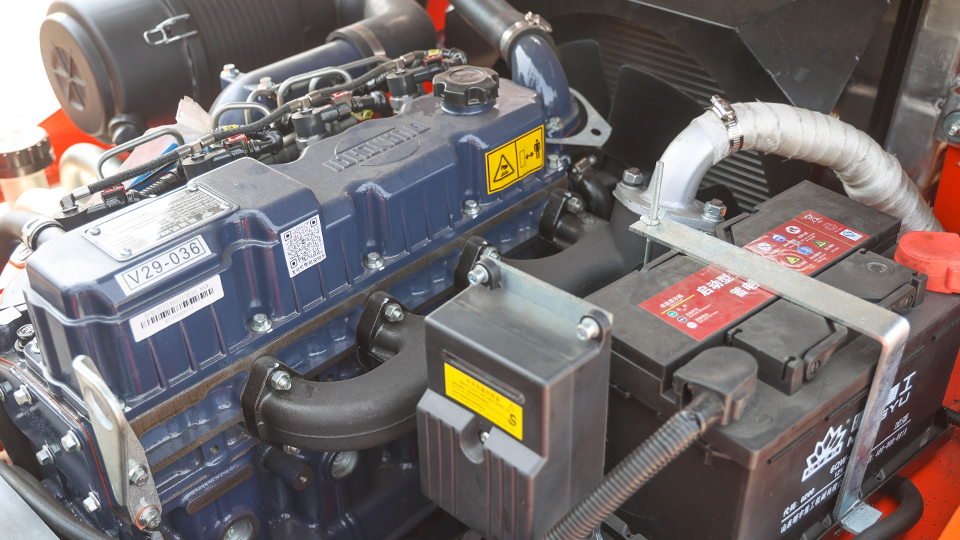
Engine: Compression test each cylinder to assess ring and valve condition. Inspect the cooling system for leaks, test the radiator cap pressure, and verify coolant freeze protection. The engine oil should be analyzed for fuel dilution, coolant contamination, and wear metals. Examine the air filter housing and intake piping for leaks that could allow unfiltered air to enter—an often-overlooked cause of accelerated cylinder wear.
Fuel System: On LPG trucks, inspect the tank, regulator, vaporizer, and hoses for leaks using a soap solution or electronic detector. Check the tank's certification date; DOT regulations require periodic requalification. For diesel trucks, inspect the fuel injection pump timing, test injector spray patterns, and verify that the water separator is functional.
Transmission and Torque Converter: Check transmission fluid level, color, and odor. Burnt fluid indicates overheating, often caused by excessive inching or improper operation. Test the transmission in forward and reverse under load, listening for delayed engagement, slipping, or harsh shifting.
Exhaust System: Inspect the manifold, piping, and muffler for leaks that could introduce carbon monoxide or diesel particulates into the operator's environment. Verify that the catalytic converter or diesel particulate filter (if equipped) is not clogged.
2.5 Electrical System (Electric and IC Trucks)
Battery and Charging (Electric Trucks): Measure specific gravity in each cell with a hydrometer (for flooded lead-acid batteries) or verify state-of-health indicators (for sealed or lithium-ion packs). Check for sulfation, sediment buildup, and electrolyte levels. Inspect the battery connector, cables, and contactor tips for arcing damage. The charger must be tested for proper voltage and amperage output, and the emergency shut-off function verified.
Starter, Alternator, and Wiring (IC Trucks): Test battery cold-cranking amps and charging system output. Inspect all wiring harnesses for chafing, particularly where they pass through firewall grommets or along frame edges. Corroded ground connections are a leading cause of intermittent electrical faults.
Lighting and Alarms: Verify that all headlights, taillights, brake lights, turn signals, and warning beacons are operational. Test the backup alarm and any motion-activated warning systems.
2.6 Braking System
Brake failure is unforgiving. The annual inspection must include:
Service Brake: Test stopping distance from a defined speed (typically 10 mph) under loaded and unloaded conditions. Measure brake pedal free travel and test for air in hydraulic lines (if applicable). Inspect brake pads, shoes, drums, or discs for wear beyond manufacturer limits.
Parking Brake: The parking brake must hold the truck stationary on a defined grade (usually 15%) in both forward and reverse. Test on an actual incline or using a certified test ramp. Inspect the parking brake linkage, cables, and ratchet mechanism for wear and proper adjustment.
2.7 Steering and Suspension
Steering on a forklift is typically rear-wheel, which provides a tight turning radius but also creates a wide tail swing. Test the steering for excessive free play—more than 15 degrees of wheel movement before the wheels respond indicates worn steering gears, linkages, or kingpins. Inspect tie-rod ends, ball joints, and hydraulic steering cylinders for leaks or looseness.
For pneumatic-tired trucks, inspect shock absorbers and suspension bushings. Solid-tired trucks rely on the tire itself for cushioning; inspect for chunking, flat spotting, or separation from the rim.
2.8 Operator Compartment and Controls
The operator's immediate environment must be ergonomic and safe. Inspect the seat for torn upholstery, collapsed suspension, or failed adjustment mechanisms. The seat belt must retract smoothly and latch securely. All control levers, pedals, and switches should operate with appropriate resistance and detent feedback. The horn, hour meter, and any onboard diagnostic displays must be functional.
Part 3: Common Pitfalls and How to Avoid Them
Even experienced technicians and fleet managers fall into predictable traps during annual inspections. Recognizing these pitfalls is essential for maintaining program integrity.
3.1 Pitfall: Treating the Annual Inspection as a "Big Daily Check"
The most pervasive error is conflating the annual inspection with an expanded version of the operator's daily pre-start checklist. The daily check is a surface-level, 5-minute scan for obvious fluid leaks and tire damage. The annual inspection is a deep diagnostic that requires disassembly, measurement, and testing. Avoid this pitfall by establishing clear boundaries: if a task requires a tool beyond a flashlight and rag, it belongs in the annual program, not the daily routine.
3.2 Pitfall: Inadequate Technician Training and Certification
Regulatory standards require that annual inspections be performed by a "competent person"—defined as someone with training, experience, and authority to identify hazards and initiate corrective actions. Sending a general maintenance mechanic to inspect a forklift without specific powered industrial truck training is a recipe for missed defects. Invest in factory-authorized training for at least one technician per shift, and maintain current certification records.
3.3 Pitfall: Neglecting Load Testing
An annual inspection that does not include a loaded operational test is incomplete. Many hydraulic leaks, brake deficiencies, and transmission faults only manifest under load. Establish a standardized load test protocol using certified test weights (never use production inventory as a substitute) and document performance metrics such as lift speed, lowering drift, and stopping distance.
3.4 Pitfall: Poor Deficiency Tracking and Closure
Identifying a defect is only half the battle; ensuring timely repair is the other. A common failure mode is the "tag-and-forget" syndrome, where a truck is tagged out of service but remains idle for weeks because parts are on backorder or labor is unavailable. Implement a closed-loop tracking system that escalates overdue repairs to management and provides alternate equipment to maintain operational capacity.
3.5 Pitfall: Inconsistent Record Keeping
Scattered paper forms, illegible handwriting, and missing photographs undermine the legal defensibility of an inspection program. Transition to a digital platform that timestamps entries, geotags locations, and automatically archives records in the cloud. In the event of an incident investigation or regulatory audit, a searchable digital trail is invaluable.
3.6 Pitfall: Ignoring Attachment Inspections
Forklifts equipped with specialized attachments—paper roll clamps, carton clamps, rotators, or push-pull systems—require attachment-specific inspections that are often overlooked. The attachment's hydraulic circuit, mounting pins, and structural welds must be evaluated with the same rigor as the base truck. Consult the attachment manufacturer's inspection guidelines and integrate them into the annual checklist.
Conclusion
The annual forklift inspection is a cornerstone of industrial safety and equipment stewardship. It demands more than a cursory glance; it requires a disciplined, documented, and technically rigorous evaluation of every system that contributes to safe operation. By establishing a clear documentation framework, adhering to a comprehensive checklist, and vigilantly avoiding common pitfalls, organizations can protect their workforce, extend equipment life, and maintain regulatory compliance. In an era of increasing automation and just-in-time logistics, the reliability of the forklift fleet is not merely an operational concern—it is a strategic imperative. Treat the annual inspection with the seriousness it deserves, and it will repay that investment in safer shifts, fewer breakdowns, and uninterrupted productivity.
Name: selena
Mobile:+86-13176910558
Tel:+86-0535-2090977
Whatsapp:8613181602336
Email:vip@mingyuforklift.com
Add:Xiaqiu Town, Laizhou, Yantai City, Shandong Province, China
