
vip@mingyuforklift.com
+86-0535-2090977

Introduction
The Utilev brand, a value-focused line within the Hyster-Yale Group, manufactures internal combustion forklifts that are widely deployed in warehouses, manufacturing plants, and logistics yards across the globe. Diesel-powered Utilev models—typically in the 2.0 to 3.5-ton capacity range—combine the high torque of compression-ignition engines with the rugged simplicity required for all-day material handling. Because these machines operate in close proximity to pedestrians, racking systems, and expensive inventory, every startup must follow a disciplined, repeatable protocol that prioritizes safety, mechanical integrity, and emissions compliance.
This article provides a comprehensive, step-by-step guide to the startup procedure for a diesel Utilev forklift. The procedure is organized into four phases: (1) pre-start visual and fluid inspections, (2) operator positioning and safety-system verification, (3) engine starting and warm-up, and (4) post-start functional tests before the first load is lifted. Wherever possible, the guidance aligns with the official Hyster/Utilev operator documentation and industry best practices for diesel industrial trucks .
Phase 1: Pre-Start Inspection (Walk-Around)
Before the operator even climbs into the cab, a systematic walk-around inspection must be completed. This phase is the most effective way to catch fluid leaks, tire damage, or fork defects that could lead to catastrophic failure once the engine is running.
1.1 Visual and Structural Checks
Begin at the front of the truck and move counter-clockwise. Look for fresh oil, fuel, or coolant puddles on the floor—any indication of an overnight leak. Inspect the mast channels, carriage, and forks for cracks, bends, or excessive wear. Fork heels should be checked for straightness; a damaged fork can drop a load without warning. Examine the lift chains and rollers for proper lubrication and equal tension. On the overhead guard, verify that no structural welds are cracked and that the safety glass (if fitted) is free of impact damage.
1.2 Tire and Wheel Inspection
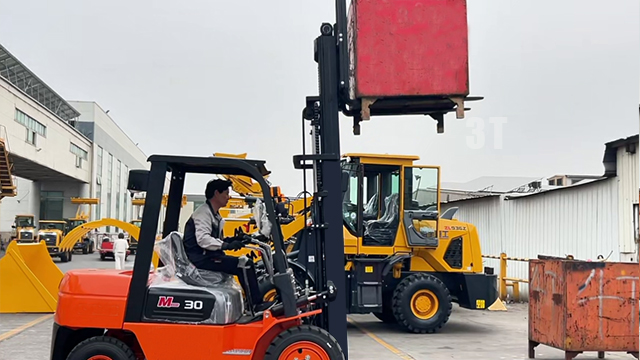
Diesel Utilev forklifts are rear-steering, meaning the front tires carry the majority of the load weight. Check pneumatic tires for correct inflation pressure and tread depth; solid tires should be inspected for chunking or separation. Loose wheel nuts are a common cause of industrial accidents, so a quick visual check of the wheel hardware is prudent. If the truck is equipped with a front-end attachment such as a sideshifter or fork positioner, confirm that the auxiliary hydraulic lines are not chafed or leaking.
1.3 Fluid Level Verification
Fluid checks are the heart of the pre-start routine. On a diesel Utilev, the operator must verify at least four critical fluids:
Engine oil – Withdraw the dipstick, wipe it clean, reinsert fully, and read the level. It must sit between the MIN and MAX marks. Low oil pressure during startup can destroy a diesel turbocharger in seconds.
Coolant – The coolant reservoir (or radiator sight glass) should show fluid at the “FULL COLD” mark. Never open a radiator cap on a warm engine; the system is pressurized and scalding coolant can erupt.
Diesel fuel – Ensure the tank is sufficient for the planned shift. Running a diesel fuel system dry introduces air that will require manual bleeding before the engine will restart.
Hydraulic oil – The hydraulic reservoir sight gauge should read within the recommended band. Low hydraulic fluid can cause mast drift or slow lift cycles.
If any fluid is low, top it off with the exact specification listed in the Utilev operator’s manual. Mixing coolant technologies or hydraulic oil viscosities can damage seals and pumps .
1.4 Battery and Electrical System
Open the battery compartment (usually located beneath the operator seat or behind a side panel) and inspect the terminals for corrosion. White or greenish buildup indicates acid leakage; clean the terminals with a baking-soda solution and ensure the cable clamps are tight. A weak battery may crank the engine slowly, but more importantly it may fail to power the glow-plug circuit, making cold-weather starts impossible.
1.5 Air Intake and Exhaust
Check the air-filter restriction indicator if fitted; a clogged filter will reduce power and increase black smoke. Inspect the exhaust pipe and muffler for cracks that could leak carbon monoxide into the operator’s breathing zone. Diesel particulate matter is a known carcinogen, so any exhaust leak must be repaired before the truck is used indoors.
Phase 2: Operator Positioning and Safety-System Verification
Once the walk-around is complete, the operator may enter the cab. Utilev trucks are designed with a neutral-start interlock, meaning the engine will not crank unless the transmission is in neutral and the parking brake is applied.
2.1 Seat and Belt Adjustment
Adjust the seat so that all foot pedals (accelerator, brake, inching brake if equipped) can be reached without stretching. The seat belt must be fastened before the engine is started; on trucks with an optional seat-belt interlock, the starter circuit is disabled until the belt is latched. The operator’s back and waist should be against the seatback, with the left hand on the steering wheel and the right hand ready for the hydraulic controls .
2.2 Control Neutralization
Verify that the directional control lever (forward-neutral-reverse) is in the NEUTRAL position. On models with a separate mechanical shift lever, confirm it is also in neutral. Place all hydraulic levers (lift, tilt, sideshift, auxiliary) in their neutral or “hold” detents. The parking brake lever must be fully engaged; on trucks with an electric parking brake, confirm the indicator lamp is illuminated.
2.3 Dashboard Lamp Test
Insert the ignition key and turn it to the ON position (one click clockwise from OFF). The instrument panel will perform a bulb check: all warning lamps and LCD segments should illuminate for approximately 0.5 seconds, then extinguish except for any active fault indicators. If a lamp fails to light, the bulb or circuit may be defective. If a lamp stays on—particularly the engine malfunction, low oil pressure, or glow-plug indicator—do not attempt to start the engine. Consult a qualified technician .
Phase 3: Engine Starting and Warm-Up
Diesel engines rely on compression heat to ignite fuel, so the starting sequence differs significantly from gasoline or LPG forklifts. Cold cylinders, thick oil, and air in the fuel lines are the primary enemies of a reliable start.
3.1 Cold-Start Aid (Glow Plugs)
When the ignition key is turned to ON, the engine control unit energizes the glow plugs if the coolant temperature is below approximately 21 °C (70 °F). A glow-plug or “cold start” icon (usually a coil symbol) illuminates on the dash. The duration of pre-heating depends on ambient temperature:
表格
Coolant Temperature Recommended Pre-Heat Time
20 °C (68 °F) 8 seconds
10 °C (50 °F) 15 seconds
0 °C (32 °F) 18 seconds
–10 °C (14 °F) 25 seconds
–20 °C (–4 °F) 30 seconds
–30 °C (–22 °F) 40 seconds
Wait until the glow indicator either extinguishes or begins to blink, signaling that the combustion chambers have reached adequate temperature. Do not rush this step; attempting to crank while the plugs are still heating can flood the intake with unburned fuel .
3.2 Cranking the Engine
With the glow-plug cycle complete, turn the key further clockwise to the START position. The starter motor will engage. Release the key as soon as the engine fires; a spring returns the key to the ON position automatically. If the engine does not start within 10 seconds, release the key and wait 5–10 seconds before a second attempt. Continuous cranking overheats the starter and can drain the battery. The Utilev electronic control unit also features an anti-restart function: if the engine stalls, the key must be returned to OFF before another start attempt is recognized .
Important: Do not press the accelerator pedal during cranking. The Utilev ECU is programmed with a “Clear Flood Mode”—if the pedal is depressed more than 80 % during cranking, fuel injection is disabled to prevent hydrolock.
3.3 Fuel System Priming (If Required)
If the forklift has been serviced recently or the fuel tank was run dry, air may have entered the high-pressure lines. In this case, manual priming is necessary before the engine will start:
Locate the hand primer pump on the fuel filter head.
Loosen the air-bleed screw (purging bolt) on top of the filter housing.
Operate the hand pump until fuel flows from the bleed screw without bubbles.
Tighten the bleed screw and pump a few more strokes to pressurize the system.
Failure to bleed the system will result in extended cranking and potential damage to the injection pump .
3.4 Post-Start Warm-Up
Once the engine starts, allow it to idle for 5 to 10 minutes before applying load. This warm-up period serves several purposes:
Engine oil circulates to the turbocharger bearings and cylinder walls.
Coolant begins flowing through the radiator and heater core.
Hydraulic oil warms, reducing viscosity drag and improving response.
The ECU completes its self-diagnostic routines.
During warm-up, monitor the coolant temperature gauge. The optimum operating zone is roughly the middle of the bar-graph display. If the temperature gauge climbs rapidly into the red zone, or if the warning buzzer sounds, shut down immediately and investigate for coolant loss or thermostat failure. Also listen for abnormal combustion noises (knocking or misfiring) and observe the exhaust color:
Exhaust Color Indication
Colorless Normal complete combustion
Black Incomplete combustion (over-fueling or restricted intake)
White Water entering combustion chamber (head-gasket leak)
Blue Oil burning (piston-ring or valve-seal wear)
Any persistent abnormal color warrants immediate shutdown and service .
Phase 4: Post-Start Functional Verification
After the engine has reached stable idle temperature, the operator must confirm that every safety-critical system responds correctly before moving the first pallet.
4.1 Hydraulic System Test
With the engine at low idle, cycle the lift lever through its full stroke—raise the forks to maximum height and lower them to the floor. Repeat with the tilt lever, moving the mast fully backward and then slightly forward. If the truck is equipped with a sideshifter or fork positioner, test those functions as well. The motion should be smooth, without jerking, cavitation noise, or drift when the lever is released. Drift indicates worn control-valve spools or leaking cylinder seals.
4.2 Brake and Steering Check
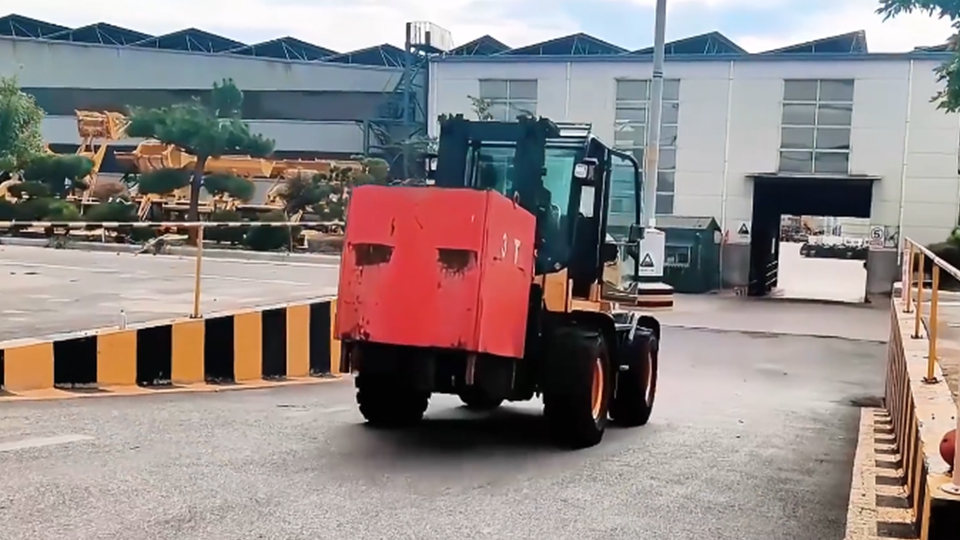
Apply the service brake firmly while stationary; the pedal should feel solid, not spongy. Release the parking brake and roll forward a few meters at walking speed, then brake again. The truck should stop in a straight line without pulling left or right. Turn the steering wheel lock-to-lock; rear-wheel steering on a Utilev forklift means the tail swings wide, so the steering should be responsive and free of binding.
4.3 Horn, Lights, and Indicators
Sound the horn, cycle the headlights, and test the turn-signal lever. Unlike passenger cars, the Utilev turn-signal lever does not self-cancel; it must be returned to neutral manually after each turn. If the truck is equipped with a beacon or reverse alarm, verify those as well.
4.4 Final Walk-Around
Before engaging in productive work, perform a final 360-degree visual sweep. Confirm that no tools, fluid cans, or personnel are within the swing radius of the mast or the rear counterweight. The forks should be lowered to 15–20 cm (6–8 in.) above the ground, with the mast tilted fully backward to stabilize the load center of gravity .
Special Operating Conditions
Cold-Weather Operation
In sub-zero environments, diesel fuel can gel, and battery capacity drops precipitously. Use winter-grade diesel with a cloud point appropriate for the lowest expected ambient temperature. If the truck is equipped with an engine-block heater, plug it in for at least two hours before the shift. An optional cold-weather package may include a grid heater or ether injection port; use these aids strictly according to the manufacturer’s guidelines to avoid engine damage.
High-Altitude Operation
At elevations above 1,500 m (5,000 ft), the thinner air reduces the mass of oxygen available for combustion. Diesel engines may produce less power and emit more black smoke. If prolonged high-altitude operation is expected, the fuel-injection timing and turbocharger boost may require recalibration by an authorized Hyster-Yale technician.
Shutdown and Parking Protocol
Although the question focuses on startup, a safe startup is only possible when the previous operator performed a proper shutdown. At the end of each shift:
Park on a level surface and apply the parking brake.
Lower the forks fully to the ground and tilt the mast forward slightly to relieve hydraulic pressure.
Move all control levers to neutral.
Allow the engine to idle for 1–2 minutes if it has been working hard; this prevents turbocharger oil coking.
Turn the key to OFF and remove it.
Block the wheels if the truck is parked on an incline.
Conclusion
The startup procedure for a diesel Utilev forklift is a deliberate, multi-phase ritual that balances mechanical preparation with operator safety. From the initial fluid-level checks to the glow-plug pre-heat cycle and the post-start hydraulic verification, each step exists to prevent the kind of failures that turn a routine material-handling shift into a costly accident. Operators who treat startup as a checklist-driven discipline—not a casual turn of the key—extend equipment life, reduce downtime, and protect the people working around them. For model-specific torque values, fluid specifications, and wiring diagrams, always consult the official Utilev operator and service manuals available through authorized Hyster-Yale dealers
Name: selena
Mobile:+86-13176910558
Tel:+86-0535-2090977
Whatsapp:8613181602336
Email:vip@mingyuforklift.com
Add:Xiaqiu Town, Laizhou, Yantai City, Shandong Province, China