
vip@mingyuforklift.com
+86-0535-2090977

�� A Technical Analysis of Catastrophic Incidents: The Common Accidents Involving Powered Industrial Trucks (Forklifts)
Powered Industrial Trucks (PITs), commonly referred to as forklifts, are indispensable workhorses in logistics, warehousing, and manufacturing. However, their unique design—high center of gravity, rear-wheel steering, and substantial mass—renders them inherently unstable and dangerous when operated improperly. According to the Occupational Safety and Health Administration (OSHA), tens of thousands of serious forklift-related injuries occur annually, with approximately 75–100 resulting in fatalities.1 Crucially, up to 70% of these incidents are estimated to be preventable through comprehensive training and adherence to safety protocols.2
This technical article dissects the major categories of forklift accidents, analyzing the primary causal factors rooted in the principles of physics, human factors, and environmental design.
I. Category 1: Vehicle Instability and Tip-Overs (The Leading Cause of Fatalities)
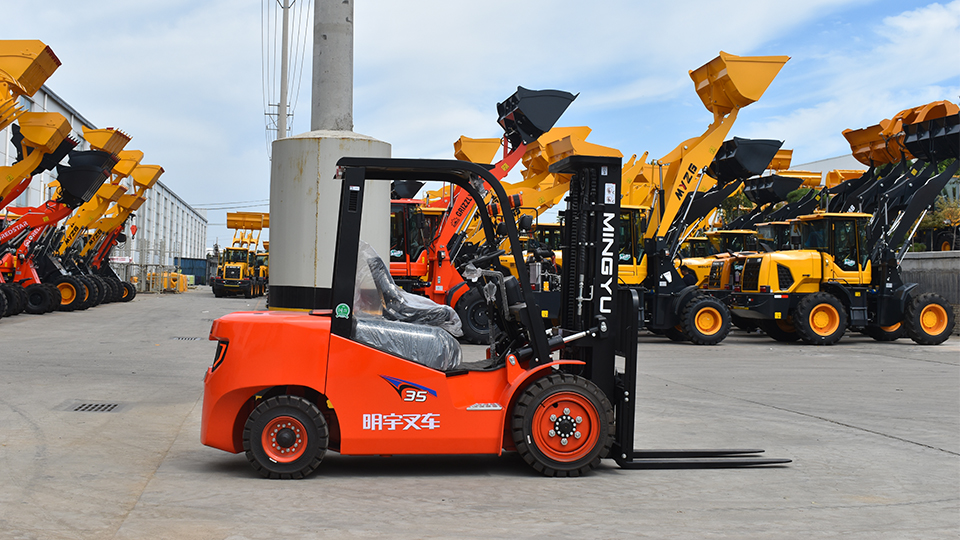
Forklift rollovers are the most common type of fatal forklift accident.3 They occur when the vehicle’s center of gravity shifts outside its Stability Triangle (the base formed by the front axle pivots and the rear axle center point), leading to a loss of equilibrium.
A. Lateral Tip-Overs (Sideways Rollovers)4
Lateral tips are often sudden and violent, resulting in the operator being crushed by the overhead guard if they attempt to jump out—the leading cause of operator fatality in this category.
|
Causal Factor |
Technical Rationale |
|
Excessive Speed on Turns |
Centrifugal force is proportional to the square of the speed ($F_c \propto v^2$). Turning too quickly dramatically increases the lateral force acting on the center of gravity, pulling it outside the Stability Triangle. |
|
Elevated Load While Traveling |
Raising the load significantly raises the combined center of gravity (truck + load). A higher center of gravity reduces the critical angle of tip, making the truck exponentially more susceptible to side-to-side tipping forces. |
|
Traveling on Inclines/Ramps |
Turning or driving across a slope or grade reduces the effective width of the Stability Triangle, requiring only a minimal shift in the center of gravity to cause a tip-over. |
|
Uneven Surfaces/Potholes |
Driving a wheel into a pothole or over a high obstruction creates a sudden, severe lateral shift in the vehicle's base support, initiating a tip before the operator can react. |
B. Longitudinal Tip-Overs (Forward Tipping)
Forward tipping, while less common than lateral tipping in fatalities, is the result of overwhelming the front axle's capacity to support the load.
|
Causal Factor |
Technical Rationale |
|
Exceeding Rated Capacity |
Carrying a load heavier than the Rated Capacity (found on the data plate) moves the center of gravity forward of the front axle. This is an immediate and catastrophic failure of stability. |
|
Sudden Braking with Elevated Load |
Rapid deceleration generates significant inertia in the load, increasing the load moment arm and potentially overcoming the counterweight's effect. |
|
Forward Tilt at Height |
Tilting the mast forward while the load is elevated extends the load moment arm, destabilizing the truck and causing a forward pitch, especially if the load is not centered correctly. |
II. Category 2: Collisions and Striking Incidents
Collisions involve the forklift striking either static objects (e.g., racking, structural columns) or, more dangerously, other vehicles and pedestrians.5 Pedestrian impacts account for a significant portion of both fatal and serious injury cases (up to 36% of fatalities).6
A. Pedestrian Impacts
These incidents are often catastrophic for the pedestrian, who can be crushed, run over, or struck by the swinging rear end of the forklift.
|
Causal Factor |
Technical Rationale |
|
Rear-End Swing |
Counterbalanced forklifts utilize rear-wheel steering. When turning, the rear of the truck swings outward, often catching pedestrians unaware or crushing them against a fixed object (e.g., a wall or rack). |
|
Operator Blind Spots |
Tall or wide loads inherently obstruct the forward view. The operator is mandated to travel in reverse in this situation, but failure to do so, or inadequate checks when reversing, leads to collisions. |
|
Lack of Warning Devices |
Failure to use the horn at blind intersections, doorways, or rack aisles prevents timely warning, creating collision opportunities in shared spaces. |
|
Inadequate Workplace Zoning |
Mixing high-traffic pedestrian areas with intensive forklift routes without barriers, visual signals (e.g., floor striping, guard rails), or safety lighting (e.g., "blue lights") is a common administrative failure leading to accidents. |
B. Collisions with Structures and Equipment
|
Causal Factor |
Technical Rationale |
|
Speed and Reaction Time |
Excessive speed in narrow aisles or congested spaces reduces the operator's reaction time and increases stopping distance. A forklift's stopping distance is significantly longer than a car's due to its solid tires and heavy load. |
|
Racking Impact |
Forklift contact with storage racking compromises the structural integrity of the shelving system, potentially leading to catastrophic rack collapse and mass falling load incidents. |
|
High Reach Errors |
Misjudging overhead clearance when the mast is partially or fully raised, resulting in collision with overhead pipes, ductwork, or high bay doors. |
III. Category 3: Falls to a Lower Level and Dock Accidents
Loading docks and vehicle thresholds present a convergence of hazards, frequently leading to the forklift or its load falling to a lower level.7
A. Runaway Trailers and Dock Plunge
|
Causal Factor |
Technical Rationale |
|
Absence of Wheel Chocks/Restraints |
When a forklift enters or exits an unsecured trailer, the kinetic energy of the forklift's mass causes the trailer to roll or "creep" away from the dock. This creates a gap into which the forklift can plunge, pinning the operator or causing a severe drop injury. |
|
Improper Dock Plate/Bridge Plate |
Using a dock plate that is not rated for the combined weight of the forklift and its maximum load, or a plate that is improperly secured, can lead to the plate shifting, folding, or collapsing during transfer. |
|
Driving Off the Dock Edge |
Operator inattention or poor maneuvering near the dock edge can result in the forklift falling completely from the dock to the lower grade level. |
B. Personnel Falls
Falls associated with forklifts are primarily the result of the misuse of the equipment for elevating workers.
|
Causal Factor |
Technical Rationale |
|
Using Unapproved Platforms |
Elevating personnel on standard pallets or forks without an approved, securely attached work platform (man basket) that includes toe boards, guardrails, and secure attachment to the carriage. |
|
Sudden Movement |
The forklift operator moving or lowering the forks while a worker is elevated, violating the protocol that the operator must remain seated at the controls while the worker is elevated, and no movement should occur until the platform is fully lowered. |
IV. Category 4: Falling Loads and Crushing Hazards
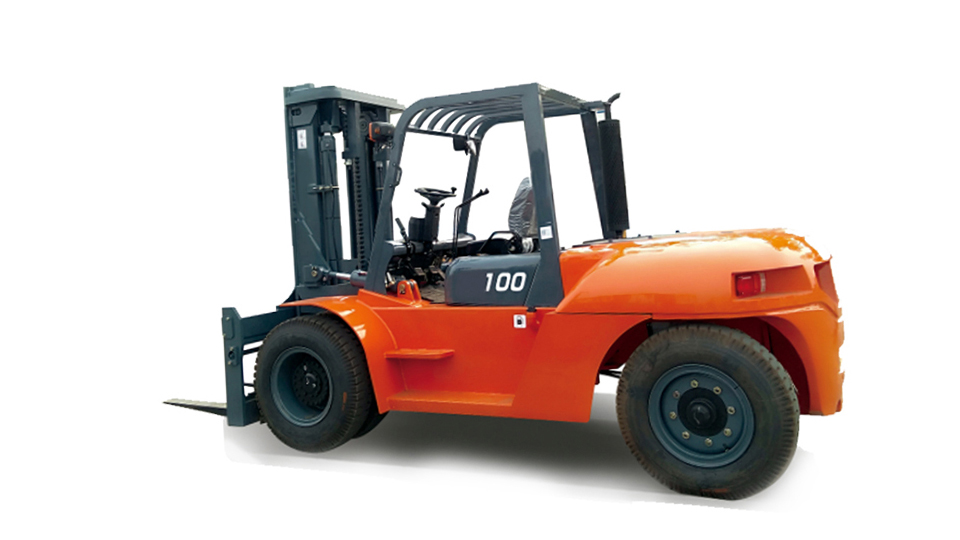
Accidents involving falling materials pose a severe risk to both the operator and surrounding personnel, leading to crushing injuries.8
|
Causal Factor |
Technical Rationale |
|
Improper Load Creation |
Unstable load center: Failure to center the load on the forks, making it prone to tipping sideways. Unsecured loads: Failure to use appropriate stretch wrap, banding, or tying to stabilize loose materials. |
|
Damaged Equipment |
Operating a forklift with a bent or cracked fork, or a damaged load backrest extension. The load backrest is essential for preventing material from falling backward onto the operator. |
|
Abrupt Mast Movement |
Rapidly tilting the mast or lifting/lowering the load too quickly introduces dynamic forces that can overcome the friction holding the load stack together. |
|
High Stacking Errors |
Placing loads in a racking system without adequate horizontal or vertical clearance, causing contact with the rack during placement or retrieval, and dislodging adjacent materials. |
V. Underlying Systemic and Human Factors
The immediate cause of an accident (e.g., "turned too fast") is often triggered by underlying systemic failures. OSHA estimates that operator error is involved in up to 90% of all forklift incidents.
|
Systemic Factor |
Technical Implication |
|
Inadequate Training and Certification |
Failure to provide comprehensive training in accordance with OSHA standards (29 CFR 1910.178) on vehicle stability, safe operating speeds, and load handling. Training must be specific to the type of truck and the workplace environment. |
|
Fatigue and Distraction |
Long shifts, lack of breaks, and operator fatigue significantly degrade reaction time and decision-making capacity. Distractions (e.g., mobile phones, complex radio communication) compromise the operator's vigilance. |
|
Poor Maintenance |
Mechanical failures (e.g., brake fade, hydraulic leaks, worn mast chains) resulting from neglected pre-shift inspections or scheduled preventative maintenance (PM) are direct contributors to loss of control. |
|
Inadequate Lighting and Noise |
Poor illumination in working areas or excessive ambient noise compromises visibility and the operator's ability to hear warning signals (horns, alarms), increasing collision risk. |
Conclusion
The vast majority of forklift accidents can be categorized into four high-risk areas: Tip-Overs, Pedestrian and Structural Collisions, Falls to a Lower Level, and Falling Loads. These incidents are a direct result of physics principles being violated, primarily related to the center of gravity and load moment. Mitigating these risks requires a multi-faceted approach centered on rigorous operator certification and retraining, strict enforcement of safe operating procedures (especially regarding speed and load positioning), and proactive engineering controls within the facility (e.g., traffic management, safety barriers, and well-maintained equipment). By addressing the root causal factors—operator error and environmental design flaws—the industry can significantly reduce the catastrophic injury and fatality rates associated with these essential but hazardous industrial machines.
Name: selena
Mobile:+86-13176910558
Tel:+86-0535-2090977
Whatsapp:8613181602336
Email:vip@mingyuforklift.com
Add:Xiaqiu Town, Laizhou, Yantai City, Shandong Province, China