
vip@mingyuforklift.com
+86-0535-2090977

Introduction
The forklift truck stands as one of the most transformative inventions in industrial history, fundamentally reshaping manufacturing, warehousing, and logistics operations worldwide. Yet the question of who invented the first forklift truck resists a simple answer. Unlike the telephone or light bulb, the forklift emerged through incremental innovations spanning decades, with multiple inventors, companies, and technological breakthroughs contributing to its evolution. This article examines the technical genealogy of powered industrial trucks, tracing the development from manual hoists to the sophisticated material handling equipment that underpins modern supply chains.
Understanding forklift origins requires examining the broader context of industrialization, the emergence of standardized pallets, and the mechanization of warehouse operations. The invention was not a singular eureka moment but rather a convergence of engineering solutions responding to specific economic and logistical challenges. By analyzing patent records, corporate archives, and technical specifications, we can reconstruct the developmental timeline and identify the key contributors who transformed materials handling from backbreaking manual labor to efficient mechanized processes.
Predecessor Technologies: The Era of Manual Handling
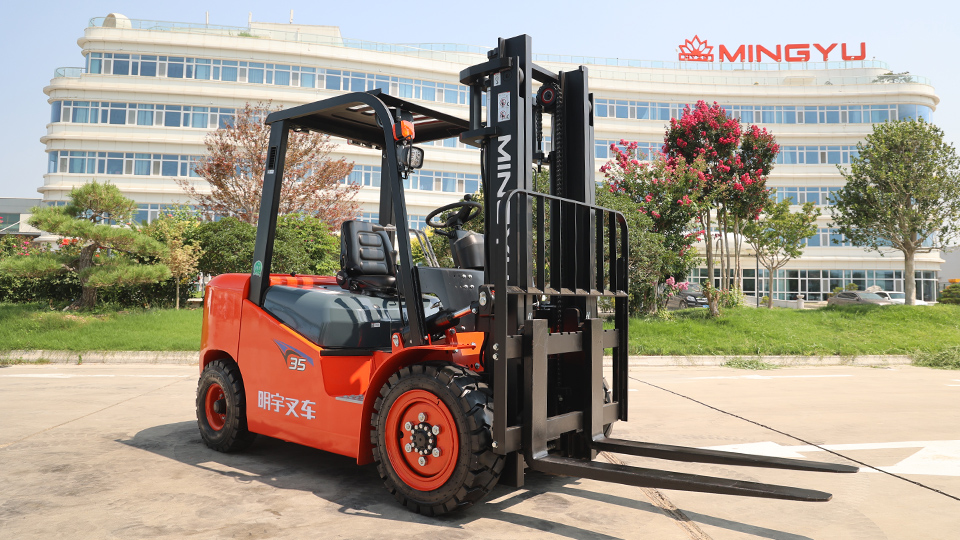
Before powered lift trucks, materials movement relied entirely on human and animal labor augmented by simple mechanical advantage devices. The ancient world employed ramps, levers, and pulley systems for construction and cargo handling, but these remained static installations rather than mobile solutions. The Industrial Revolution of the 18th and 19th centuries introduced steam power and railways, dramatically expanding production capacity while simultaneously creating new challenges for internal factory logistics.
The first significant predecessor to the forklift appeared in 1867 when the Pennsylvania Steel Company developed a primitive platform truck for moving heavy steel components within their facility. These early devices featured wheeled platforms pushed by workers, representing the conceptual foundation of load transportation but lacking vertical lifting capability. The introduction of cast iron wheels and later rubber tires improved mobility, yet the fundamental limitation remained: materials had to be manually lifted onto these platforms, restricting efficiency and creating significant ergonomic hazards.
Hydraulic technology, originally developed for presses and industrial machinery, provided the technical basis for vertical lifting. The Pascal principle—demonstrating that pressure applied to confined fluid transmits equally in all directions—enabled compact yet powerful lifting mechanisms. By the late 19th century, hydraulic jacks were commonplace in railway maintenance shops, providing the mechanical foundation that would eventually enable self-propelled lifting vehicles.
The Early 20th Century: Birth of Powered Lift Trucks
The definitive precursor to the modern forklift emerged in 1906 when the Pennsylvania Railroad introduced battery-powered platform trucks for moving luggage at their Altoona, Pennsylvania station. Developed by the railroad's engineering department, these vehicles featured electric motors powered by lead-acid batteries, establishing the propulsion architecture that would dominate indoor material handling for the next century. While these early trucks lacked lifting mechanisms, they demonstrated the viability of electric-powered industrial vehicles and established operational precedents for controlled indoor transportation.
The true innovation combining vertical lifting with horizontal mobility appeared in 1917 when Clark Material Handling Company, then known as Clark Equipment Company, introduced the "Tructractor" in Buchanan, Michigan. Designed by company founder Eugene Bradley Clark and his engineering team, the Tructractor represented the first internal combustion engine-powered industrial truck specifically designed for material handling within manufacturing facilities. This three-wheeled vehicle featured a flat bed for transporting materials and a simple lifting mechanism operated by mechanical screw jacks.
Eugene Bradley Clark, born in 1878, had established his company in 1903 as a manufacturer of drill bits and automotive parts. The Tructractor emerged from Clark's observation of the inefficiencies in moving materials between his factory's machine shops. Recognizing that existing railway equipment was ill-suited for short-distance, flexible routing within industrial facilities, Clark directed his engineers to develop a purpose-built solution. The resulting vehicle, while crude by modern standards, established the conceptual framework of a self-propelled, driver-operated machine capable of both transporting and elevating loads.
The original Tructractor specifications reveal the engineering constraints of the era. Powered by a gasoline engine producing approximately 20 horsepower, the vehicle could carry loads up to two tons at speeds not exceeding 5 miles per hour. The lifting mechanism, operated by a hand crank, could elevate the platform approximately 12 inches—sufficient for loading onto railway cars or stacking materials in low racks. Steering utilized a tiller mechanism rather than a steering wheel, reflecting the vehicle's origins in agricultural tractor design.
The Yale Connection and Vertical Innovation
Parallel development occurred at Yale & Towne Manufacturing Company, founded by Linus Yale Jr. in Stamford, Connecticut. While primarily known for lock manufacturing, Yale & Towne diversified into material handling equipment during World War I to meet military logistics demands. In 1920, the company introduced a battery-powered low-lift platform truck, followed in 1923 by the first forklift with an elevated mast capable of lifting loads above truck height.
The 1923 Yale forklift represented a critical technical breakthrough. Unlike the Clark Tructractor's limited elevation, this machine featured telescoping masts with chains and pulleys that could lift loads to 15 feet, enabling true vertical storage and retrieval. The mast design, utilizing nested channel sections and roller bearings, established the structural template for modern forklift masts. Yale engineers also developed the tilt mechanism, allowing loads to be angled backward for stability during transport—a feature now standard on all counterbalanced forklifts.
Linus Yale Jr.'s contribution to forklift development, while indirect, proved significant. His manufacturing expertise and the company's existing precision machining capabilities enabled the production of reliable hydraulic components and mechanical systems. The Yale forklift innovations coincided with the company's expansion into European markets, facilitating the global dissemination of powered lift truck technology.
The Pallet Revolution and Standardization
The forklift's utility expanded dramatically with the standardization of pallets in the 1930s. While wooden platforms had existed for centuries, the modern four-way entry pallet—allowing forklift tines to engage from any side—was developed by Howard T. Hallowell in 1924 and refined by George Raymond Sr. of the Raymond Corporation in the 1930s. Raymond, working with William C. House, patented the double-faced wooden pallet in 1939, creating the interface standard that maximized forklift efficiency.
George Raymond Sr.'s contributions extended beyond pallets to forklift design itself. The Raymond Corporation, founded in 1922, introduced the first hydraulic forklift with a telescoping mast in 1929 and pioneered the narrow aisle reach truck concept in the 1950s. Raymond's engineering philosophy emphasized operator ergonomics and warehouse space optimization, leading to innovations in mast visibility, seat design, and maneuverability that influenced industry-wide standards.
The pallet-forklift symbiosis created a materials handling revolution. Prior to standardization, goods were shipped in barrels, sacks, and wooden crates of varying dimensions, requiring manual handling for loading and unloading. The unit load concept—consolidating multiple items onto a single standardized platform—enabled mechanized handling from production through distribution. Forklift sales increased exponentially following World War II as American industry adopted palletized logistics, with annual domestic production growing from approximately 5,000 units in 1945 to over 100,000 by 1960.
Post-War Innovation and Global Expansion
The mid-20th century witnessed rapid forklift technological advancement driven by industrial demand and engineering refinement. The introduction of the overhead guard in the 1950s, pioneered by Clark and Hyster Corporation, addressed the critical safety hazard of falling objects. Hyster Company, founded by Ernest G. Swigert in Portland, Oregon in 1929, developed the first pneumatic-tired forklift suitable for outdoor and rough terrain applications, expanding powered lift truck utility beyond smooth warehouse floors.
Toyota Industries Corporation entered the forklift market in 1956, introducing the Model LA 1-ton lift truck. Under the engineering leadership of Shoichiro Toyoda, the company applied automotive manufacturing quality control techniques to industrial truck production, establishing new reliability benchmarks. Toyota's systematic approach to continuous improvement (kaizen) and just-in-time manufacturing principles, applied to their own forklift production, created feedback loops that enhanced product design and manufacturing precision.
The development of the container forklift in the 1960s revolutionized international trade. Malcom McLean's standardization of shipping containers created demand for specialized high-capacity forklifts capable of handling 20-foot and 40-foot containers. Kalmar, a Finnish company founded in 1802 as a sawmill operation, emerged as the leader in heavy container handling equipment, introducing the first straddle carrier in 1965 and the reachstacker in 1985. These machines, while distinct from warehouse forklifts, extended the core lifting and transportation concepts to maritime logistics.
Electrification and Environmental Considerations
The energy crises of the 1970s accelerated forklift electrification trends that had begun in the early 20th century. While battery-powered trucks had remained popular for indoor applications due to zero emissions and quiet operation, petroleum price volatility and increasing environmental regulations drove development of advanced electric drive systems. The introduction of solid-state motor controllers in the 1970s improved battery efficiency and enabled precise speed control, narrowing the performance gap between electric and internal combustion forklifts.
The 1990s brought significant battery technology improvements with the commercialization of nickel-metal hydride and later lithium-ion systems. These chemistries offered higher energy density, faster charging, and longer service life than traditional lead-acid batteries. BYD Company, founded in 1995 by Wang Chuanfu in Shenzhen, China, emerged as a leader in lithium iron phosphate forklift batteries, integrating automotive battery technology with industrial applications. BYD's pure electric forklifts, introduced in 2009, eliminated the battery changing infrastructure required by lead-acid systems through opportunity charging protocols.
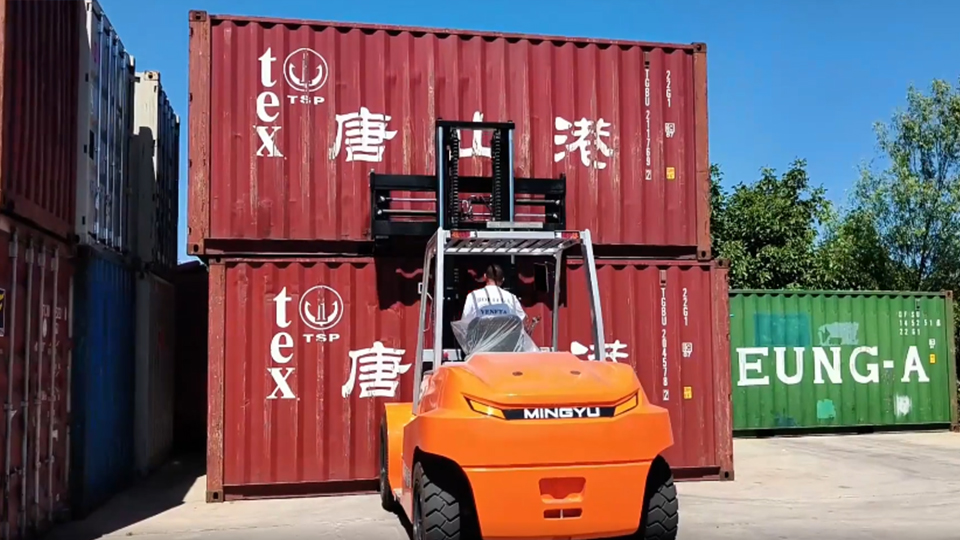
Fuel cell technology represents the latest frontier in forklift power systems. Companies including Plug Power, founded in 1997 by George C. McNamee and Roger B. Saillant, developed hydrogen fuel cell systems specifically for forklift applications. These systems offer the continuous operation capability of internal combustion engines with zero local emissions, proving particularly valuable in high-throughput distribution centers where battery changing downtime proves costly. Walmart, Amazon, and other major logistics operators have deployed thousands of fuel cell forklifts, demonstrating commercial viability at scale.
Automation and the Future of Lift Trucks
The 21st century has witnessed the convergence of forklift technology with robotics and artificial intelligence. Automated Guided Vehicles (AGVs), first developed in the 1950s by Barrett Electronics Corporation, evolved from wire-guided systems following buried cables to sophisticated laser navigation and vision-based guidance. The Kiva Systems acquisition by Amazon in 2012 for $775 million signaled the strategic importance of robotic material handling, with Kiva's orange mobile robots now numbering in the hundreds of thousands across Amazon fulfillment centers.
Modern autonomous forklifts incorporate LiDAR sensors, computer vision, and machine learning algorithms to navigate dynamic warehouse environments without fixed infrastructure. Companies including Seegrid, founded in 2003 by Dr. Hans Moravec of Carnegie Mellon University, developed vision-guided technology based on advanced stereo camera systems. These systems construct three-dimensional environmental maps through simultaneous localization and mapping (SLAM) algorithms, enabling autonomous operation in facilities shared with human workers.
The technical trajectory suggests continued evolution toward fully autonomous material handling systems. However, the fundamental lifting and transportation concepts established by Eugene Bradley Clark, George Raymond Sr., and their contemporaries remain central to these advanced systems. The mast structure, fork carriage, and load backrest—developed in the early 20th century—persist as essential mechanical elements even as control systems become increasingly sophisticated.
Conclusion
Attributing the invention of the forklift truck to a single individual proves historically inaccurate and technically insufficient. Eugene Bradley Clark and the Clark Equipment Company created the first internal combustion industrial truck in 1917, establishing the conceptual foundation of self-propelled material handling. Yale & Towne engineers developed the elevated mast that transformed platform trucks into true forklifts. George Raymond Sr. standardized the pallet interface that maximized forklift utility. Subsequent innovators refined power systems, safety features, and automation capabilities.
The forklift's invention narrative exemplifies the collaborative, incremental nature of industrial innovation. Each generation of engineers built upon predecessor achievements, responding to evolving economic demands and technical possibilities. From the Tructractor's modest lifting capability to modern autonomous systems navigating complex warehouse environments, the forklift's evolution reflects broader themes of mechanization, standardization, and intelligent automation that define industrial progress.
Understanding this developmental history provides context for contemporary material handling challenges. As e-commerce growth drives demand for warehouse automation and environmental concerns accelerate electrification, the forklift continues evolving while maintaining the core functionality established over a century ago. The invention was not a moment but a movement—a continuous technical refinement that transformed global commerce and continues shaping the future of logistics.
Name: selena
Mobile:+86-13176910558
Tel:+86-0535-2090977
Whatsapp:8613181602336
Email:vip@mingyuforklift.com
Add:Xiaqiu Town, Laizhou, Yantai City, Shandong Province, China
