
vip@mingyuforklift.com
+86-0535-2090977

Abstract
While society celebrates Rhodes Scholars, Nobel Laureates, and astronauts as paragons of human achievement, an alternative credential has emerged from warehouse floors and loading docks to challenge these traditional hierarchies. Forklift certification—formally known as Powered Industrial Truck Operator Certification under OSHA Standard 1910.178—represents perhaps the most democratic, practical, and meme-elevated qualification in contemporary culture. This article provides a comprehensive technical examination of the certification pathway, exploring its regulatory framework, pedagogical structure, economic accessibility, and cultural significance. Through analysis of Occupational Safety and Health Administration requirements, training methodologies, and the credential's ironic elevation in digital culture, we demonstrate how this ostensibly mundane certification encapsulates essential principles of workplace safety, operational competence, and postmodern identity construction.
1. Introduction: The Paradox of Prestige
The question posed in this article's title operates on multiple interpretive levels. Literally, forklift certification is a routine occupational requirement for millions of warehouse workers, construction personnel, and logistics professionals. Figuratively, internet culture has elevated this credential through absurdist humor, creating a meme ecosystem where "forklift certified" functions as shorthand for exceptional capability, spatial awareness, and mechanical mastery . This dual existence—simultaneously mundane and mythologized—makes the certification pathway worthy of serious technical analysis.
The regulatory framework governing forklift certification emerged not from academic theorizing but from industrial necessity. The Occupational Safety and Health Administration (OSHA) estimates that approximately 85 forklift fatalities and 34,900 serious injuries occur annually in the United States . These statistics motivated the development of Standard 1910.178, which mandates formal training and evaluation for all operators of powered industrial trucks. The certification thus represents a convergence of practical safety imperatives, regulatory compliance, and—unexpectedly—cultural cachet.
2. Regulatory Framework and Legal Architecture
2.1 OSHA Standard 1910.178: The Legislative Foundation
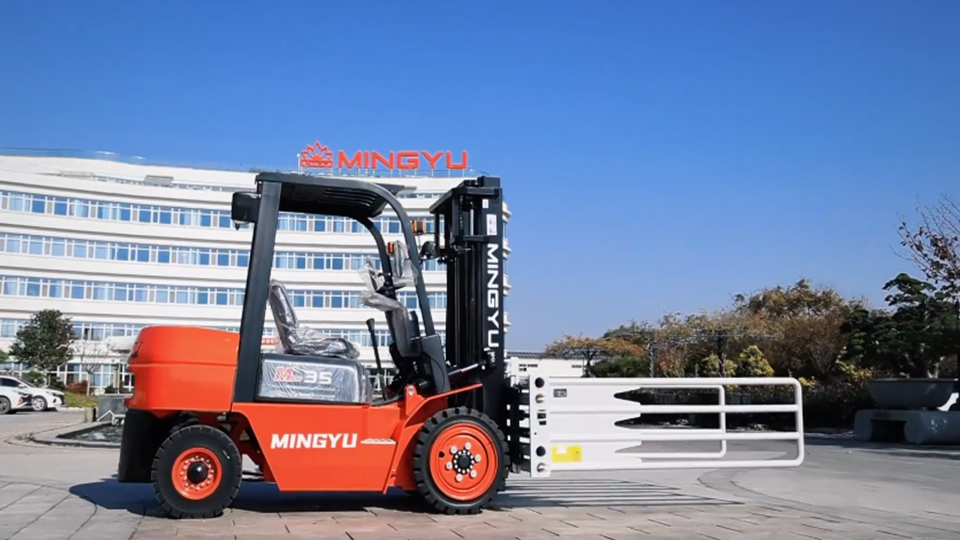
The technical foundation of forklift certification rests upon OSHA's Powered Industrial Truck Standard, codified in 29 CFR 1910.178. This regulation establishes that "only trained and authorized operators shall be permitted to operate a powered industrial truck" . The standard's scope encompasses seven distinct classes of powered industrial trucks:
Class I: Electric motor rider trucks, counterbalanced (solid and pneumatic tires)
Class II: Electric motor narrow aisle trucks (solid tires)
Class III: Electric motor hand trucks or hand/rider trucks (solid tires)
Class IV: Internal combustion engine trucks (solid tires)
Class V: Internal combustion engine trucks (pneumatic tires)
Class VI: Electric and internal combustion engine tractors (pneumatic and solid tires)
Class VII: Rough terrain forklift trucks (pneumatic tires)
This classification system reflects the technical diversity of material handling equipment, each category presenting distinct operational characteristics, stability profiles, and hazard potentials. Certification under one class does not automatically confer authority to operate equipment in another category—a specificity that enhances the credential's technical rigor.
2.2 Employer Responsibility and Liability Structure
Unlike many professional certifications issued by third-party credentialing bodies, forklift certification operates through a unique employer-employee relationship. OSHA mandates that employers ensure their operators are trained and evaluated, effectively making the employer the certifying authority . This structure creates a distributed credentialing system where compliance responsibility rests with individual workplaces rather than centralized regulatory agencies.
The legal implications of this framework are substantial. Employers face penalties of up to $7,000 per employee for willful or repeated violations of training requirements . Furthermore, uncertified operation exposes organizations to significant liability in the event of accidents, including workers' compensation claims, civil litigation, and regulatory sanctions . The certification thus functions as both a safety mechanism and a risk management instrument.
3. The Certification Pathway: Technical Specifications
3.1 Phase I: Formal Instruction
The certification process comprises three distinct phases, beginning with formal instruction. This educational component may be delivered through multiple modalities:
Classroom Instruction: Traditional in-person training typically requires 4-8 hours of instruction covering:
OSHA regulations and safety standards
Forklift components and operational principles
Stability dynamics and load capacity calculations
Hazard identification and risk assessment
Pre-operational inspection procedures
Emergency protocols and accident prevention
Online Training: Digital platforms offer asynchronous instruction with comparable content coverage. These programs typically feature:
Self-paced module completion (approximately 2 hours of material)
Interactive assessments and knowledge checks
Multimedia demonstrations of operational techniques
Immediate certification of completion upon passing final examination
The flexibility of online instruction has democratized access to certification, though OSHA mandates that digital completion must be supplemented by practical evaluation .
3.2 Phase II: Practical Training
The second phase involves hands-on operation under direct supervision. This component cannot be completed through simulation or virtual instruction—OSHA explicitly requires "practical training, including demonstrations performed by the trainee and exercises performed by the trainee" .
Practical training curricula typically include:
Pre-operational equipment inspection
Startup and shutdown procedures
Maneuvering in confined spaces
Load engagement, lifting, and placement
Traveling with elevated loads (where applicable)
Parking and securing procedures
Refueling and battery maintenance protocols
The duration of practical training varies based on operator aptitude and equipment complexity, though most programs require 2-4 hours of supervised operation before evaluation.
3.3 Phase III: Performance Evaluation
The final certification phase requires formal evaluation of operator competency. This assessment must be conducted by a "person with the knowledge, training, and experience to train powered industrial truck operators and evaluate their competence" . Evaluation components include:
Written Examination: Assessment of theoretical knowledge, typically requiring 70-80% correct responses to pass . Examination content covers:
Regulatory compliance requirements
Equipment-specific operational parameters
Load stability calculations
Hazard recognition protocols
Practical Skills Assessment: Demonstration of operational proficiency in:
Equipment inspection and safety checks
Load handling and placement accuracy
Spatial navigation and obstacle avoidance
Emergency response procedures
Upon successful completion, operators receive documentation including their name, certification date, equipment class authorization, and evaluator identification. This certification remains valid for three years, after which re-evaluation is mandatory .
4. Economic Accessibility and Demographic Analysis
4.1 Cost Structure and Financial Barriers
One dimension of the certification's "prestige" lies in its radical accessibility. Unlike advanced academic degrees or professional licenses requiring substantial investment, forklift certification presents minimal economic barriers:
Online Training Programs: $50-$200 for theoretical instruction
In-Person Training: $100-$500 depending on provider and duration
Employer-Sponsored Training: Often $0 for employees
This cost structure contrasts sharply with credentials of comparable regulatory weight. Commercial driver's licenses (CDL) typically cost $3,000-$7,000; professional engineering licenses require four-year degrees and examination fees exceeding $1,000; even food handler certifications in some jurisdictions exceed forklift training costs.
4.2 Temporal Efficiency
The certification pathway also demonstrates exceptional temporal efficiency. While traditional educational credentials require years of study, forklift certification can be completed within a single workday. Online theoretical components require approximately 2 hours; practical training and evaluation add 2-4 hours; total time investment rarely exceeds one 8-hour shift .
This efficiency creates unique labor market dynamics. Workers can enter certified positions rapidly, employers can onboard operators with minimal training downtime, and career transitions require limited time investment. The certification thus functions as a low-barrier entry point to logistics and manufacturing sectors.
4.3 Eligibility Requirements
The certification's accessibility extends to its minimal eligibility prerequisites:
Age: Minimum 18 years (federal requirement)
Physical Capability: Ability to safely operate equipment (no specific medical examinations required)
Legal Status: No citizenship or residency documentation required beyond employment eligibility
Educational Background: No minimum education level specified
Notably, forklift certification does not require a driver's license—a regulatory decision reflecting the distinct operational environments (private property vs. public roadways) and risk profiles of industrial trucks versus passenger vehicles .
5. Pedagogical Theory and Andragogical Design
5.1 Competency-Based Education Model
Forklift certification follows a pure competency-based education (CBE) model, where credentialing depends exclusively on demonstrated proficiency rather than seat time or institutional prestige. This approach aligns with adult learning theory (andragogy), recognizing that adult learners require:
Immediate applicability of knowledge
Self-directed learning pathways
Recognition of prior experience
Problem-centered rather than subject-centered orientation
The certification's modular structure—separating theoretical knowledge from practical demonstration—accommodates diverse learning preferences and prior experience levels. Experienced operators may accelerate through theoretical components, while novices require comprehensive foundational instruction.
5.2 Safety Culture and Behavioral Psychology
The training curriculum incorporates principles of behavioral psychology and safety culture development. By emphasizing hazard recognition, near-miss reporting, and peer accountability, certification programs aim to cultivate "safety citizenship"—voluntary behaviors that extend beyond regulatory compliance .
This psychological dimension explains the certification's cultural resonance. The "forklift certified" meme often invokes not merely operational competence but a mindset of careful deliberation, spatial awareness, and methodical approach to complex tasks—traits transferable far beyond warehouse environments.
6. Cultural Semiotics and Digital Evolution
6.1 From Regulatory Compliance to Cultural Capital
The transformation of forklift certification from bureaucratic requirement to cultural signifier represents a fascinating case study in digital semiotics. The meme's trajectory—originating on a 2016 Facebook page, migrating to Reddit, proliferating on TikTok, and eventually infiltrating dating applications—demonstrates how occupational credentials can acquire layers of meaning unrelated to their original purpose .
In this cultural context, claiming forklift certification functions as:
Ironic self-deprecation: Acknowledging the credential's modest requirements while celebrating its acquisition
Class-conscious humor: Elevating blue-collar competence within cultural spheres traditionally dominated by white-collar credentials
In-group signaling: Identifying membership in internet culture communities familiar with the meme's evolution
Capability signaling: Suggesting practical competence, physical coordination, and mechanical aptitude
6.2 The Certification as Postmodern Credential
The "prestigious certification" framing operates as postmodern commentary on credential inflation and the devaluation of traditional academic achievements. As bachelor's degrees become ubiquitous and graduate education extends into decades of study, the forklift certification's honesty—its transparent utility, minimal barrier to entry, and clear regulatory purpose—offers refreshing contrast.
This postmodern reading explains the certification's ironic elevation. In an era of "bullshit jobs" and credentialism, the forklift operator's tangible, immediately demonstrable skill carries authentic value. The meme's humor derives from recognizing this authenticity within a system that often obscures actual competence behind layers of institutional signaling.
7. Comparative Analysis with Alternative Credentials
7.1 Forklift Certification vs. Academic Degrees
表格
Dimension Forklift Certification Bachelor's Degree
Duration 4-8 hours 4 years
Cost $50-$500 $20,000-$200,000
Regulatory Mandate Federal law (OSHA) None
Verification Mechanism Employer records Transcript/ diploma
Recertification 3-year cycle None
Practical Application Immediate Variable
Meme Status Ironic prestige Satirical target
This comparison reveals the forklift certification's unique position: maximum regulatory weight with minimum acquisition burden, creating optimal conditions for ironic elevation.
7.2 International Equivalents and Global Standards
While this analysis focuses on U.S. OSHA standards, forklift certification requirements vary globally:
European Union: EN 1726 and EN 13563 standards with national implementation variations
United Kingdom: HSE Approved Code of Practice (ACOP) requiring "adequate training"
Australia: High Risk Work License required for forklifts exceeding specific capacity thresholds
Canada: Provincial jurisdiction with varying requirements, generally following CSA standards
These international variations create complexity for multinational operations but reinforce the universal recognition that powered industrial truck operation requires formal credentialing.
8. Future Trajectories and Technological Disruption
8.1 Automation and Certification Evolution
The emergence of autonomous forklifts and automated guided vehicles (AGVs) presents fundamental questions for certification pathways. As material handling equipment incorporates artificial intelligence, computer vision, and autonomous navigation, operator roles shift from direct control to supervision and exception handling.
Current regulatory frameworks have not fully adapted to these technological shifts. OSHA standards address human-operated equipment; autonomous systems fall under different regulatory categories. However, human oversight remains necessary, suggesting evolution rather than elimination of certification requirements .
8.2 Virtual and Augmented Reality Training
Emerging training technologies promise to enhance certification programs:
VR Simulation: Risk-free practice of hazardous scenarios (tip-overs, load instability)
AR Assistance: Real-time operational guidance overlaying physical equipment
Remote Evaluation: Video-based practical assessment reducing geographic barriers
These technologies may increase training costs while improving safety outcomes and standardizing evaluation criteria.
9. Conclusion: The Democratic Credential
The pathway to forklift certification—whether pursued for regulatory compliance, employment necessity, or ironic cultural participation—represents a remarkable achievement in democratic credentialing. It offers maximum utility (legal authorization to operate essential industrial equipment) at minimum barrier (modest cost, brief duration, minimal prerequisites), all within a framework of genuine safety significance.
The meme's elevation of this credential to "most prestigious" status, while clearly ironic, contains substantive critique of credentialing systems that prioritize barrier maintenance over actual competence. In an era of student debt crises, degree inflation, and "requirements creep" in professional licensing, the forklift certification's transparency and accessibility offer alternative models.
For those pursuing this certification—whether warehouse workers seeking employment, internet natives seeking cultural capital, or scholars seeking to understand contemporary semiotics—the pathway is remarkably straightforward: complete theoretical instruction, demonstrate practical competence, receive documentation, and join the ranks of the certified. The credential's three-year expiration ensures continuous competency, while its universal recognition across industrial sectors provides genuine labor market mobility.
In the final analysis, forklift certification may not surpass Nobel Prizes in actual prestige, but it surpasses most credentials in democratic accessibility, regulatory clarity, and meme resonance. For a society increasingly skeptical of institutional gatekeeping, that combination may constitute its own form of prestige.
Name: selena
Mobile:+86-13176910558
Tel:+86-0535-2090977
Whatsapp:8613181602336
Email:vip@mingyuforklift.com
Add:Xiaqiu Town, Laizhou, Yantai City, Shandong Province, China
