
vip@mingyuforklift.com
+86-0535-2090977

The Vertical Revolution in Modern Construction
The construction industry stands at an inflection point where traditional approaches to working at height are being systematically replaced by intelligent, connected, and sustainable aerial work platforms (AWPs). These new-generation machines—often called Mobile Elevating Work Platforms (MEWPs)—are fundamentally restructuring how contractors approach vertical access, transforming what was historically a safety-compromised, labor-intensive process into a streamlined, data-driven operation. With the global AWP market valued at approximately $15.32 billion in 2025 and projected to grow at a 4% compound annual growth rate through 2033 , the economic significance of this equipment category reflects its central role in contemporary construction methodology.
This transformation extends beyond incremental improvements in lift capacity or reach. New-generation AWPs integrate artificial intelligence, Internet of Things (IoT) connectivity, electric propulsion systems, and autonomous capabilities to create ecosystems where equipment communicates, optimizes, and protects with minimal human intervention. For construction managers navigating compressed schedules, labor shortages, and stringent safety regulations, these platforms offer not merely access solutions but comprehensive operational advantages that reshape project economics from the ground up—literally and figuratively.
The Architecture of Efficiency: Smart Technology Integration
Telematics and IoT: The Connected Jobsite
The integration of telematics and IoT technologies represents perhaps the most consequential advancement in AWP evolution. Modern platforms function as nodes within broader construction ecosystems, continuously transmitting operational data that enables real-time decision-making and predictive optimization . These systems monitor equipment location, utilization rates, battery status, hydraulic pressure, and operational parameters, providing fleet managers with unprecedented visibility into equipment performance.
The practical implications transform construction management. Rather than reacting to equipment failures that halt progress, predictive maintenance algorithms analyze usage patterns and component stress indicators to schedule service during planned downtime . Geofencing capabilities ensure equipment operates only within designated safe zones, while usage tracking identifies training needs when operators consistently engage in inefficient or unsafe practices. This data-driven approach reduces unplanned downtime by up to 40% in well-managed fleets, directly translating to improved project schedules and reduced rental costs.
For large-scale infrastructure projects requiring dozens of elevated access points simultaneously, centralized fleet management platforms coordinate AWP deployment across multiple work fronts. Equipment can be repositioned dynamically based on real-time progress tracking, ensuring that platforms are available where needed without the accumulation of idle inventory that inflates project costs. This coordination capability proves particularly valuable in urban construction environments where space constraints limit equipment staging areas and efficient deployment directly impacts site logistics.
Autonomous and Semi-Autonomous Capabilities
Artificial intelligence integration is progressively enabling autonomous and semi-autonomous operation modes that reduce operator cognitive load while improving precision and safety . Advanced sensor arrays—combining LiDAR, ultrasonic proximity detectors, and machine vision cameras—enable platforms to navigate complex environments, detect obstacles, and automatically adjust positioning to maintain optimal working orientation.
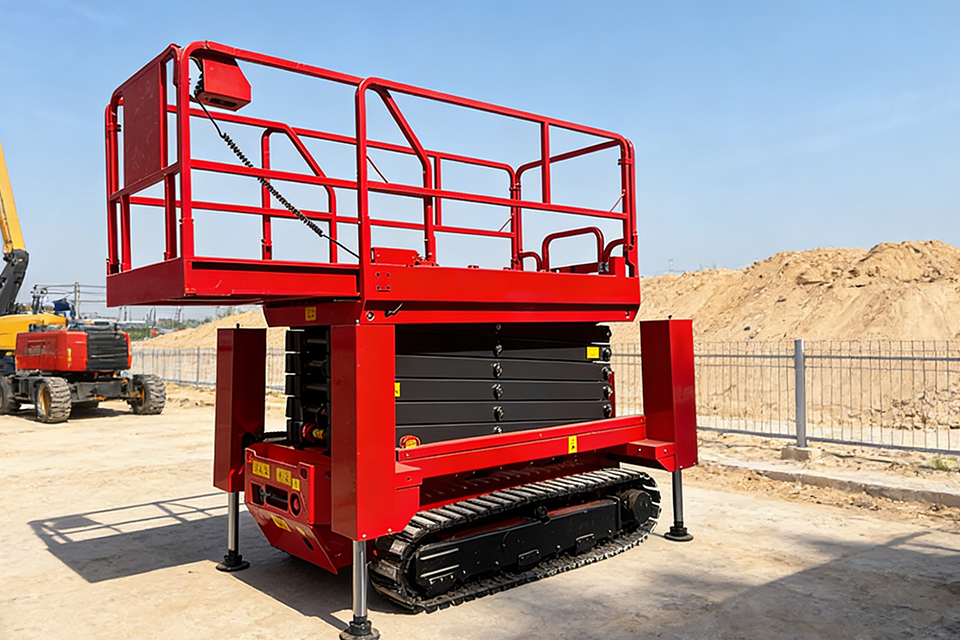
Semi-autonomous features already deployed in premium equipment include auto-leveling systems that compensate for uneven terrain without manual adjustment, and self-diagnostic routines that identify optimal positioning based on task parameters. These capabilities reduce setup time significantly; where traditional platforms might require 15-20 minutes of manual positioning and stabilization, autonomous systems achieve operational readiness in under five minutes .
The trajectory toward full autonomy promises further transformation. Development programs are advancing platforms capable of navigating to work locations independently, positioning based on Building Information Modeling (BIM) coordinates, and adjusting configurations in response to changing site conditions without continuous operator input. While fully autonomous AWPs remain in development, the incremental capabilities already available demonstrate the technology's potential to address skilled operator shortages while improving consistency and safety in repetitive elevation tasks.
Electrification and Sustainable Operations
The Electric Transition
The construction industry's environmental footprint faces increasing scrutiny, driving rapid adoption of electric and hybrid AWP technologies. Electric platforms now represent the fastest-growing segment of the AWP market, with manufacturers like XCMG, Genie, JLG, and Skyjack introducing comprehensive electric ranges that match or exceed diesel-powered equivalents in performance . XCMG's XGS40ACK, launched in early 2025, exemplifies this capability: a 125-foot all-electric rough-terrain boom lift with 40.2-meter working height and 22.5-meter outreach, demonstrating that electrification no longer confines equipment to smooth, indoor applications .
The operational advantages of electric AWPs extend beyond environmental compliance. Electric motors deliver instant torque for precise positioning, operate at substantially reduced noise levels (critical for urban projects facing noise ordinances), and eliminate exhaust emissions that restrict indoor use . For construction firms working in mixed indoor-outdoor environments—common in urban renovation, atrium construction, and infrastructure maintenance—electric platforms offer seamless transition between environments without equipment changes.
Battery technology advances drive this transition. Lithium-ion battery energy density improvements enable longer operational periods between charges, while fast-charging capabilities minimize downtime . Modern battery management systems (BMS) optimize charging cycles, monitor cell health, and predict replacement needs—integrating with telematics platforms to ensure power availability aligns with project schedules. The total cost of ownership for electric AWPs increasingly undercuts diesel equivalents when fuel, maintenance, and regulatory compliance costs are fully accounted for .
Hybrid Systems and Energy Management
For applications requiring extended operation without charging infrastructure, hybrid platforms combine electric drive with compact diesel generators. These systems operate on battery power for typical use, engaging combustion engines only during high-demand periods or charging cycles. This architecture maintains zero-emission capability for indoor phases of mixed-environment projects while ensuring continuous availability for outdoor applications .
Energy management systems optimize power consumption through regenerative braking, auto-idle functions, and intelligent load sensing. When platforms lower or retract booms, regenerative systems capture gravitational energy to recharge batteries, extending operational duration without external charging . Smart processors analyze work patterns to predict energy needs and optimize power distribution, ensuring that platforms remain operational through complete work shifts even under demanding conditions.
Design Innovation: Form Factor and Functionality
Compact Solutions for Urban Constraints
Urbanization trends—projected to concentrate 68% of the global population in cities by 2050 —create demand for AWPs that navigate increasingly constrained construction environments. Manufacturers respond with compact designs that maintain substantial working heights and capacities while reducing footprint and weight. Genie's next-generation scissor lifts, launched in late 2024, utilize curved linkage designs that reduce machine weight while enabling right-sized components that lower maintenance costs .
These compact platforms feature zero-tail-swing designs that operate within their own footprint, eliminating the spatial buffers required by traditional equipment . Multi-directional steering and crab-steering capabilities enable positioning in tight spaces where conventional drive systems would require multiple repositioning maneuvers. For urban renovation projects, interior atrium work, and infrastructure maintenance in dense environments, these capabilities transform logistical constraints from project limitations into manageable parameters.
The TIL Snorkel A62JRT, launched at Bauma ConExpo India 2024, illustrates this design philosophy: a 20.8-meter working height articulating boom with zero tail swing and the largest platform in its class, yet compact enough for efficient transport between urban job sites . Such equipment enables construction in environments where traditional AWPs would prove impractical, expanding the addressable market for elevated access solutions.
Modular and Lightweight Construction
Advanced materials and manufacturing techniques enable platforms that combine high strength with reduced weight. Carbon fiber and high-strength steel alloys maintain structural integrity while decreasing overall mass, improving transportability and reducing ground loading pressures . This lightweighting trend facilitates trailer-mounted deployment for rapid response applications and reduces the heavy-equipment logistics burden that complicates remote site operations.
Modular design approaches allow field configuration adjustments to match specific task requirements. Platforms can be equipped with varying basket sizes, tool mounting systems, and auxiliary power supplies without manufacturer intervention, improving fleet flexibility and reducing the total equipment inventory required to address diverse project needs. This adaptability proves particularly valuable for rental companies serving multiple market segments, enabling single units to fulfill roles that previously required specialized equipment.
Safety Architecture: Beyond Compliance to Prevention
Integrated Safety Systems
New-generation AWPs incorporate comprehensive safety architectures that prevent incidents rather than merely protecting against their consequences. Anti-entrapment systems detect obstructions during platform movement, automatically halting operation to prevent crushing injuries . Load-sensing technology continuously monitors weight distribution, restricting operation when capacity limits approach and preventing the instability that leads to tip-over incidents.
Real-time stability monitoring integrates tilt sensors, outrigger position detectors, and ground pressure measurements to assess platform security continuously. When sensors detect conditions approaching safety thresholds—excessive slope, insufficient outrigger deployment, or asymmetric loading—the system restricts operation and alerts operators before hazardous situations develop . This proactive approach fundamentally differs from traditional platforms that relied on operator judgment and post-incident protection systems.
Operator Assistance Technologies
Advanced operator interfaces reduce cognitive load while improving situational awareness. Touchscreen displays consolidate operational data—platform height and orientation, remaining battery capacity, load status, and diagnostic information—enabling informed decision-making without reference to external gauges or manuals . Augmented reality (AR) integration, emerging in premium equipment, overlays operational parameters and hazard warnings directly in the operator's field of view, maintaining attention on the work environment rather than instrument panels.
Proximity sensing systems create virtual safety envelopes around platforms, detecting approaching personnel, equipment, or structural elements and providing graduated warnings as conflicts approach. In advanced implementations, these systems integrate with automatic slow-down or stop functions that prevent contact without operator intervention, addressing the collision and entrapment incidents that constitute a significant portion of AWP accidents.
Economic Impact and Market Dynamics
Productivity Quantification
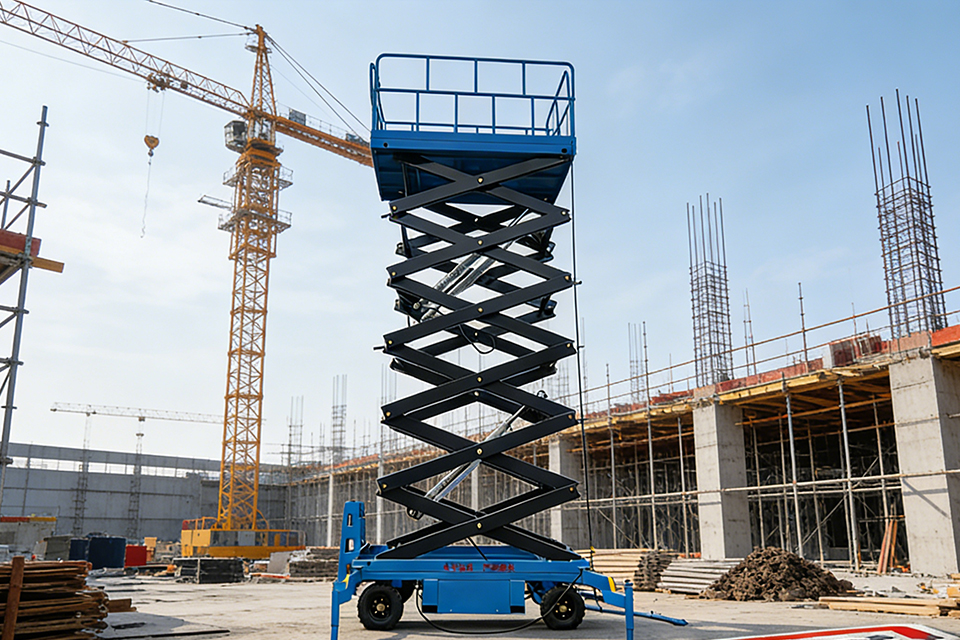
The efficiency gains from new-generation AWPs translate directly to project economics. Setup time reductions—achieved through auto-leveling, rapid deployment features, and intuitive controls—accumulate to substantial schedule savings across projects requiring frequent repositioning. For high-rise construction, where platforms may be relocated dozens of times daily, these time savings can reduce overall project duration by 15-20% compared to traditional access methods .
Labor productivity improvements prove equally significant. Ergonomic platform designs reduce operator fatigue, while precise positioning capabilities minimize the trial-and-error adjustments that consume productive time. The ability to position multiple workers and materials simultaneously—particularly in scissor lift applications—reduces the sequential task performance that extends project timelines when using ladders or scaffolding.
Rental Market Expansion
The AWP rental market experiences robust growth as construction firms recognize the capital efficiency of accessing new-generation technology without ownership burdens . Rental companies invest heavily in fleet modernization, offering customers the latest equipment capabilities without depreciation risk or maintenance responsibility. This trend accelerates technology adoption, as rental fleets typically replace equipment every 3-5 years—faster turnover than contractor-owned inventory.
Digital rental platforms streamline equipment procurement, enabling online specification, pricing, and scheduling that reduces administrative overhead . Integration with telematics systems allows rental providers to offer value-added services including operator training verification, utilization optimization consulting, and predictive maintenance scheduling that maximizes equipment availability for critical project phases.
Regional Development and Infrastructure Implications
Asia-Pacific Growth Dynamics
The Asia-Pacific region represents the fastest-growing AWP market, driven by massive infrastructure investment and urbanization across China, India, and Southeast Asia . Government initiatives such as India's Smart City Mission, with $27.33 billion allocated for 100 smart cities , create sustained demand for construction equipment capable of efficient urban operation. Regional manufacturers including XCMG, Sany, and Zhejiang Dingli compete aggressively with established Western brands, driving innovation while reducing equipment costs .
Saudi Arabia's Vision 2030 exemplifies the infrastructure investment transforming regional markets. The Kingdom's economic diversification and infrastructure development programs have accelerated AWP adoption, with particular emphasis on telematics-equipped and electric platforms that align with sustainability objectives . These large-scale national programs create predictable demand that encourages fleet investment and rental market development.
North American Market Leadership
North America maintains market leadership in AWP technology development and adoption, supported by stringent safety regulations that mandate advanced equipment capabilities . The U.S. Department of Transportation's annual investment exceeding $100 billion in highway construction and maintenance sustains demand for robust, high-reach platforms suitable for infrastructure applications. The region's mature rental market, generating over $55 billion annually , ensures widespread access to new-generation equipment across contractor segments.
Regulatory pressure continues driving technology adoption. OSHA and ANSI standards increasingly require features such as real-time safety monitoring, anti-entrapment systems, and improved stability controls . These requirements accelerate fleet turnover as older equipment becomes non-compliant, ensuring that construction sites utilize platforms incorporating the latest safety and efficiency technologies.
Future Trajectories: The Next Decade of AWP Evolution
Artificial Intelligence and Machine Learning
The integration of AI and machine learning will deepen significantly over the coming decade. Predictive algorithms will optimize equipment deployment across project schedules, anticipating needs based on construction sequencing and automatically positioning platforms for maximum efficiency . Machine learning analysis of operational data will identify subtle performance patterns that indicate impending component failures, enabling maintenance interventions before functional degradation affects productivity.
Autonomous operation capabilities will expand from current semi-autonomous features to fully independent platform navigation and positioning. Construction sites will integrate AWPs with BIM systems, enabling platforms to automatically relocate to coordinates specified in digital models without manual operator guidance . This integration will eliminate the positioning errors and time losses associated with manual coordinate interpretation, while ensuring that work proceeds according to precise design specifications.
Sustainability and Circular Economy
Environmental considerations will increasingly influence AWP design beyond power systems. Manufacturers are implementing sustainable manufacturing practices, utilizing recyclable materials, and establishing end-of-life equipment recycling programs . Battery second-life applications—repurposing AWP batteries for stationary energy storage after their service life in mobile equipment—will extend component utility while reducing waste streams.
The development of hydrogen fuel cell power systems represents a potential next frontier for applications requiring extended operation without charging infrastructure. Fuel cell systems offer the zero-emission benefits of batteries with rapid refueling capabilities comparable to diesel, addressing the range and charging limitations that currently constrain electric platform adoption in certain applications.
Conclusion: Redefining Construction Possibilities
New-generation aerial work platforms represent far more than improved lifting equipment—they constitute fundamental enabling technology for modern construction methodology. By integrating smart connectivity, electric propulsion, autonomous capabilities, and comprehensive safety systems, these platforms eliminate the traditional constraints that forced trade-offs between efficiency, safety, and environmental responsibility.
The economic and operational advantages are quantifiable and substantial: reduced project timelines, lower total cost of ownership, improved safety outcomes, and enhanced capability to work in constrained or sensitive environments. As urbanization accelerates and infrastructure investment intensifies globally, the demand for intelligent aerial access solutions will continue expanding, driving further innovation in this dynamic equipment sector.
For construction industry stakeholders, the question is no longer whether to adopt new-generation AWP technology, but how quickly implementation can occur to capture competitive advantages. The platforms reaching for today's skies are already reshaping what construction can achieve—and the trajectory points toward even more transformative capabilities in the near future. In an industry where vertical access has historically constrained possibility, new-generation AWPs are literally elevating construction potential to unprecedented heights.
Name: selena
Mobile:+86-13176910558
Tel:+86-0535-2090977
Whatsapp:8613181602336
Email:vip@mingyuforklift.com
Add:Xiaqiu Town, Laizhou, Yantai City, Shandong Province, China
