
vip@mingyuforklift.com
+86-0535-2090977

Introduction: The Evolution of Working at Height
For decades, working at elevation meant balancing on precarious ladders, erecting cumbersome scaffolding, or accepting the inherent dangers of makeshift platforms. These traditional methods not only compromised worker safety but also severely limited productivity, creating bottlenecks in construction schedules and maintenance operations. Today, the landscape has fundamentally transformed. Aerial Work Platforms (AWPs)—also known as Mobile Elevating Work Platforms (MEWPs)—have emerged as the definitive solution for safe, efficient elevated access, effectively eliminating the traditional trade-off between reaching heights and ensuring worker protection.
The global AWP market, projected to reach $12.6 billion by 2025 with a compound annual growth rate of 5.6% , reflects the industry's recognition that modern aerial platforms are no longer optional equipment but essential infrastructure for any operation requiring elevated access. This technological evolution represents more than incremental improvement—it constitutes a paradigm shift in how industries approach height-based work, combining advanced engineering with intelligent safety systems to create environments where efficiency and protection coexist rather than compete.
Understanding Modern Aerial Work Platform Technology
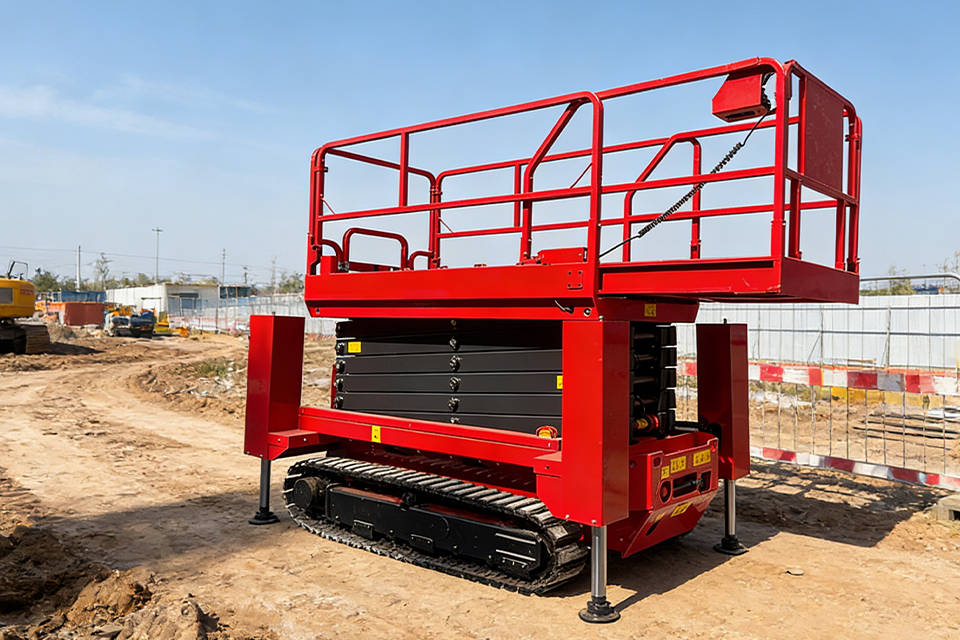
The Diverse Platform Ecosystem
Contemporary aerial work platforms encompass a sophisticated range of equipment types, each engineered for specific operational contexts. Scissor lifts provide vertical elevation with substantial platform capacity, making them ideal for maintenance tasks requiring multiple workers and heavy materials. Boom lifts—both articulating and telescopic varieties—offer the horizontal outreach necessary for accessing over obstacles or reaching into complex architectural configurations. Vertical mast lifts deliver compact maneuverability for indoor applications, while specialized spider lifts and track-mounted platforms navigate terrain where traditional wheeled units cannot operate .
The technological distinction between these categories has blurred as manufacturers integrate cross-functional capabilities. Modern scissor lifts feature rough-terrain undercarriages previously exclusive to boom lifts, while compact boom designs now offer the footprint necessary for indoor operation. This convergence expands application possibilities while reducing fleet complexity for rental companies and contractors.
Power Systems: The Electric Revolution
Perhaps no aspect of AWP evolution has been more transformative than the shift from internal combustion to electric and hybrid power systems. While diesel engines dominated outdoor applications historically, electric AWPs now account for approximately 30% of new installations—a figure expected to rise dramatically as battery technology advances . Lithium-ion battery energy density has increased eightfold between 2008 and 2020 according to U.S. Office of Energy Efficiency and Renewable Energy data , enabling longer operational periods between charges while reducing overall weight.
The implications extend beyond environmental compliance. Electric platforms eliminate exhaust emissions for indoor use, operate at significantly reduced noise levels, and decrease maintenance requirements by eliminating engine-related service intervals. For urban construction projects facing stringent emissions regulations and noise ordinances, electric AWPs have become not merely preferable but mandatory.
Safety Architecture: Engineering Protection into Every System
Structural Safety Foundations
Modern AWPs incorporate multiple redundant safety systems that fundamentally alter the risk profile of elevated work. Load-sensing technology continuously monitors platform weight distribution, automatically restricting operation when capacity limits approach . Tilt sensors and stability control systems prevent operation on inclines exceeding safe parameters, while outrigger and auto-leveling technologies ensure platform stability even on uneven terrain.
The physical guarding of platforms has evolved substantially. Guardrail systems now feature standardized heights and strength requirements, with mid-rails and toe boards preventing falls and dropped objects simultaneously. Entry gates incorporate interlocks preventing operation when open, while platform control locations ensure operators maintain proper positioning within guarded areas .
Active Safety Technologies
Beyond passive protection, contemporary AWPs deploy active safety systems that intervene before incidents occur. Anti-entrapment systems detect obstructions during platform movement, automatically halting operation to prevent crushing injuries . Over-rise prevention devices, now subject to stricter manufacturing criteria specifying materials, quantities, and installation methods , prevent mechanical overextension that could compromise stability.
Real-time monitoring systems represent the cutting edge of safety integration. These platforms continuously assess operational parameters—hydraulic pressure, battery status, structural loads, environmental conditions—and provide immediate feedback to operators while logging data for maintenance analysis. When integrated with telematics systems, this data enables fleet managers to identify unsafe operational patterns and intervene before accidents occur .
Fall Protection Integration
Fall protection requirements for AWPs have expanded significantly. Where previous regulations mandated harness use only for platforms exceeding 10 meters, contemporary standards increasingly require comprehensive fall protection across all operational heights . Modern platforms feature engineered anchor points compatible with standard lanyard systems, enabling 100% tie-off during entry, operation, and exit procedures.
The procedure for exiting platforms at height—necessary for certain maintenance and construction applications—exemplifies integrated safety design. Workers must position platforms within 12 inches of adjacent structures, shut down equipment, and maintain continuous attachment through dual-lanyard systems when transferring between platform and structure . These protocols, while adding procedural steps, eliminate the exposure periods that historically produced falls during platform entry and exit.
Operational Efficiency: Maximizing Productivity Through Technology
Control System Innovation
The operator interface has undergone revolutionary improvement. Joystick-based proportional controls provide intuitive, precise platform positioning that reduces operator fatigue while improving accuracy . Touchscreen interfaces display real-time operational data—platform height and orientation, remaining battery capacity, load status, and diagnostic information—enabling informed decision-making without reference to external gauges or manuals.
Advanced positioning systems enhance productivity in complex environments. Multi-directional steering allows platform movement in any orientation, eliminating the repositioning cycles required by traditional drive systems. Zero-tail-swing designs enable operation in confined spaces where platform rotation would otherwise contact surrounding structures . These capabilities reduce setup time and enable continuous workflow in environments that would previously have required scaffolding or ladder repositioning.
Predictive Maintenance and Uptime Optimization
Equipment availability directly impacts project schedules and labor costs. Modern AWPs address this through integrated diagnostic systems that monitor component condition and predict maintenance requirements before failures occur . By analyzing operational data patterns—hydraulic cycle counts, motor temperature profiles, battery charge/discharge characteristics—these systems identify degradation trends and schedule maintenance during planned downtime rather than allowing unexpected failures to interrupt operations.
The economic impact is substantial. Unplanned equipment downtime on construction projects can cost thousands of dollars per hour in delayed labor and extended project timelines. Predictive maintenance systems reduce these incidents while optimizing maintenance resource allocation, ensuring that service activities occur when needed rather than on arbitrary schedules.
Remote Operation Capabilities
Emerging remote control technologies expand operational possibilities while enhancing safety. Ground-based operators can maneuver platforms through hazardous environments—areas with chemical exposure risks, unstable structural conditions, or limited escape routes—while maintaining safe separation from hazards . This capability proves particularly valuable in industrial maintenance applications where platform positioning requires precise adjustment while workers perform tasks within the platform.
Remote operation also facilitates multi-tasking scenarios where a single operator can position equipment while preparing materials or coordinating with ground crews, effectively multiplying labor productivity without increasing headcount.
Regulatory Compliance and Training Integration
Evolving Safety Standards
The regulatory environment for AWPs continues tightening as authorities recognize the technology's potential when properly implemented. The International Powered Access Federation (IPAF) reports that nearly 60% of AWP accidents relate to inadequate safety protocols and equipment selection , prompting enhanced training requirements and equipment specifications.
Regional regulations demonstrate this trend. Korea's Occupational Safety & Health Agency (KOSHA) implemented revised certification criteria in 2024 requiring enhanced safety devices and mandatory inspection protocols . These regulations specify over-rise prevention device configurations, impact dampening systems, slack rope detectors, and comprehensive fall prevention systems—establishing benchmarks that influence global manufacturing standards.
Training and Competency Development
Equipment sophistication demands corresponding operator competency. Modern AWP training encompasses not merely control operation but hazard recognition, emergency procedures, and site-specific risk assessment . Virtual reality and augmented reality training systems enable immersive skill development without exposing trainees to actual elevation risks , accelerating competency acquisition while maintaining safety.
Competency verification has standardized through formal assessment protocols. Operators must demonstrate practical skills alongside theoretical knowledge, with certifications requiring periodic renewal to ensure continued proficiency with evolving equipment capabilities and safety standards.
Industry Applications and Market Dynamics
Construction and Infrastructure Dominance
The construction sector accounts for approximately 45.53% of AWP market demand , driven by high-rise building proliferation and infrastructure maintenance requirements. Modern urban construction—with buildings routinely exceeding 50 stories—simply cannot proceed without reliable elevated access systems. The delivery of Zoomlion's ZT82J boom lift to the UK in 2025, featuring 82.3-meter working height capability, illustrates the extreme reach requirements of contemporary infrastructure projects .
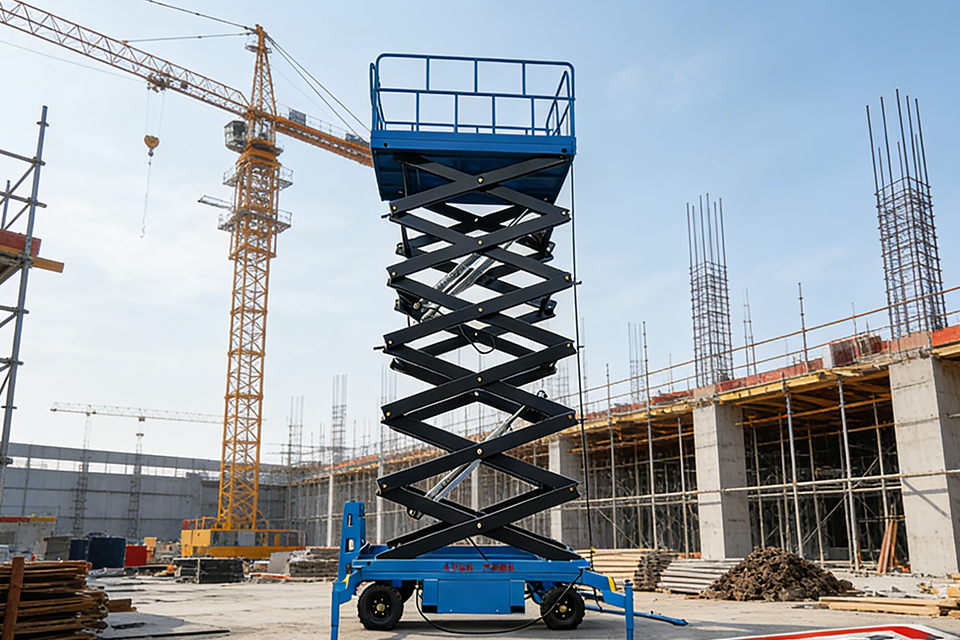
Infrastructure maintenance applications, including bridge inspection, wind turbine service, and utility line work, demand specialized platform configurations. Spider lifts with track-mounted undercarriages navigate terrain inaccessible to wheeled units, while insulated platforms enable electrical utility work with appropriate protection ratings.
Emerging Application Sectors
Beyond traditional construction, AWPs penetrate diverse industries. The renewable energy sector's expansion—global investment exceeded $3 trillion in 2024 —creates substantial demand for platforms capable of wind turbine maintenance and solar installation. Logistics and warehousing operations utilize compact vertical mast lifts for facility maintenance and inventory management. Aviation maintenance employs specialized platforms designed for aircraft access without damage to sensitive surfaces.
This application diversity drives equipment specialization. Manufacturers develop industry-specific configurations with appropriate platform dimensions, load capacities, and safety features for particular operational contexts, expanding the technology's utility across economic sectors.
Future Trajectories: The Next Generation of Aerial Platforms
Autonomous and Semi-Autonomous Operation
Artificial intelligence integration promises further transformation. Autonomous positioning systems will enable platforms to navigate to work locations without continuous operator input, while AI-powered stability control will adjust platform parameters in real-time based on environmental conditions and load dynamics . These capabilities will reduce operator cognitive load while improving safety margins in challenging conditions.
Advanced Materials and Manufacturing
3D printing technology adoption in AWP manufacturing enables rapid prototyping, customized component production, and on-demand spare part fabrication . This manufacturing flexibility reduces lead times for specialized equipment while enabling design optimizations impossible with traditional fabrication methods. Advanced composite materials simultaneously reduce platform weight and increase structural capacity, improving transportability and operational efficiency.
Sustainability Integration
Environmental considerations increasingly influence equipment design beyond power systems. Sustainable manufacturing practices, recyclable material utilization, and end-of-life equipment recycling programs address the complete lifecycle environmental impact . Battery recycling and second-life applications for industrial power storage extend component utility while reducing waste streams.
Conclusion: A New Standard for Elevated Work
The transformation of aerial work platforms from simple mechanical lifts to sophisticated, intelligent systems represents one of construction and industrial equipment's most significant safety and productivity achievements. By integrating advanced engineering, electronic safety systems, and data-driven maintenance approaches, modern AWPs have effectively resolved the historical conflict between working efficiently at height and protecting worker wellbeing.
For organizations evaluating elevated access solutions, the evidence overwhelmingly supports AWP adoption. The combination of regulatory compliance requirements, insurance cost considerations, productivity improvements, and—most importantly—worker protection creates an irrefutable case for modern platform technology. As the industry continues evolving toward autonomous operation, enhanced electrification, and deeper integration with construction management systems, the gap between AWP-equipped operations and traditional access methods will only widen.
The question is no longer whether aerial work platforms justify their investment, but rather how quickly organizations can implement these systems to capture their safety and efficiency benefits. In an industry where falls from elevation remain a leading cause of serious injury and fatality, the comprehensive protection offered by modern AWPs isn't merely an operational advantage—it's an ethical imperative and a business necessity. The technology has matured; the standards have been established; the benefits are proven. The era of worrying about aerial work has ended, replaced by confident, efficient, and safe elevation access for every application requiring work at height.
Name: selena
Mobile:+86-13176910558
Tel:+86-0535-2090977
Whatsapp:8613181602336
Email:vip@mingyuforklift.com
Add:Xiaqiu Town, Laizhou, Yantai City, Shandong Province, China