
vip@mingyuforklift.com
+86-0535-2090977

Introduction
Forklift certification serves as the gateway to one of the most in-demand skilled trades in modern logistics, manufacturing, and construction sectors. As workplace safety regulations intensify and employer liability concerns mount, understanding the precise technical pathway to OSHA-compliant certification has become essential for career advancement and organizational compliance. This comprehensive analysis examines the complete certification ecosystem, from eligibility prerequisites through recertification protocols, providing a definitive roadmap for operators and employers navigating the 2025 regulatory landscape.
Regulatory Foundation and Legal Imperatives
The Occupational Safety and Health Administration (OSHA) establishes mandatory certification requirements through Standard 29 CFR 1910.178, which governs all powered industrial truck operations. This regulation mandates that no employee shall operate a forklift without completion of a certified training program encompassing three distinct pillars: formal instruction, practical hands-on training, and workplace-specific performance evaluation.
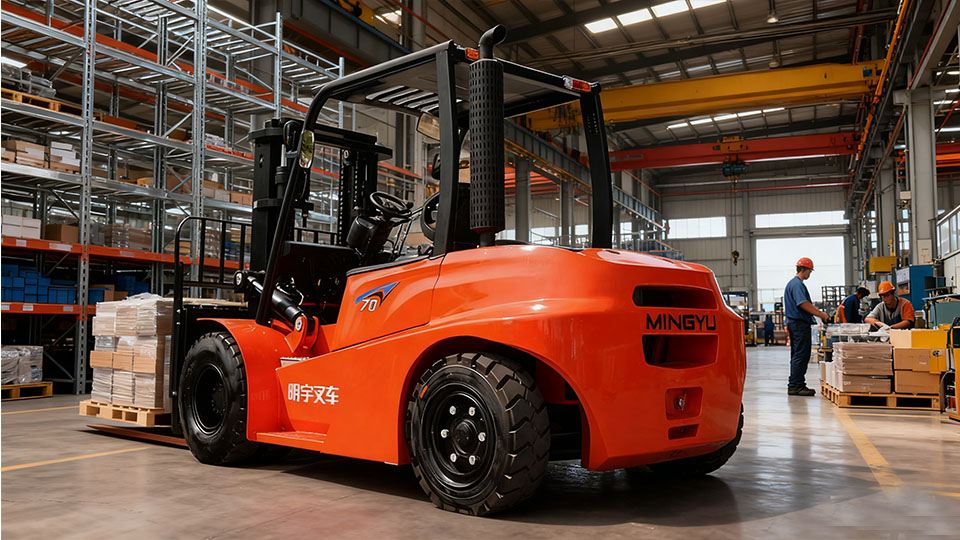
The regulatory framework operates on employer-responsibility principles—unlike commercial driver's licenses, forklift certification is not issued by state or federal agencies but rather by employers or their designated qualified trainers. This distinction creates a unique credentialing ecosystem where third-party training providers deliver educational content, but ultimate certification authority rests with the employing organization.
Non-compliance exposes organizations to severe financial penalties, with OSHA fines reaching $15,625 per violation and repeat violations escalating to $156,259. Beyond regulatory sanctions, uncertified operation invalidates insurance coverage and creates substantial civil liability exposure, making proper certification a critical risk management imperative.
Eligibility Prerequisites and Operator Qualifications
Before initiating certification training, prospective operators must satisfy baseline eligibility criteria established by OSHA and the Fair Labor Standards Act:
Age Requirements:
Operators must be at least 18 years old for non-agricultural environments. No exceptions exist for younger workers, regardless of experience or supervision levels.
Physical and Mental Competency:
While OSHA does not mandate specific medical examinations, operators must possess:
Adequate vision (correctable to standard operational requirements)
Physical capability to enter/exit equipment and manipulate controls
Sufficient cognitive function to assess hazards and execute safety protocols
Ability to remain alert during extended operational periods
Documentation Prerequisites:
Valid government-issued identification
Social Security number or tax identification for certification records
High school diploma or equivalent (recommended but not universally required)
Clean drug screening (employer-specific requirement)
Notably, state-issued driver's licenses are not required for forklift certification under federal OSHA standards, though individual employers may impose this as a hiring condition.
The Three-Pillar Certification Framework
OSHA mandates a tripartite training structure that no single training modality can fully satisfy in isolation:
Pillar I: Formal Instruction (Classroom Component)
This theoretical foundation comprises lecture, discussion, interactive computer learning, video, and written material covering 22 mandatory topics specified in OSHA standards 1910.178(l)(3)(i) and (ii). Required content includes:
Equipment-Specific Knowledge:
Operating instructions, warnings, and precautions for the specific truck type
Differences between forklifts and automobiles regarding steering, maneuverability, and stability
Vehicle capacity, stability principles, and load composition calculations
Controls and instrumentation functionality
Engine and motor operation limitations
Workplace Hazard Recognition:
Surface conditions and environmental operating limitations
Load handling techniques including stacking, unstacking, and transportation
Pedestrian traffic awareness and right-of-way protocols
Narrow aisle navigation and confined space operations
Ramp, slope, and incline negotiation procedures
Hazardous location classifications and precautions
Maintenance and Safety Protocols:
Pre-operational inspection requirements
Refueling procedures (gasoline, diesel, LPG) and battery charging/replacement protocols
Attachment installation and utilization
Emergency procedures and accident reporting
Delivery formats include traditional classroom instruction, self-paced online modules, video-based training, or blended approaches. Online training has gained significant traction, with providers such as US Forklift Certification offering OSHA-aligned courses completable in 30-60 minutes.
Pillar II: Practical Hands-On Training
Theoretical knowledge must translate to operational competency through supervised practice. This component requires:
Demonstration Phase:
Qualified trainers must demonstrate proper operational techniques including:
Pre-use inspection sequences
Safe mounting and startup procedures
Load approach, engagement, and lifting protocols
Traveling with loads (elevated vs. ground-level requirements)
Precision placement and stacking operations
Shutdown and parking procedures
Supervised Practice:
Trainees must operate actual equipment under direct trainer observation, practicing:
Maneuvering in confined spaces
Load handling at various heights and distances
Navigation of ramps, inclines, and uneven surfaces
Emergency stopping and hazard avoidance
Refueling/recharging procedures
OSHA emphasizes that this practical training must occur on the specific equipment type the operator will use in actual work conditions—training on a warehouse sit-down counterbalance forklift does not qualify operation of rough-terrain telescopic handlers.
Pillar III: Workplace Performance Evaluation
The culminating certification component requires evaluation in the actual workplace environment where the operator will work. This assessment, conducted by a qualified trainer or employer representative, verifies:
Operational Competency Demonstration:
Proper execution of pre-operational inspections
Safe load handling in actual working conditions
Navigation of site-specific hazards (pedestrian traffic, aisle configurations, surface conditions)
Adherence to workplace-specific safety protocols
Appropriate response to simulated emergency scenarios
Evaluation Documentation:
Successful completion requires documentation including:
Operator name and certification date
Training completion verification
Evaluation date and trainer identity
Specific equipment types authorized for operation
Three-year expiration date
Only upon satisfactory completion of all three pillars may an employer issue official certification, typically in the form of a wallet card and formal certificate.
Training Pathway Selection: Modalities and Providers
Prospective operators must navigate multiple training delivery options, each presenting distinct advantages and limitations:
Online Training Programs
Technical Specifications:
Self-paced modules accessible via desktop, tablet, or mobile devices
Video-based instruction with interactive assessments
Immediate certificate generation upon exam completion
Average completion time: 1-2 hours
Advantages:
Cost efficiency: $50-$100 individual pricing
Schedule flexibility for working professionals
Immediate documentation for employment applications
Unlimited exam retakes without additional fees
Limitations:
Does not satisfy hands-on or evaluation requirements
Requires employer coordination for practical components
Some employers prefer integrated in-person training
Leading providers include US Forklift Certification ($58 individual, volume discounts available), Forklift Academy ($49.50), and CertifyMeOnline, all offering OSHA-aligned content with instant documentation.
In-Person Training Programs
Technical Specifications:
Classroom instruction combined with immediate hands-on practice
Direct trainer feedback and real-time error correction
Integrated evaluation and same-day certification
Duration: 4-8 hours to 1-2 full days
Advantages:
Complete three-pillar fulfillment in single session
Immediate equipment familiarity
Direct networking with industry professionals
Enhanced employer recognition
Limitations:
Higher cost: $150-$350 per person
Geographic constraints requiring travel
Fixed scheduling reducing flexibility
Time opportunity costs for wage-earning participants
Hybrid Training Models
Combining online theoretical completion with scheduled practical evaluation, hybrid programs offer middle-ground solutions:
Process Flow:
Complete online classroom component independently
Schedule hands-on session with employer or training provider
Demonstrate competency on actual equipment
Receive certification documentation
Cost Structure:
Online component: $50-$75
Hands-on evaluation: $50-$150
Total investment: $100-$225
Employer-Sponsored Training
Many organizations provide comprehensive certification as an employment benefit:
Implementation Models:
In-house programs: Qualified internal trainers conduct all components
Third-party contracting: External providers deliver training at employer facilities
Train-the-trainer: Initial investment in internal trainer qualification ($500-$2,000) enables ongoing certification capability
Economic Advantages:
Eliminated individual cost burden
Equipment-specific training alignment
Integration with workplace safety protocols
Group pricing discounts (10-50% per-person reductions)
Certification Documentation and Record Management
Upon successful completion, operators receive:
Primary Documentation:
Wallet Card: Portable proof of certification including operator name, certification date, expiration date, and authorized equipment types
Certificate of Completion: Formal documentation suitable for employment verification and regulatory inspection
Employer Record Requirements:
OSHA mandates employers maintain training records including:
Operator name and hire date
Training date and content summary
Evaluation date and trainer identification
Equipment types covered by certification
Three-year retention minimum
Modern digital platforms streamline record management, providing automated renewal tracking, audit-ready reporting, and centralized documentation accessible for OSHA inspections.
Recertification and Continuing Competency
Initial certification remains valid for three years, after which operators must complete refresher training and performance re-evaluation.
Standard Recertification Process:
Review of core safety principles and operational procedures
Update on regulatory changes and industry best practices
Workplace-specific hazard review
Hands-on performance evaluation
Documentation renewal
Accelerated Recertification Triggers:
Immediate retraining and evaluation are required when:
Accident involvement: Operator error contributing to incidents or near-misses
Unsafe operation observation: Documented performance deficiencies by supervisors
Equipment transition: Assignment to substantially different forklift classifications
Workplace condition changes: Introduction of new hazards or operational environments
Refresher training costs typically range from $50-$100, representing 50-75% of initial certification expenses.
Career Advancement Through Supplemental Credentials
Beyond basic certification, operators can enhance career prospects through specialized qualifications:
Equipment Specializations:
Rough Terrain Forklifts: Construction and outdoor applications
Reach Trucks and Order Pickers: High-density warehouse environments
Telescopic Handlers: Extended reach applications
Heavy Capacity Forklifts (15,000+ lbs): Industrial and port operations
Each specialization requires additional training modules costing $50-$200 and demonstrating competency on specific equipment types.
Advanced Certifications:
Forklift Safety Inspector: Equipment condition assessment and maintenance oversight
Train-the-Trainer: Qualification to conduct OSHA-compliant instruction
Safety Coordinator: Workplace safety program management
These advanced credentials typically generate 20-40% wage premiums and open pathways to supervisory roles.
Common Certification Pitfalls and Compliance Risks
Online-Only Misconception:
Many operators mistakenly believe online course completion constitutes full certification. OSHA explicitly requires employer-conducted hands-on evaluation—online certificates alone do not satisfy regulatory requirements.
Equipment Type Limitations:
Certification is equipment-specific and workplace-specific. Changing employers or forklift classifications necessitates new evaluation, even with current certification.
Documentation Gaps:
Failure to maintain training records exposes employers to OSHA citations. Operators should retain personal copies of certification cards and verify employer record maintenance.
Recertification Lapses:
Allowing certification to expire invalidates operational authorization. Operators should track expiration dates and initiate renewal processes 30-60 days before expiration.
Conclusion
Obtaining forklift certification in 2025 requires navigating a structured three-pillar process combining theoretical knowledge, practical skill development, and workplace-specific competency demonstration. While online training offers cost-effective and flexible classroom completion, full regulatory compliance demands employer-conducted hands-on evaluation and performance assessment.
The investment—ranging from $50-$350 depending on training modality—delivers extraordinary returns through enhanced employability, wage premiums of 10-20% over uncertified counterparts, and protection against workplace accidents averaging $38,000-$150,000 in direct costs.
For optimal outcomes, prospective operators should prioritize employer-sponsored training when available, leverage online-hybrid approaches for cost efficiency, and maintain rigorous documentation of all certification components. As automation increasingly integrates with material handling operations, the foundational safety competencies validated through OSHA-compliant certification will remain essential for career longevity and workplace safety.
Organizations must view certification not as regulatory burden but as strategic investment—delivering risk mitigation, insurance premium reductions, and operational efficiency gains that far exceed training costs. By implementing comprehensive certification programs with qualified trainers, complete documentation, and systematic renewal tracking, employers transform compliance necessity into competitive advantage in an increasingly safety-conscious industrial landscape.
Name: selena
Mobile:+86-13176910558
Tel:+86-0535-2090977
Whatsapp:8613181602336
Email:vip@mingyuforklift.com
Add:Xiaqiu Town, Laizhou, Yantai City, Shandong Province, China
