
vip@mingyuforklift.com
+86-0535-2090977

Introduction
Forklifts represent one of the most versatile yet hazardous pieces of equipment on international construction sites. From material handling in Dubai's towering developments to logistics operations in European infrastructure projects, these powered industrial trucks are indispensable. However, their utility comes with significant risk. According to the Occupational Safety and Health Administration (OSHA), forklifts account for approximately 85 fatal accidents and 34,900 serious injuries annually in the United States alone. On overseas construction sites—where regulatory frameworks may differ, environmental conditions vary dramatically, and equipment often operates under extreme stress—rigorous periodic inspection protocols are not merely recommended; they are essential for legal compliance, operational continuity, and worker safety.
International construction projects must navigate a complex web of standards. While OSHA 1910.178 governs forklift operations in the United States, European sites fall under the Machinery Directive 2006/42/EC and EN ISO 3691-1 standards. Australian projects adhere to AS 2359, while Gulf Cooperation Council (GCC) nations typically enforce their own regulatory adaptations based on British or American standards. Despite jurisdictional differences, the fundamental inspection philosophy remains consistent: systematic, documented, and competency-based evaluation of forklift condition at defined intervals. This article delineates the comprehensive periodic inspection items required to satisfy overseas construction site safety standards, providing a technical framework that transcends specific national boundaries while ensuring full regulatory alignment.
Regulatory Context and Inspection Classification
Before examining specific inspection items, it is crucial to understand the classification framework that underpins periodic forklift maintenance. International standards universally categorize inspections into three tiers: pre-operational (daily) inspections, frequent inspections (weekly to monthly based on usage intensity), and periodic inspections (annual to semiannual comprehensive evaluations). The latter category—periodic inspections—constitutes the focus of this discussion, representing the most thorough technical assessment of forklift integrity.
Periodic inspections must be conducted by qualified personnel possessing demonstrable competency in forklift engineering and applicable regulatory requirements. On overseas sites, this often necessitates third-party certification bodies or manufacturer-authorized technicians, particularly when local workforce competency does not meet the project's specified standards. Inspection frequency is typically dictated by operational hours rather than calendar time; high-utilization construction forklifts operating 150+ hours monthly may require quarterly periodic inspections, whereas standard industrial applications might justify semiannual intervals.
Structural and Mechanical Integrity Assessment
The foundational element of any periodic inspection involves exhaustive evaluation of the forklift's structural integrity. The chassis and frame must be examined for cracks, distortion, weld failures, or corrosion penetration exceeding manufacturer-specified limits. On overseas construction sites, forklifts frequently encounter corrosive environments—coastal salt air, chemical exposure, or extreme temperature cycling—that accelerate material degradation. Inspectors must employ non-destructive testing (NDT) methods, including dye penetrant or magnetic particle inspection, when visual assessment suggests potential subsurface defects.
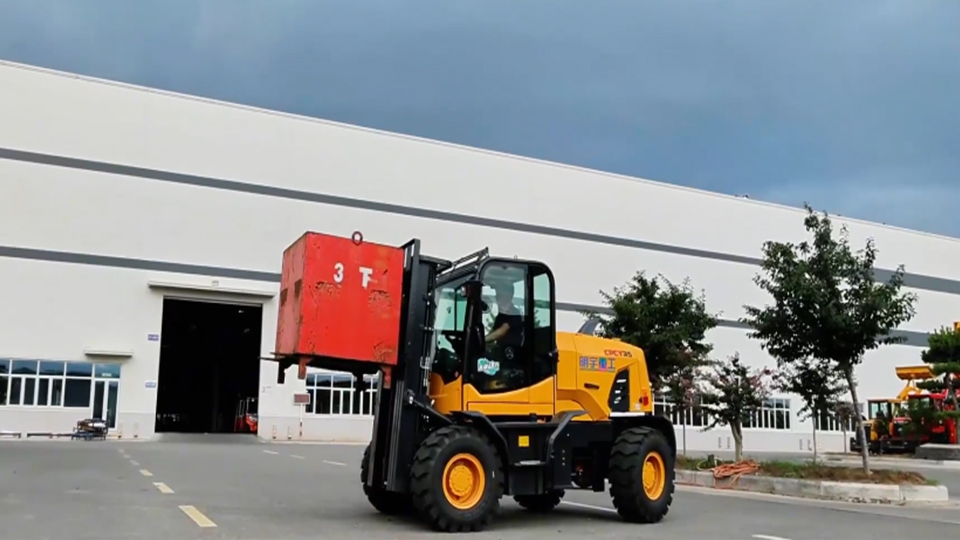
The mast assembly warrants particular scrutiny during periodic evaluations. Mast rails must be inspected for straightness within manufacturer tolerances, typically not exceeding 2mm over the full length. Roller bearings, chains, and sheaves require measurement for wear; chain elongation must not exceed 3% of the nominal length, and individual link wear should remain within 5% of original cross-sectional dimensions. Load backrests must be structurally sound with no deformation that could compromise load stability. For telescopic handlers and reach trucks common on international sites, boom extension mechanisms and locking pins require dimensional verification and functional testing under load.
The forks themselves represent critical safety components subject to rigorous periodic measurement. Fork thickness must be checked at multiple points along the blade length, with replacement mandated when wear exceeds 10% of original thickness. Hook mechanisms and positioning locks must engage positively, and fork carriers must exhibit no lateral play exceeding specification. Fork alignment must be verified; the height differential between fork tips when elevated should not exceed 3% of blade length.
Powertrain and Propulsion Systems
Periodic inspection of forklift powertrain components varies significantly based on propulsion type—internal combustion (IC) versus electric—but both categories demand exhaustive technical evaluation.
For IC engines, periodic inspection encompasses compression testing, fuel system integrity verification, exhaust emission analysis, and cooling system pressure testing. On overseas sites where fuel quality may be inconsistent, fuel filtration systems and injection components require heightened attention. Exhaust systems must be examined for leaks that could introduce carbon monoxide into operator compartments, with particular attention to manifold gasket integrity and catalytic converter function where mandated by local environmental regulations.
Electric forklifts, increasingly prevalent on European and environmentally regulated sites, require battery system deep-cycle testing, electrolyte level verification, and connector integrity assessment. Battery cell specific gravity measurements must fall within manufacturer ranges, and traction motor brush wear must be quantified. Charger calibration and automatic shutoff functionality require verification against nameplate specifications.
Transmission systems, whether hydrostatic, torque converter, or direct electric drive, must undergo operational testing under loaded conditions. Gear engagement must be smooth and positive, with no evidence of slippage or abnormal noise. Differential and final drive assemblies require oil analysis for metallic particulate content, indicating internal wear progression.
Hydraulic System Evaluation
Construction forklifts rely heavily on hydraulic systems for lifting, tilting, and attachment operation. Periodic hydraulic inspection represents one of the most technically demanding aspects of the evaluation process. System pressure must be verified at rated capacity using calibrated test gauges; pressure relief valve settings must align with manufacturer specifications within ±5%. Hydraulic oil analysis should test for viscosity degradation, water contamination, and particulate content per ISO 4406 cleanliness standards.
Cylinder rods must be inspected for scoring, pitting, or chrome layer separation that could compromise seal integrity. Cylinder barrels require internal bore measurement for ovality and taper; excessive dimensional variation indicates impending seal failure. All hoses, fittings, and connectors must be evaluated against replacement criteria—typically any external wire exposure on reinforced hoses, cracking, blistering, or leakage at connections. Hose routing must maintain adequate clearance from heat sources and moving components, with particular attention to abrasion points common in rough construction environments.
Hydraulic filters require replacement regardless of apparent condition, as periodic intervals are predicated on service hours rather than visual assessment. Reservoir breathers must be cleaned or replaced to prevent atmospheric contamination ingress.
Braking System Verification
Brake system integrity constitutes a zero-tolerance inspection item. Service brakes must achieve specified deceleration rates under loaded conditions, typically tested using portable decelerometers or dynamometer equipment. Brake fluid analysis must confirm acceptable moisture content—generally below 3%—and master cylinder operation must deliver consistent pedal feel without fade or sponginess.
Drum brake systems require measurement of lining thickness against minimum specification, while disc systems demand rotor thickness and runout verification. Parking brakes must hold the loaded forklift on specified gradients, usually 15% for pneumatic systems and 20% for mechanical systems. Brake system air dryers, compressors, and lines on pneumatic systems require moisture and contamination testing, particularly critical in humid tropical environments common to Southeast Asian and African construction sites.
Steering and Suspension Components
Steering system periodic inspection must verify free play within manufacturer limits, typically not exceeding 10 degrees of steering wheel movement before wheel response. Power steering fluid condition and pump output pressure require measurement. Tie rod ends, kingpins, and steering knuckles must be assessed for wear; joint looseness exceeding 2mm generally mandates replacement.
For forklifts equipped with suspension systems—particularly rough terrain variants—spring leaf integrity, shock absorber function, and axle mounting security require evaluation. Wheel bearing preload and seal condition must be verified, with particular attention to water ingress in off-road construction applications.
Electrical and Control Systems
Modern forklifts incorporate increasingly sophisticated electrical architectures. Periodic inspection must encompass battery load testing, alternator/regulator output verification, and starter motor current draw analysis. Wiring harnesses require inspection for chafing, insulation degradation, and proper securing; temporary repairs using non-specified materials must be flagged for permanent correction.
Control systems, including electronic stability control where equipped, require diagnostic interrogation using manufacturer-specific scan tools. Sensor calibration for load weight indicators, height limiters, and proximity warning systems must be verified against known standards. Lighting systems—headlights, tail lights, brake lights, and warning beacons—require photometric testing to confirm output meets local construction site illumination standards.
Tire and Wheel Assembly Inspection
Tire condition directly impacts forklift stability and load capacity. Pneumatic tires require tread depth measurement, sidewall inspection for cuts or bulges, and inflation pressure verification against load-specific charts. Solid tires must be evaluated for chunking, delamination, and wear to the manufacturer-specified replacement indicators. Wheel rims require examination for cracks, distortion, and proper bead seating.
Wheel nut torque must be verified and reset to specification using calibrated torque wrenches. On multi-piece industrial wheels, periodic inspection must include component match verification and lock ring integrity assessment.
Operator Protection and Ergonities
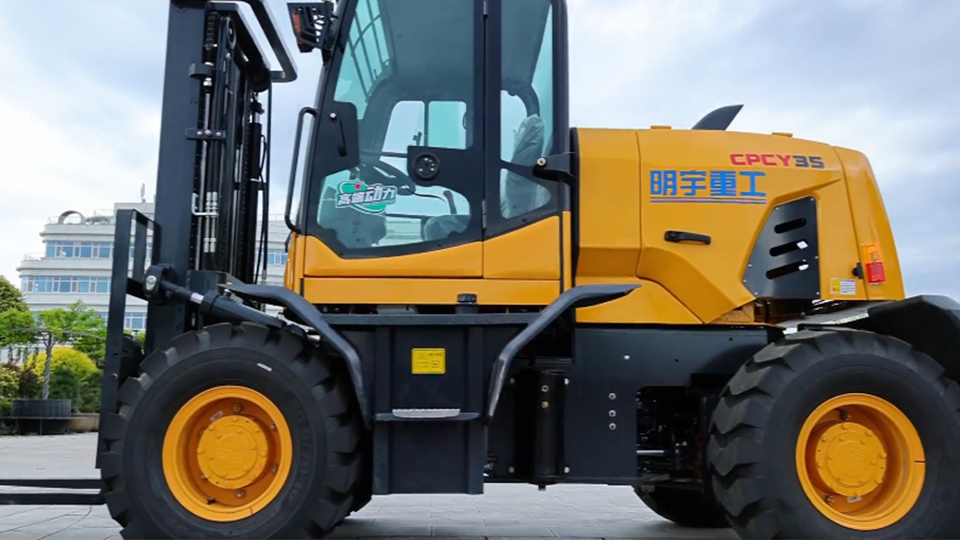
Overhead guards and roll-over protective structures (ROPS) require dimensional and structural verification against ISO 6055 and ISO 3471 standards, respectively. Any deformation, weld cracking, or corrosion compromising structural integrity mandates replacement rather than repair. Seat belts and restraint systems must retract properly and exhibit no webbing damage or buckle malfunction.
Operator compartment ergonomics and controls must be evaluated for proper function. Horn, backup alarm, and other warning devices require decibel level verification. Visibility aids including mirrors and camera systems must be properly positioned and functional.
Documentation, Traceability, and Compliance Certification
The technical inspection process culminates in comprehensive documentation that satisfies both operational and regulatory requirements. Periodic inspection reports must record all measurements, test results, and component condition assessments. Any deficiencies must be categorized according to severity—immediate withdrawal from service, repair required within specified timeframe, or monitoring recommended.
Unique equipment identifiers must link inspection records to specific forklifts throughout their service life. On overseas construction sites, this traceability often extends across international borders when equipment is redeployed between projects. Inspection certificates must reference applicable standards (OSHA, EN ISO, AS, or local equivalents) and bear the signature and credentials of the inspecting competent person.
Conclusion
Periodic forklift inspection on overseas construction sites represents a multifaceted technical discipline requiring mechanical expertise, regulatory knowledge, and systematic documentation discipline. The inspection items detailed herein—spanning structural integrity, powertrain function, hydraulic performance, braking capability, and operator protection—constitute the minimum technical baseline for safe operation. As construction projects increasingly cross international boundaries, adherence to rigorous periodic inspection protocols ensures not only regulatory compliance across jurisdictions but, more fundamentally, the preservation of human life in inherently hazardous working environments. Project managers and safety officers must treat these inspections as non-negotiable operational investments rather than regulatory inconveniences, recognizing that the cost of comprehensive periodic evaluation pales in comparison to the consequences of catastrophic equipment failure.
Name: selena
Mobile:+86-13176910558
Tel:+86-0535-2090977
Whatsapp:8613181602336
Email:vip@mingyuforklift.com
Add:Xiaqiu Town, Laizhou, Yantai City, Shandong Province, China
