
vip@mingyuforklift.com
+86-0535-2090977

Published: September 7, 2026
HTML Meta Description: Electric stacker planning for grocery distribution resilience in 2026, including cold-chain transitions, aisle fit, battery duty and safe replenishment.
Keywords: electric stacker, grocery distribution, FMI supply chain 2026, cold-chain handling, pallet replenishment, warehouse resilience, compact material handling, ZGFORKLIFT, MYZG, food logistics
The FMI Supply Chain Forum on September 8-10, 2026 centers attention on grocery logistics resilience, collaboration and service levels. Electric stackers support short pallet moves, replenishment and staging in facilities where full-size forklifts may be unnecessary. Their value comes from fitting the load, aisle, travel distance and temperature transition rather than simply choosing the smallest machine.
Begin with a task and route survey. Record the narrowest aisle and turn, doorway width, overhead clearance, maximum gradient, dock edges and the worst surface condition. Measure real loads at their actual load centers, including long, offset or irregular items. Rated capacity is only a starting point; residual capacity at the required height and with the selected attachment determines application fit.
Food distribution combines narrow staging lanes, frequent peaks, reusable crates and moves between ambient, chilled and loading areas. A compact stacker can reduce walking and pallet touches, but operators still need clear visibility, protected pedestrian routes and a plan for condensation or slippery surfaces near cold rooms.
Review the ZG-MYCDDH all-terrain electric pallet stacker as the first product reference, then confirm current specifications with the manufacturer.
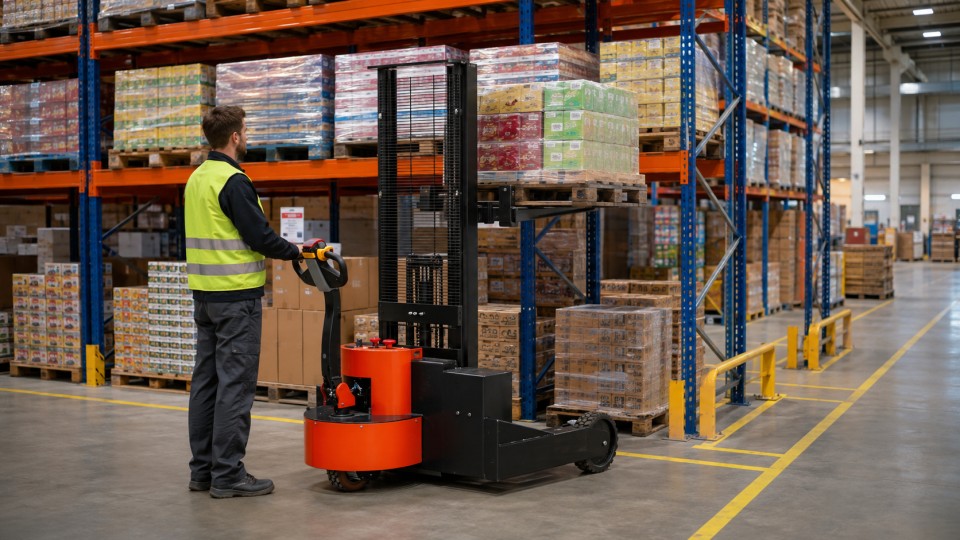
Choose pedestrian, platform or counterbalanced geometry based on travel distance, load, aisle width and rack interface. Verify lift height, residual capacity, fork dimensions, tiller clearance, battery endurance and charger location. Check wheel materials and electrical protection for low-temperature or washdown-adjacent environments.
Visibility and control deserve the same attention as capacity. Review the mast, carriage, tyres or wheels, lighting, mirrors or cameras, restraint, warning devices and speed management as one system. Dust, cold, heat, moisture and corrosion may require extra protection and shorter inspection intervals. Operators must see the travel path and place the load without leaving the protective operating position.
Compare the ZG-MYCPDB electric counterbalanced stacker for a second view of capacity, manoeuvrability, energy and service access.
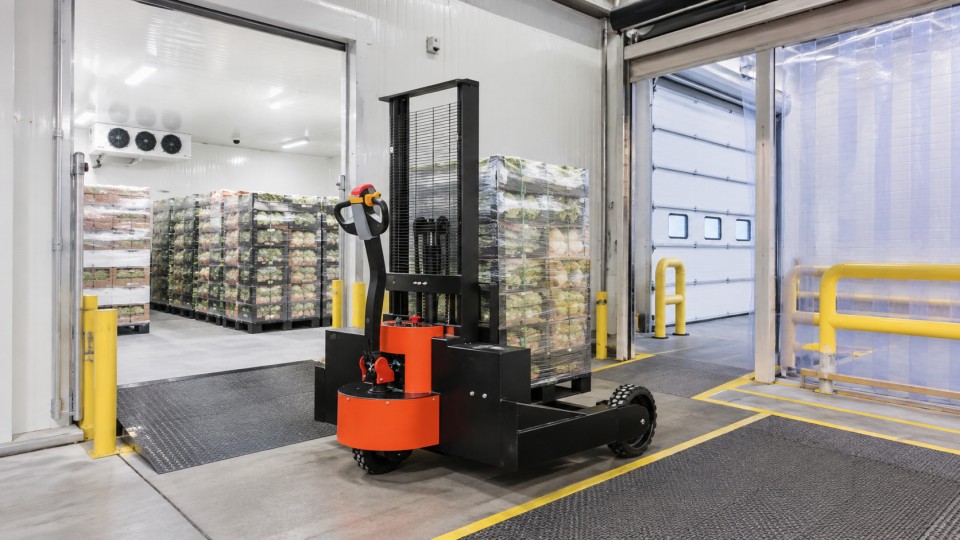
Define right-of-way at cold-room doors, crossings and dock approaches. Inspect wheels, forks, chains, brakes, steering and alarms before use. Keep loads stable and low during travel, slow before temperature transitions and isolate wet or damaged floors. Digital picking prompts must not encourage the operator to look away while moving.
Create a written operating envelope for every route: maximum load and lift height, approved travel direction, pedestrian exclusion points, slope rules and stop-work conditions. Complete a pre-shift inspection of tyres or wheels, forks, chains, hoses, brakes, steering, alarms and the energy or fuel system. Isolate defects affecting stability, braking or visibility until corrected.
Supervisors should observe real work, record near misses, harsh braking, overload attempts, impacts and recurring service issues, then improve layout, traffic separation and coaching. Build the business case around productive hours rather than purchase price alone. Include operator time, maintenance, energy or fuel, infrastructure, transport between sites, downtime risk and resale value.
The CDD85-R electric pallet stacker is the third internal product reference for application comparison.
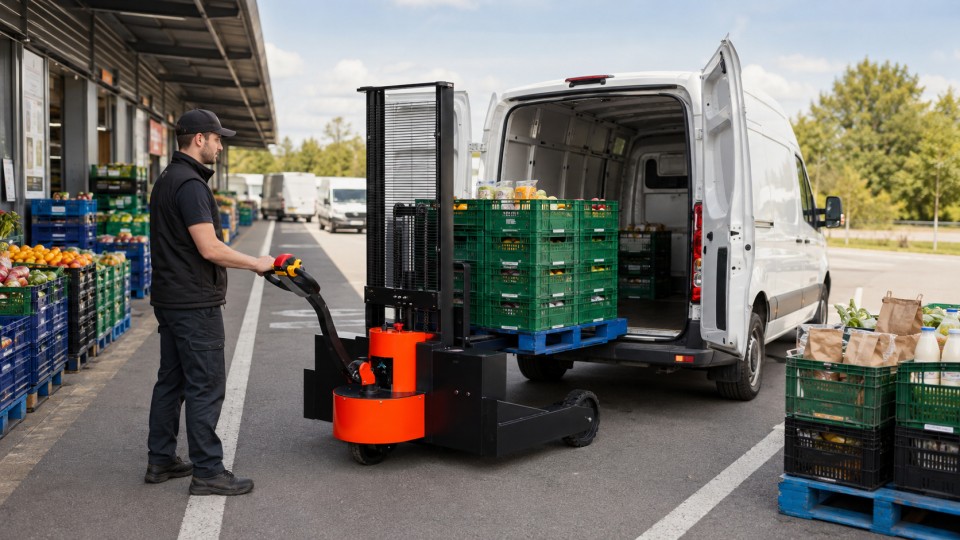
Measure touches per pallet, walking distance, queue time, battery use, product damage and replenishment accuracy before and after the trial. Include battery replacement, wheel wear, sanitation constraints and service response. Scale the fleet only after peak grocery volumes and cold-chain transitions have been tested.
A staged trial is the strongest way to validate a configuration. Select a representative route, define success measures, brief operators and compare throughput, energy use, handling accuracy and maintenance observations. Review the results with operations, safety and finance before fleet-wide deployment. This evidence turns a current industry topic into a defensible material-handling plan.
ZGFORKLIFT and MYZG can tailor the final specification after reviewing the application. Product availability varies by market; confirm the latest technical data and comply with local regulations before purchase or operation.
Contact Shandong Zhuogong Machinery equipment Co.,Ltd. Email: vip@mingyuforklift.com. Tel: +86-0535-2090977. WhatsApp: +86 131 8160 2336. Address: Xiaqiu Town, Laizhou, Yantai City, Shandong Province, China.
Send the maximum load, load-center distance, aisle width, gradient, surface condition, daily duty hours and climate so MYZG engineers can recommend a practical configuration instead of a generic catalogue answer.
Name: selena
Mobile:+86-13176910558
Tel:+86-0535-2090977
Whatsapp:8613181602336
Email:vip@mingyuforklift.com
Add:Xiaqiu Town, Laizhou, Yantai City, Shandong Province, China