vip@mingyuforklift.com
+86-0535-2090977

Published: 2026-11-10 (Asia/Shanghai)
HTML Meta Description: Remote-control rough-terrain forklift methods for recovering pallets and totes at the boundary of supervised humanoid-robot pilot zones.
Keywords: humanoid robot pilot, remote-control rough-terrain forklift, warehouse exception recovery, robot safety boundary, dropped tote recovery, human robot collaboration, remote emergency stop, ZGFORKLIFT, MYZG, automation pilot zone
The current market signal is that new logistics partnerships are testing humanoid robots in warehouse operations, making safe physical exception recovery an immediate design question rather than a distant concept. In supervised automation test cells where humanoid robots, pallets, totes and conventional material-handling equipment share controlled boundaries, the practical question is not whether the trend sounds important; it is which physical handoff, route, inspection or recovery decision must change today.
ZGFORKLIFT and MYZG recommend an application review based on actual load, route, surface, gradient, height, traffic, energy source, shift length and exception plan. Shandong Zhuogong Machinery equipment Co.,Ltd does not treat a model label or photograph as confirmation of residual capacity, stability, emissions suitability, attachment effects or destination compliance.
The exposure is that a misaligned pallet or dropped tote may tempt a worker to enter the robot cell before energy state, perception system and remote equipment controls have all been made safe. Put that failure into the briefing in language operators, technicians and supervisors can recognize. Assign authority to stop, quarantine or reroute the task without waiting for a production target to be missed.
Review the MYZG RC800 remote-control series as the first internal reference. Confirm load center, rated and residual capacity, fork or platform geometry, mast or boom, tire and brake type, steering, visibility, energy system, protective equipment and the exact environment.
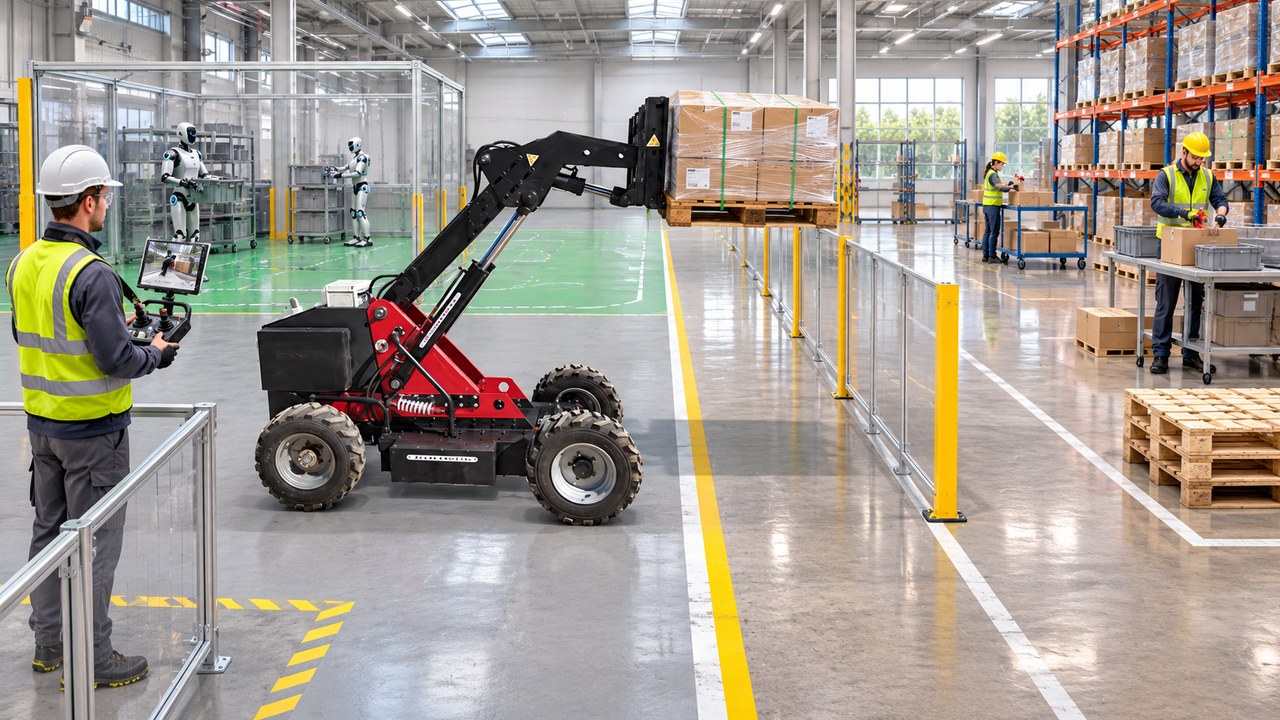
The proposed sequence is to stop the robot task; verify the cell state; lock the entry boundary; identify the object; test remote signal and emergency stop; recover the object from outside the hazard envelope; and reopen only after joint sign-off. Each step needs an owner, timestamp and stop condition. A scan, sensor or software instruction cannot overrule physical evidence of damage, instability, missing identity, unsafe access or an unverified destination.
Test one realistic exception before routine production. Stop a robot, block a lane, introduce a count mismatch, simulate signal loss or discover a damaged container. The recovery plan is valid only if people can place both load and machine in a stable state without entering an exclusion zone or improvising a new hazard.
Track pilot-zone stops, unauthorized entries, signal interruptions, emergency-stop tests, dropped-item causes, recovery duration and repeat exceptions. Review the busiest interval and every exception category. An average can hide a dangerous cluster. A fast move with incomplete evidence is not finished work; it is a deferred investigation.
Use the 600/800 kg remote-control forklift as a second comparison. Productive hours, aisle width, overhead restrictions, outdoor surface, load dimensions, operator position, refueling or charging and service access should be evaluated together rather than as isolated specifications.
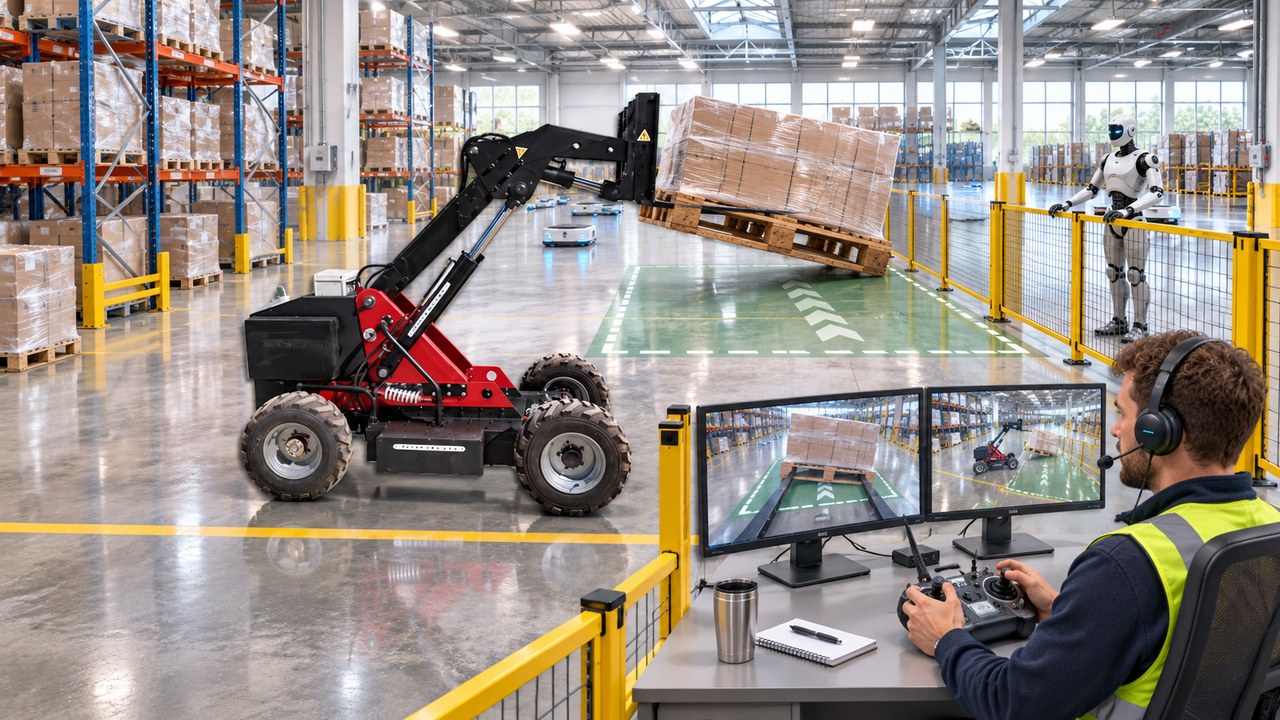
Before use, inspect the items required by the manufacturer and site procedure. Typical checks include forks or platform, mast or boom, chains, hoses, wheels, tires, steering, service and parking brakes, guards, warnings, emergency controls, battery or fuel system, visible leaks, structural condition and data plate. Remove equipment from service when a defect affects control, stability, containment or safe access.
Separate pedestrians, conventional vehicles and automated systems with barriers, route markings and explicit right-of-way rules. A spotter improves communication but never increases capacity. Remote or AI-assisted operation still needs an accountable person who understands the stop logic and can reject an unsafe instruction.
Ask for the selected model, rated and residual capacity, load center, working height, dimensions, service weight, engine or battery arrangement, charger or fuel interface, tires, brakes, standard and optional equipment, manuals, parts information, warranty, shipping plan and destination documents. CE, EPA, battery-transport, cylinder and workplace obligations depend on the exact configuration and market.
The CPD05B compact electric forklift provides the third internal reference. The three pages support comparison, but the final decision should use an order-specific quotation and data sheet. Never assume every photograph shows the same mast, attachment, tire, battery, engine or approved working envelope.
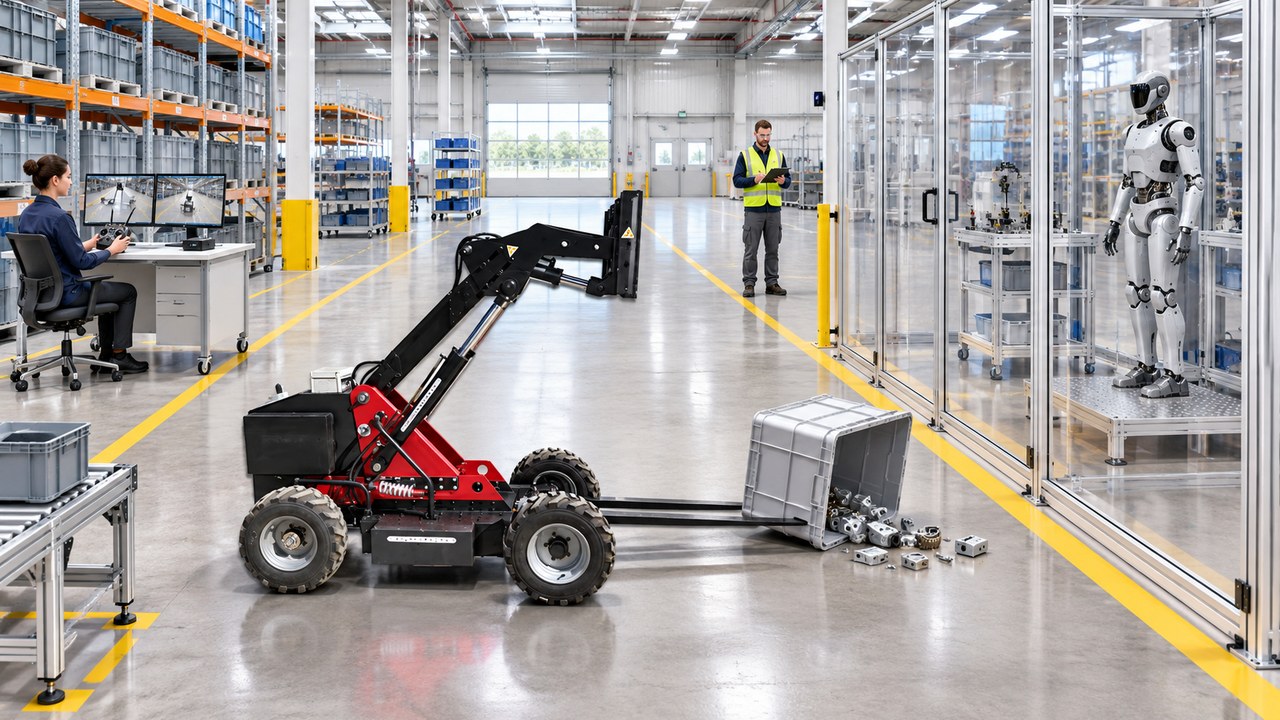
Start with an empty route, then a representative load, then the expected peak. Record operator, maintenance and area-owner observations. Approve routine use only when the route, evidence, equipment condition and recovery behavior remain consistent through the full cycle.
Repeat the review after a layout or software change, different packaging, new attachment, changed battery or cylinder, weather shift, revised customer promise, automation update or service-provider change. Good material handling is a repeatable physical process whose records and real load tell the same story.
ZGFORKLIFT and MYZG are associated with Shandong Zhuogong Machinery equipment Co.,Ltd. Send the destination, load, route, working height, operating hours and service expectations for an order-specific review.
Contact Information:
Email: vip@mingyuforklift.com
Tel: +86-0535-2090977
WhatsApp: +86 131 8160 2336
Address: Xiaqiu Town, Laizhou, Yantai City, Shandong Province, China
Name: selena
Mobile:+86-13176910558
Tel:+86-0535-2090977
Whatsapp:8613181602336
Email:vip@mingyuforklift.com
Add:Xiaqiu Town, Laizhou, Yantai City, Shandong Province, China