vip@mingyuforklift.com
+86-0535-2090977

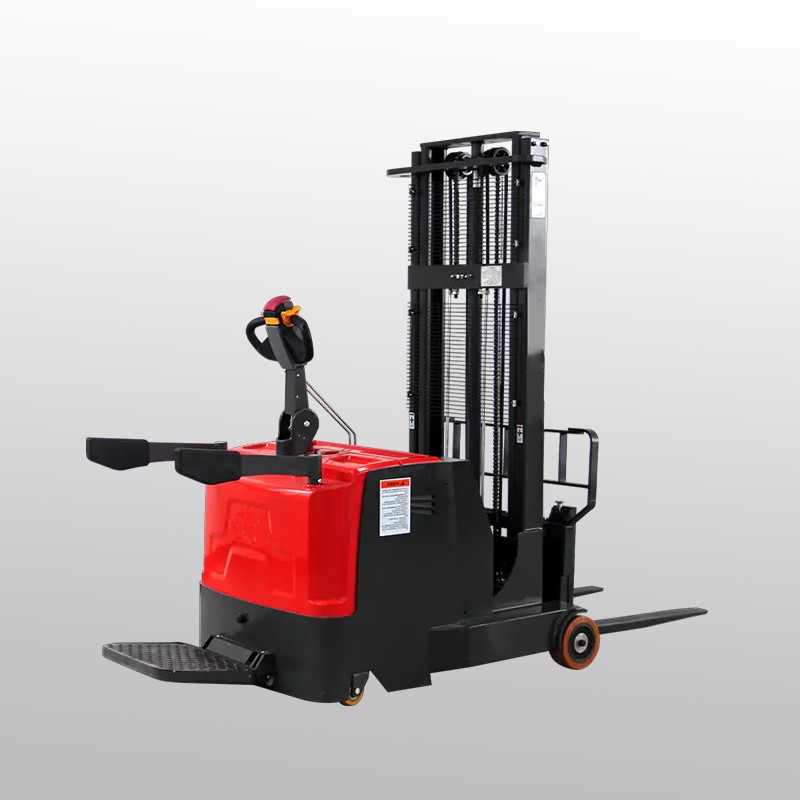
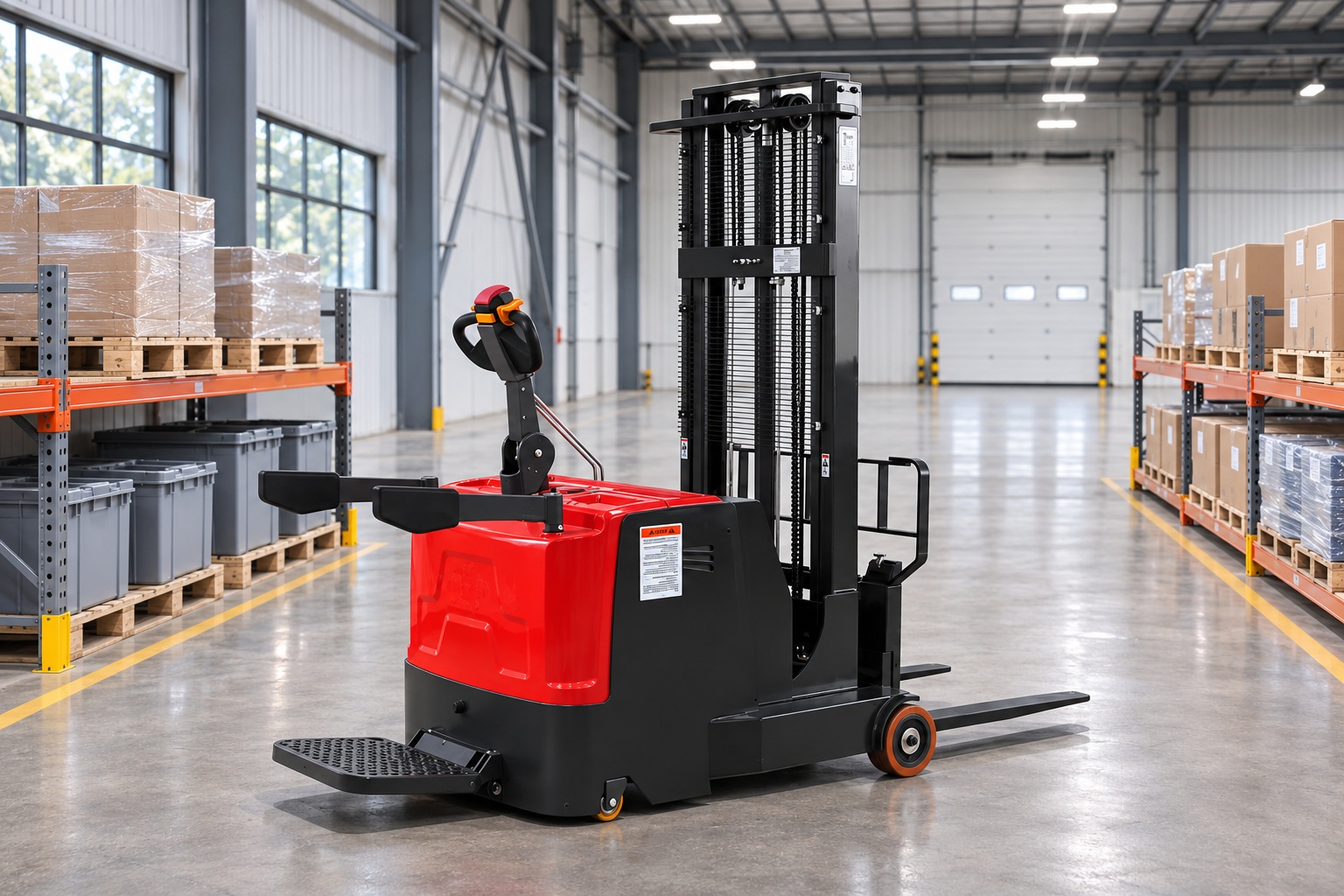
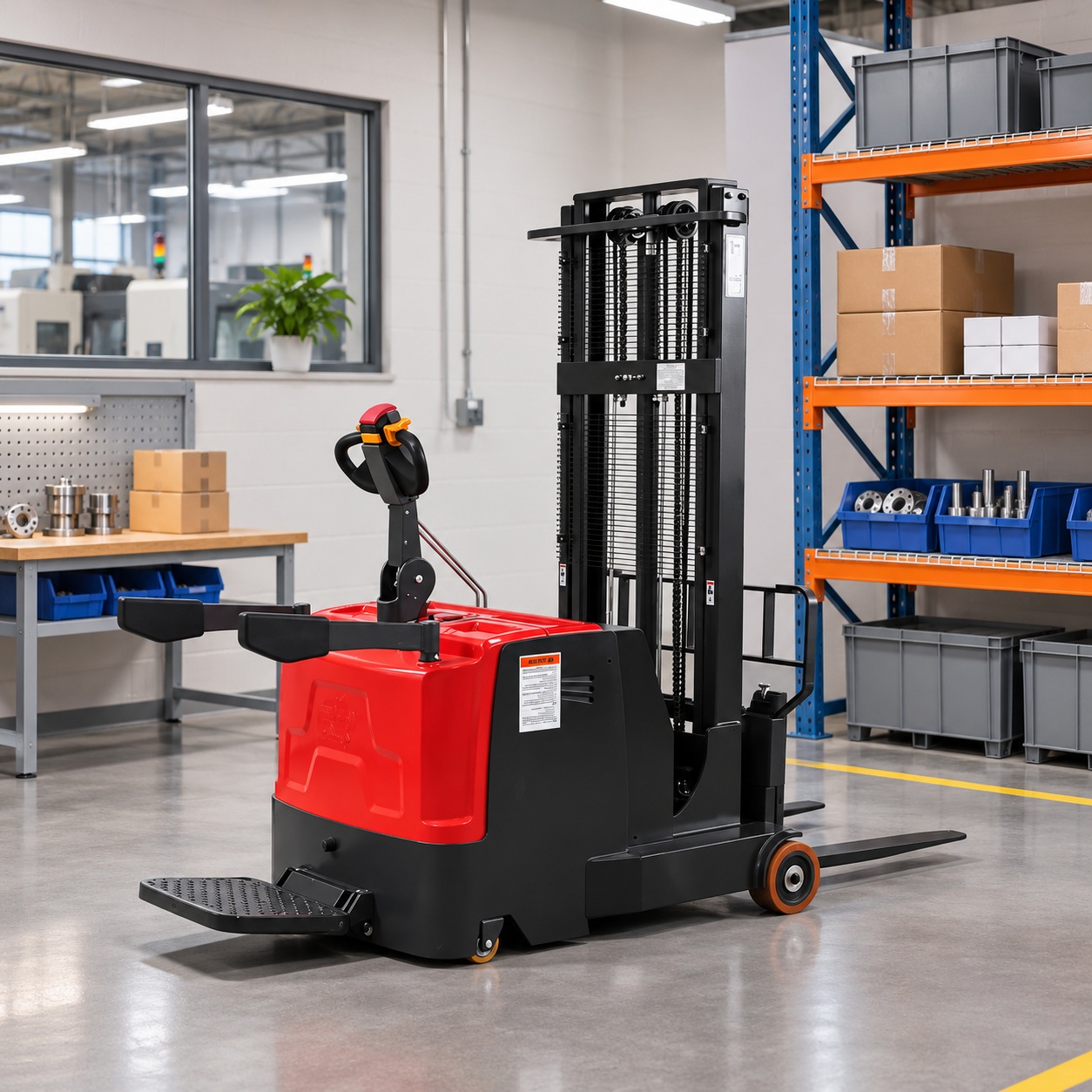
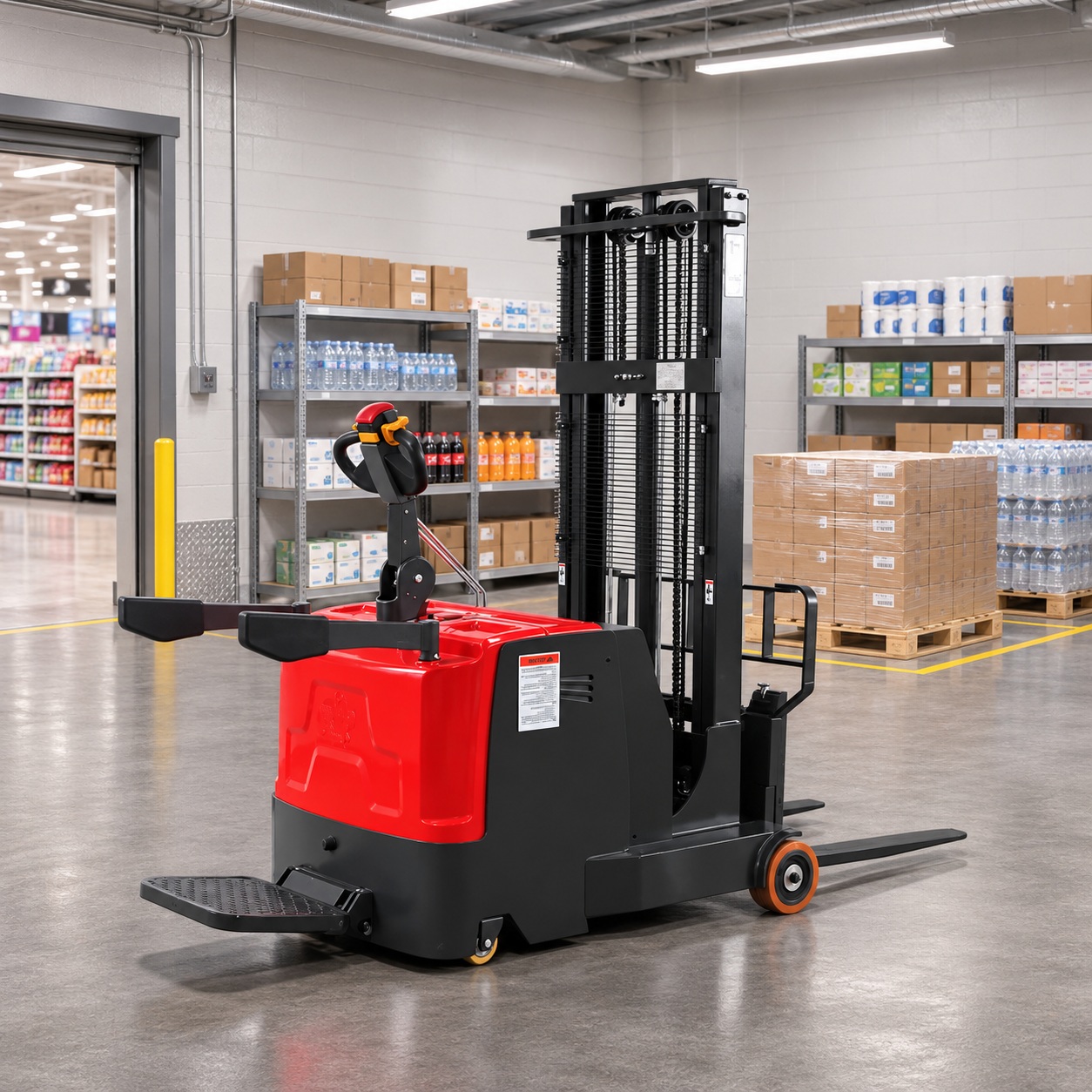
The MYCPDB08/10 short-axis electric counterbalanced stacker gives ZGFORKLIFT / MYZG customers a compact option for pallet lifting where the pallet base or handling route makes support-leg stackers difficult to use. The website's established model is a red and black stand-on electric counterbalanced machine with a folding rider platform and a short chassis. This page focuses on the buyer's real job: moving pallets from receiving through a controlled internal route, then placing them on an approved shelf or staging position. Model selection begins with the load, pallet construction, aisle and required lift height, and ends with a quotation for the exact configuration and destination market.
A components warehouse may handle pallets that have closed bottoms or cross members that block the straddle legs of a conventional stacker. A retailer's backroom may need a machine that can turn between receiving and reserve shelving without bringing a full-size counterbalance forklift into a crowded corridor. A factory parts store may want quiet electric handling during production hours while retaining enough lift to replenish a defined rack bay. For each use, verify the pallet's weight and center of gravity, the height of its intended shelf, the strength of the floor, and the actual turning envelope with the load attached. A compact chassis can help with positioning, but it does not remove the need for pedestrian separation or an approved load path.
The source MYCPDB08/10 product page describes an 800 or 1,000 kg family at a stated 500 mm load center, a folding stand-on platform and several mast heights. These figures are family references only. Request the ordered truck's data plate and capacity information for the installed mast and any fork tilt or side-shift equipment. Residual capacity may fall as the load center moves forward or lift height increases. Never assume the nominal figure applies to an off-center pallet or to every rack elevation.
A useful inquiry contains the heaviest and most frequent load, pallet length and width, underside opening, center of gravity, fork-entry direction and packaging stability. Add the highest required fork position, lowest overhead obstacle, narrowest doorway, smallest aisle, turning space, floor joints, ramps and dock-board details. Ask the supplier to compare the MYCPDB08/10 with other stacker designs against these measurements. A walkie stacker may be preferable for short routes with compatible open-bottom pallets, while a counterbalanced layout may make more sense where pallet bases obstruct support legs. The choice needs a supervised trial, not a claim based only on a catalog turning radius.
Define the mast and closed height together. A high fork position is useful only if the mast can pass through the facility's doorways and the rack can accept the pallet safely. Check whether full free lift is needed at a low ceiling or inside a vehicle. Confirm fork spacing and length for the actual pallet, and include attachment mass and forward offset in the capacity review. The source lists a GEL battery and alternative battery and controller options; the quotation should state the selected battery chemistry, capacity, charger input and charging time for the customer's electrical supply. Compare the complete offer through the All Products collection rather than comparing an equipped truck with a bare base price.
At receiving, inspect pallet integrity and confirm that the load is within the documented capacity for the intended lift. Pick up the pallet squarely, keep its weight centered, and travel with forks at the height directed by the supplied manual. Mark a pedestrian-free lift zone at each rack. At the shelf, verify the beam rating, bay width and clearance before elevating the load. Stop if the pallet rocks, the forks do not fully support it, visibility is inadequate or the floor is damaged. A spotter should have a defined role and a safe standing position when line of sight is restricted. The machine should be parked in a designated area that does not obstruct exits, equipment routes or chargers.
For an electronics-components warehouse, short batches of boxed parts may call for many accurate, low-speed placements. For a retail backroom, inbound volume can arrive in peaks followed by quiet periods when the battery can be charged under a planned schedule. For a light manufacturing store, the benefit is reliable replenishment to line-side staging while maintaining lot identification. In every case, the operator's authorization, training and local traffic rules are as important as machine specification. Buyers can review the wider product categories if the job requires a forklift or pallet truck instead, and use the equipment FAQ to prepare questions before a model-specific technical discussion.
A daily check should cover forks, mast rails, chains, hoses, load wheels, drive wheel, brake action, tiller and steering response, warning devices, emergency controls, battery state, connectors and visible leaks. A truck with an unsafe fault must be isolated and repaired before returning to service. Schedule maintenance from the supplied manual and operating hours; frequent lifting, rack contact, dust or damaged floor joints may require closer inspection. Qualified technicians should perform electrical, hydraulic, mast and brake work. Keep the charger protected from vehicle impact and moisture, and use only the equipment approved for the supplied battery. The operating team should document charging windows and a safe shutdown process for abnormal heat, odor or warning indications.
Dealers can support a small fleet by keeping serial-numbered parts information, wheel and fork wear records, charging instructions and a clear first-service checklist. Ask the supplier to identify approved wear items and likely lead times before promising a rapid repair to customers. A recurring damaged wheel often points to a route defect, so the dealer should investigate the floor as well as replace the part. The parts and dealer resource helps start a service discussion; the actual order should define parts supply, warranty scope, training, technician responsibilities and response expectations. A real demonstration on the customer's pallet and aisle is a more credible sales case than an invented productivity percentage.
Shandong Zhuogong Machinery Equipment Co., Ltd. can discuss a ZGFORKLIFT / MYZG configuration, export packing, operating manuals, spare-parts planning and after-sales communication with a buyer or distributor. State the destination market before ordering and request evidence applicable to the exact machine and battery. CE requirements depend on the delivered configuration and market rules, so any declaration and labels must be reviewed for that order. EPA engine-emissions rules may not apply in the same way to a battery-electric stacker, but the importer should confirm all destination obligations for electrical equipment and batteries. Do not treat a product photo, a generalized export statement or a customer story as proof of a specific certificate or project outcome. References and cooperation cases should be shared only when verified and permitted.
To request a quote, provide load photos, pallet-base details, maximum weight, load center, lift height, closed-height limit, aisle width, floor condition, travel distance, daily hours, battery and charger preferences, destination country and quantity. Site drawings and a sample pallet help avoid specification errors. Read the company background and send the application through the contact page, email vip@mingyuforklift.com, telephone +86-0535-2090977 or WhatsApp +86 131 8160 2336. Shandong Zhuogong Machinery Equipment Co., Ltd. can then review the right MYCPDB08/10 option. Final capacity, battery, mast, dimensions, safety instructions and commercial terms are confirmed by the signed technical agreement and supplied documentation.
Name: selena
Mobile:+86-13176910558
Tel:+86-0535-2090977
Whatsapp:8613181602336
Email:vip@mingyuforklift.com
Add:Xiaqiu Town, Laizhou, Yantai City, Shandong Province, China