vip@mingyuforklift.com
+86-0535-2090977

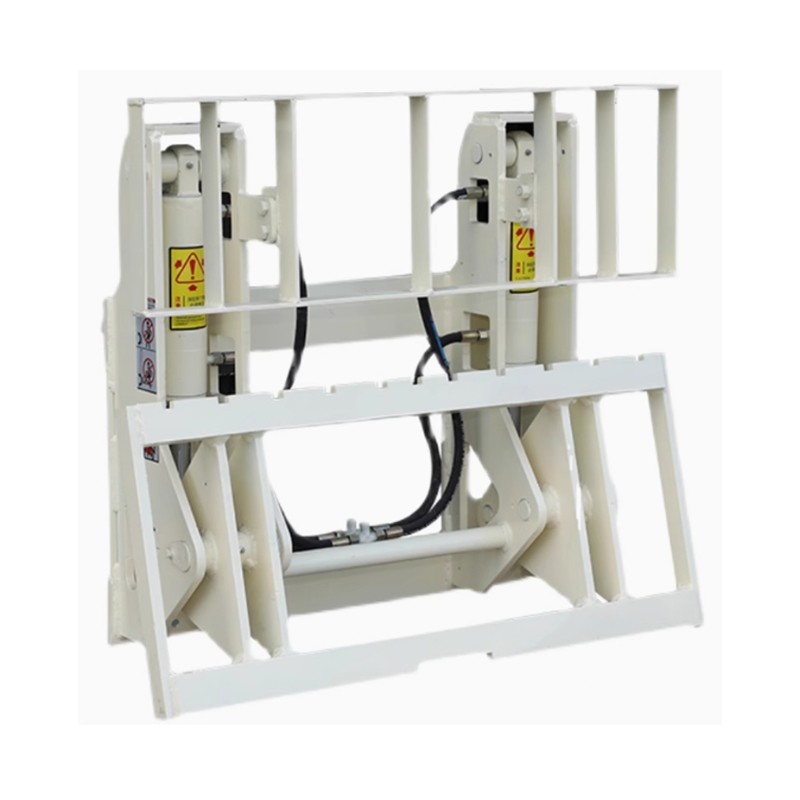
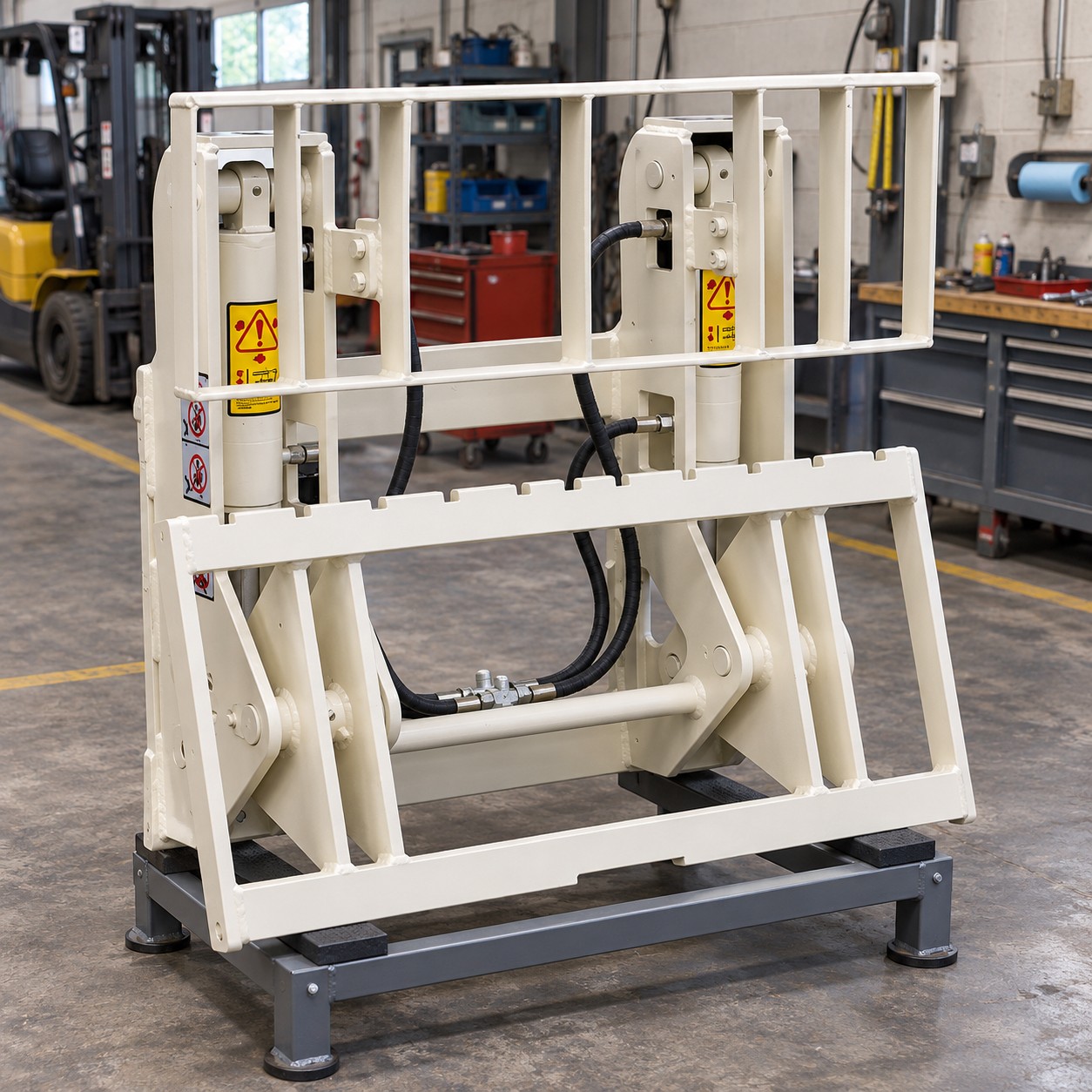
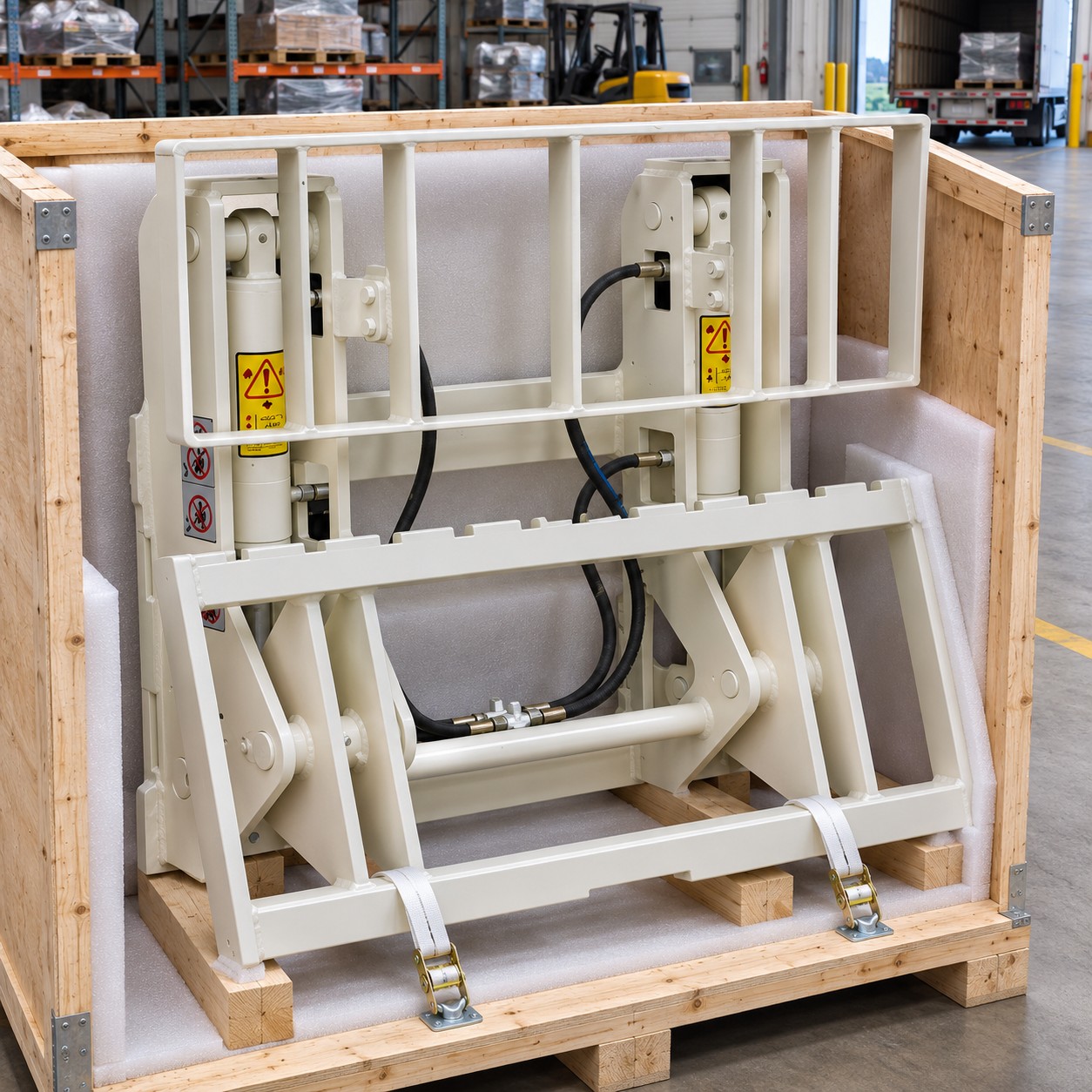
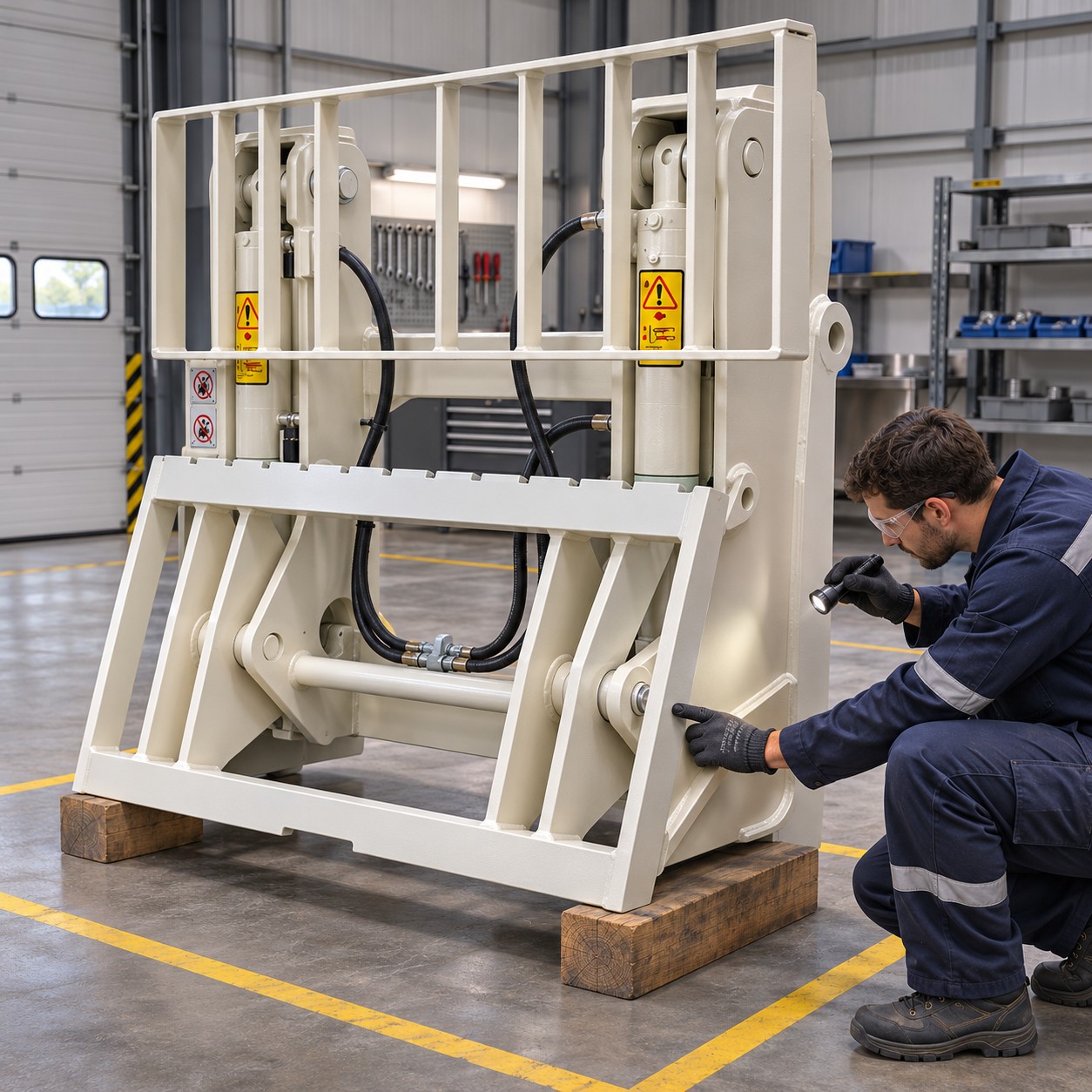
A warehouse or production site may need an attachment that changes the angle of a supported load during a controlled handling step. The ZGFORKLIFT / MYZG tilting fork product reference shows a cream-white steel carriage assembly with a wide upper grille, hydraulic cylinders and hoses, and a lower pivoting frame. The source image does not show a particular pair of long fork blades or establish an approved tilt angle, rated capacity, pressure setting or compatible truck. This page explains how to assess the pictured attachment family for a real application. Shandong Zhuogong Machinery Equipment Co., Ltd. should confirm every offered configuration in a current drawing and quotation before purchase.
The first customer question is not how far the mechanism moves, but why the load must change angle. Record the unit-load dimensions, mass, center of gravity, packaging strength, support points and intended pickup and placement positions. Describe any receiving frame, bin, rack or production fixture and the clearance around it. A load can shift or spill as its angle changes, so a trial with representative goods is essential. Check whether the operation could instead be performed with a stationary fixture or a safer process change. Never use an attachment to make an unstable or unapproved load appear acceptable. The host forklift, load and work area need a coordinated operating plan.
Use the site's original tilting fork reference to identify the visible carriage and pivot assembly. Send the supplier photographs of your host forklift carriage, mast, auxiliary hydraulic connections and existing forks. Request the attachment mass, center of gravity, mounting class, hydraulic flow and pressure requirements, actual tilt range, permissible load and approved fork interface in writing. The image alone cannot verify these specifications. An attachment changes load-center geometry and residual capacity, particularly at height. Have a qualified person review the complete truck-and-attachment combination and update the operating information as required before use.
A useful buying brief includes the host truck model and serial number, material type, maximum and minimum load dimensions, required lift height, target angle, aisle width and cycle frequency. Ask which hydraulic controls, hoses, pins, mounting hardware and operator instructions are included. Confirm whether forks are supplied or must be selected separately; the source photograph primarily shows the tilting carriage rather than a full fork set. Compare quoted configurations against dimensioned drawings, not just marketing names. Before acceptance, carry out a supervised no-load function check and then a controlled trial with representative loads. Record any movement, interference, loss of visibility or package damage.
Compare other equipment in the attachment category. A tipping bucket is a different material interface for an assessed loose-material process. A fork positioner changes fork spacing for suitable loads rather than necessarily changing carriage angle. These alternatives should be compared by actual load, discharge or placement method, host fitment and site risk controls. Do not infer that one attachment can perform the function of another because both appear in a parts catalog.
Possible applications include controlled positioning of approved containers, production fixtures or packed loads when an angle adjustment is specified by the handling plan. Suitability must be confirmed for the actual load and supplied attachment. Define the start and end positions, keep bystanders outside the work zone and check overhead clearance before moving. Operators should use only the approved hydraulic control, make angle changes slowly and keep the load low whenever practical. Stop work if the load shifts, if a hose leaks, if the frame interferes with the truck or if the intended receiving surface is not stable. Never tip a load toward people or use the assembly as a personnel platform.
The All Products catalog helps a buyer compare host trucks and accessories. General questions can be raised through the site's frequently asked questions, but the site-specific operating procedure should be based on the delivered equipment and a measured trial. The procurement team should also review floor condition, pedestrian routes, nearby racks, lighting, receiving height and the consequences of a dropped load. A good attachment choice resolves a defined process bottleneck while keeping the truck within its approved operating envelope.
Inspect the visible frame, grille, pivot points, pins, cylinders, hoses, couplings and retaining devices before each shift. Check for cracks, looseness, abrasion, leaks and unexpected movement. Perform a function test without a load in a clear area as specified by the supplied manual. Remove a defective assembly from service until qualified personnel repair and assess it. Keep a maintenance record for hydraulic components and any fitted fork blades. Ask for the exact unit's lubrication schedule, replacement-part references and installation procedure; the source image does not provide service intervals. After a repair, repeat the required fitment and operating checks before production use.
For an export order, ask for packing dimensions, installation and operator instructions, spare-parts information and a contact route for technical service. The company background page is a starting point for supplier review, not a substitute for order-specific evidence. Request any applicable CE documentation for the actual delivered configuration and destination. EPA requirements may apply to a combustion-engine host truck in some markets, but they do not by themselves establish an approval for a hydraulic attachment. Ask for verifiable references before relying on a claimed customer case. This page makes no unverified performance, certification, export-volume or installation claim.
A dealer should collect the host truck identification, load drawing and workflow photographs before recommending the tilting fork assembly. Separate the attachment, installation parts, hydraulic work, freight, commissioning and training in the quote. Keep the trial acceptance criteria, approved loads, operating angle and residual-capacity decision in the customer's handover file. Plan service access and parts supply for the destination market. A fleet manager can compare cycle time, package damage, training burden and maintenance cost with alternative handling methods. If the load cannot be restrained during angle change, the correct recommendation may be a different fixture or process rather than this accessory.
Send load dimensions and mass, the required handling angle, lift height, worksite photographs and host forklift details to Shandong Zhuogong Machinery Equipment Co., Ltd. Request a current ZGFORKLIFT / MYZG drawing, approved configuration, hydraulic requirements, delivery scope and operator documentation. Email vip@mingyuforklift.com, call +86-0535-2090977 or use the contact page. Final selection should follow the actual delivered unit, the compatible host truck and a supervised trial with representative goods.
Name: selena
Mobile:+86-13176910558
Tel:+86-0535-2090977
Whatsapp:8613181602336
Email:vip@mingyuforklift.com
Add:Xiaqiu Town, Laizhou, Yantai City, Shandong Province, China