vip@mingyuforklift.com
+86-0535-2090977

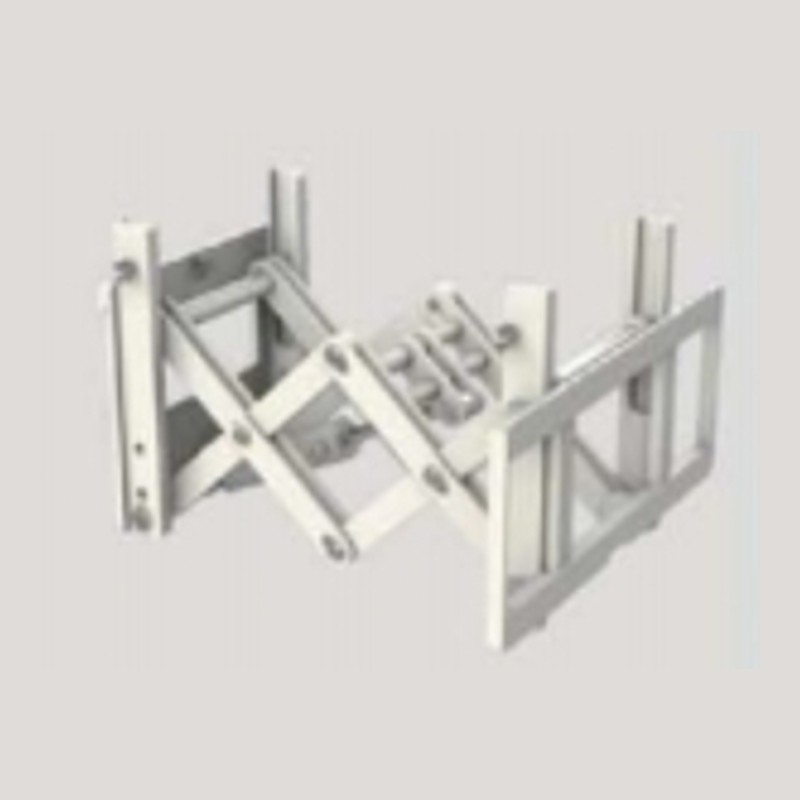
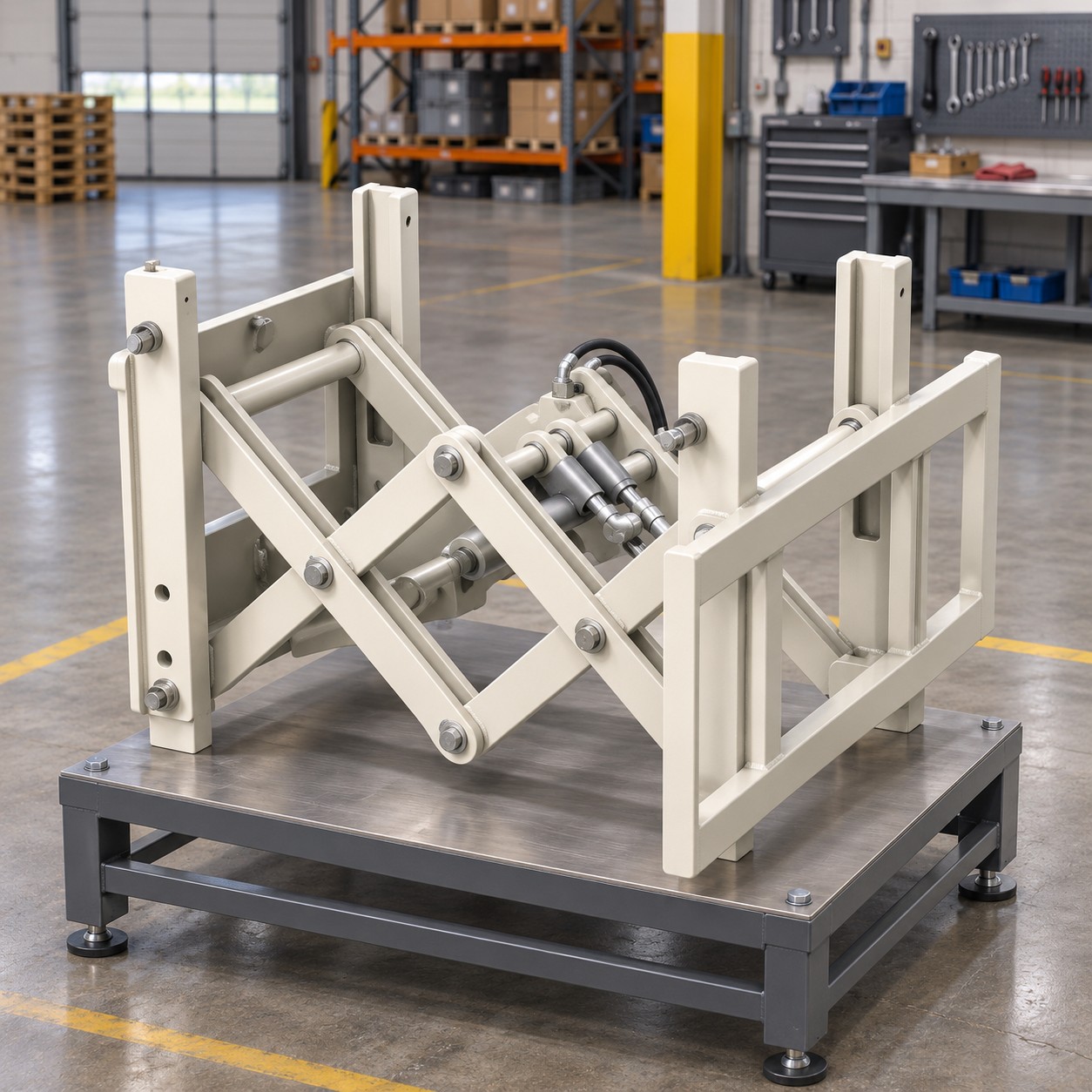
A warehouse may face a reach problem when a suitable load is set back from the normal carriage position and a standard fork approach is difficult. The ZGFORKLIFT / MYZG forward fork rack reference is a compact light-colored steel assembly with front and rear rectangular frames, linked arms between the frames and a central mechanism. The source photograph shows the frame, not a complete installed truck or a confirmed fork set. This page explains how buyers can evaluate that actual attachment family for a defined operation. The image alone does not prove extension travel, rated capacity, carriage fit, hydraulic requirements or safe use with a particular load. Request a current data sheet for the offered configuration from Shandong Zhuogong Machinery Equipment Co., Ltd.
Before selecting a forward-reaching assembly, document exactly where the load sits, how far the truck can approach and why normal fork insertion is insufficient. Record pallet dimensions, load mass, center of gravity, rack or container geometry, aisle width and the highest lift needed. Check the floor and truck operating space: extending a load forward changes the leverage on the forklift and may reduce usable capacity substantially. A narrow work area can also create collision points between the moving frame, the load and a rack upright. A qualified engineer or supplier representative should review the complete host and attachment combination rather than relying on a generic forklift rating.
Use the site's original forward fork rack product image as a visual identity check. Ask for drawings that show the retracted and extended envelope, mass, center of gravity, mounting interface, hydraulic flow and pressure, permitted load and any required forks. The source image is not sufficient to infer these dimensions. Share the host forklift model and serial number, carriage class, mast details and available auxiliary controls with the supplier. Confirm residual capacity for the planned load center and height in writing, and arrange an installation inspection before the equipment is released for production.
A purchase specification should include the minimum reach needed, maximum load size, stack height, cycle rate, target placement accuracy and the route to the pickup point. Ask which items the quoted scope includes: frame, pins, hoses, valves, mounting hardware, fork blades, training and spare parts. Compare the fully extended dimensions with rack protection, ceiling fixtures, doorways and dock equipment. A trial should start without a load and then use a representative approved load under supervision. Check movement at each stage, visibility to the operator, clearance at full extension and how the load behaves during retraction. Stop if the frame binds, if the load shifts or if the truck's stability is uncertain.
Compare this approach with products in the attachment category. A fork positioner changes the spacing of suitable forks; it does not automatically solve a reach problem. A tilting fork carriage addresses a change in load angle and requires different operating controls. The right solution may also be a rack-layout change, a different truck or a fixed transfer device. Choose according to the real process and approved load rather than an attachment name alone.
Potential uses include assessed deep placement positions, loading zones with controlled approach restrictions and production material transfer where a specified forward movement is needed. Each use must be checked against the actual delivered unit. Define the pickup and deposit points, protect nearby workers and keep the travel route clear. The operator should complete the approach at a safe speed, keep the load low where practical and use only the approved control sequence for extension and retraction. Never use the reach mechanism to push against a fixed obstruction or to drag a load of unknown resistance. A supervisor should record approved load patterns and an exception procedure for loads that do not fit the trial.
The All Products catalog helps compare a compatible host forklift with other equipment options. The site's frequently asked questions can help frame purchasing questions, but the final operating envelope must come from the unit-specific documentation. Reach changes the effective load center and can affect visibility and floor loading. Review aisle markings, rack clearances, pedestrian separation and load containment before training operators. Do not lift people or use the extending frame as an access platform.
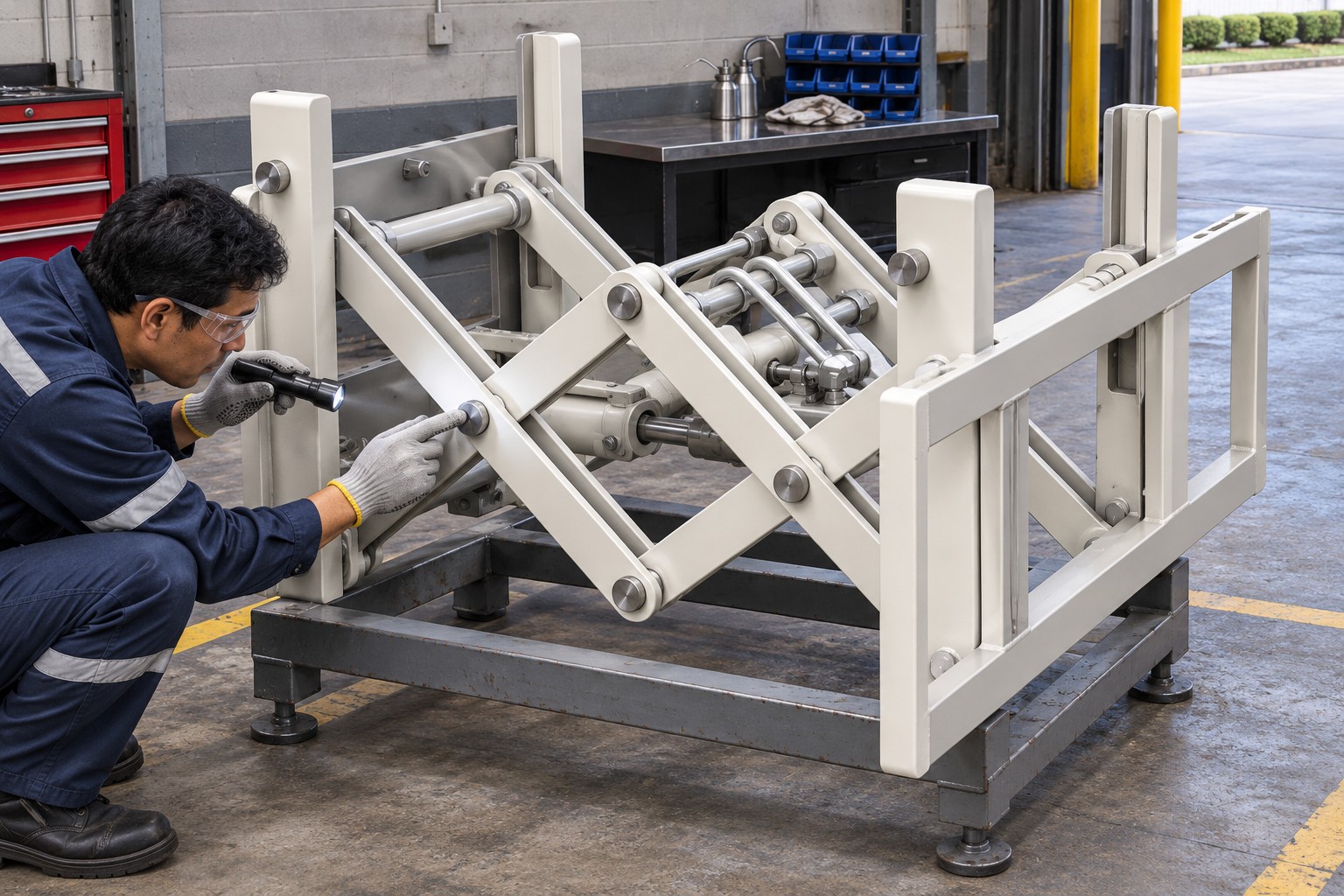
Before each shift, inspect the front and rear frames, scissor links, pins, retainers, hydraulic components and any fitted forks for damage or looseness. Check hoses for abrasion and leaks, and verify smooth motion in a clear area according to the supplied manual. Remove a damaged unit from service until qualified personnel inspect it. Keep linkage joints clean and follow the exact lubrication schedule supplied with the product; do not guess an interval from a photograph. Record unusual noises, uneven travel, impacts and any unintended movement. A dealer should identify replacement pins, bushings, seals and hose parts by the delivered unit's parts list so repair work does not rely on visual similarity.
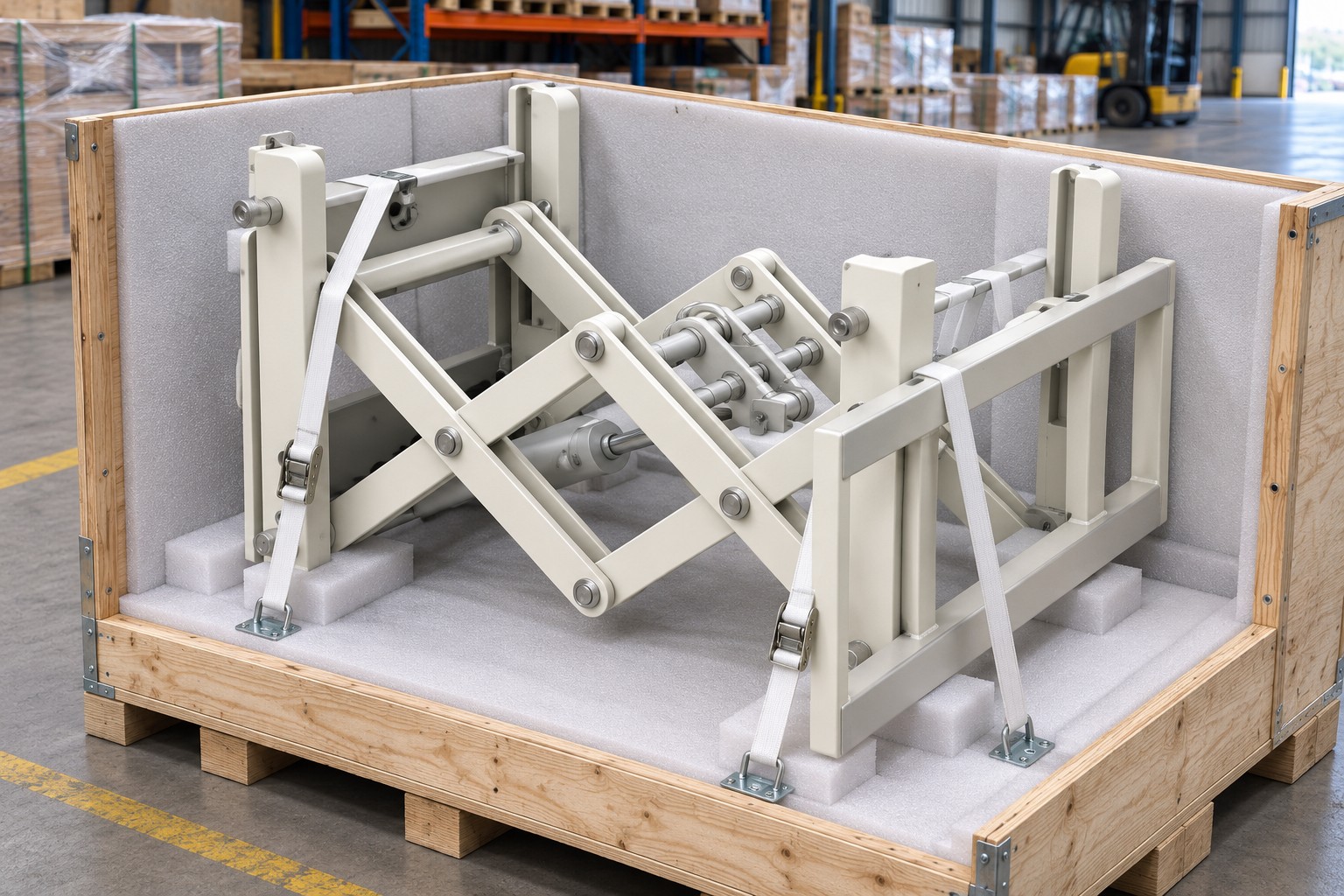
For international purchases, request a packing list, installation and operator documents, spare-parts references and a clear technical support contact. The company information page is a starting point for supplier review. Buyers should request any applicable CE-related documentation for their exact delivered configuration and market. EPA rules may apply to a combustion-engine host forklift in some destinations; they do not by themselves establish approval of this accessory. Export experience, service coverage and customer cases should be supported by relevant records if they are important to an approval decision. This page makes no unverified certification, performance or cooperation claim.
A dealer should collect site drawings, host truck details and representative load data before recommending the forward fork rack. Separate the attachment cost from installation components, hydraulic work, freight, commissioning, operator training and planned maintenance. Keep the load trial and residual-capacity decision in the customer's handover file. A fleet manager should compare the proposed attachment with alternative handling layouts using cycle time, rack risk, service access and operator workload. If safe reach cannot be verified on the existing truck, a different process or truck may be the sounder purchase.
Send required reach, load dimensions and mass, lift height, rack drawings and host forklift identification to Shandong Zhuogong Machinery Equipment Co., Ltd. Ask for the current ZGFORKLIFT / MYZG frame drawing, fork and hydraulic scope, capacity assessment and maintenance documents. Contact vip@mingyuforklift.com, call +86-0535-2090977 or use the contact page. Final approval should follow a fitment review and controlled trial with the actual load and delivered equipment.
Name: selena
Mobile:+86-13176910558
Tel:+86-0535-2090977
Whatsapp:8613181602336
Email:vip@mingyuforklift.com
Add:Xiaqiu Town, Laizhou, Yantai City, Shandong Province, China