
vip@mingyuforklift.com
+86-0535-2090977

Essential Foundations: A Technical Outline for Forklift Operation Safety
Article Title: The Indispensable Imperative: When Operating a Forklift, Essential Safety and Technical Compliance Mandates
I. Introduction
II. A. The Crux of the Matter: Why operational safety is non-negotiable (legal, financial, human cost).
B. The Scope: What the article will cover (pre-op, operation, stability, maintenance).
C. The Core Thesis: Operational success hinges on adherence to technical standards and disciplined procedure.
II. Pre-Operation: The Technical Inspection
A. The Mandatory "OSHA-Compliant" Pre-Check: The physical and regulatory checklist.
Fluids (hydraulic, engine oil, coolant) and Fuel/Battery Charge .
Tires (condition, pressure, lug nuts).
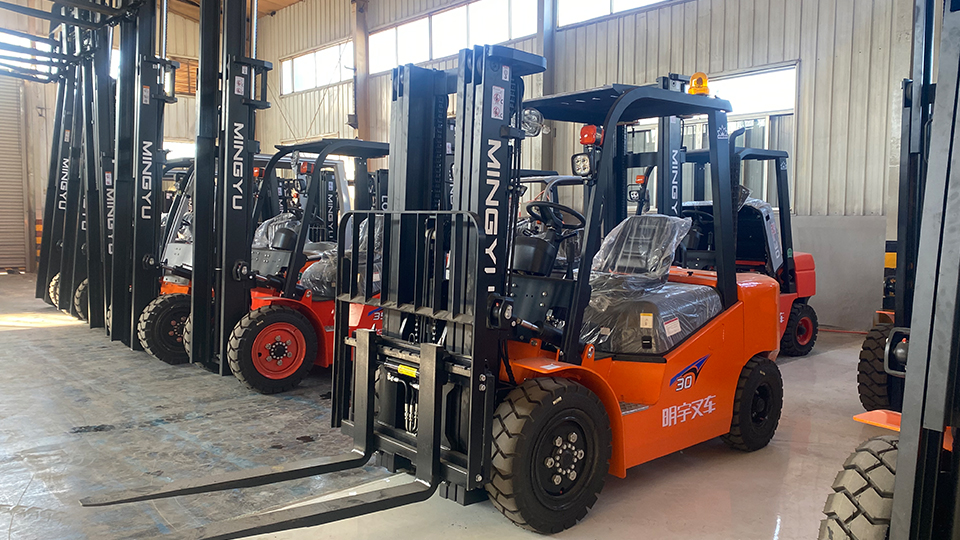
Forks and Mast Assembly (cracks, welds, chains, hydraulic hoses).
Safety Devices (horn, lights, seatbelt, fire extinguisher location).
B. Operator Qualification and Physical State:
Certification validation (proof of training).
Impairment check (fatigue, medication).
Appropriate Personal Protective Equipment (PPE).
III. The Principles of Load Stability and Physics
A. The Stability Triangle: A deep dive into the center of gravity (CG) and load axis.
Definition and visualization of the Stability Triangle .
The shifting center of gravity with an elevated or titled load.
B. Load Capacities and Ratings:
Reading and interpreting the Data Plate (capacity, load center, max lift height).
Understanding the concept of Derating (attachments, uneven terrain).
C. Safe Load Handling Techniques:
Securing the load (even distribution, backrest contact).
Tilting (when and how much) and height management (traveling low).
Handling unbalanced or asymmetrical loads.
IV. Operational Procedures and Environmental Control
A. Travel and Traffic Management:
Speed limits (indoor vs. outdoor).
Visibility and Direction (driving in reverse with large loads).
Intersections, Blind Corners, and Horn Usage.
Maintaining a safe distance from other vehicles/pedestrians.
B. Ramps and Slopes:
Crucial Rule: Always drive with the load/forks uphill when ascending or descending.
Proper braking and speed control.
C. Loading/Unloading Trailers and Dock Plates:
Wheel chocks and positive trailer securement.
Checking the load-bearing capacity of dock plates.
V. Technical Maintenance and Advanced Scenarios
A. Refueling/Recharging Protocol:
Propane: Tank changing safety and ventilation.
Electric: Battery charging, watering, and ventilation (H2 gas hazard).
B. Reporting Malfunctions: The immediate cease-operation mandate.
C. High-Risk Scenarios:
Elevated Personnel Platforms (use of a dedicated work platform).
Overhead obstructions and power lines.
The crucial procedure for a tip-over (rollover).
VI. Conclusion (Approx. 100 words)
A. Synthesis: Recap of the core mandatory practices.
B. Final Mandate: Safety is not a suggestion; it is the technical prerequisite for the job.
�� Article Introduction: The Indispensable Imperative
The Indispensable Imperative: When Operating a Forklift, Essential Safety and Technical Compliance Mandates
In the logistics, manufacturing, and warehousing sectors, the powered industrial truck, commonly known as the forklift, is the undisputed workhorse. Its capacity to handle immense loads with apparent ease makes it an irreplaceable asset to global supply chains. However, this power comes tethered to a significant liability. A forklift is, fundamentally, a counterbalance machine operating under dynamic physical constraints, and the margin for error is razor-thin. When considering its operation, the single most critical query is not what the machine can do, but rather, what the operator must do to ensure safety, structural integrity, and regulatory compliance.
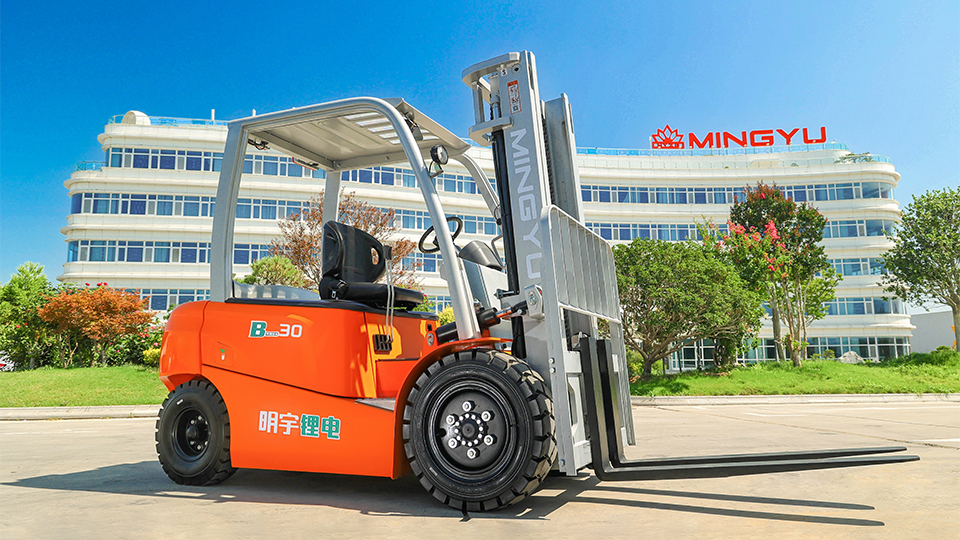
When operating a forklift it is essential that you... recognize and rigorously adhere to a fixed set of technical, regulatory, and physical mandates that transcend simple "best practices" and constitute the absolute minimum standard for professional operation. Failure to comply is not merely a violation of company policy; it is a direct challenge to the fundamental laws of physics—specifically gravity and inertia—often resulting in catastrophic outcomes. The operational hazards are well-documented: tip-overs, dropped loads, pedestrian strikes, and structural damage—each carrying severe financial penalties, operational shutdowns, and, most importantly, the irreversible cost of human injury or fatality.
This technical article dissects the operational environment, moving beyond simple driving instruction to explore the engineering principles of stability, the non-negotiable procedural checks, and the advanced handling techniques required to manage this powerful piece of machinery. The core tenet is this: successful forklift operation is not defined by speed or efficiency, but by perfect execution of mandatory safety protocol. This begins long before the key is turned—with the essential technical inspection—and governs every movement, lift, and tilt until the machine is safely powered down.
Name: selena
Mobile:+86-13176910558
Tel:+86-0535-2090977
Whatsapp:8613181602336
Email:vip@mingyuforklift.com
Add:Xiaqiu Town, Laizhou, Yantai City, Shandong Province, China
