
vip@mingyuforklift.com
+86-0535-2090977

Published: October 30, 2026
HTML Meta Description: Prepare remote rough-terrain forklift operations for winter utility repair, transformer handling, clear communication and safe loss-of-link response.
Keywords: remote forklift, rough-terrain forklift, winter utility recovery, field equipment staging, remote operator control, transformer handling, cold-weather site logistics, signal-loss safety, ZGFORKLIFT, MYZG
Utility repair teams may stage transformers, pumps, switchgear and cable drums at temporary locations before roads and permanent power are restored. Remote forklift control can assist with a task where the operator needs to remain outside a restricted area, but it adds communication and recovery requirements that must be planned before unloading begins. Winter conditions make the route survey, battery or fuel checks, operator visibility and loss-of-signal response especially important.
Logistics trend coverage increasingly discusses AI and automation alongside the continuing role of skilled workers. On a field repair site, remote operation is a narrow tool for a defined task, not an automatic substitute for a trained operator. Agree on the boundary of the work zone, the person authorized to issue commands and the exact condition that stops a lift. Make sure the equipment delivery plan accounts for changing ground conditions and that the heaviest component is not scheduled before the staging pad is ready.
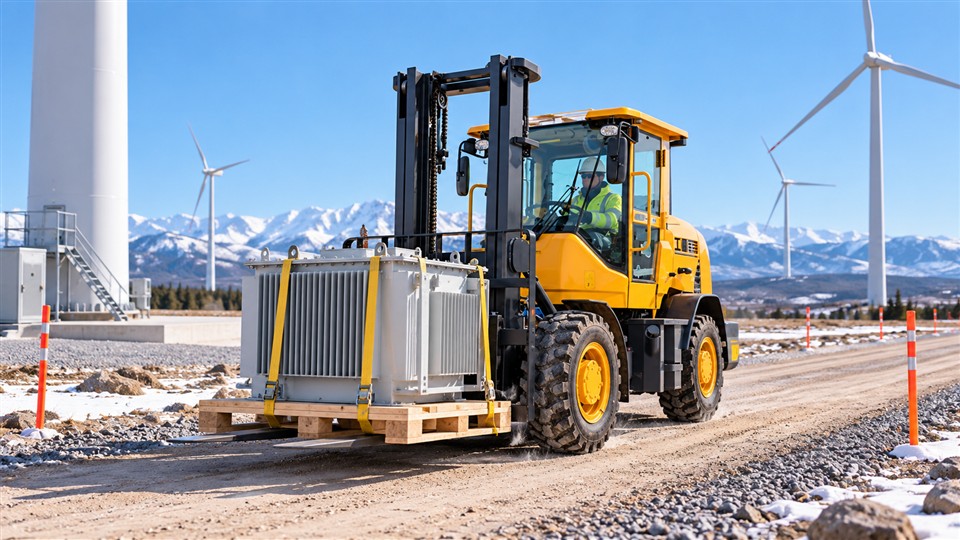
Application setup: Build a load sheet for each skid or pallet, including weight, center of gravity, lifting points and required placement height. Survey soft shoulders, frozen ruts, ice, standing water, cable crossings and overhead conductors. Check the remote-control range, camera view, feedback, emergency stop and safe state after loss of connection. Test the system at the farthest point on the route with no load, then with a representative load under controlled conditions. Keep a recovery vehicle and a clear path available if the forklift becomes immobilized.
Compare the 5T rough-terrain forklift for rated capacity, configuration and access requirements. Confirm the final specification for the exact attachment and work height.
Daily operating controls: Establish radio protocol and a single controller for each operation. Keep everyone out of the travel path and suspended-load zone, and do not allow a second operator to issue commands. Verify the emergency stop and signal-loss response at the start of each shift. Clear snow and ice from access points, protect cables from vehicle traffic and stop if camera lenses, sensors or operator visibility are degraded. Inspect forks, chains, tyres, steering, brakes, hydraulic lines, warning devices and controls before use. Use spotters at blind transitions.
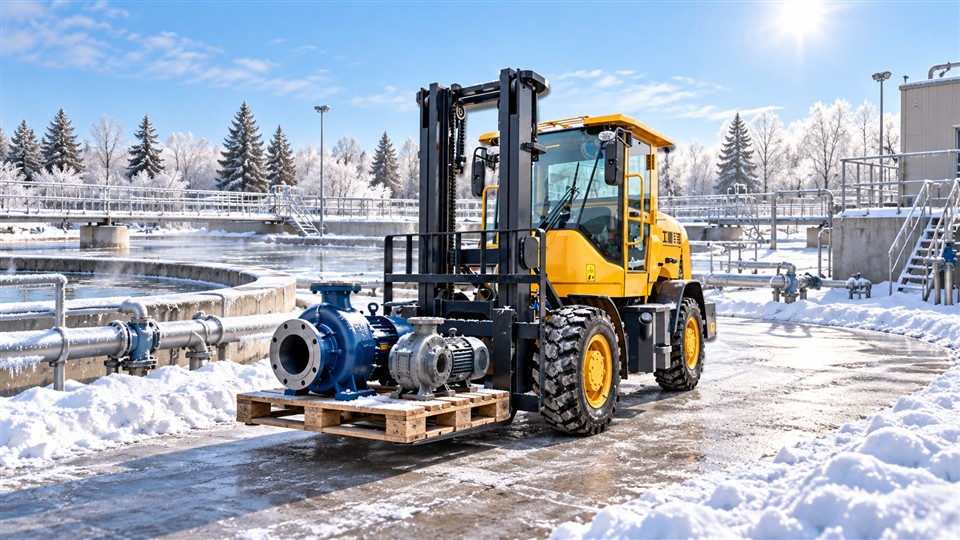
Review the CPC30SY off-road forklift as another product reference, then compare dimensions and service access with the planned route.
Performance and total cost: Compare the remote system cost with the delay and exposure it is intended to reduce. Include communications setup, operator certification, weather protection, transport, spare controls, battery or fuel availability and field service response. During the pilot, record completed lifts, pauses from signal quality, reset time and any manual recovery. Review the evidence with the site safety lead and utility engineer; if communications cannot be made reliable, shift the task to a conventional controlled position or another handling method.
Commissioning note: Provide the manufacturer with the site plan, load data, slope, surface, expected temperature and control distance. Request written confirmation of remote options, rated capacity and safe operating limits for the selected truck. ZGFORKLIFT and MYZG at Shandong Zhuogong Machinery equipment Co.,Ltd can help assess the application; the site owner remains responsible for electrical clearances, work permits and local safety rules.
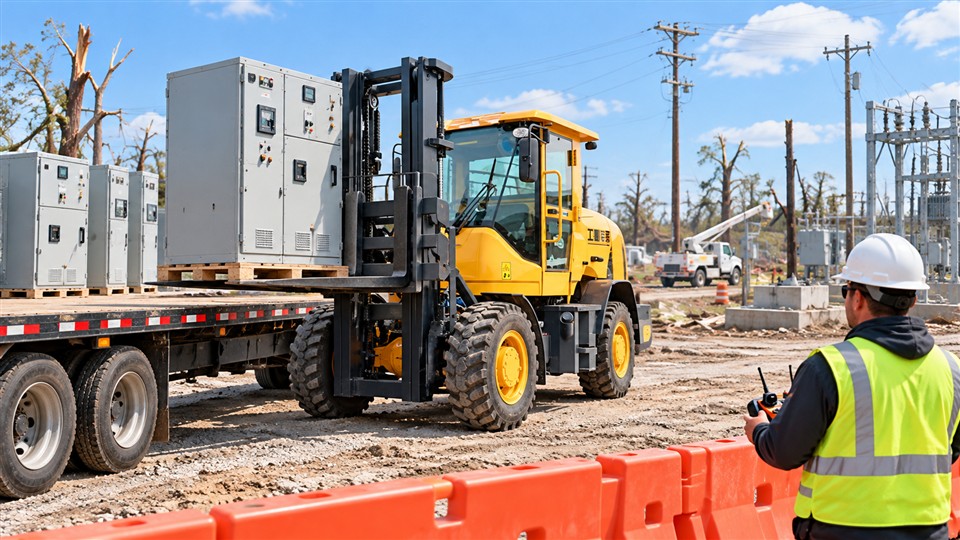
The DY26-3T rough-terrain forklift provides a third internal reference for comparing application fit. Product availability and specifications vary by market; verify current technical data before purchase or operation.
Contact Shandong Zhuogong Machinery equipment Co.,Ltd for application review. ZGFORKLIFT / MYZG sales: vip@mingyuforklift.com; telephone +86-0535-2090977; WhatsApp +86 131 8160 2336. Address: Xiaqiu Town, Laizhou, Yantai City, Shandong Province, China.
For a practical recommendation, send the destination country, maximum load, load-center distance, aisle width, lift height, surface, daily operating hours and working temperature. This information helps the engineering team review a specific configuration instead of relying on a generic catalogue description.
Name: selena
Mobile:+86-13176910558
Tel:+86-0535-2090977
Whatsapp:8613181602336
Email:vip@mingyuforklift.com
Add:Xiaqiu Town, Laizhou, Yantai City, Shandong Province, China