
vip@mingyuforklift.com
+86-0535-2090977

Published: October 30, 2026
HTML Meta Description: Coordinate electric forklifts with AI slotting and returns workflows using verified scans, safe exception handling and realistic battery planning.
Keywords: electric forklift, AI warehouse slotting, reverse logistics, returns season 2026, scan verification, lithium forklift, warehouse inventory accuracy, battery planning, ZGFORKLIFT, MYZG
Returns season creates a different warehouse pattern from outbound picking: cartons arrive with uncertain condition, inventory status may be incomplete and pallets must reach inspection or quarantine before they return to active stock. AI-supported slotting can recommend locations, but the physical move still depends on a correctly identified pallet, a safe aisle and an operator who can reject a bad task. Electric forklifts can support these loops when charging, scanning and exception handling are designed together.
Gartner’s 2026 warehousing outlook highlights optimization-focused AI and physical automation, while emphasizing pragmatic use cases such as labor planning and slotting. Reverse logistics is a useful test of that approach because it contains frequent exceptions. The digital system should not silently turn an unknown pallet into available inventory. Build a loop where an operator scans at receipt, routes the load to an appropriate buffer and confirms the status before another task is assigned.
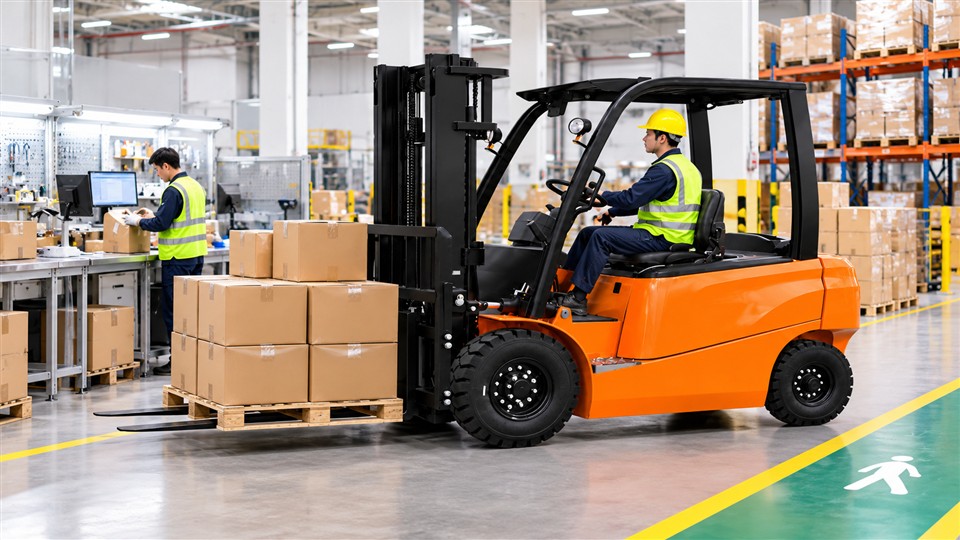
Application setup: Map receiving, inspection, repair, quarantine and restock zones before changing slotting rules. Confirm aisle widths, rack clearances, pallet overhang, turn areas, lift height and load center for the electric forklift. Estimate energy use from the actual stop-start duty cycle, not a brochure shift assumption. Identify charging opportunities during breaks and shift handovers, verify charger compatibility and ensure charging bays do not obstruct egress. Test scanner coverage, wireless dead spots and the workflow when a barcode is damaged or absent.
Compare the B20 lithium electric forklift for rated capacity, configuration and access requirements. Confirm the final specification for the exact attachment and work height.
Daily operating controls: Operators should stop before scanning or resolving an inventory exception; a moving truck is not an appropriate place to troubleshoot a screen. Keep foot traffic out of returns buffers, protect damaged goods from blocking fire routes and separate maintenance or inspection work from forklift travel. Inspect forks, mast, chains, tyres, brakes, steering, warning systems and battery connectors every shift. Train staff to override a route suggestion when a pallet is unstable, a rack is damaged or a pedestrian is present.
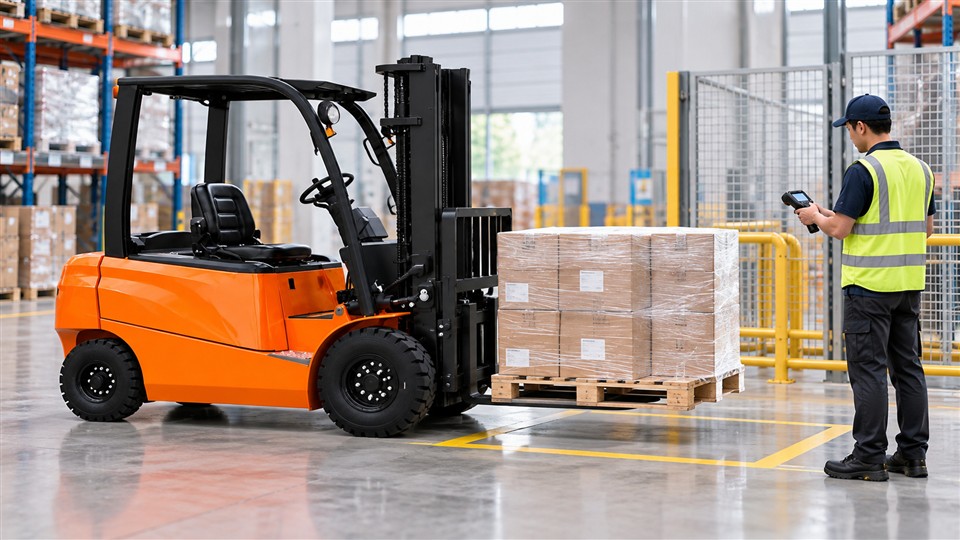
Review the B50 lithium electric forklift as another product reference, then compare dimensions and service access with the planned route.
Performance and total cost: Track correct putaway, time to inspection, restock accuracy, battery charging dwell, aisle congestion and re-handles. Include software integration, scanner upkeep, training, charger installation and service response in total cost. Compare a representative week of returns before and after slotting changes, and separate AI recommendation quality from truck execution quality. When a system repeatedly directs traffic into a blocked or unsafe aisle, update the warehouse map and escalation rules rather than normalizing the detour.
Commissioning note: Provide load weights, aisle measurements, daily hours, battery requirements and the warehouse integration plan when comparing models. Confirm rated capacity, battery chemistry, charger requirements and service support for the destination. ZGFORKLIFT and MYZG from Shandong Zhuogong Machinery equipment Co.,Ltd can review the operating profile with the facility team.
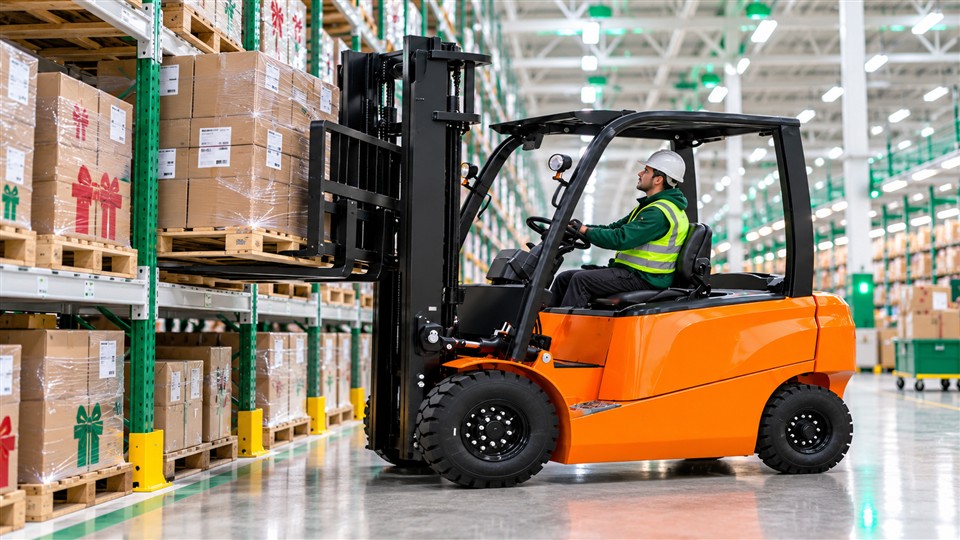
The B60 electric forklift provides a third internal reference for comparing application fit. Product availability and specifications vary by market; verify current technical data before purchase or operation.
Contact Shandong Zhuogong Machinery equipment Co.,Ltd for application review. ZGFORKLIFT / MYZG sales: vip@mingyuforklift.com; telephone +86-0535-2090977; WhatsApp +86 131 8160 2336. Address: Xiaqiu Town, Laizhou, Yantai City, Shandong Province, China.
For a practical recommendation, send the destination country, maximum load, load-center distance, aisle width, lift height, surface, daily operating hours and working temperature. This information helps the engineering team review a specific configuration instead of relying on a generic catalogue description.
Name: selena
Mobile:+86-13176910558
Tel:+86-0535-2090977
Whatsapp:8613181602336
Email:vip@mingyuforklift.com
Add:Xiaqiu Town, Laizhou, Yantai City, Shandong Province, China