
vip@mingyuforklift.com
+86-0535-2090977

HTML Meta Description: A 2026 port-recovery guide for rough-terrain forklifts, covering route release, storm debris, ground bearing, critical cargo and controlled terminal restart.
Keywords: storm ready port,rough terrain forklift,terminal recovery,2026 port logistics,off road forklift,disaster resilience,cargo handling,ZGFORKLIFT,MYZG,port equipment
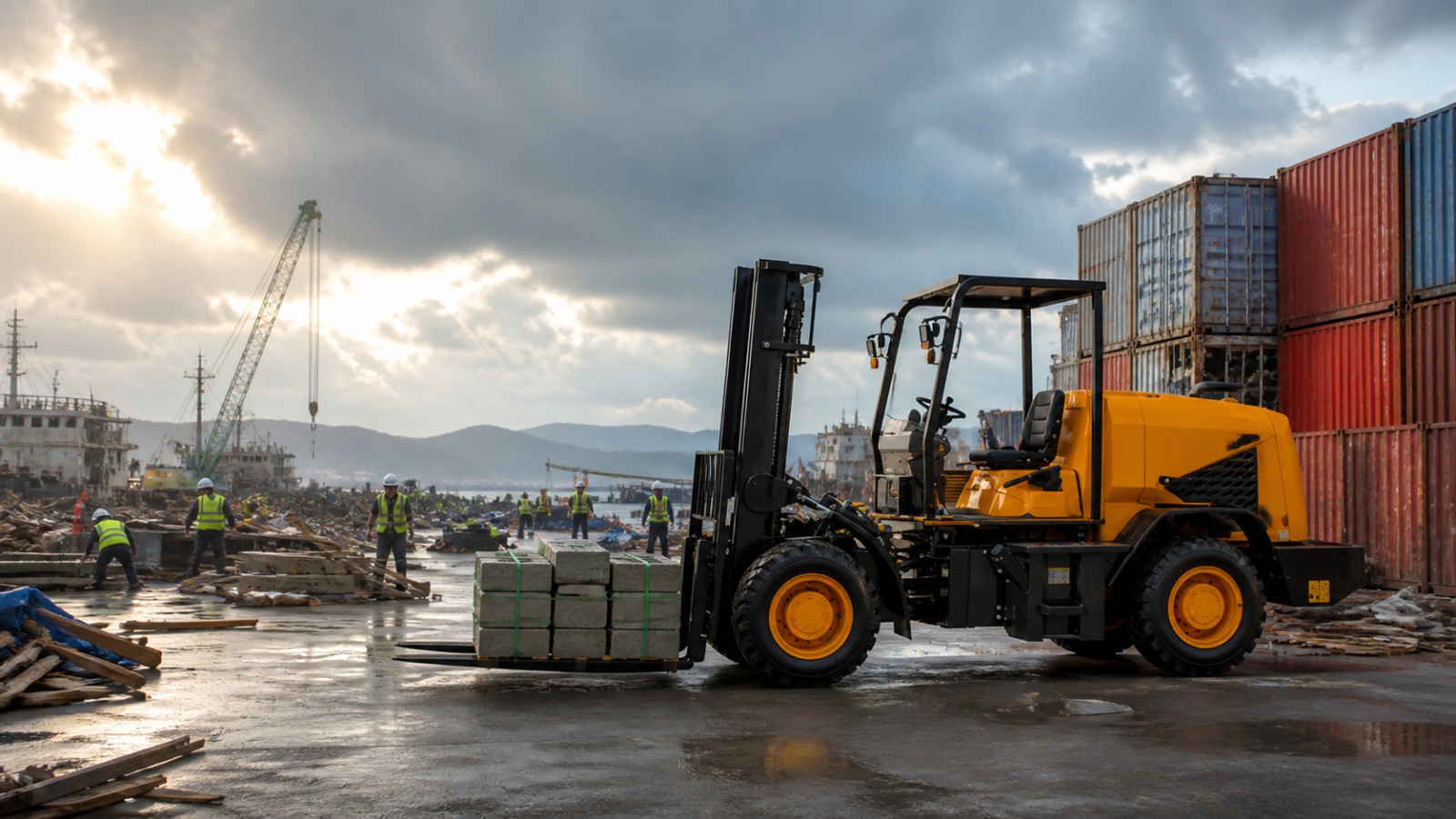
Ports are strengthening storm-recovery plans as intense weather threatens roads, power and cargo flow. After a storm, rough-terrain forklifts may move barriers, repair materials and essential palletized supplies before normal terminal routes are fully restored. This capability is valuable only after competent teams release the structure, pavement and work zone. A machine must never be used as a substitute for engineering inspection.
Compare the 7T off-road forklift against the documented application. Confirm final configuration, capacity and local requirements before purchase.
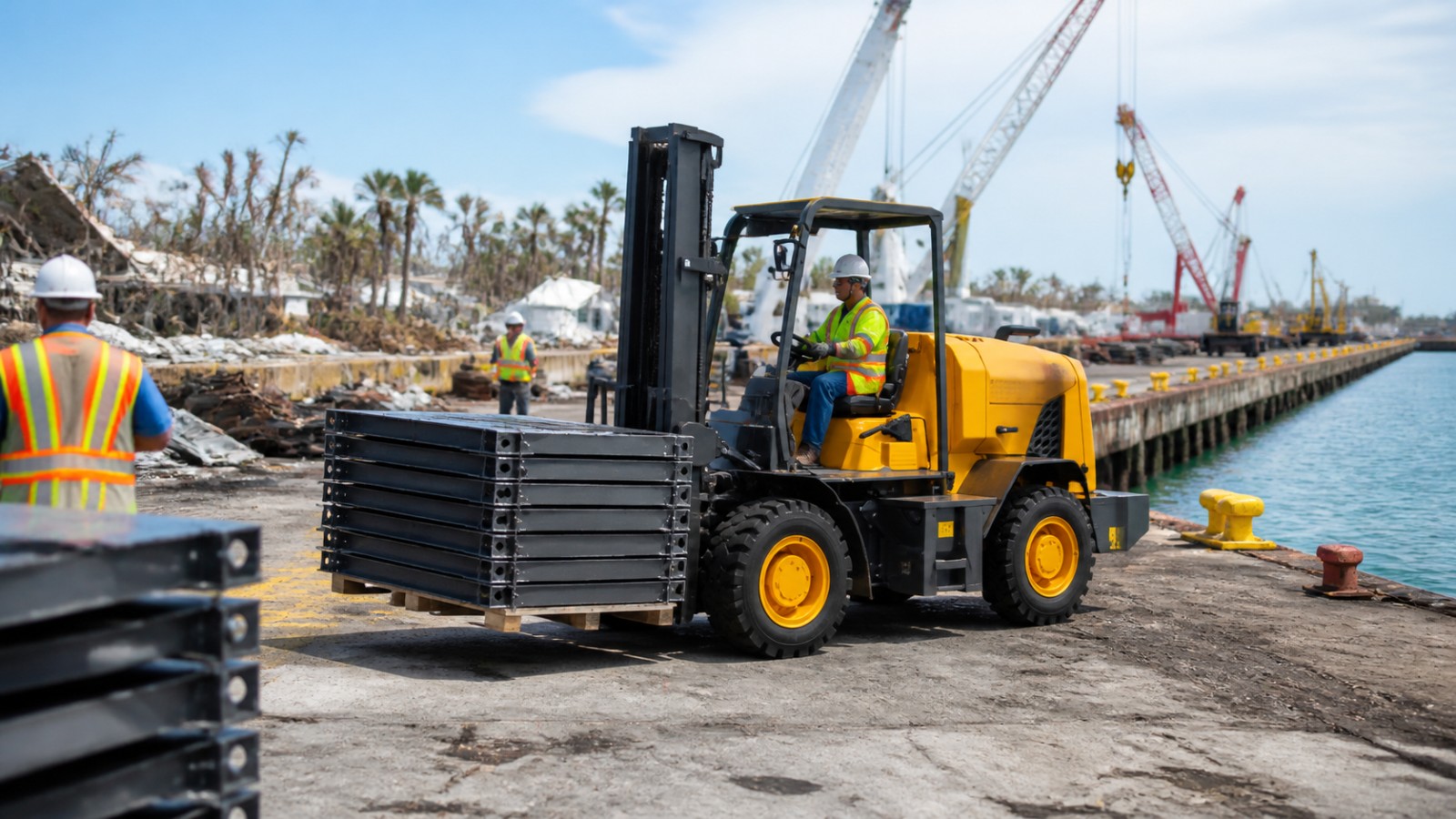
Survey standing water, washouts, soft shoulders, debris, slopes, overhead lines and hidden edge damage. Mark one-way routes and establish stable turning and staging areas. Verify every load weight, center of gravity and restraint. ZGFORKLIFT and MYZG equipment should be selected on residual capacity, ground clearance, traction, braking and the actual attachment rather than advertised capacity alone.
Compare the DY26 3T off-road forklift against the documented application. Confirm final configuration, capacity and local requirements before purchase.
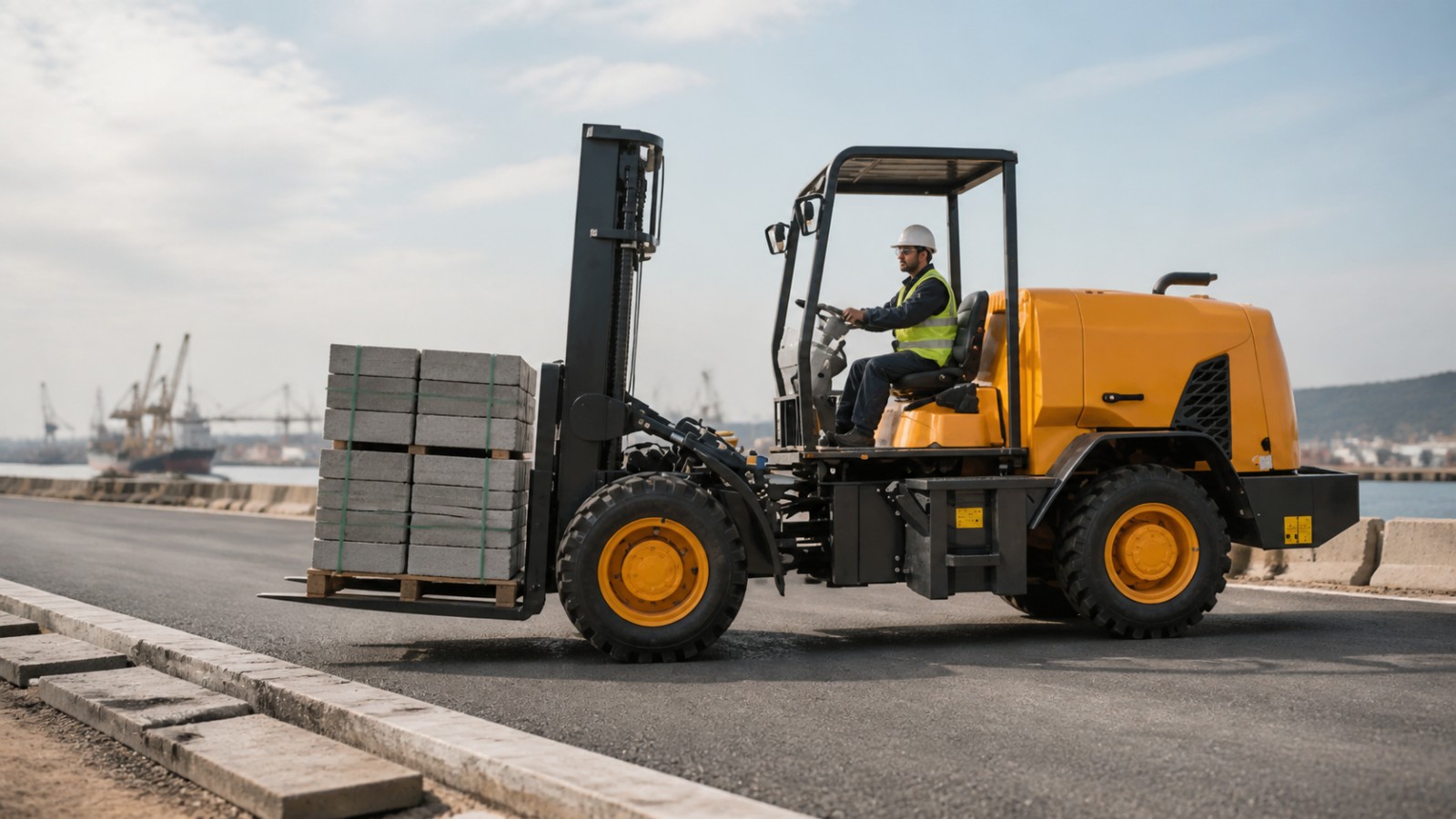
Separate recovery equipment from pedestrians and emergency responders. Use a trained spotter where visibility is restricted, but keep the spotter out of the travel path. Recheck routes after rain, tide change or heavy vehicle passage. Inspect tires, wheels, steering, brakes, mast, forks, hydraulics, lights and alarms at every shift change, and isolate any machine exposed to saltwater flooding until qualified assessment.
Compare the HLBCPC50 diesel forklift against the documented application. Confirm final configuration, capacity and local requirements before purchase.
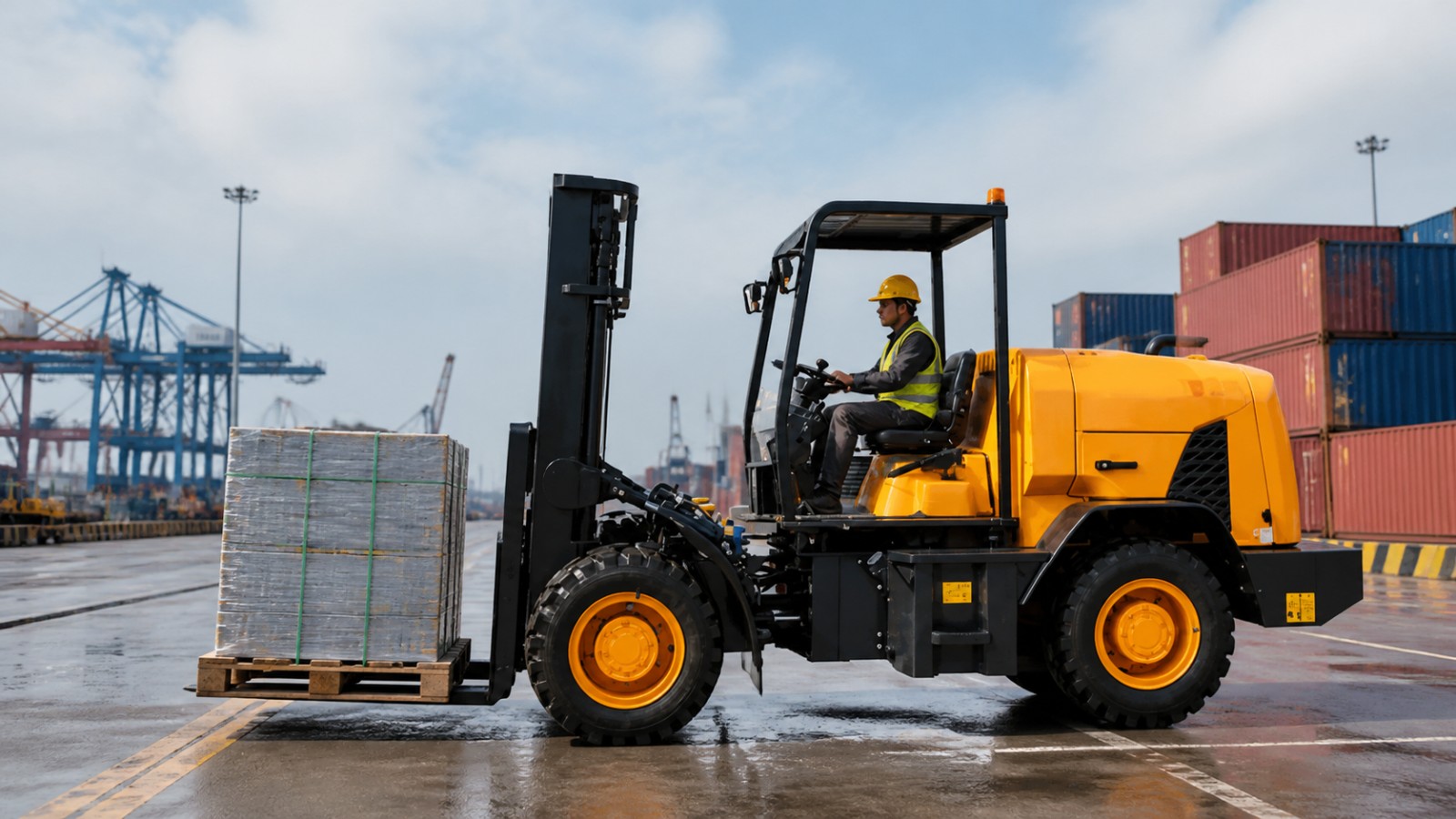
Prioritize loads by recovery value: safety barriers, pumps, generators, communications, spill-control materials and critical spares may come before routine cargo. Track route closures, fuel, idle time, damage and completed priority moves. A drill that removes one access road and one fuel source will show whether the terminal can maintain safe decisions under pressure.
Equipment selection begins with the real duty profile. Record load weight and dimensions, load center, lift height, aisle or route width, surface condition, gradients, daily hours and destination-market requirements. Separate mandatory safety and capacity needs from optional cameras, telematics or attachments. Shandong Zhuogong Machinery equipment Co.,Ltd can use complete application data to compare configurations without hiding basic operating needs behind a technology feature.
Total cost includes energy or fuel, planned service, batteries where applicable, tires, wear parts, operator time and downtime. Confirm inspection access, documentation, parts support and warranty arrangements before commissioning. A machine that fits the application and can be maintained predictably generally creates more value than a lower-priced truck that is unavailable during a critical shift. ZGFORKLIFT and MYZG buyers should establish the maintenance calendar before daily operation begins.
Commissioning should use representative loads and routes. Verify fork entry, clearance, braking, visibility, stability, parking and charging or refueling procedures. Record baseline condition and serial information. Operators require model-specific familiarization and site authorization, while supervisors must define traffic rules, key control, defect reporting and the exact conditions that remove equipment from service.
After launch, review utilization, delays, impacts, maintenance findings and operator feedback at a consistent interval. Investigate layout, pallet quality, congestion and scheduling around every recurring problem. Data should support conversations among operators, technicians and planners. Small changes to slotting, staging and standard work can often improve safety and throughput without adding another truck.
Procurement teams should request a written technical agreement covering the selected configuration, rated and residual capacity, attachment, mast or platform, tires, power system, charger or fuel arrangement, operating environment, manuals, spare parts and service expectations. The final solution must follow the supplied manual, site risk assessment and applicable local regulations. No article or specification summary replaces trained operation and competent engineering review.
Website: www.vavforklift.com
Email: vip@mingyuforklift.com
Tel: +86-0535-2090977 WhatsApp: +86 131 8160 2336
Address: Xiaqiu Town, Laizhou, Yantai City, Shandong Province, China.
Published: September 2, 2026.
Name: selena
Mobile:+86-13176910558
Tel:+86-0535-2090977
Whatsapp:8613181602336
Email:vip@mingyuforklift.com
Add:Xiaqiu Town, Laizhou, Yantai City, Shandong Province, China
