
vip@mingyuforklift.com
+86-0535-2090977

Warehouse leaders entered the 2026 peak season with a new operating problem: higher pallet volume is arriving at the same time that grid capacity, charging access and energy planning are under pressure. This has made “throughput versus grid constraints” a timely search topic across logistics and material handling. For many mixed-use sites, the answer is not to abandon electrification or to depend on one fuel. It is to build an energy-diverse fleet in which each truck is assigned to the work it can complete reliably.
A correctly specified 2T LPG forklift can play a practical role in that plan. It can support receiving, production supply, dock transfer and ventilated indoor-to-outdoor routes without waiting for a traction battery to recharge. This ZGFORKLIFT / MYZG guide explains how to evaluate a two-ton LPG truck through the real load, route, shift, fuel system, ventilation, maintenance, operator and total-cost requirements. Final capacity, options and compliance must always be confirmed for the exact ordered configuration with Shandong Zhuogong Machinery equipment Co.,Ltd.
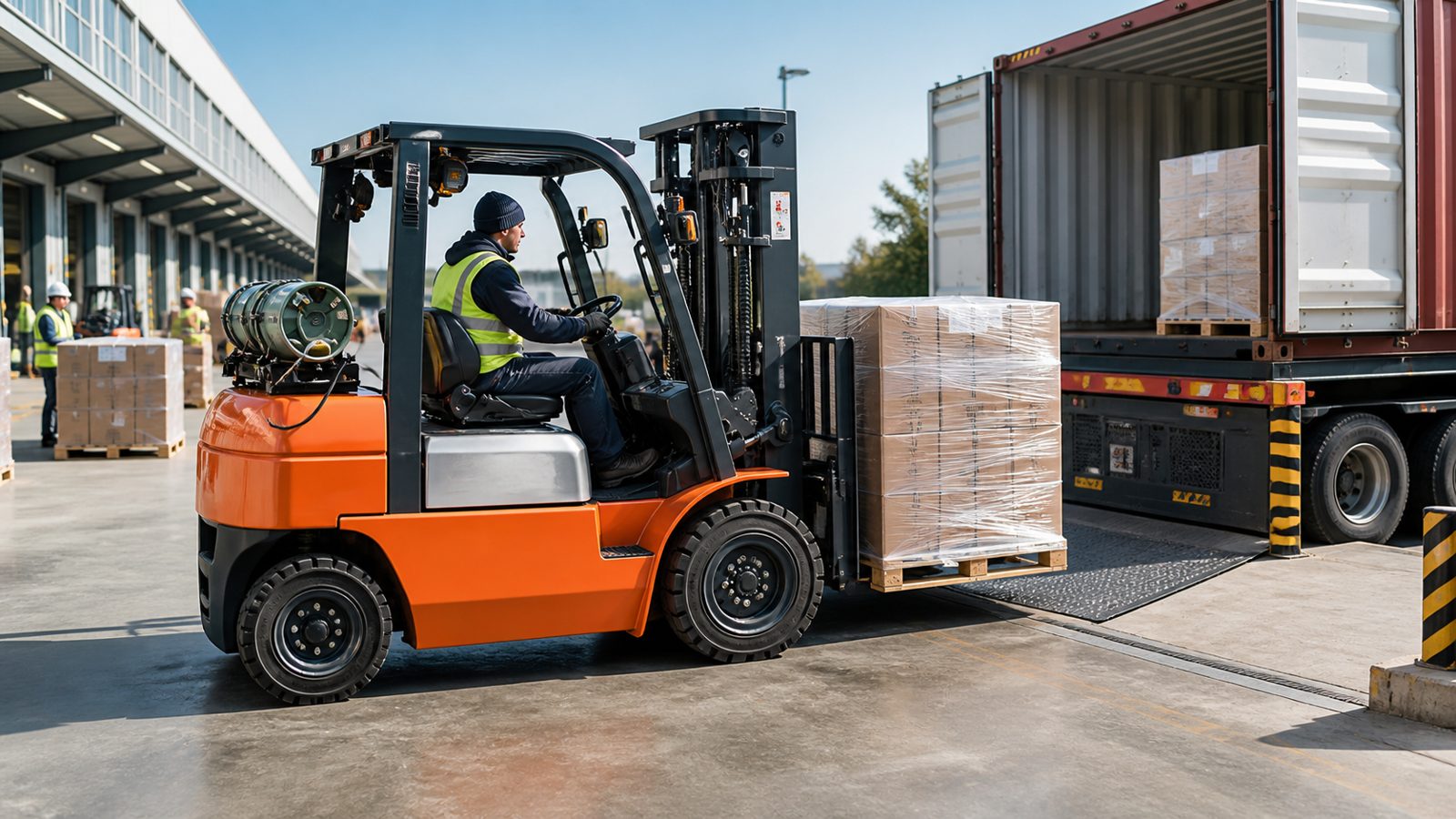
Warehouses are adding automation, charging stations, refrigeration, heating and data infrastructure while also processing unpredictable inbound volume. An electric fleet may be highly efficient, but its success depends on the building supply, charger quantity, demand peaks, connection lead time and available charging windows. A site that buys trucks without studying those limits can move the bottleneck from the dock to the electrical room.
Propane-powered equipment provides an independent energy source and rapid cylinder exchange. This can create a useful operating buffer during seasonal peaks, facility expansion, charger maintenance or delayed grid upgrades. That benefit is about availability, not a claim that LPG is universally superior. LPG still requires safe storage and handling, combustion-emission control, scheduled service and suitable ventilation. Electric forklifts remain attractive for quiet, zero-tailpipe-emission work where the energy system supports the duty cycle.
A 2,000 kg nominal rating does not mean the forklift can lift every 2,000 kg load at every height. Record the heaviest real load, its dimensions, load centre, pallet construction and centre of gravity. Long, tall, liquid, hanging or offset loads can change stability and usable capacity. Mast height, attachment weight and forward reach can reduce residual capacity. The final data plate must represent the fitted mast, forks and attachment package.
Measure aisle width, doorway height, trailer openings, turning points, ramp gradients, dock plates and overhead obstructions. Inspect the complete travel surface, including joints, drains, broken concrete, wet zones and transitions between warehouse and yard. The truck must match the route rather than only the pallet. Buyers comparing LPG equipment for much heavier distribution work can review the CPCY55 LPG Forklift for Beverage, Food and Multi-Shift Distribution to understand how application priorities change with capacity and intensity.
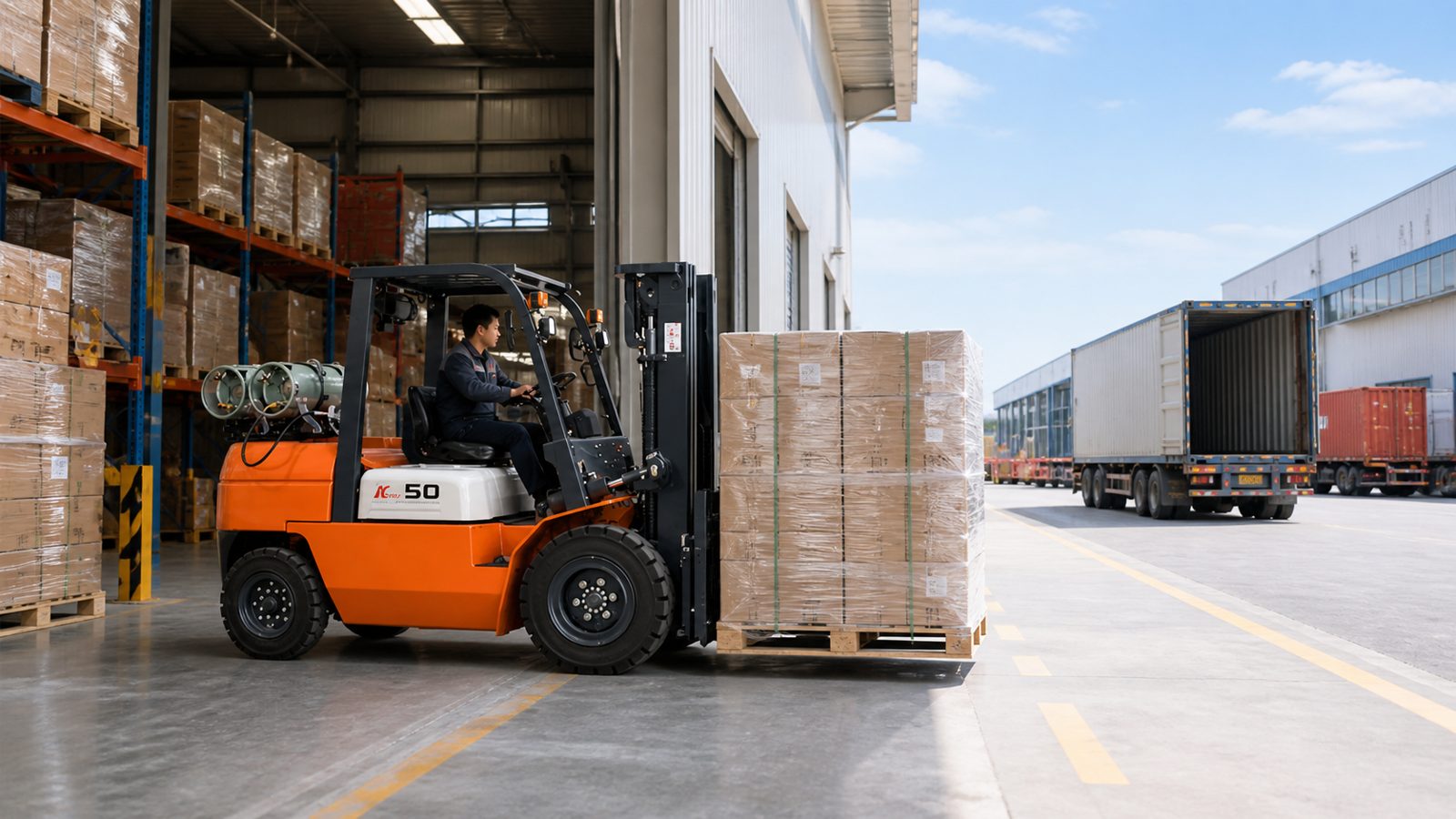
Do not base the purchase on an average day. Record the highest inbound and outbound volume, pallets per hour, trailer schedule, production call rate, storage travel distance and longest continuous work period. Identify which operations fail first when demand rises. A forklift can appear underutilised in annual averages but remain essential during two concentrated dock windows each day.
Separate productive time from waiting, congestion and idling. If a truck spends many minutes waiting for a dock door, scanner or pallet, adding fuel or battery capacity will not solve the true constraint. Improve door scheduling, staging rules, travel lanes and information flow before increasing fleet size. A right-sized two-ton LPG forklift creates value when its work queue, cylinder supply and operator availability are coordinated.
A mixed fleet can allocate electric trucks to controlled indoor cycles and LPG trucks to long shifts, rapid turnaround or indoor-to-outdoor transfer. The plan should define which truck serves each zone, where energy is supplied, who is authorised to refuel or charge, how replacement equipment is dispatched and what happens during a power or fuel interruption. Standardised checklists reduce mistakes across different powertrains.
Compare complete systems. Electric cost includes the battery, charger, cabling, protection, grid work, demand charges and charging downtime. LPG cost includes fuel, cylinders or bulk supply, exchange labour, storage, inspection, engine service and emission monitoring. The best answer can vary by shift, facility and local energy price. A narrow-aisle operation may need a different machine entirely; the ZG-CQDA20 2.0 Ton Electric Reach Stacker offers a relevant product comparison for high-rack and compact-aisle applications.
Calculate cylinder demand from measured operating hours and real duty intensity, then include a reasonable delivery and peak-volume buffer. Assign cylinder identities and maintain inspection, fill, exchange and defect records. Storage quantities and separation distances must comply with local requirements. The exchange point needs ventilation, impact protection, signage, controlled access and separation from ignition sources and vehicle traffic.
Only trained, authorised personnel should change cylinders. Park on level ground in the designated area, lower the forks, apply the parking brake, shut down according to the manual and wear required protective equipment. Inspect the cylinder, valve, connector, hose and mounting system. Reject damaged, leaking, heavily corroded or out-of-date cylinders according to the approved procedure. Never improvise fittings, force a connection or use components that are not rated for the fuel and pressure.
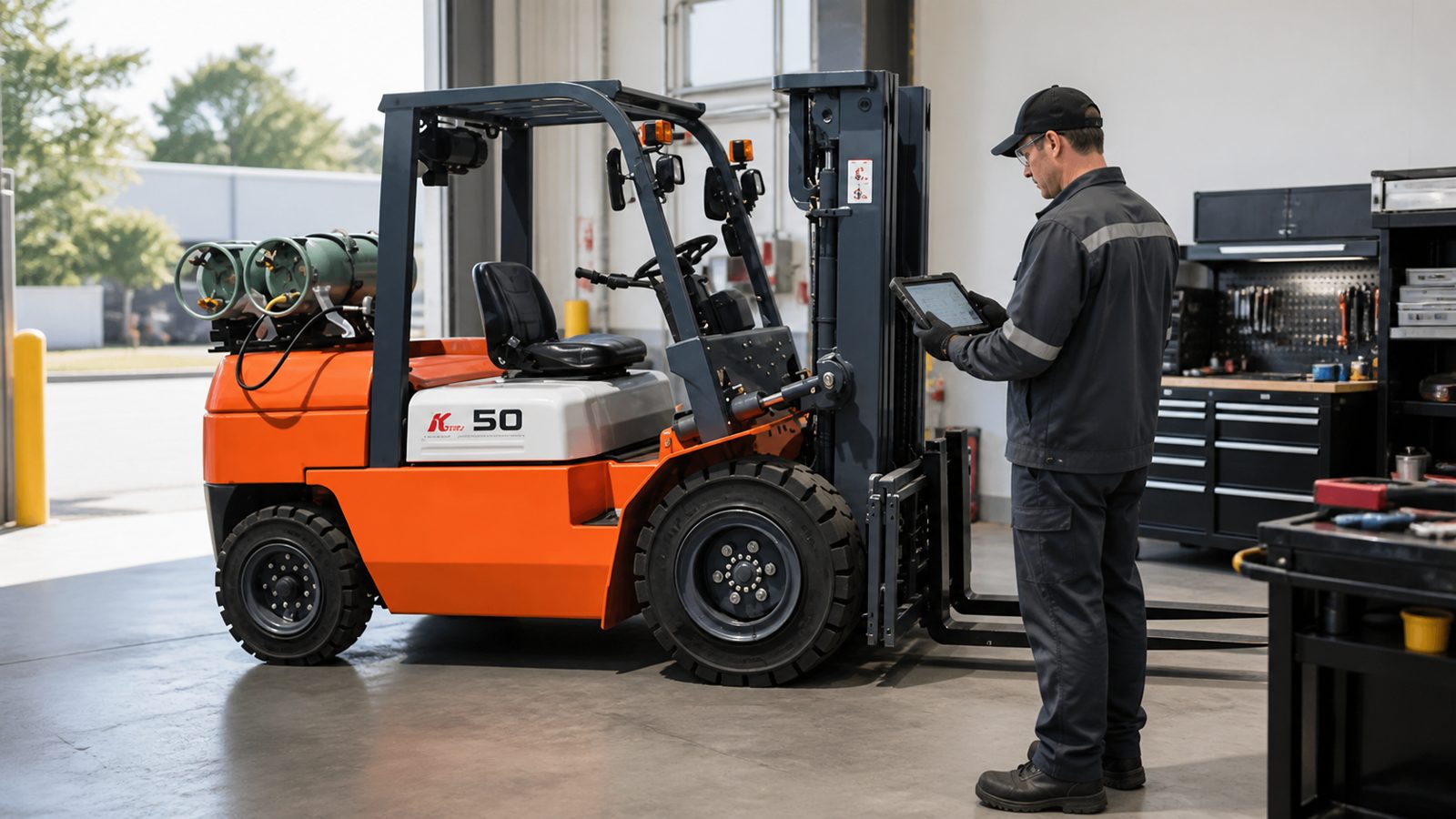
Telematics is another leading 2026 forklift trend because fleet managers want decisions based on utilisation, idle time, impacts, fault codes and service history. A data system can reveal that one truck carries most of the peak workload while another is parked, or that a specific route creates repeated impacts and tyre wear. The purpose is to correct the process, not merely create a dashboard.
Start with a small set of reliable indicators: operating hours, productive travel, idle percentage, pallets or tonnes moved, fuel per productive hour, impacts, unplanned downtime and maintenance response time. Review data with operators and technicians, because context matters. A long idle event may indicate congestion or a necessary safety stop rather than poor behaviour. Protect account access, define data ownership and follow applicable privacy and labour rules.
Data cannot compensate for skipped inspection. Daily checks should cover forks, locking devices, carriage, mast, chains, rollers, hydraulic hoses, tyres, wheels, brakes, steering, restraint system, lights, horn, warning devices, overhead guard, fluid leaks and the LPG installation. Verify that the data plate is readable and matches the truck configuration. Unsafe defects require removal from service and qualified evaluation.
Scheduled service should address engine oil, filters, ignition, cooling, fuel regulator or vaporiser, hoses, connectors, transmission, brakes and emission-control components as applicable. Analyse repeat faults, consumption changes, overheating, hard starting and unusual exhaust rather than resetting alerts without finding the cause. Keep serial and configuration records so replacement parts are correctly identified.
An LPG forklift is not emission-free. Combustion can produce carbon monoxide, nitrogen oxides, hydrocarbons and carbon dioxide. Indoor operation requires an approved assessment of building volume, ventilation, operating hours, fleet count and local exposure requirements. Food, pharmaceutical, cold-room and other sensitive spaces may require stricter controls or a zero-tailpipe-emission solution.
Maintain the engine and after-treatment system correctly, minimise unnecessary idling and use carbon-monoxide monitoring where required by the site assessment. Never operate an internal-combustion forklift in an unventilated enclosure. If clean narrow-aisle stacking is the primary task, buyers can compare the ZG-CDD15G 1.5 Ton Stand-On Electric Pallet Stacker, which represents a different warehouse layout and energy strategy.
Peak volume increases congestion, temporary labour, unfamiliar drivers and time pressure. These conditions make route discipline more important. Separate pedestrians and vehicles, control access to docks, mark stopping points, protect blind intersections and set speeds appropriate to visibility and floor condition. Temporary staging must not block travel lanes, fire exits or safety equipment.
Operators require training and authorisation for the specific truck, attachments, loads and site. Use the approved travel position and slope procedure. Keep the load stable, correctly supported and within the capacity plate. When the load blocks forward visibility, follow the approved travel method and site controls. Productivity targets never replace the right to stop unsafe work.
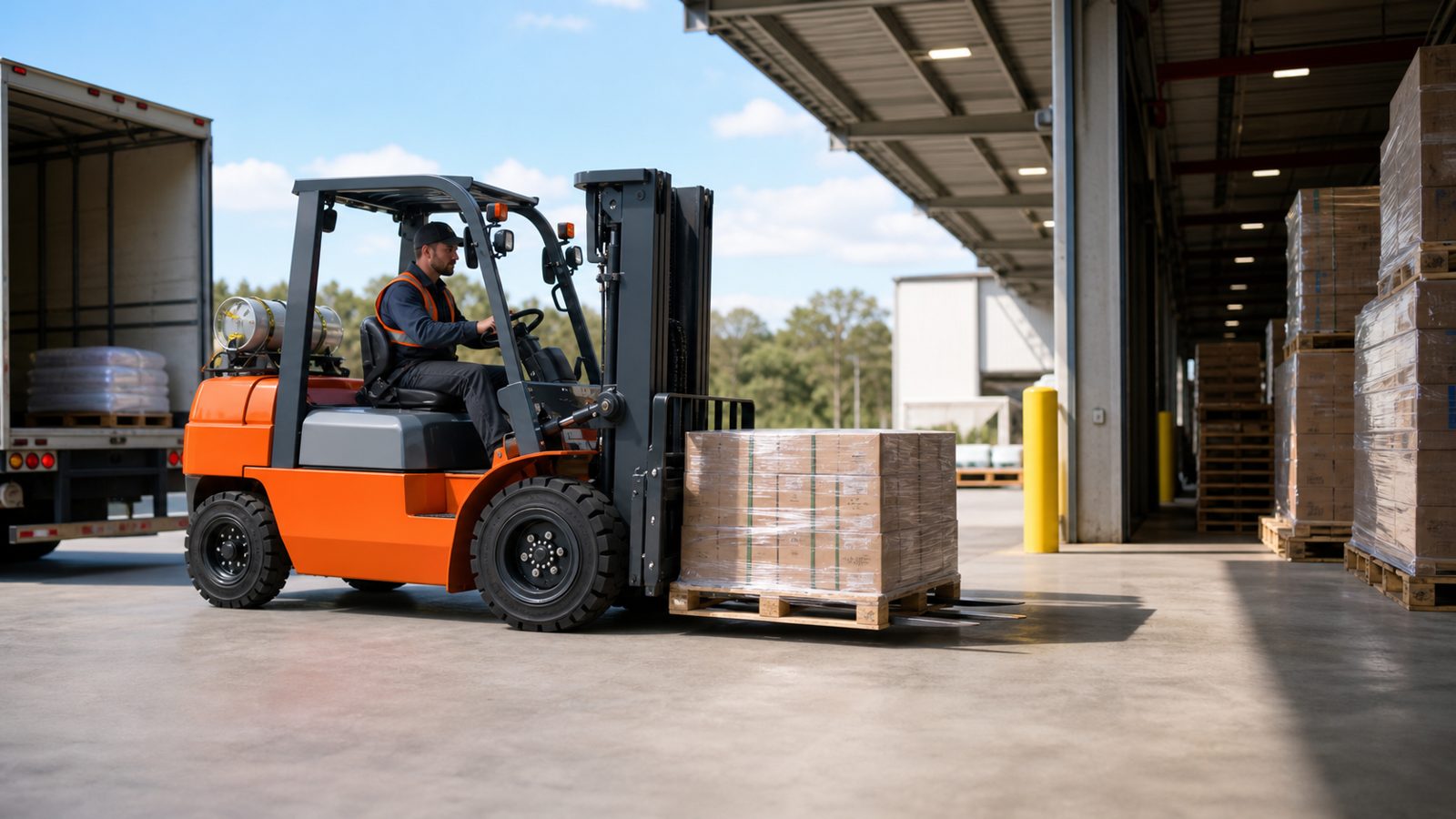
Purchase price alone cannot show value. Model fuel, tyres, scheduled service, wear parts, labour, training, storage, ventilation, monitoring, downtime, replacement rental and resale. Include seasonal volume instead of dividing cost only by annual operating hours. A truck with a higher hourly cost may still be economical if it prevents lost dock windows during the busiest period.
Measure cost per pallet or tonne moved, not only fuel per hour. This connects energy use to useful work and exposes oversizing, empty travel, idle time and poor routing. Compare suppliers against the same documented application. Confirm which parts, warranty events, travel, labour and consumables are included in the service offer.
Send the maximum load weight, load dimensions, load centre, lift height, pallet type, fork length, attachment requirements, aisle width, lowest doorway, turning points, maximum gradient, indoor and outdoor percentages, floor and yard condition, daily hours, shifts, peak pallets per hour, ambient temperature, fuel availability, cylinder standard, tyre preference, destination country, compliance expectations, quantity and delivery schedule. Route and load photographs are valuable.
Ask for written confirmation of the exact model, rated and residual capacity, mast, lowered height, turning radius, dimensions, tyres, engine, LPG system, cylinder interface, emission configuration, warranty, service intervals, recommended spare parts, export packing and destination documentation. Final acceptance should verify the ordered configuration, function, documentation and operator understanding.
Shandong Zhuogong Machinery equipment Co.,Ltd supports buyers, dealers and fleet operators with application communication, forklift selection, production coordination, export planning, parts identification and lifecycle service discussion. ZGFORKLIFT / MYZG can compare LPG, electric, diesel, rough-terrain and warehouse equipment so the final choice matches the real material flow and energy system.
For a tailored two-ton LPG proposal, provide the load, route, operating hours and destination requirements. The supplier can then discuss the appropriate mast, forks, tyres, options, LPG interface and documentation. Availability, specifications, lead time, compliance and commercial terms must be confirmed for the exact order.
Shandong Zhuogong Machinery equipment Co.,Ltd
Website: https://www.vavforklift.com/
Email: vip@mingyuforklift.com
Tel: +86-0535-2090977
WhatsApp: +86 131 8160 2336
Address: Xiaqiu Town, Laizhou, Yantai City, Shandong Province, China
Name: selena
Mobile:+86-13176910558
Tel:+86-0535-2090977
Whatsapp:8613181602336
Email:vip@mingyuforklift.com
Add:Xiaqiu Town, Laizhou, Yantai City, Shandong Province, China
