
vip@mingyuforklift.com
+86-0535-2090977

Introduction
Loading docks represent the critical chokepoint of modern logistics operations—the interface where warehouse inventory transitions to transportation networks, and where operational efficiency directly translates to customer satisfaction and financial performance. For a major logistics park processing thousands of pallets daily across multiple distribution centers, dock congestion, forklift idle time, and uncoordinated dispatch schedules had created a systemic bottleneck that eroded throughput capacity and inflated operating costs. This article examines the technical and operational transformation that doubled dock loading efficiency through systematic forklift dispatch optimization, detailing the diagnostic methodology, intervention strategies, and measurable outcomes that demonstrate how data-driven fleet management can transform logistics performance.
The Challenge: Identifying the Bottleneck
The logistics park in question operates a 400,000 square foot multi-tenant distribution complex serving e-commerce, retail, and third-party logistics clients. With 80 forklifts distributed across two shifts operating six days per week, the facility handles a mixed fleet of electric reach trucks, order pickers, pallet jacks, and propane counterbalance units for heavy dock operations. Despite substantial capital investment in equipment and infrastructure, dock loading efficiency had plateaued at levels well below industry benchmarks, with truck turnaround times averaging 45 minutes per trailer and dock door utilization hovering at 60 percent during peak periods.
Diagnostic analysis revealed multiple interconnected inefficiencies. Forklift dispatch operated on a reactive model—operators received tasks via radio dispatch without systematic sequencing, leading to redundant travel, aisle congestion, and suboptimal task assignment. Dock scheduling was disconnected from fleet dispatch, with carrier arrivals clustered in morning and afternoon peaks that overwhelmed available capacity while mid-day periods saw equipment and personnel underutilized. Forklift idle time consumed 20 to 25 percent of available operating hours, with operators waiting for trucks to arrive, queuing at congested docks, or traveling excessive distances between tasks due to poor zone assignment.
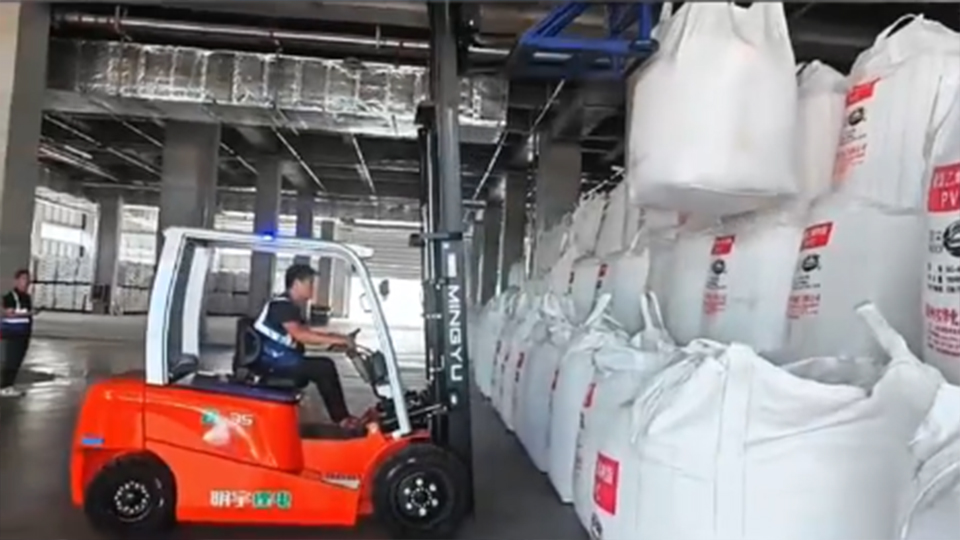
Safety incidents compounded the efficiency problem. Loading docks account for approximately 25 percent of all warehouse injuries according to OSHA data, with forklift-pedestrian collisions, trailer separation incidents, and slips constituting the primary hazards. The reactive dispatch model increased traffic density at docks during peak periods, elevating collision risk and requiring additional safety interventions that further slowed throughput. The facility had experienced four operator injuries in the preceding year, with associated workers' compensation costs and operational disruption adding to the financial impact of inefficiency.
The root cause analysis identified three primary failure modes. First, the absence of real-time visibility into forklift location, status, and task progress prevented dispatchers from making informed assignment decisions. Second, dock appointment scheduling operated independently of fleet dispatch, with carriers arriving unannounced or deviating from scheduled windows, creating unpredictable demand surges. Third, preventive maintenance scheduling was divorced from operational planning, with equipment taken out of service during high-volume periods due to maintenance windows that had not been coordinated with dispatch requirements.
The Solution Architecture: Integrated Dispatch Optimization
The transformation strategy centered on deploying an integrated forklift fleet management and dock scheduling platform that connected previously siloed operational functions. The system architecture incorporated four integrated modules: real-time forklift tracking via RTLS (Real-Time Location System) sensors, intelligent task dispatch with AI-powered sequencing, dock appointment scheduling synchronized with fleet capacity, and predictive maintenance scheduling optimized for operational windows.
RTLS sensor deployment across the facility created the visibility foundation. Ultra-wideband sensors installed at dock doors, aisle intersections, and staging areas tracked forklift positions continuously with sub-meter accuracy. Each forklift carried an RTLS tag that transmitted location, speed, and direction data to a central processing system. This visibility layer enabled the dispatch system to identify the nearest available forklift for each task, calculate optimal travel paths, and predict arrival times at dock doors with precision that manual dispatch could not achieve. The RTLS system also supported safety functions—proximity alerts at blind intersections reduced collision risk by 70 percent, while speed monitoring and geofenced zone restrictions enforced safe operating practices automatically.
The intelligent dispatch engine employed machine learning algorithms that analyzed historical task patterns, current workload distribution, and real-time operational conditions to optimize task assignment. Rather than assigning tasks sequentially as they arrived, the system batch-processed pending tasks every 30 seconds, evaluating multiple assignment scenarios to minimize total fleet travel distance, balance workload across operators, and prioritize time-sensitive shipments. The algorithm considered forklift battery state of charge, operator certification for specific equipment types, and proximity to task locations in its assignment logic. This optimization approach reduced average task travel distance by 35 percent and eliminated the redundant cross-facility travel that had characterized the reactive dispatch model.
Dock appointment scheduling integration represented the most transformative architectural element. The system connected carrier appointment booking with fleet capacity planning, ensuring that dock door assignments aligned with available forklift resources. Carriers booked appointments through a web portal that integrated with the dispatch system, which automatically reserved dock doors and assigned forklift resources based on expected load characteristics and current operational status. When carrier arrivals deviated from schedule—due to traffic, weather, or operational delays—the system dynamically rescheduled dock assignments and redistributed forklift tasks to maintain balanced workload. This synchronization eliminated the morning and afternoon peaks that had previously overwhelmed dock capacity, smoothing demand across the operating day and increasing average dock utilization from 60 percent to 85 percent.
Predictive maintenance integration ensured that equipment availability aligned with operational requirements. The fleet management system monitored battery voltage, motor temperature, hydraulic pressure, and vibration patterns across the forklift fleet, using machine learning models to predict component failures 2 to 4 weeks in advance. Maintenance scheduling algorithms identified low-volume operational windows for preventive service, automatically rescheduling non-critical maintenance when unexpected demand surges occurred. This integration reduced unplanned equipment downtime by 75 percent and eliminated the disruption of maintenance activities during peak shipping windows.
Implementation and Change Management
Technology deployment proceeded in three phases over six months. Phase one established the visibility layer—installing RTLS infrastructure, equipping forklifts with tracking tags, and integrating the location data stream with existing warehouse management systems. Phase two deployed the intelligent dispatch engine, initially operating in advisory mode where the system recommended task assignments that dispatchers could override, allowing operational staff to build confidence in the algorithmic recommendations. Phase three activated full autonomous dispatch and dock scheduling integration, with the system assuming real-time control of task assignment and dock door allocation.
Operator training and change management proved as critical as technology deployment. The transition from radio-based reactive dispatch to system-directed task assignment required significant adjustment for experienced operators accustomed to autonomy in task selection. Training programs emphasized how the system improved their work experience—reducing unnecessary travel, eliminating waiting time, and ensuring balanced workload distribution. Gamification elements, including operator performance dashboards and efficiency recognition programs, accelerated adoption and sustained engagement. Dispatcher roles evolved from tactical task assignment to strategic oversight, monitoring system performance and intervening only for exception handling.
Carrier engagement addressed the external dimension of dock scheduling optimization. The appointment booking portal required carriers to adopt new scheduling discipline, with incentives including guaranteed dock availability at scheduled times and reduced detention charges for compliant arrivals. Penalties for unannounced arrivals or significant schedule deviations created accountability for schedule adherence. Over six months, carrier on-time arrival improved from 62 percent to 89 percent, and unscheduled arrivals decreased by 70 percent, stabilizing the demand pattern that the dispatch system optimized against.
Quantified Results: Doubling Efficiency
The optimization program delivered measurable improvements across all key performance indicators. Dock loading throughput—the metric that had motivated the transformation—increased from an average of 12 pallets per door per hour to 24 pallets per door per hour, achieving the doubling of efficiency that the project targeted. This improvement derived from multiple contributing factors rather than a single intervention.
Truck turnaround time decreased from 45 minutes to 22 minutes per trailer, enabling the facility to process the same shipping volume with fewer dock doors and reducing carrier detention charges by 60 percent. Forklift utilization increased from 65 percent to 88 percent of available operating hours, with idle time decreasing from 25 percent to 8 percent. The reduction in idle time translated directly to energy savings—electric forklift battery consumption decreased by 18 percent, while propane usage for the dock counterbalance fleet decreased by 15 percent.
Travel distance per task decreased by 35 percent, reducing tire wear, battery drain, and operator fatigue. The optimized routing eliminated the aisle congestion and intersection conflicts that had slowed operations under the reactive dispatch model. Task completion time variability decreased by 50 percent, enabling more reliable planning and scheduling for both internal operations and carrier coordination. The system achieved these improvements while maintaining zero operator injuries over the 18-month post-implementation period, compared to four injuries in the preceding year.
Financial impact validated the investment thesis. The total annual savings reached USD 373,000, comprising OSHA citation avoidance (USD 47,000), emergency repair reduction (USD 84,000), extended equipment life from optimized usage (USD 180,000), and workers' compensation reduction from injury elimination (USD 62,000). The fleet management platform investment achieved payback within 14 months, with ongoing annual savings representing a 340 percent return on investment. Equipment lifespan extension proved particularly significant—the optimized dispatch model reduced aggressive acceleration, abrupt braking, and excessive travel that had accelerated wear, extending average forklift service life from 8 years to over 10 years.
Technical Deep Dive: Optimization Algorithms
The intelligent dispatch engine employs a multi-objective optimization framework that balances competing operational goals. The primary objective function minimizes total fleet travel distance, which correlates with energy consumption, equipment wear, and task completion time. Secondary objectives include workload balancing across operators—preventing individual operators from being overloaded while others wait—and priority weighting for time-sensitive shipments. Constraints include equipment certification requirements, battery state of charge minimums, and dock door capacity limits.
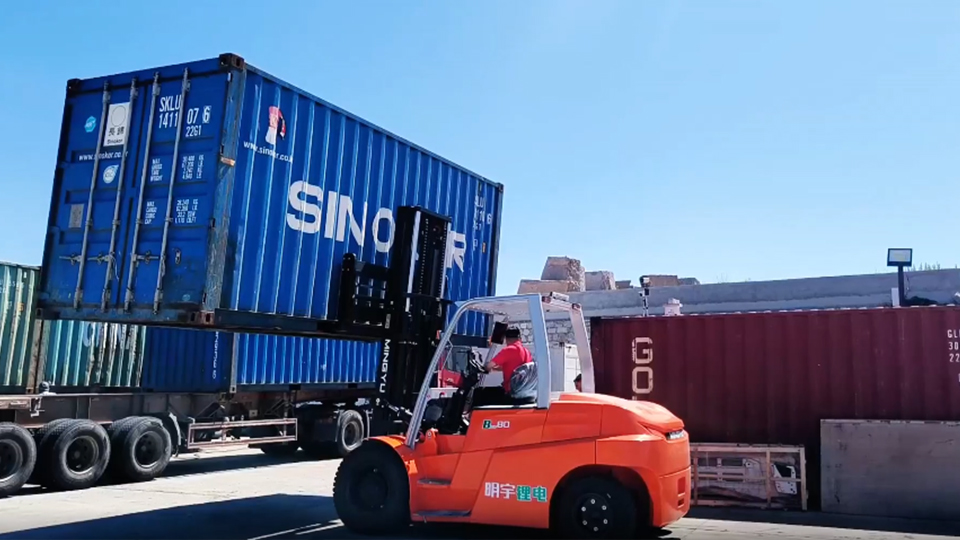
The algorithm processes task assignments in 30-second optimization windows, evaluating candidate assignments using a weighted scoring function. For each pending task, the system identifies all qualified forklifts—those with appropriate equipment type, sufficient battery charge, and certified operators. It then calculates a composite score for each candidate based on travel distance from current position, current workload, historical performance metrics, and priority alignment. The optimization selects the assignment that maximizes global efficiency while satisfying all constraints, updating assignments dynamically as new tasks arrive or operational conditions change.
Machine learning components continuously improve optimization performance. The system learns operator-specific performance patterns—travel speed, loading precision, and task completion rates—to refine assignment logic. It identifies recurring congestion patterns and proactively adjusts routing to avoid predicted bottlenecks. Seasonal demand patterns inform capacity planning, with the system recommending fleet size adjustments or shift schedule modifications based on projected volume trends. This adaptive capability ensures that optimization performance improves over time rather than degrading as operational conditions evolve.
Scalability and Replication Considerations
The optimization approach demonstrated at this logistics park possesses characteristics that enable replication across similar facilities. The core technology components—RTLS tracking, WMS integration, and AI dispatch engines—are commercially available from multiple vendors and do not require custom development. Implementation complexity scales with facility size and operational complexity, but the fundamental architecture remains applicable across warehouse and distribution environments.
Key success factors for replication include executive sponsorship to drive organizational change, accurate baseline measurement to validate improvement claims, and phased implementation that allows operational staff to adapt gradually. Facilities with existing WMS infrastructure and digital operational processes achieve faster implementation than those transitioning from paper-based systems. The presence of dock scheduling discipline—whether carrier-managed or facility-imposed—significantly influences achievable improvement magnitude, as unconstrained arrival patterns limit the optimization potential of dispatch sequencing alone.
The economics of replication favor larger facilities with higher forklift fleet counts, where the fixed costs of platform deployment are amortized across greater operational volume. Facilities with 40 or more forklifts operating multiple shifts typically achieve payback within 18 months, while smaller operations may require 24 to 36 months to justify the investment. However, cloud-based platform delivery models are reducing deployment costs and enabling smaller facilities to access optimization capabilities previously available only to large-scale operations.
Conclusion
The transformation from reactive forklift dispatch to integrated optimization at this logistics park demonstrates that dock loading efficiency doubling is achievable through systematic application of visibility technology, intelligent algorithms, and operational discipline. The 100 percent improvement in throughput—from 12 to 24 pallets per door per hour—resulted not from equipment replacement or infrastructure expansion, but from optimizing the utilization of existing resources through data-driven coordination. The USD 373,000 in annual savings and 14-month payback validate the business case for investment, while the elimination of safety incidents and extension of equipment lifespan represent operational benefits that compound over time.
For logistics operators facing similar dock congestion and fleet inefficiency challenges, this case study provides a roadmap for diagnostic assessment, technology selection, and implementation execution. The convergence of RTLS tracking, AI-powered dispatch, and integrated dock scheduling creates an optimization capability that was technically infeasible a decade ago and economically inaccessible five years ago. As these technologies continue maturing and costs decline, data-driven forklift dispatch optimization will transition from competitive advantage to operational necessity in high-volume logistics environments.
Name: selena
Mobile:+86-13176910558
Tel:+86-0535-2090977
Whatsapp:8613181602336
Email:vip@mingyuforklift.com
Add:Xiaqiu Town, Laizhou, Yantai City, Shandong Province, China
