
vip@mingyuforklift.com
+86-0535-2090977

Introduction
Starting a diesel forklift may appear straightforward to experienced operators, but the correct procedure encompasses a systematic sequence of pre-operation inspections, environmental preparations, engine starting protocols, and post-start verification checks that ensure both safety and equipment longevity. Utilev—a brand recognized for its internal combustion counterbalanced forklift trucks ranging from 2 to 7 tons—manufactures diesel-powered models that require specific operational discipline to achieve reliable starts, optimal performance, and extended service life. This article provides a comprehensive technical guide to the correct starting procedure for diesel Utilev forklifts, drawing from manufacturer documentation, OSHA requirements, and diesel engine operational principles to establish best practices that minimize startup failures, reduce component wear, and maintain compliance with safety regulations.
Pre-Start Inspection: The Foundation of Safe Operation
OSHA mandates that all forklifts be examined at least daily before being placed in service, with round-the-clock operations requiring examination after each shift. This regulatory requirement forms the procedural foundation for every diesel Utilev forklift start sequence. The pre-start inspection divides naturally into two phases: a walk-around visual check with the engine off, followed by operational checks with the engine running.
The walk-around inspection begins with fluid level verification. Engine oil, coolant, hydraulic fluid, and diesel fuel must all register within their designated operating ranges. Low engine oil levels risk accelerated bearing wear and potential catastrophic failure during startup, when oil pressure is establishing. Coolant deficiency can cause overheating during the warm-up phase, while hydraulic fluid shortages compromise lift and tilt function safety. Fuel level should be sufficient for the planned operating period, as restarting a diesel engine shortly after shutdown can introduce air into the fuel system if the tank is nearly empty.
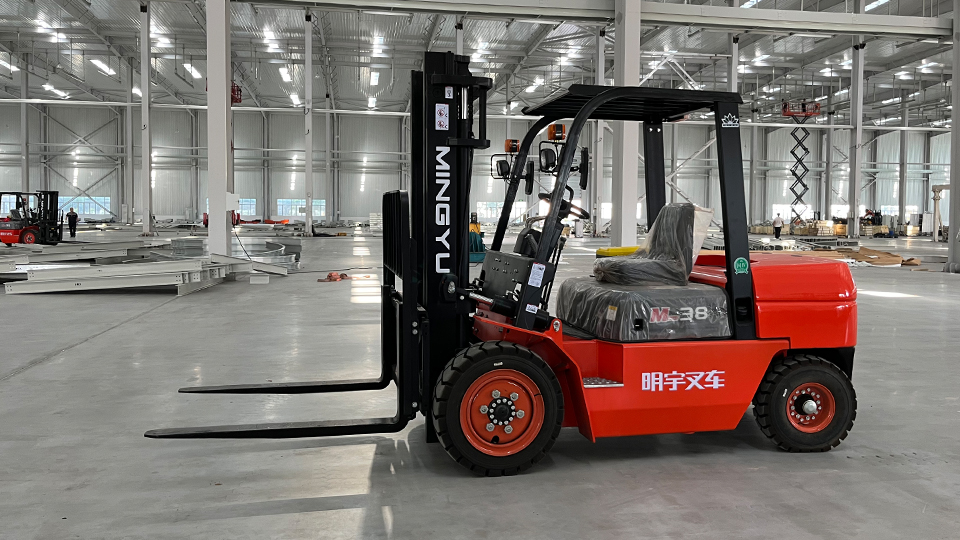
Leak inspection follows fluid level checks. The operator should examine the ground beneath and around the forklift for signs of oil, hydraulic fluid, coolant, or fuel leakage. Diesel fuel leaks present both fire hazards and slip risks, while hydraulic fluid leaks indicate seal degradation that could cause sudden loss of lifting capacity. The Utilev operator manual emphasizes that any visible leak, regardless of severity, should be reported before operation commences.
Tire condition assessment is critical for stability and safe travel. Pneumatic tires require pressure verification against manufacturer specifications, with inspection for cuts, gouges, bulges, or embedded debris that could cause failure under load. Solid tires should be checked for chunking, splitting, or excessive wear that reduces shock absorption and traction. Tire damage is a leading cause of forklift instability incidents, and starting operations with compromised tires risks rollover during the first travel or lifting maneuver.
Fork and mast inspection completes the walk-around phase. Forks must be straight, free from cracks, and properly seated on the carriage with heel bolts and retaining pins intact. The mast channels, lift chains, and hydraulic hoses require visual examination for damage, proper tension, and secure routing. The load backrest must be firmly attached, and finger guards—if equipped—must be in place. OSHA specifically warns operators not to place hands inside the mast during inspection; chain tension should be checked using a stick or similar tool rather than direct hand contact.
Safety equipment verification includes confirming that all warning decals and nameplates are legible and properly affixed, that the operator manual is present on the truck, and that the operator compartment is free from grease, debris, and obstructions. The seatbelt must be in good condition and buckle securely. Any forklift exhibiting defects that could affect safe operation must be removed from service immediately and reported to supervision.
Entering the Operator Station and Control Preparation
After completing the walk-around inspection, the operator enters the cab using handrails and steps, never jumping or climbing on components not designed for foot placement. Seat adjustment is essential for both comfort and control reach—the operator must be able to operate all pedals, levers, and switches without stretching or contorting. Mirror positioning should provide clear rear and side visibility from the seated position. The seatbelt must be fastened before any further actions.
Control preparation requires specific positioning before engine start. The parking brake must be fully engaged to prevent unintended movement during startup. The gear selector must be in neutral position—attempting to start with the transmission engaged can cause sudden lurching that risks collision or injury. The mast tilt should be in neutral, and the forks should be lowered to the ground or their lowest position. This configuration minimizes hydraulic system pressure during startup and ensures the machine is in a stable, safe posture if unexpected movement occurs.
Engine Starting Procedure for Normal Conditions
The ignition sequence for diesel Utilev forklifts follows a deliberate progression that accounts for diesel engine characteristics distinct from gasoline or electric powertrains. The operator inserts the key into the ignition switch, typically located on the dashboard or near the operator's seat, and turns it to the "ON" position. This activates the electrical system, illuminating dashboard instruments and initiating system self-diagnostics.
For Utilev models equipped with glow plugs—a standard feature on diesel engines for combustion chamber pre-heating—the operator must wait for the glow plug indicator light on the dashboard to illuminate and then extinguish before attempting to start the engine. Glow plugs heat the combustion chamber to temperatures suitable for diesel fuel ignition under compression. Attempting to start before the glow plugs have completed their heating cycle can result in hard starting, incomplete combustion, and fuel wetting of cylinder walls that dilutes lubricating oil and accelerates wear. The pre-heating duration varies with ambient temperature, ranging from a few seconds in warm conditions to 10-15 seconds in cold environments.
With the glow plug cycle complete, the operator turns the key to the "START" position. The starter motor engages the flywheel, cranking the engine. The key should be held in the start position only until the engine fires—typically 3 to 5 seconds—and never for more than 10 consecutive seconds. Extended cranking overheats the starter motor, drains the battery, and can damage the starter drive mechanism. If the engine fails to start on the first attempt, the operator must release the key, wait 30 seconds for the starter to cool, and then retry. This cooling interval prevents cumulative thermal damage to the starter windings.
Some Utilev diesel models may incorporate a fuel priming system, particularly if the fuel filter has been recently serviced or if the fuel tank has run dry. Priming ensures the fuel system is fully charged with diesel and free from air bubbles that prevent injection. The priming pump—typically located near the fuel filter—requires manual pumping until resistance is felt, indicating that fuel has filled the lines and the system is pressurized. Operating a diesel engine with air in the fuel system causes erratic running, power loss, and potential injector damage.
Upon successful engine start, the operator should immediately release the key, allowing it to return to the "ON" position. The engine should settle into a steady idle rhythm within a few seconds. Dashboard warning lights should extinguish sequentially as systems initialize and self-checks complete. Any warning light that remains illuminated indicates a fault condition requiring investigation before operation proceeds.
Cold Weather Starting Procedures
Diesel engines present unique starting challenges in cold weather due to fuel gelling, increased oil viscosity, and reduced battery capacity. When ambient temperatures drop below freezing, standard starting procedures require modification to ensure reliable engine ignition and protection of critical components.
Fuel management is the first line of cold weather defense. Diesel fuel forms wax crystals as temperatures decline, potentially clogging fuel filters and blocking fuel flow from tank to injection pump. Winter-blended diesel fuel, available at most fuel stations in cold climates, contains additives that lower the cold filter plugging point and maintain flow at lower temperatures. Operators should fill tanks with winterized fuel before cold weather arrives and avoid mixing incompatible additives that can degrade fuel quality. Keeping the fuel tank full minimizes condensation space where water can accumulate and freeze.
Block heaters represent the most effective cold weather starting aid for stationary diesel forklifts. These electric heating elements warm the engine coolant, which in turn heats the engine block and crankcase oil. A block heater operated for 2 to 4 hours before starting can raise engine temperature from sub-freezing to near-operating range, dramatically reducing cranking effort and startup wear. For Utilev forklifts without block heaters, magnetic oil pan heaters or dipstick heaters provide alternative warming methods, though with less comprehensive effect.
Battery condition becomes critical in cold weather, as battery capacity drops approximately 50 percent at 0°F compared to normal operating temperatures. A fully charged battery in warm conditions may lack sufficient cranking amperage for cold startup. Battery tenders or trickle chargers maintain charge during periods of non-use, while secondary battery installations dedicated to glow plug operation preserve starting power. Battery cables and terminals require inspection for corrosion and tightness, as poor connections further reduce available starting current.
Glow plug operation in cold weather may require extended cycling. Some Utilev models allow double-cycling of the glow plug system—activating the pre-heat function twice before cranking—to ensure adequate combustion chamber temperature. In extreme cold, ether starting aids may be employed according to manufacturer guidelines, though excessive ether use can cause engine damage and should be reserved for emergencies.
Oil viscosity selection impacts cold weather starting. Standard 15W-40 diesel oil may be too viscous for temperatures below 0°F, creating excessive drag on the starter and delaying oil circulation to critical bearings. Manufacturer guidelines should be consulted for recommended viscosity grades in anticipated temperature ranges, with synthetic or synthetic-blend oils offering improved cold flow characteristics compared to conventional mineral oils.
Engine Warm-Up: A Critical Operational Phase
Diesel engines are not "start-and-go" machines. The warm-up phase following startup is essential for reaching optimal operating temperature, ensuring proper lubrication, and preventing premature component wear. The duration of warm-up depends significantly on ambient temperature, with manufacturer guidelines and diesel engine operational principles establishing appropriate intervals.
At ambient temperatures above 50°F, a warm-up period of 1 to 2 minutes is generally sufficient. Between 0°F and 50°F, 3 to 5 minutes of idling is recommended. Below 0°F, warm-up may extend to 7 minutes. These intervals allow engine oil to reach flow viscosity, coolant to begin circulating through the radiator, and combustion chamber components to thermally expand to their designed clearances. Attempting to operate under load before adequate warm-up subjects bearings, pistons, and cylinder walls to excessive friction and potential seizure.
During warm-up, the operator should monitor dashboard gauges for normal readings. Oil pressure should register within the normal range within 5 to 10 seconds of startup—delayed oil pressure indication suggests lubrication system problems requiring immediate shutdown. Coolant temperature should rise steadily from cold toward the normal operating range. Battery charge indicators should show positive charging voltage. Any gauge reading outside normal parameters, or any unusual noises, vibrations, or exhaust smoke characteristics, warrants investigation before loading operations commence.
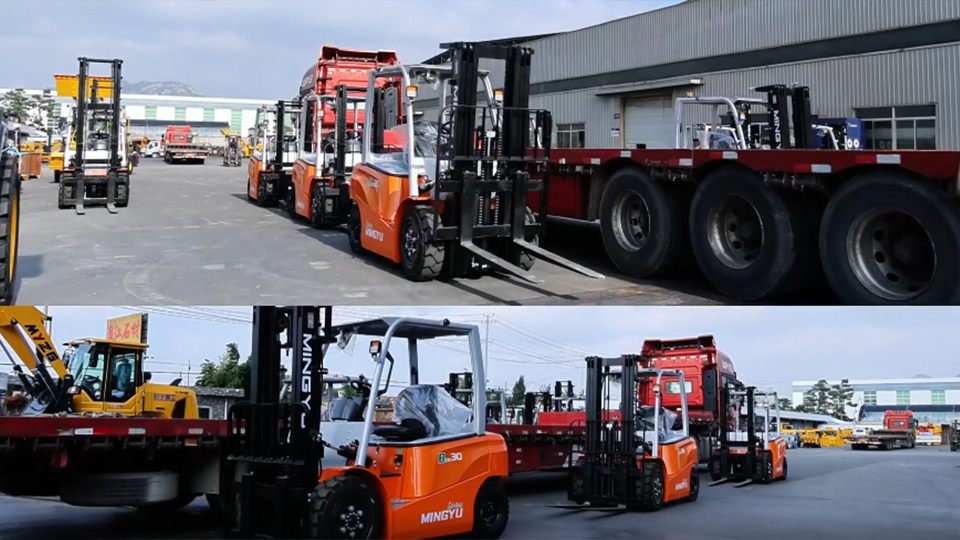
The warm-up period is not merely passive waiting—it provides opportunity for operational system verification. The operator should test the horn, lights, and backup alarm to confirm functionality. Hydraulic controls can be cycled through their full range of motion—lift, lower, tilt forward, tilt back, and side shift if equipped—to verify smooth operation and detect any hydraulic abnormalities before loading begins. Brake testing at low speed confirms stopping capability. These checks, performed during warm-up, integrate seamlessly into the startup sequence without adding operational delay.
Post-Start Verification and Operational Readiness
Following warm-up completion, a final verification sequence confirms that the Utilev diesel forklift is ready for productive operation. The parking brake is released, and the forklift is moved at low speed in a clear area to verify steering responsiveness, brake effectiveness, and transmission engagement. Any hesitation, rough shifting, or abnormal noises during this initial movement indicate mechanical issues requiring correction.
Hydraulic function testing under no-load conditions confirms that the mast raises and lowers smoothly, tilt functions operate without jerking or binding, and attachment mechanisms engage properly. The load backrest should be visually confirmed secure, and fork positioning verified appropriate for the first planned task. Only after all systems have demonstrated normal operation should the forklift be directed to its first loading assignment.
For Utilev forklifts equipped with operator presence sensing systems—mandatory in many markets—the operator must remain properly seated with the seatbelt fastened for the system to allow operation. These safety systems automatically disable hydraulic and travel functions if the operator leaves the seat unexpectedly, preventing uncontrolled movement that could cause injury or damage. Understanding and respecting these interlock functions is part of correct starting and operating procedure.
Common Starting Errors and Their Consequences
Incorrect starting procedures generate consequences ranging from minor inconvenience to catastrophic equipment damage. Cranking the engine for extended periods—exceeding 10 seconds per attempt—overheats and damages the starter motor, with replacement costs significantly exceeding the inconvenience of waiting between attempts. Repeated failed starting attempts without diagnosing the root cause can flood the combustion chamber with unburned fuel, diluting crankcase oil and compromising lubrication until the oil is changed.
Starting with the transmission engaged causes immediate lurching upon engine ignition, risking collision with nearby equipment, structures, or personnel. This error remains a leading cause of startup-related incidents and underscores why neutral position verification is mandatory before key activation. Similarly, starting with the mast elevated or forks raised creates instability that could result in tipping if the machine moves unexpectedly during startup.
Operating under load before adequate warm-up accelerates engine wear measurably. Cold oil fails to establish full hydrodynamic bearing films, resulting in metal-to-metal contact at bearing surfaces. Cold pistons and cylinders operate with excessive clearance until thermal expansion establishes proper fit, causing piston slap and accelerated cylinder wear. Turbochargers—common on modern diesel engines—require oil flow for bearing cooling; operating at high load before oil temperature stabilizes can cause turbocharger failure within hours.
Ignoring warning lights or abnormal gauge readings during startup invites progressive damage. Low oil pressure at idle may indicate bearing wear, oil pump failure, or severe oil degradation—conditions that will cause catastrophic engine failure if operation continues. Elevated coolant temperature during warm-up suggests thermostat failure, coolant loss, or radiator blockage that will cause overheating under load. The correct response to any abnormal indication is immediate shutdown and maintenance inspection.
Conclusion
The correct way to get a diesel Utilev forklift running extends far beyond inserting a key and turning it. The complete procedure encompasses a structured pre-start inspection addressing fluids, leaks, tires, forks, and safety equipment; proper operator positioning and control configuration; ignition sequencing that respects glow plug timing and starter motor limitations; environmental adaptations for cold weather conditions; a deliberate warm-up phase that protects engine components; and comprehensive post-start verification of all operational systems. Each element serves a specific protective function—preventing mechanical damage, ensuring operator safety, maintaining regulatory compliance, and optimizing equipment availability.
Operators who internalize this complete starting discipline achieve more reliable equipment performance, extended engine life, reduced maintenance costs, and safer working environments. The few minutes invested in correct starting procedure yield returns measured in years of productive service and avoidance of the injuries, downtime, and expenses that result from rushed or improper startup practices. For fleet managers and safety professionals, ensuring that all diesel Utilev operators are trained and held accountable to these standards represents a foundational element of material handling operational excellence.
Name: selena
Mobile:+86-13176910558
Tel:+86-0535-2090977
Whatsapp:8613181602336
Email:vip@mingyuforklift.com
Add:Xiaqiu Town, Laizhou, Yantai City, Shandong Province, China
