
vip@mingyuforklift.com
+86-0535-2090977

The global forklift industry is entering a transformative phase in 2026, driven by the convergence of electrification, automation, and evolving supply chain demands. With the worldwide forklift market projected to reach USD 92.4 billion in 2026 and grow at a compound annual growth rate (CAGR) of 13.1% through 2035, material handling operations are being fundamentally reshaped by technology and regulation . From warehouse floors to port terminals, five dominant trends are defining procurement strategies, operational workflows, and competitive positioning across the sector.
1. The Electrification Imperative: From Lead-Acid to Lithium-Ion Dominance
The most consequential shift in the forklift market is the accelerated transition from internal combustion engine (ICE) models to electric powertrains. Electric forklifts already commanded 60.55% of global volume in 2025, and this share is expanding rapidly as regulatory pressure and total cost of ownership (TCO) advantages converge .
Regulatory Catalysts
California’s Zero-Emission Forklift Regulation, which bans new gasoline and propane forklift deliveries starting in 2026, exemplifies the regulatory momentum sweeping industrialized regions. The rule covers nearly 89,000 large spark-ignition trucks and is expected to cascade into nationwide adoption patterns across the United States . In Europe, similar emissions reduction mandates under the European Green Deal are pushing fleet operators toward electrification, while China’s dual-carbon goals continue to favor electric industrial vehicles in the world’s largest forklift market.
Battery Technology Evolution
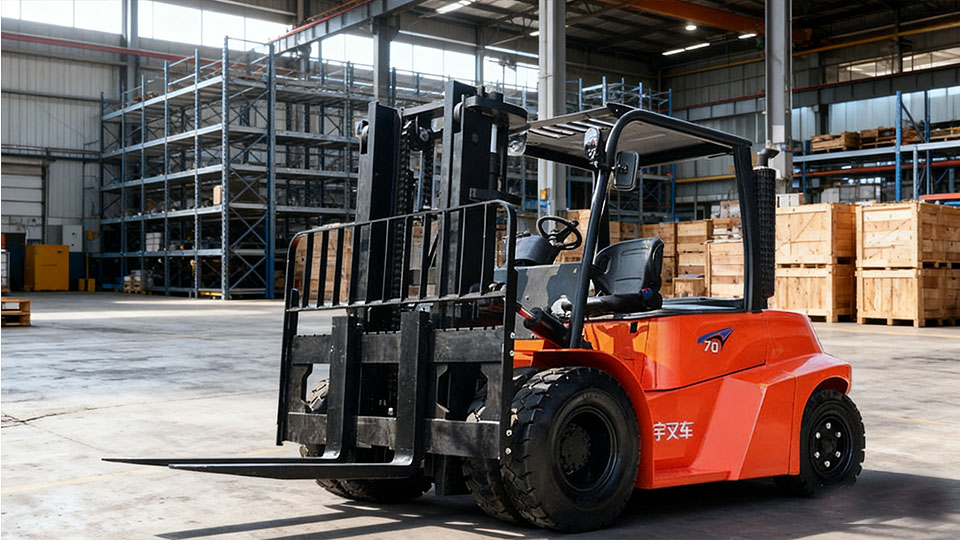
The transition is increasingly defined by lithium-ion (Li-ion) battery adoption, which reached 49% of electric forklift installations in recent assessments . Unlike legacy lead-acid batteries, Li-ion solutions offer rapid charging, opportunity charging capability, and maintenance-free operation that eliminates the need for battery watering rooms. Critically, advanced Li-ion systems are now powering heavy-duty applications previously dominated by diesel—Hyster’s lithium-ion series, for instance, can lift 40,000 lb, effectively dispelling long-standing capacity concerns about electric models .
The economic case is compelling: electric models deliver up to 50% lower maintenance costs and nearly 80% fuel savings compared to ICE equivalents . While upfront costs remain 2–3 times higher than legacy models, the lifecycle economics increasingly favor electrics over a 5–7 year ownership horizon, particularly for high-utilization fleets.
2. Autonomous Material Handling: From Pilot Programs to Production Deployment
Autonomous forklifts have transitioned from experimental technology to operational necessity. The global autonomous forklift market is projected to grow from $8.76 billion in 2026 at a CAGR of 12.0%, reflecting mainstream enterprise adoption . Approximately 18% of newly launched forklifts now integrate autonomous navigation systems, while automated warehouse forklifts have demonstrated 44% improvement in operational efficiency and 36% enhancement in safety metrics .
Technology Maturation
Modern autonomous forklifts deploy hybrid navigation architectures combining LiDAR, computer vision, and SLAM (Simultaneous Localization and Mapping) to operate in dynamic, mixed-traffic environments. SEER Robotics introduced autonomous models in 2025 capable of navigating facilities with human-operated equipment, raising throughput by up to 40% . These systems no longer require dedicated infrastructure such as magnetic tape or QR-code grids, enabling retrofit deployment in existing warehouses.
Operational Impact
The labor shortage crisis is accelerating autonomous adoption. With warehousing wages rising 4–5% annually and certified operator positions remaining unfilled across major logistics hubs, autonomous forklifts offer a viable path to maintaining throughput without expanding headcount . Walmart’s deployment of autonomous medium-capacity forklifts illustrates how Tier-1 retailers are leveraging automation to offset workforce gaps .
The technology stack is also evolving toward collaborative autonomy. AutoXing’s January 2025 launch of Smart Forklifts capable of switching between autonomous and manual modes represents a pragmatic approach for facilities transitioning gradually toward full automation .
3. E-Commerce Logistics and the Rise of Narrow-Aisle Specialists
The explosive growth of e-commerce continues to reshape forklift demand profiles. Daily parcel volumes surpassed 16.5 million units in late 2024, pushing fulfillment operators to retrofit existing facilities or construct high-throughput distribution centers optimized for cubic-space efficiency .
Facility Design Impact
High-density warehouse designs favor narrow-aisle configurations with clear heights exceeding 40 feet, intensifying demand for Class 1 (electric counterbalance) and Class 2 (narrow-aisle) forklifts capable of maneuvering in constrained spaces. Class 2 vehicles captured 32.45% of the U.S. forklift market in 2025, reflecting the premium placed on vertical-space utilization .
Throughput Requirements
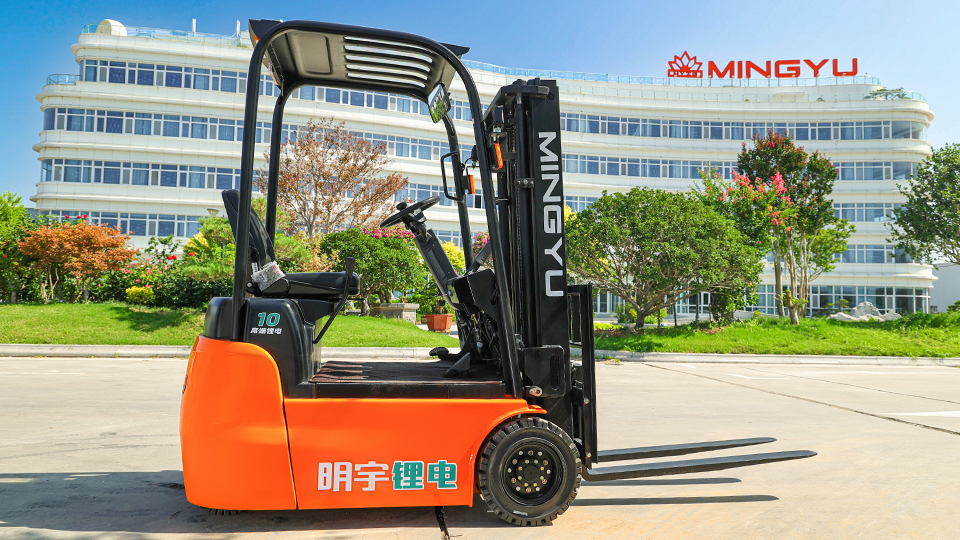
The velocity of modern fulfillment operations demands equipment optimized for rapid cycle times. Three-wheel electric forklifts, valued at USD 314 million globally in 2025, are gaining traction specifically for their maneuverability in tight spaces and suitability for light-duty material handling tasks in retail and logistics distribution . Sub-5-ton forklifts represented 44.35% of 2025 shipments, mirroring demand for agile units in e-commerce and assembly-line settings .
Logistics operations now account for 37.88% of global forklift demand, with warehouse utilization of forklifts increasing by 32% year-over-year in key markets . This demand concentration is prompting OEMs to develop application-specific models optimized for the unique cadence of fulfillment centers—faster lift speeds, regenerative lowering, and integrated weighing systems that eliminate intermediate process steps.
4. Fleet Management as a Service: The Subscription Economy Enters Material Handling
The traditional capital-intensive model of forklift ownership is giving way to fleet-as-a-service (FaaS) and subscription-based arrangements that align costs with operational output. This trend reflects broader industrial preferences for operational expenditure (OpEx) over capital expenditure (CapEx), particularly amid economic volatility.
Subscription Model Mechanics
Jungheinrich’s Full Flex Rental program exemplifies the emerging paradigm: 12-month cancelable contracts combining equipment, maintenance, and fleet analytics under a single recurring fee . These arrangements shield users from technology obsolescence risk while ensuring access to the latest electrified and connected equipment. The model is particularly attractive for seasonal operations and SMEs that struggle with the high upfront costs of Li-ion and fuel-cell forklifts—advanced trucks currently priced at 2–3 times legacy model equivalents .
Telematics Integration
The viability of subscription models depends on comprehensive telematics platforms that provide real-time visibility into fleet utilization, operator performance, and predictive maintenance requirements. ArcBest’s Vaux platform demonstrates this convergence by layering fleet-management software over autonomous mobile robot (AMR) trucks, enabling remote monitoring across autonomous, semi-autonomous, and manual operational modes .
The forklift attachment rental market, valued at USD 573 million in 2026, further illustrates the shift toward flexible equipment access over ownership, with rental solutions offering 40–70% gross margins for providers while reducing capital lock-in for users .
5. Intelligent Safety Systems and Regulatory Compliance
As forklift fleets become more complex and autonomous, safety technology is evolving from passive features to active, AI-driven intervention systems. The global intelligent forklift safety system market is projected to grow from USD 1,055 million in 2026 to USD 1,867 million by 2034 at a 10.3% CAGR, reflecting regulatory pressure and liability concerns .
Advanced Safety Architecture
Modern intelligent safety systems employ a "perception + early warning + linkage control" methodology integrating LiDAR, ultrasonic sensors, cameras, and onboard computing to detect pedestrians, obstacles, and load instability in real time . When hazards are detected, these systems can autonomously decelerate vehicles, limit lift heights in unstable conditions, or execute emergency braking—capabilities increasingly necessary as facilities adopt high-bay racking and narrow-aisle configurations that amplify collision risks.
Regulatory and ESG Drivers
The occupational safety imperative is stark: the National Safety Council recorded 73 lift-truck-related fatalities in 2022, while OSHA issued over 2,400 citations and USD 8 million in penalties under the Powered Industrial Truck Standard in fiscal year 2024 . Beyond regulatory compliance, ESG reporting requirements are compelling companies to adopt data-driven safety solutions that offer traceability, accountability, and measurable incident reduction.
Toyota Material Handling Japan’s July 2025 announcement of Japan’s first cloud-based AI forklift safety evaluation service, developed in partnership with Fujitsu, signals the direction of the industry—predictive safety analytics that identify operator behavior patterns and equipment stress indicators before incidents occur .
Strategic Implications for 2026 and Beyond
The convergence of these five trends is creating a bifurcated market structure. On one side, premium autonomous and electric forklifts with integrated telematics and safety systems command growing margins and customer loyalty. On the other, conventional ICE and basic electric models face commoditization pressure in less regulated markets.
For fleet operators, 2026 represents a critical decision window. The California regulation and its inevitable diffusion create a compliance deadline that will cascade through procurement cycles. Organizations that delay electrification risk stranded ICE assets with declining resale values. Similarly, the labor shortage is not cyclical but structural—demographics suggest the certified operator pool will continue contracting, making automation an operational necessity rather than a competitive luxury.
Geographically, Asia-Pacific maintains 47–49% global market share, led by Chinese manufacturing scale and Japanese technological innovation . However, North America is projected to be the fastest-growing region at a 5.8% CAGR through 2035, driven by warehouse expansion, e-commerce logistics demand, and fleet electrification mandates .
The forklift of 2026 is no longer merely a lifting device—it is an intelligent, connected, autonomous node within the broader logistics ecosystem. As the market advances toward the USD 279.7 billion projected for 2035, success will belong to organizations that treat material handling not as a cost center to be minimized, but as a strategic capability to be optimized through technology, data, and flexible service models .
Name: selena
Mobile:+86-13176910558
Tel:+86-0535-2090977
Whatsapp:8613181602336
Email:vip@mingyuforklift.com
Add:Xiaqiu Town, Laizhou, Yantai City, Shandong Province, China
