
vip@mingyuforklift.com
+86-0535-2090977

Purchasing a forklift represents one of the most consequential capital decisions in warehouse, manufacturing, and distribution operations. The choice between internal combustion (IC) and electric powertrains has grown increasingly complex as technology evolves, regulations tighten, and operational demands shift. With the global forklift market projected to reach USD 92.4 billion in 2026 and electric models commanding 60.55% of unit volume, buyers face a landscape fundamentally different from even five years ago , . This guide provides a technical and economic framework for evaluating IC versus electric options, ensuring procurement decisions align with operational realities rather than legacy assumptions.
Understanding the Powertrain Landscape
Internal Combustion Forklifts
IC forklifts utilize either liquid propane gas (LPG), compressed natural gas (CNG), gasoline, or diesel engines. These machines have dominated heavy-duty outdoor and high-throughput indoor applications for decades, offering characteristics that electric technology has only recently begun to challenge.
IC forklifts deliver consistent power output regardless of battery state, enabling sustained high-performance operation over extended shifts. Diesel models in particular offer exceptional torque for outdoor rough-terrain and heavy-lift applications, with capacities extending to 100,000+ lbs in specialized configurations . The rapid refueling capability—3-5 minutes to swap an LPG tank—eliminates the downtime associated with battery charging, a critical advantage in continuous operations.
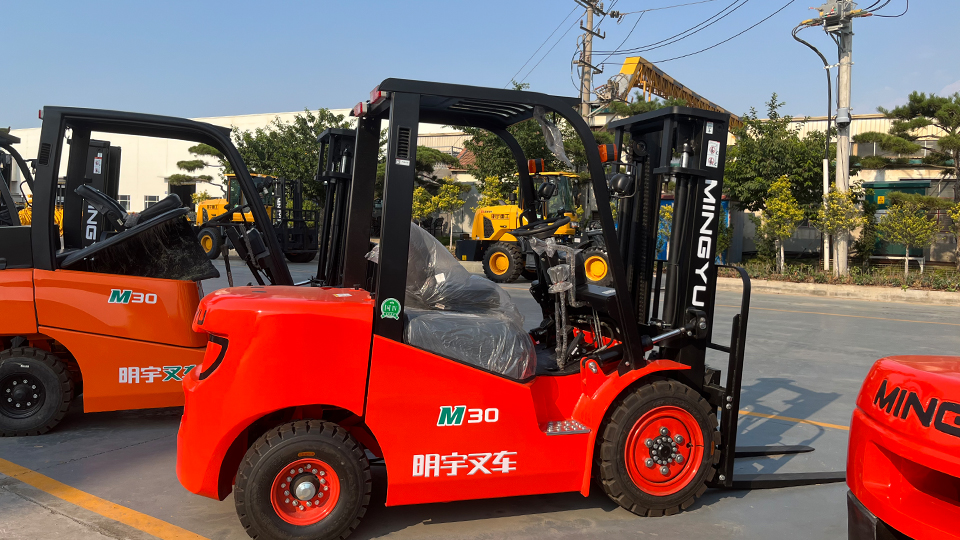
However, IC technology carries inherent liabilities. Emissions of carbon monoxide, nitrogen oxides, and particulate matter restrict indoor use without ventilation infrastructure. Engine noise levels typically exceed 85-90 dB, requiring hearing protection and limiting communication between operators and ground personnel. Maintenance demands are substantial: oil changes, filter replacements, emission system servicing, and engine overhauls generate ongoing operational costs and equipment downtime .
Electric Forklifts
Electric forklifts employ lead-acid or lithium-ion (Li-ion) battery packs powering AC or DC electric motors. The technology has matured dramatically, with Li-ion systems now capable of lifting 40,000 lbs—capacities previously exclusive to diesel . Electric models produce zero direct emissions, operate at 60-70% lower noise levels (60-65 dB), and eliminate the fuel storage and handling requirements of IC equipment .
The operational profile of electric forklifts differs fundamentally from IC. Electric motors deliver maximum torque at zero RPM, providing smooth, immediate acceleration and precise load control. Regenerative braking systems capture energy during deceleration, reducing brake wear and extending component life. The absence of engine vibration reduces operator fatigue and structural stress on components .
However, electric forklifts historically faced limitations in runtime, charging infrastructure requirements, and upfront cost premiums. As detailed below, these constraints are rapidly diminishing.
Total Cost of Ownership: Beyond Sticker Price
The most common procurement mistake is fixating on acquisition cost while neglecting operational economics. A comprehensive TCO analysis reveals why electric forklifts increasingly dominate total lifecycle calculations.
Acquisition Cost
IC forklifts maintain a 20-40% upfront cost advantage over comparable electric models. A standard 5,000 lb capacity IC counterbalance forklift typically ranges USD 20,000-35,000, while equivalent electric models command USD 25,000-50,000 depending on battery technology . Li-ion battery packs specifically add USD 8,000-15,000 to base vehicle cost compared to lead-acid-equipped electrics or IC alternatives.
However, this upfront differential must be evaluated against operational cost structures. For high-utilization applications (2,000+ hours annually), the TCO crossover point typically occurs within 2-3 years for electric models, with cumulative savings accelerating thereafter .
Energy Costs
Energy represents the most significant TCO differentiator. Electric forklifts deliver nearly 80% fuel cost savings compared to LPG equivalents . At average North American energy prices, annual fuel costs for an IC forklift operating 2,000 hours approximate USD 4,000-6,000 (LPG), while comparable electric operation costs USD 800-1,200 in electricity .
The magnitude of savings depends on local energy pricing, utilization intensity, and charging strategy. Facilities with access to industrial electricity rates or on-site solar generation can further amplify electric cost advantages. Conversely, regions with high electricity costs and inexpensive propane may narrow the differential.
Maintenance Expenditure
IC forklifts require systematic engine maintenance: oil and filter changes every 250-500 operating hours, air filter replacements, spark plug service, emission system inspections, and periodic engine overhauls. Annual maintenance costs typically range USD 2,000-4,000 per unit for high-utilization IC forklifts .
Electric forklifts eliminate engine-related maintenance entirely. Brake wear is reduced by 50-70% through regenerative braking. The maintenance burden shifts to battery care (for lead-acid) or is virtually eliminated (for Li-ion). Lead-acid batteries require weekly watering, equalization charging, and terminal cleaning—procedures consuming 2-3 hours weekly and requiring trained personnel. Li-ion systems are sealed and maintenance-free, with battery management systems automating cell balancing and health monitoring .
For a fleet of 20 forklifts operating 2,500 hours annually, maintenance cost differentials can exceed USD 60,000 per year in favor of electric models, exclusive of battery replacement reserves.
Battery Lifecycle Economics
Battery replacement represents the largest single cost uncertainty in electric forklift TCO. Lead-acid batteries deliver 1,000-1,500 cycles (3-5 years at single-shift operation) and cost USD 3,000-6,000 to replace. Li-ion batteries offer 3,000-5,000 cycles (8-14 years) at USD 8,000-15,000 replacement cost .
When amortized across operational life, Li-ion battery costs approximate USD 0.50-1.00 per operating hour, compared to USD 1.50-2.50 per hour for lead-acid when replacement frequency and maintenance are included. The extended Li-ion lifecycle also reduces capital planning uncertainty and eliminates the operational disruption of frequent battery change-outs.
Application-Specific Selection Criteria
Indoor vs. Outdoor Operation
Indoor applications overwhelmingly favor electric forklifts. Zero emissions eliminate ventilation requirements and air quality concerns. Reduced noise improves communication and reduces hearing conservation program burdens. The absence of fuel storage eliminates fire code complications and spill containment infrastructure .
For outdoor and mixed indoor/outdoor operations, the calculus becomes nuanced. IC forklifts—particularly diesel—maintain advantages in extreme weather, rough terrain, and applications requiring continuous high-power output. However, IP-rated electric forklifts with sealed electrical systems are increasingly capable of outdoor duty cycles, and Li-ion's cold-weather performance (with appropriate thermal management) challenges diesel's historical dominance in outdoor yards .
Shift Patterns and Utilization Intensity
Single-shift operations (8 hours/day) are well-suited to both IC and electric configurations. Standard lead-acid batteries can complete a full shift with reserve capacity, while IC refueling occurs after shift end without operational impact.
Multi-shift operations (16-24 hours/day) historically favored IC due to rapid refueling. However, Li-ion opportunity charging has fundamentally altered this dynamic. By charging during 15-30 minute breaks and shift changes, Li-ion-equipped forklifts can operate continuously without battery change-out infrastructure . Facilities must evaluate whether distributed charging station deployment is operationally feasible and economically justified compared to IC refueling or lead-acid battery rooms.
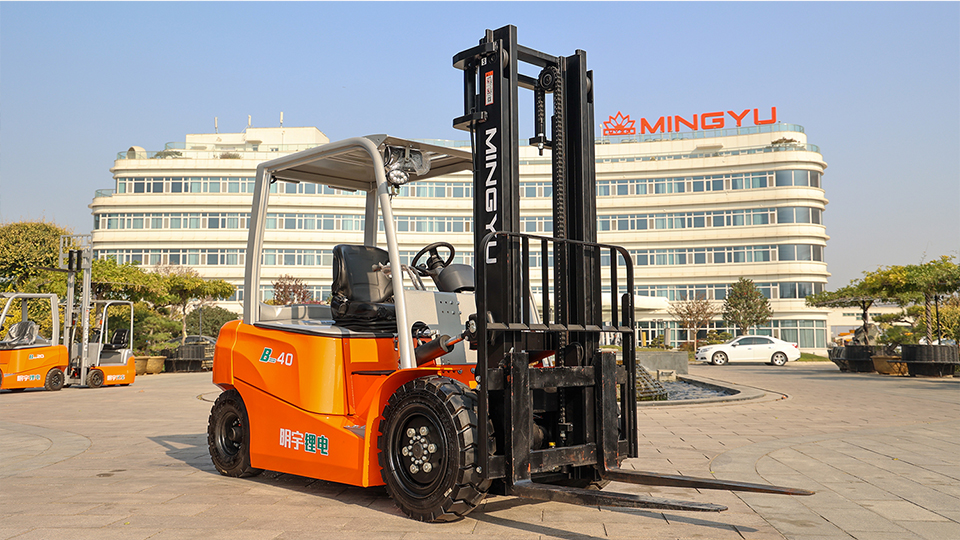
High-utilization applications (3,000+ hours annually) strongly favor electric TCO economics, as energy and maintenance savings compound rapidly. Low-utilization or seasonal operations may not generate sufficient operational savings to justify electric premium pricing within acceptable payback periods.
Load Characteristics and Capacity Requirements
Standard capacity ranges (3,000-10,000 lbs) are well-served by both IC and electric options. However, heavy-duty applications (15,000+ lbs) have historically been IC-dominated due to battery weight and power density constraints.
This limitation is eroding. Hyster-Yale's lithium-ion big truck series demonstrates 40,000 lb capacity with electric powertrains, while Konecranes and Kalmar offer electric container handlers and reach stackers for port applications . For extreme capacities (50,000+ lbs) or specialized attachments, IC may remain the only viable option, though the threshold for electric feasibility rises annually.
Regulatory and Compliance Considerations
Emissions Regulations
California's Zero-Emission Forklift Regulation represents the most aggressive emissions mandate affecting forklift procurement. Effective 2026, the rule prohibits new large spark-ignition (LSI) forklift sales and establishes fleet turnover timelines through 2038 . With 89,000 LSI forklifts affected, California operators face immediate compliance planning requirements.
The regulation's impact extends beyond state borders. National fleet operators increasingly standardize on electric equipment to avoid California-specific asset segregation. Similar regulatory frameworks in the EU, China, and other jurisdictions create global momentum toward electrification .
OSHA's Powered Industrial Truck Standard (29 CFR 1910.178) imposes additional compliance burdens on IC operations, including ventilation requirements, fuel storage regulations, and operator training specific to combustion hazards. Electric forklifts simplify compliance profiles, reducing regulatory risk and inspection vulnerability.
Safety and Liability
The National Safety Council recorded 73 forklift-related fatalities in 2022, with IC-specific hazards including carbon monoxide poisoning, fuel fires, and explosion risks contributing to incident severity . Electric forklifts eliminate combustion-related hazards, though they introduce battery-specific risks (electrolyte exposure, electrical shock, thermal events) that require distinct mitigation protocols.
Li-ion battery thermal runaway, while rare, presents catastrophic failure potential requiring specialized fire suppression systems and emergency response procedures. Proper BMS implementation, thermal management, and charging infrastructure design are essential risk controls .
Infrastructure and Facility Impact
IC Infrastructure Requirements
IC forklifts necessitate on-site fuel storage and handling infrastructure. LPG requires cylinder exchange programs or bulk tank installation with pressure regulation and leak detection systems. Diesel demands above-ground or underground storage tanks with spill containment, secondary containment, and environmental monitoring. These installations trigger fire code compliance, environmental permitting, and ongoing inspection requirements .
Ventilation systems for indoor IC operation represent significant capital and operating costs. ASHRAE standards mandate 5,000-10,000 CFM per forklift for adequate contaminant dilution, requiring substantial HVAC capacity and energy consumption .
Electric Infrastructure Requirements
Electric forklifts require charging infrastructure scaled to operational demands. Standard lead-acid charging utilizes 240V or 480V single-phase or three-phase power at 50-100A capacity per charger. Opportunity charging for Li-ion may require 480V three-phase at 100-200A for rapid replenishment .
Facility electrical service upgrades can represent USD 50,000-200,000 depending on existing capacity and charger quantity. Charger placement must account for operational workflow, cable management, and proximity to electrical panels. Smart charging systems with load management capabilities mitigate peak demand charges but add complexity and capital cost.
Battery change-out rooms for lead-acid multi-shift operations consume 500-1,500 square feet, requiring overhead cranes, spill containment, eyewash stations, and ventilation. Li-ion opportunity charging eliminates dedicated battery rooms, freeing valuable floor space for revenue-generating activities .
Resale Value and Asset Liquidity
IC forklifts historically retained stronger resale values due to broader secondary market demand and universal refueling infrastructure. However, this advantage is diminishing as electric adoption accelerates and regulatory restrictions on IC equipment expand.
Electric forklifts with Li-ion batteries command premium resale pricing when battery health is documented and remaining capacity is verified. BMS data logs providing charge cycle history, temperature profiles, and state-of-health metrics enable transparent valuation, reducing buyer uncertainty .
Conversely, lead-acid-equipped electrics face accelerating depreciation as Li-ion becomes standard, and IC equipment in regulated jurisdictions may experience stranded asset risk as compliance deadlines approach.
The Decision Framework: A Structured Evaluation
Effective forklift procurement requires systematic evaluation across multiple dimensions:
1. Operational Profile Analysis
Annual operating hours and shift structure
Indoor/outdoor duty cycle ratio
Load capacity and attachment requirements
Aisle width and maneuverability constraints
2. Economic Modeling
5-7 year TCO projection incorporating local energy costs
Capital availability and depreciation strategy
Residual value assumptions under regulatory scenarios
Maintenance resource capacity and labor costs
3. Regulatory Compliance Assessment
Applicable emissions regulations and compliance timelines
OSHA ventilation and fuel storage requirements
Local air quality management district rules
Corporate sustainability commitments and ESG reporting
4. Infrastructure Evaluation
Electrical service capacity and upgrade feasibility
Fuel storage and handling infrastructure status
Facility space constraints and optimization opportunities
Charging station placement and workflow integration
5. Technology Roadmap Alignment
Fleet electrification timeline and standardization strategy
Autonomous operation compatibility requirements
Telematics and fleet management integration needs
Battery technology evolution and supplier stability
Conclusion: The Electric Imperative
The IC versus electric decision is no longer a technical toss-up resolved by application-specific exceptions. Electric forklifts have achieved functional parity across the vast majority of operational scenarios while delivering superior TCO, regulatory compliance, and operational flexibility. The remaining IC strongholds—extreme heavy-duty, remote outdoor, and specialized attachments—contract annually as battery technology advances.
For buyers evaluating 2026 procurement, the default assumption should be electric unless specific operational constraints definitively require IC. Even in IC-justified applications, regulatory trajectories suggest limited asset lifespans, requiring careful residual value analysis and compliance horizon planning.
The ultimate buyer's guide is not a static comparison but a dynamic framework recognizing that electrification is not merely an alternative but the inevitable trajectory of material handling technology. Organizations that align procurement strategy with this trajectory will capture compounding operational and competitive advantages; those that resist risk stranded assets, regulatory penalties, and escalating operational costs in an increasingly electric industry.
The question is no longer whether electric forklifts can meet your needs, but whether your operations can afford to remain dependent on combustion.
Name: selena
Mobile:+86-13176910558
Tel:+86-0535-2090977
Whatsapp:8613181602336
Email:vip@mingyuforklift.com
Add:Xiaqiu Town, Laizhou, Yantai City, Shandong Province, China
