
vip@mingyuforklift.com
+86-0535-2090977

Introduction: The Criticality of Sourcing
Finding a reliable forklift is not merely a purchasing decision; it is a critical capital investment that directly impacts operational efficiency, supply chain continuity, and, most importantly, workplace safety. For material handling professionals, fleet managers, and warehouse directors, the question, "Where can I find reliable forklifts for sale in my area?" requires a strategic, multi-faceted answer that goes beyond a simple search query.
Reliability in the material handling sector is defined by uptime, adherence to safety standards (such as OSHA and relevant regional regulations), and predictable Total Cost of Ownership (TCO). This 2000-word technical article dissects the available procurement channels, offering a detailed, systematic methodology for vetting sellers and inspecting equipment, ensuring your localized search yields a dependable, compliant asset.
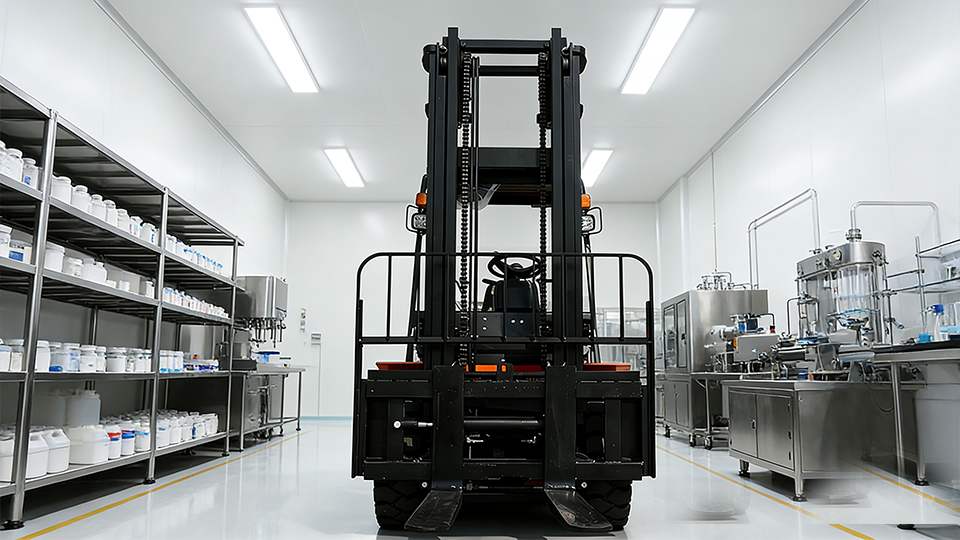
II. Strategic Sourcing Channels: A Technical Breakdown
The journey to finding a reliable forklift begins with identifying the appropriate vendor channel. These channels are broadly categorized based on the age and condition of the equipment, and each requires a different level of due diligence.
A. Channel 1: Authorized Manufacturer Dealerships (The Gold Standard)
Authorized dealerships represent the official local presence for major global manufacturers. This is the most reliable channel for acquiring new equipment and highly certified used (or "refurbished") units.
1. Technical Benefits of Authorized Dealerships:
OEM Certification: They sell machines certified by the Original Equipment Manufacturer (OEM). Used equipment is often subjected to a rigorous 40- to 60-point inspection and reconditioning process before being designated as "Certified Pre-Owned."
Warranty Support: New forklifts come with standard manufacturer warranties (often 1-5 years). Certified used units typically carry short-term powertrain warranties (e.g., 90-day parts and labor), providing a crucial financial safety net.
Integrated Service Network: A reliable dealer offers a full-service ecosystem, including factory-trained and certified technicians, genuine OEM parts inventory, and responsive emergency service. This minimizes downtime, which is the single largest factor impacting TCO.
Financing and Leasing: They provide structured financing, often including flexible leasing programs (operating leases vs. capital leases) that are essential for capital expenditure management.
2. Localized Search Strategy:
To find these highly reliable sources in your area, start the search with the major global brands:
Search Query Template: [Manufacturer Name] forklift dealer [City/State]
Major Global Manufacturers: Toyota Material Handling, Crown Equipment Corporation, Hyster-Yale, Mitsubishi Logisnext (Cat, Mitsubishi, Jungheinrich), and Clark Material Handling.
B. Channel 2: Independent Equipment Resellers and Brokers
Independent dealers specialize in acquiring fleets from various sources (auctions, trade-ins, end-of-lease) and remarketing them. Their inventory is usually more diverse in terms of brand and age than an authorized dealer.
1. Technical Considerations for Independent Resellers:
Pricing: Prices are often significantly lower than authorized dealerships, especially for older or higher-hour models.
Variability in Quality: Reliability is highly dependent on the reseller’s internal quality control. Buyers must demand clear documentation on the unit's reconditioning process (if any) and maintenance history.
Parts Supply Risk: While the unit may be sold, long-term parts supply can be less guaranteed than with an OEM dealer, especially for specialized or discontinued models.
2. Localized Search Strategy:
Search Query Template: used industrial forklift sales [City/Region] or material handling equipment supplier [Area Code]
C. Channel 3: Online Marketplaces and Auctions (Highest Risk/Potential Reward)
Platforms like eBay, Craigslist, or specialized heavy equipment auction sites (Ritchie Bros., IronPlanet) offer the widest variety and lowest prices, but this channel carries the highest risk of purchasing an unreliable or non-compliant machine.
1. Technical Due Diligence (The "As-Is" Warning):
Inspection: Most online and auction sales are “as-is, where-is,” with no implied warranty. It is non-negotiable to hire a certified, third-party mobile mechanic to conduct a pre-purchase inspection on-site.
Documentation: Sellers may provide incomplete or non-existent maintenance logs. The buyer must be prepared to accept the full cost and responsibility of bringing the unit up to safety and operational standards.
Hour Metrics: On auction sites, the low price often reflects high operational hours (typically above 10,000 hours for IC engines or high cycle counts for electric).
III. The Technical Evaluation Checklist: Vetting the Asset
Once a suitable local seller is identified, the focus shifts to the technical assessment of the equipment itself. Reliability is a quantifiable metric derived from the machine's condition, age, and maintenance history.
A. Pre-Inspection Documentation Requirements
Before setting foot on the dealer's lot, demand the following technical records:
|
Document Required |
Technical Purpose |
Reliability Indicator |
|
Complete Maintenance Logs |
Verifies regular service intervals (typically 200-250 hours for IC engines). |
High: Shows commitment to preventative maintenance (PM). |
|
Data Plate (Nameplate) Photo |
Confirms compliance with ANSI/ITSDF B56.1 and load stability standards. Must match the unit’s serial number. |
Critical: Required by OSHA. Ensures safe rated capacity is known. |
|
Oil Analysis Reports |
(Optional but highly technical) Provides diagnostic data on engine/transmission/hydraulic fluid contamination. |
High: Predicts failure of major components (e.g., bearing wear, cooling system breaches). |
|
Battery History (Electric Units) |
Shows battery manufacture date, cycle history, and watering schedule. |
Critical for Electric: Lead-acid batteries over five years old require higher CAPEX budgeting for replacement. |
B. The 10-Point Mechanical and Structural Inspection
A thorough inspection must transition from a visual check to operational testing of the core systems.
|
Component |
Inspection Focus |
Reliability Failure Indicators |
|
1. The Forks and Carriage |
Check the fork heel (90-degree bend) for excessive wear (must be less than 10% reduction in original thickness). Inspect the top retaining pin and latch. |
Wear >10%: Must be replaced immediately; a major safety failure risk. |
|
2. The Mast Assembly |
Raise and lower the mast repeatedly without a load. Check for chain tension uniformity, lubrication, and any signs of broken or corroded chain links. Inspect rails and rollers for binding or excessive side-to-side play. |
Binding/Jerking: Indicates hydraulic or roller/carriage alignment issues. |
|
3. Hydraulic Systems |
Inspect all hoses, fittings, and lift cylinders for active drips or excessive seepage. Test the tilt mechanism to its full forward and backward limits. |
Active Leaks: A primary indicator of neglected seals and potential system pressure loss. |
|
4. Tires and Wheels |
Cushion (Indoor): Look for chunking, flat spots, or wear down to the tire wear line. Pneumatic (Outdoor): Check for proper inflation, deep cuts, or embedded debris. |
Uneven Wear: Suggests axle or steering alignment problems. |
|
5. Engine/Power Train (IC Models) |
Run the engine for a minimum of 15 minutes. Check for unusual smoke (blue/black/white), strong fuel odors, or knocking noises. Check all fluid levels (oil, coolant, transmission) and look for fresh leaks beneath the counterweight. |
Heavy Smoke: Indicates piston ring, turbo, or head gasket failure. |
|
6. Battery and Electrical (Electric Models) |
Check specific gravity or voltage for consistency across cells. Look for corrosion (white/green powder) on terminals and check electrolyte levels (must cover the plates). Test the battery charger's functionality. |
Heavy Corrosion/Low Water: Signifies severe neglect, drastically reducing battery life and capacity. |
|
7. Brakes and Steering |
Test both the service (foot) brake and the parking brake under a slight load or on an incline. Check for excessive travel in the brake pedal or spongy feel. Test the steering at low speed for play or non-responsive dead zones. |
Excessive Travel/Failure on Incline: Immediate safety hazard; requires brake system overhaul. |
|
8. Operator Controls & Safety |
Test all safety systems: horn, lights, backup alarm, seatbelt, and the Operator Presence Sensing System (OPS)—the truck should shut off hydraulic functions when the operator leaves the seat. |
OPS Failure: OSHA violation and extreme safety risk. |
|
9. Hour Meter Integrity |
Verify that the physical hour meter matches any hours listed on maintenance records or onboard telemetry systems. High-quality used units typically have less than 1,500 hours per year of service life. |
Discrepancy: Potential for fraud; machine hours may be concealed. |
|
10. Chassis and Counterweight |
Visually inspect the frame and overhead guard for cracked welds, collision damage, or signs of poorly repaired damage. Ensure the counterweight is securely mounted. |
Cracked Welds: Structural compromise; machine must be tagged out of service immediately. |
IV. Beyond the Sale: The Importance of Local Dealer Support
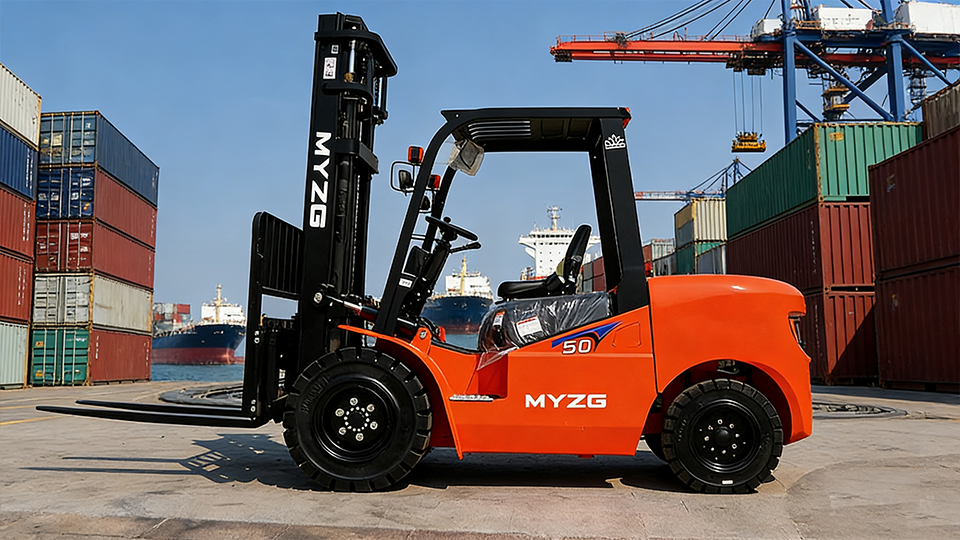
A reliable forklift is useless without reliable support. When locating a seller "in your area," you are not just buying equipment; you are securing a long-term service partner.
A. Evaluating the Local Service Network
Response Time Guarantee (Uptime): Ask for documented service response times. An excellent local dealer should be able to dispatch a technician for a catastrophic breakdown within a defined window (e.g., 2-4 hours). Downtime is measured in lost productivity, making rapid service a key TCO element.
Parts Inventory Access: Inquire about their local parts inventory. A dealer that maintains a deep stock of common wear-and-tear items (filters, brake components, master cylinders, tires) minimizes lead times and truck-down hours.
Telematics Integration: For modern fleets, reliability is managed via telemetry. Ask if the dealer offers fleet management software (e.g., remote diagnostics, impact sensing, utilization reports). This technology predicts failure before it happens, proactively managing asset reliability.
B. Vetting the Dealer’s Reputation (Local Insight)
While online reviews (Google, Yelp, specialized industry forums) are useful, a technical assessment of a local dealer requires peer-to-peer validation:
Request Local References: Ask the dealer for contact information for two or three current customers in your operating region, preferably those running a similar class and power type (IC vs. Electric) of forklift.
Check Certifications: Verify that the dealer’s service technicians are OEM-certified for the brand they sell, not just generally skilled mechanics.
Facility Inspection: A site visit to the dealer's service center can be highly revealing. A clean, organized shop with specialized tools and designated service bays indicates a professional operation capable of high-level repair and reconditioning.
V. Conclusion: Securing the Investment
The search for reliable forklifts for sale in your area necessitates a methodological approach rooted in technical due diligence. By focusing the initial search on authorized manufacturer dealerships—the primary source of certified, supported equipment—the risk of acquiring an unreliable asset is minimized.
For managers considering used equipment from independent sources, the 10-Point Mechanical and Structural Inspection is a non-negotiable step. The operational hours, the integrity of the mast and forks, and the presence of complete maintenance logs are the quantifiable metrics that separate a reliable investment from a catastrophic liability. Ultimately, reliability is not a feature of the forklift alone, but a product of the robust, locally accessible service and parts network supporting it. Choose your local partner with the same scrutiny you apply to the equipment itself.
Name: selena
Mobile:+86-13176910558
Tel:+86-0535-2090977
Whatsapp:8613181602336
Email:vip@mingyuforklift.com
Add:Xiaqiu Town, Laizhou, Yantai City, Shandong Province, China
