
vip@mingyuforklift.com
+86-0535-2090977

The modern warehouse is a study in controlled chaos. Pallets move through aisles at all hours. Order pickers navigate between towering racks. Forklifts reverse around blind corners. Supervisors track inventory across thousands of SKUs. And somewhere in the background, a customer expects same-day delivery.
For decades, this system depended almost entirely on human operators—skilled, experienced, and increasingly scarce. But a fundamental shift is underway. Smart forklifts, equipped with artificial intelligence, autonomous navigation, and real-time fleet connectivity, are transforming material handling from a labor-dependent craft into a data-driven, automated discipline. The autonomous forklift market, valued at approximately $7.84 billion in 2025, is projected to reach $13.79 billion by 2030, growing at a compound annual growth rate of 12% . This is not incremental improvement. It is a redefinition of what a forklift can be.
The Labor Crisis That Accelerated Everything
The push toward forklift automation was not born in a research lab. It was born on the warehouse floor, where the labor crisis has become structural rather than cyclical. Across North America, Europe, and Asia-Pacific, warehouse operators face a shortage of qualified forklift operators that wage increases alone cannot solve . In the United States alone, the logistics sector faces a shortfall exceeding 400,000 qualified operators—a gap that immigration policy and wage inflation cannot bridge .
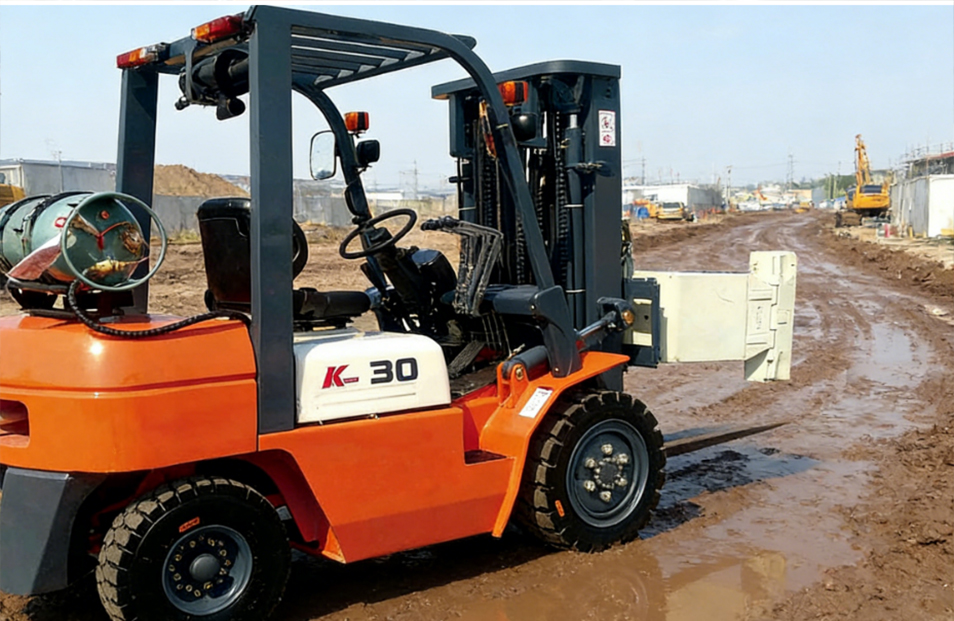
Younger workers increasingly reject repetitive material handling roles, while experienced operators are aging out faster than replacements enter the pipeline . This is not a temporary market imbalance. It is a permanent reconfiguration of the warehouse labor market. Companies that deployed autonomous forklifts 18 months ago are now operating at 30–40% lower labor costs per pallet moved, with safety incident rates down by over 60% . These are not marginal improvements. They represent fundamental cost structure advantages that become nearly impossible to close once established.
The convergence of three forces makes this moment particularly critical: labor scarcity has become permanent in developed markets, lithium-ion battery economics have crossed the viability threshold for 24/7 operations, and fleet management software has matured to the point where autonomous units integrate seamlessly with existing warehouse management systems . The technology risk that justified waiting has largely evaporated, but the deployment learning curve remains steep.
The Technology Stack: From Sensors to Intelligence
At the heart of the autonomous forklift revolution lies a sophisticated technology stack that transforms raw sensor data into intelligent action. The core components include navigation systems, sensor fusion, and fleet management platforms, each layer building upon the others to create a cohesive autonomous system .
Navigation: From Magnetic Strips to Visual SLAM
Traditional automated guided vehicles (AGVs) followed predetermined paths marked by magnetic strips, wires, or reflectors embedded in warehouse floors. These systems offered reliability but zero flexibility—any layout change required physical infrastructure modification and costly re-commissioning .
Modern autonomous mobile robots (AMRs) and autonomous forklifts have broken free of these constraints through simultaneous localization and mapping (SLAM) technologies. Laser SLAM enables real-time environment mapping, allowing forklifts to navigate narrow aisles without pre-installed guides . This flexibility reduces setup time by approximately 70% compared to traditional automated systems .
According to a comprehensive academic review published in 2026, the navigation landscape for autonomous forklifts spans multiple approaches, each suited to different operational contexts . For standard warehouse operations with moderate accuracy requirements, open-source SLAM solutions like Cartographer provide infrastructure-free localization with repeatable, high-precision performance at substantially lower cost than commercial systems . In extreme environmental conditions, such as refrigerated warehouses operating at −30°C where conventional laser rangefinders fail, magnetic sensor systems offer cost-effective reliability . For applications demanding the highest accuracy, commercial SLAM achieves millimeter-level precision, while three-stage algorithmic fusion approaches provide comparable sub-centimeter accuracy using standard sensors at substantially lower cost .
The demand for intelligent navigation technologies, including LiDAR and SLAM, surged by 30% between 2022 and 2024, reflecting the growing shift toward AI-driven robotics . Visual SLAM, in particular, has gained traction because it cuts commissioning time by 20% and allows layout reconfiguration without physical guides .
Sensor Fusion: The 360-Degree Safety Net
Autonomous forklifts do not rely on a single sensor modality. Instead, they combine LiDAR, 3D cameras, ultrasonic sensors, and RFID systems to create a comprehensive perception layer . This sensor fusion approach creates a 360-degree safety net, enabling forklifts to detect obstacles—from stray pallets to workers—within 5 meters and adjust speed or stop instantly, cutting collision risks by over 90% .
The International Federation of Robotics reports that the number of AGVs and AMRs deployed worldwide reached over 220,000 units by 2025, reflecting a sharp increase in warehouse automation . In 2024, more than 200,000 AGV and AMR units were deployed globally, representing a 25% increase compared to 2022 . These systems are being increasingly implemented across industries such as automotive, e-commerce, pharmaceuticals, and food and beverage for applications like material handling, intralogistics, and inventory management .
Vision-Based Precision Manipulation
Navigation gets the forklift to the pallet. Vision-based manipulation gets the forks into the pallet pockets. This final approach phase demands sub-centimeter accuracy that general navigation systems cannot provide.
Academic research published in 2026 details the evolution of vision-based pallet detection systems . For standard indoor warehouse operations, learning-based approaches combined with monocular RGB cameras provide robust detection in cluttered environments with low sensor costs . For handling high-value goods with maximum precision, RGB-D systems achieve sub-centimeter position and 0.4-degree orientation accuracy through direct 3D geometric reconstruction . When dealing with shrink-wrapped and low-texture pallets, multi-modal LiDAR-vision fusion maintains sub-centimeter performance despite featureless surfaces, reflective floors, and partial occlusions .
The macro-micro control architecture has become dominant in the literature because it addresses the key transition from global navigation to high-precision pallet engagement without undue productivity loss . The architecture maintains pallet visibility with sufficient geometric spread to support reliable pose estimation, produces collision-free approach trajectories that preserve safety margins, and ensures that the micro-controller converges within the defined operating envelope for terminal alignment and insertion .
Fleet Management and IoT Integration
Individual autonomous forklifts are impressive. Connected fleets are transformative. Cloud-based fleet management platforms sync data across multiple forklifts, optimizing task allocation in real time . During peak hours, the system prioritizes urgent orders, reducing waiting times by 40% in e-commerce warehouses .
Forklift telematics systems function as a digital nervous system for the fleet, combining GPS, UWB (Ultra-Wideband), LiDAR, and weight detection technologies with powerful software integrations . These systems continuously monitor and manage every aspect of forklift operations, collecting real-time data on precise location, performance metrics, and operator behavior . UWB technology offers centimeter-level indoor positioning, which is critical in complex environments where traditional GPS falters .
The U.S. Department of Commerce reports that in 2024, 42% of logistics companies adopted AMRs to improve operational efficiency, a significant jump from 28% in 2022 . Autonomous fleet management software adoption rose by 41%, while vision-guided navigation systems increased by 36% . These systems integrate with warehouse management systems (WMS) and enterprise resource planning (ERP) platforms, enabling seamless data exchange and process optimization .
Safety Transformation: From Reactive to Predictive
Forklift safety has traditionally been a reactive discipline—signage, training, and incident investigation after the fact. Smart forklifts are inverting this paradigm, making safety proactive and predictive.
AI-powered pedestrian detection systems represent the most effective approach to preventing workplace collisions . These systems use neural networks trained on millions of images to distinguish humans from objects, edge computing to process video in real-time without network dependency, and configurable detection zones to deliver trusted alerts without overwhelming operators .
The architectural choice between edge and cloud computing profoundly affects safety effectiveness. Edge-based systems achieve 50–100 millisecond total latency, allowing alerts within 8 inches of travel. Cloud processing introduces encoding delays, network transmission, and response transmission totaling 200–500 milliseconds under good conditions—that difference between 8 inches and 3 feet can determine whether an operator receives a warning or records a collision .
Modern AI safety systems employ graduated alert mechanisms: gentle chimes for awareness notifications in warning zones, urgent distinct alarms for immediate attention in critical zones, and automatic braking when pedestrians are detected too close . Dynamic zone adjustment analyzes movement in real-time, expanding safety zones as forklifts accelerate and predicting forklift paths from speed and steering angle .
According to the European Agency for Safety and Health at Work, workplace injuries related to manual material handling dropped by 25% in facilities that integrated AGVs and AMRs during 2024 . Industry reports and vendor case studies show up to a 50% reduction in near misses after deploying AI detection and alerting systems .
Market Dynamics and Competitive Landscape
The global AGV-AMR market is estimated at approximately $2.26 billion in 2026 and projected to reach $6.78 billion by 2035, expanding at a CAGR of 13% . Asia-Pacific leads with approximately 40% market share, followed by Europe at approximately 30% and North America at approximately 25% . China led global AGV and AMR installations with over 45,000 new units deployed in 2023 alone .
By type, AGVs hold 58% of the market while AMRs account for 42%, though AMRs are gaining share due to their superior flexibility . In 2024, AMRs accounted for 65% of new installations due to their ability to navigate dynamically without fixed infrastructure, compared to 35% for traditional AGVs .
Major manufacturers are responding strategically. Yale Lift Truck Technologies is positioning itself as a broader warehouse automation provider, expanding beyond traditional lift trucks into end-to-end solutions including pedestrian awareness technology and automated counterbalance stackers . Cyngn Inc. launched its AI-driven DriveMod-enabled forklift in June 2023, emphasizing safety and efficiency in material handling . AiTEN Robotics has developed the Autopilot Series, combining LiDAR and AI for precise navigation with 5G-enabled real-time data synchronization .
The competitive landscape is further shaped by strategic acquisitions. Oshkosh Corporation's acquisition of AUSACORP S.L. in September 2024 expanded its access segment with compact all-terrain machines . Significant players in the market include Hangcha Group, Hyundai Heavy Industries Group, KAUP GmbH & Co., and Toyota Industries Corporation .
Operational Impact: Beyond Labor Replacement
The transformation extends far beyond replacing human operators. Smart forklifts are redefining warehouse operations in fundamental ways.
24/7 Operations. Unhindered by shifts or fatigue, autonomous forklifts maintain consistent throughput, ideal for time-sensitive industries like pharmaceuticals . In manufacturing, AGVs and AMRs have enabled round-the-clock operation while improving picking accuracy to 99.9% in some warehouses .
Space Optimization. Precision control with ±10mm positioning allows stacking goods up to 9 meters, increasing storage capacity by 30% in high-density warehouses . Narrow aisle operations, previously requiring highly skilled human operators, become routine for autonomous systems.
Labor Collaboration. Rather than replacing workers entirely, autonomous forklifts handle repetitive tasks like pallet transfers, allowing human teams to focus on complex operations like quality checks and exception handling . This collaborative model—humans and robots working in shared spaces—represents the most sustainable path forward.
Data-Driven Optimization. Every movement, every load, every near-miss generates data. Fleet management platforms analyze this data to identify bottlenecks, optimize routes, and predict maintenance needs before failures occur. The system becomes not just a tool but a strategic partner in building resilient supply chains .
Challenges on the Path to Autonomy
Despite the compelling trajectory, the transition to autonomous forklifts is not without obstacles.
High Initial Investment. The upfront cost of autonomous forklift systems impacts 47% of deployment decisions, while system integration complexity affects nearly 39% of industrial end users . For small and mid-sized operators, the capital requirement remains a significant barrier.
Integration Complexity. Integrating new robotic systems into existing infrastructure requires careful planning. Facilities must evaluate warehouse layout, existing WMS compatibility, and network infrastructure before deployment .
Workforce Buy-In and Training. The essential need for workforce buy-in and training represents a human challenge that technology alone cannot solve . Operators must understand how to interact with autonomous systems, interpret alerts, and respond to exceptions.
Cybersecurity Concerns. As forklifts become connected devices, they also become potential attack vectors. Heightened cybersecurity focus is tempering enthusiasm for rapid deployment, though it has not slowed procurement to date .
5G and Connectivity Requirements. Private 5G networks now provide the deterministic connectivity AGVs require, delivering 20% productivity gains and 15% lower capital expenditure than Wi-Fi in early rollouts . However, not all facilities have access to such infrastructure, and network dead zones near metal racking and concrete walls remain standard challenges .
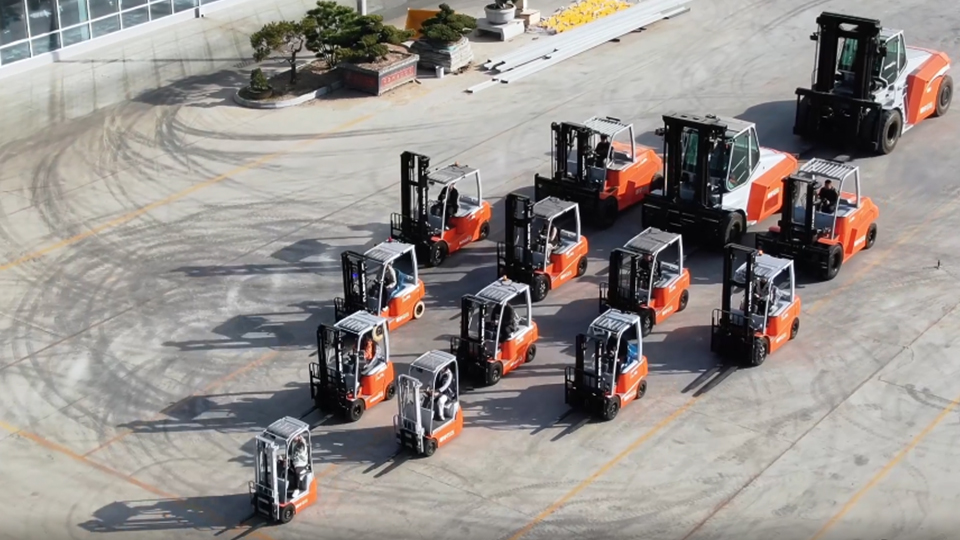
The Road Ahead: From Autonomous to Intelligent
The current generation of autonomous forklifts represents a significant advance, but it is only the beginning. The next evolution will see forklifts that are not merely autonomous but truly intelligent—systems that learn from their environment, predict demand patterns, and coordinate with the entire supply chain.
AI-Enhanced Navigation. Improvements in AI and machine learning give robots more usable intelligence for navigation, decision-making, and collaboration. AMRs can optimize routes in real-time, predict issues, and learn from experience to improve performance .
Predictive Intervention. Next-generation AI safety agents analyze historical near-miss patterns, identify operator fatigue indicators, and predict pedestrian behavior based on movement patterns . These systems automatically adjust safety parameters during high-risk periods, creating virtual safety nets that adapt autonomously .
Zero-Infrastructure Intelligence. Revolutionary agentic systems require no tags or high-visibility vests. Advanced computer vision recognizes and tracks humans automatically, treating every person as a protected entity without manual oversight .
Solid-State Batteries and Beyond. The lithium revolution in forklift power is converging with automation. Solid-state batteries, with their promise of even higher energy density and improved safety profiles, could further extend the operational capabilities of autonomous forklifts, enabling longer runtimes between charges and more compact vehicle designs.
Conclusion
The transformation from manual to autonomous forklifts is not merely a technological upgrade. It is a fundamental restructuring of how warehouses operate, how labor is deployed, and how safety is managed. The companies that move decisively—integrating autonomous systems with their WMS, retraining their workforce, and redesigning workflows around human-robot collaboration—will capture disproportionate efficiency gains.
Those who delay risk being trapped in a cycle of rising labor costs, increasing safety incidents, and declining operational competitiveness. The autonomous forklift has shifted from experimental technology to strategic necessity . The question is no longer whether smart forklifts will redefine modern logistics. The question is which operators will be ready when they do.
Name: selena
Mobile:+86-13176910558
Tel:+86-0535-2090977
Whatsapp:8613181602336
Email:vip@mingyuforklift.com
Add:Xiaqiu Town, Laizhou, Yantai City, Shandong Province, China