
vip@mingyuforklift.com
+86-0535-2090977

The Lithium Revolution: How Energy Transformation Is Reshaping the Forklift Industry
For more than a century, the material handling industry relied on a simple formula: internal combustion engines for heavy outdoor work, and lead-acid batteries for indoor electric forklifts. That formula is now being rewritten at remarkable speed. Lithium-ion (Li-ion) battery technology, once the domain of consumer electronics and passenger vehicles, has crossed decisively into industrial equipment—and the forklift sector is experiencing one of the most consequential energy transitions in its history.
What began as a niche alternative is rapidly becoming the industry default. According to Interact Analysis, Li-ion forklifts are projected to rise from approximately 32% of global electric forklift shipments in 2024 to over 70% by 2034, with a decisive inflection point expected around 2026 when lithium-ion overtakes lead-acid in market share within the electric segment . By 2034, as much as 83% of all newly shipped electric forklifts globally are expected to be lithium-powered . These are not marginal shifts; they represent a structural reconfiguration of how warehouses, distribution centers, and manufacturing plants power their fleets.
The Economics of Change: Total Cost of Ownership
The most compelling argument for lithium-ion adoption is not environmental virtue—it is hard economics. While a lithium-ion forklift battery typically costs between $10,000 and $25,000, roughly two to three times the price of a comparable lead-acid unit, the total cost of ownership (TCO) tells a very different story .
Lithium-ion batteries deliver 2,500 to 4,000 charge cycles compared to 1,000 to 1,500 for lead-acid . They charge fully in 1 to 2 hours versus 6 to 8 hours for lead-acid . They require virtually no maintenance—no watering, no equalization charges, no acid cleanup, no dedicated battery rooms with ventilation systems . In a multi-shift warehouse, these differences compound rapidly.
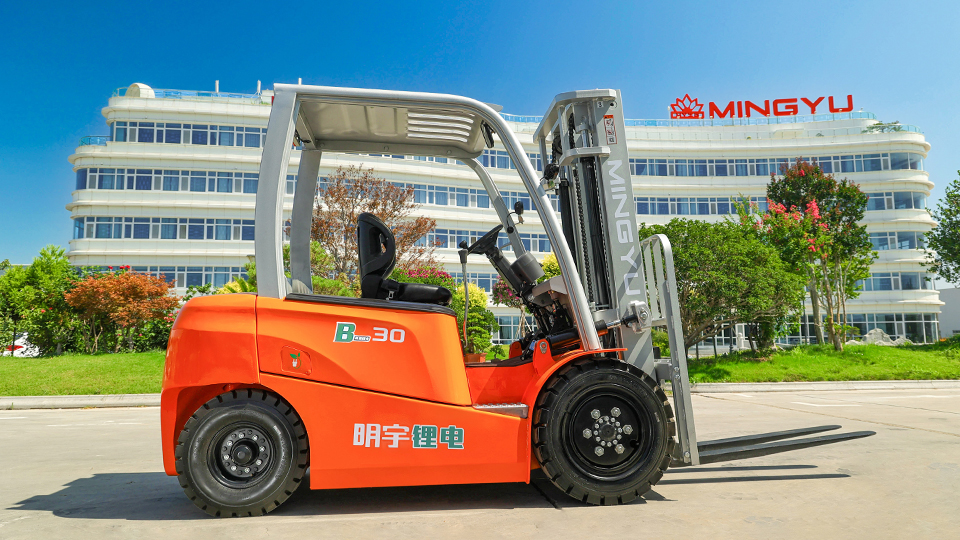
Consider a practical scenario: a warehouse operating 50 forklifts on lead-acid batteries, replacing them every three years. Over a ten-year horizon, the lead-acid fleet incurs approximately $500,000 in battery costs, maintenance labor, and replacement cycles. A comparable lithium-ion fleet, with one replacement over the same period and minimal maintenance, costs approximately $330,000—a 34% reduction . Hangcha Group's own TCO analysis indicates a cost reduction of approximately 55% compared to lead-acid over the battery lifecycle . For operations running 24/7, the payback period on the lithium premium can be as short as two to four years .
The TCO advantage is further amplified by opportunity charging. Unlike lead-acid batteries, which degrade with partial charging and require full discharge-recharge cycles, lithium-ion units can be topped up during 15-minute operator breaks without compromising lifespan . This eliminates the need for battery swapping between shifts, a labor-intensive process that can consume 20 to 30 minutes per change and requires dedicated floor space for battery rooms. In high-rent warehouse environments, reclaiming that square footage for productive use carries its own financial return.
The Technology Behind the Transition
The chemistry driving this revolution is predominantly lithium iron phosphate (LiFePO4). Unlike the cobalt-rich chemistries used in consumer electronics, LiFePO4 offers superior thermal stability, longer cycle life, and fundamentally safer operation—critical attributes in industrial environments where batteries operate under heavy loads, vibration, and temperature variation .
Modern lithium forklift batteries are not merely power cells; they are integrated electromechanical systems governed by sophisticated battery management systems (BMS). The BMS continuously monitors cell voltage, temperature, state of charge, and current draw, balancing cells in real time to prevent overcharging, deep discharge, and thermal runaway. Hangcha Group, in partnership with CATL, subjects its battery packs to over 273 validation tests before deployment . This level of engineering rigor addresses the safety concerns that historically made warehouse managers cautious about lithium technology.
The energy density advantage is equally significant. Lithium-ion batteries convert up to 98% of charger energy into usable power, compared to approximately 80% for lead-acid . This higher efficiency translates directly into lower electricity consumption and reduced utility costs. Moreover, lithium batteries maintain consistent voltage output throughout their discharge cycle, meaning a forklift powered by lithium delivers the same lift speed and load capacity at 20% state of charge as it does at 80%. Lead-acid batteries exhibit pronounced voltage sag below 30% charge, directly degrading operational performance at the end of a shift .
Regional Dynamics: A Globally Uneven Transition
The pace of lithium adoption varies substantially across geographies, reflecting differences in regulatory pressure, industrial structure, and supply chain maturity.
China stands as the undisputed leader. Driven by massive domestic production of cost-competitive Class 3.1 electric warehouse forklifts—with basic models priced around $1,000—Chinese Li-ion forklift shipments are projected to surge from 26,436 units in 2018 to over 1 million units annually by 2034 . By that point, more than 73% of forklifts sold in China will be Li-ion powered. This dominance is fueled not only by manufacturing scale but by aggressive electrification policies and a domestic battery supply chain anchored by giants like CATL and BYD.
Europe presents a different profile: a regulation-driven frontrunner where environmental mandates and indoor air quality standards have accelerated the transition . In 2022, electric forklifts already accounted for approximately 90% of the European market, with the region now focused primarily on lithium-ion displacing legacy lead-acid rather than ICE-to-electric conversion . France, Germany, Italy, Spain, the UK, and Sweden are all projected to reach the 50% lithium-ion penetration milestone as early as 2025 .
North America, the largest regional market by value in 2025, is experiencing strong growth driven by e-commerce warehouse expansion, sustainability mandates, and the Inflation Reduction Act's investment tax credits of up to 30% for commercial clean energy equipment . However, the region also faces headwinds from tariffs on imported battery cells and components, particularly from Asia-Pacific suppliers . These trade dynamics are prompting investments in domestic battery production and localized supply chains.
Market Scale and Competitive Landscape
The economic significance of this transition is reflected in market valuations. The global forklift battery market was valued at approximately $27.08 billion in 2025 and is projected to reach $38.5 billion by 2030, growing at a CAGR of 7.5% . The broader electric forklift market is expanding even faster, surging from $72.12 billion in 2025 to a projected $124.23 billion by 2030 at a CAGR of 11.5% .
Major manufacturers are responding strategically. Toyota Material Handling introduced a new line of electric pneumatic forklifts in late 2023 with factory-integrated 48V and 80V lithium systems . Hyster Company launched its J32-40UTTL and J30-70UTL models featuring factory-installed lithium-ion packs capable of full charge in approximately 2.5 hours with opportunity-charging support . Jungheinrich AG has launched next-generation lithium-ion systems designed for high-performance industrial applications , while Crown Equipment Corporation continues to advance battery efficiency and lifecycle performance . BYD Company Limited, leveraging its automotive battery expertise, has expanded its integrated battery-electric forklift solutions globally .
Strategic partnerships are also reshaping the competitive landscape. In March 2023, KION Group partnered with Li-Cycle Holdings Corp. to establish a closed-loop lithium battery recycling program targeting recovery rates of up to 95% . This addresses one of the industry's emerging concerns: end-of-life battery management and the sustainable sourcing of critical materials like lithium, cobalt, and nickel.
Operational Transformation: Beyond the Battery
The lithium revolution extends beyond chemistry into fundamental changes in warehouse operations and fleet management.
Space Optimization. Eliminating battery rooms and charging stations frees valuable floor space. A typical lead-acid operation requires one spare battery per forklift plus dedicated charging infrastructure. Lithium-ion's opportunity-charging capability allows fleets to operate with a 1:1 battery-to-truck ratio, often eliminating the need for battery exchange areas entirely.
Cold Storage Performance. Lithium-ion batteries equipped with integrated heating elements can operate reliably in sub-freezing environments, heating to operational temperature in roughly one-third the time required by lead-acid . This makes them particularly valuable in cold chain logistics, where lead-acid performance degrades severely.
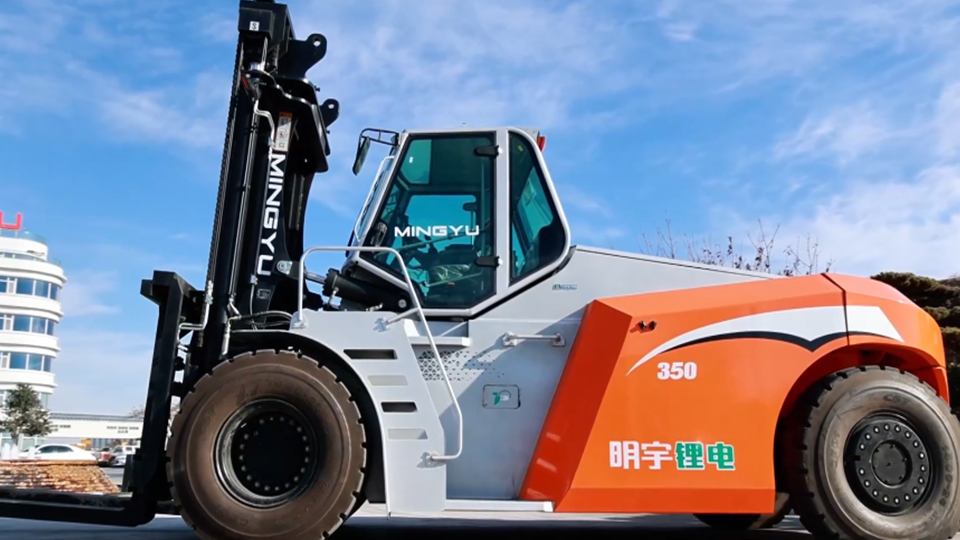
Data Integration. Modern lithium batteries communicate via CANBus protocols, feeding real-time data on charge status, health metrics, and usage patterns into fleet management systems . This enables predictive maintenance, optimized charging schedules, and precise TCO tracking—capabilities that were impractical with legacy lead-acid systems.
Labor Efficiency. The elimination of battery watering, cleaning, and swapping removes not only direct maintenance labor but also the ergonomic risks associated with handling 2,000-pound lead-acid battery packs. This contributes to improved workplace safety and reduced workers' compensation exposure.
Challenges and Considerations
Despite the compelling case for lithium-ion, the transition is not without obstacles.
Upfront Capital Requirements. The higher initial investment remains a barrier for small and mid-sized operators, particularly in developing markets and cost-sensitive sectors . While TCO analysis demonstrates long-term savings, capital budget constraints and long procurement approval cycles can delay adoption.
Charging Infrastructure. Realizing the full benefits of lithium-ion requires upgraded charging infrastructure capable of delivering high-current fast charging. Facilities with legacy lead-acid chargers may need significant electrical upgrades, adding to transition costs.
Supply Chain and Tariff Exposure. The global forklift battery supply chain remains concentrated in Asia-Pacific, making it vulnerable to trade disruptions and tariff fluctuations . The industry is responding with regional manufacturing investments, but localization will take time.
Recycling Infrastructure. While lead-acid batteries benefit from a mature, highly efficient recycling ecosystem, lithium-ion recycling is still scaling. Companies like Li-Cycle are building capacity, but the infrastructure to handle the coming wave of end-of-life industrial lithium batteries requires substantial further investment .
Single-Shift Economics. For low-intensity, single-shift operations with existing lead-acid infrastructure already amortized, the TCO advantage of lithium-ion is less pronounced . In these scenarios, lead-acid may remain cost-competitive for the remainder of its useful life.
The Road Ahead: Solid-State and Beyond
Looking beyond the current generation of LiFePO4 systems, the industry is already exploring next-generation technologies. Solid-state batteries, with their promise of even higher energy density and improved safety profiles, could further extend the operational capabilities of electric forklifts . Wireless charging systems, integrated into warehouse flooring, may eventually eliminate plug-in charging entirely, enabling truly continuous operation for automated guided vehicles (AGVs) and autonomous mobile robots (AMRs).
Hydrogen fuel cells continue to attract interest for ultra-heavy-duty and extended-runtime applications, particularly in ports and outdoor logistics where refueling infrastructure can be centralized . However, the 2018 hydrogen forklift explosion at a Louisiana manufacturing plant—which resulted in six injuries and one fatality—serves as a sobering reminder of the safety challenges inherent in high-pressure hydrogen systems . For the foreseeable future, lithium-ion appears positioned as the dominant technology for the vast majority of material handling applications.
Conclusion
The forklift industry is experiencing an energy transformation that is both rapid and irreversible. Lithium-ion battery technology has crossed the threshold from promising alternative to operational standard, driven by a convergence of economic advantage, regulatory pressure, and technological maturity.
For fleet operators, the decision is increasingly not whether to adopt lithium-ion, but when and how. The operators who move decisively—upgrading charging infrastructure, retraining maintenance staff, and redesigning workflows around opportunity charging—will capture the full productivity and cost benefits of the transition. Those who delay risk being saddled with obsolete lead-acid systems that become progressively more expensive to maintain as the industry shifts its service and support infrastructure toward lithium.
The lithium revolution in forklifts is not merely a battery swap. It is a fundamental reimagining of how material handling fleets are powered, managed, and optimized. And as the data makes clear, that revolution is already well underway.
Name: selena
Mobile:+86-13176910558
Tel:+86-0535-2090977
Whatsapp:8613181602336
Email:vip@mingyuforklift.com
Add:Xiaqiu Town, Laizhou, Yantai City, Shandong Province, China
