
vip@mingyuforklift.com
+86-0535-2090977

Introduction
For warehouse managers, logistics coordinators, and fleet operators, calculating diesel consumption per shift is one of the most practical questions in material handling operations. Unlike hourly fuel rates—which provide a snapshot of instantaneous consumption—shift-based calculations align directly with workforce scheduling, fuel procurement logistics, and operational budgeting. A standard industrial shift typically spans 8 to 10 hours, though extended shifts of 12 hours are common in continuous manufacturing and port operations. Understanding how many liters of diesel a forklift consumes during these defined work periods enables precise fuel inventory management, cost forecasting, and fleet sizing decisions. This article provides a comprehensive technical examination of diesel forklift consumption per shift, examining capacity-based benchmarks, duty cycle variations, real-world operational factors, and economic implications.
Defining the Shift: Standard Operating Periods
Before quantifying fuel consumption, it is essential to establish what constitutes a "shift" in industrial contexts. The duration of a shift fundamentally determines total fuel usage, yet not all hours within a shift represent productive forklift operation.
Standard 8-Hour Shift
The most prevalent shift duration in warehousing, manufacturing, and distribution centers spans 8 hours, typically structured as 7:00 AM to 3:00 PM or 3:00 PM to 11:00 PM in two-shift operations. However, not all 8 hours involve active forklift operation. Industry time-motion studies indicate that actual productive forklift usage within an 8-hour shift averages 5.5 to 6.5 hours, accounting for operator breaks, loading delays, idle periods during order consolidation, and coordination with other material handling equipment.
Extended 10-Hour and 12-Hour Shifts
Continuous operations—common in food processing, cold storage, and port logistics—often utilize 10-hour or 12-hour shifts. In these scenarios, productive operating hours typically reach 7 to 9 hours per shift, with proportionally higher fuel consumption. Extended shifts require larger fuel tanks or mid-shift refueling protocols to prevent operational interruptions.
The Critical Distinction: Operating Hours vs. Clock Hours
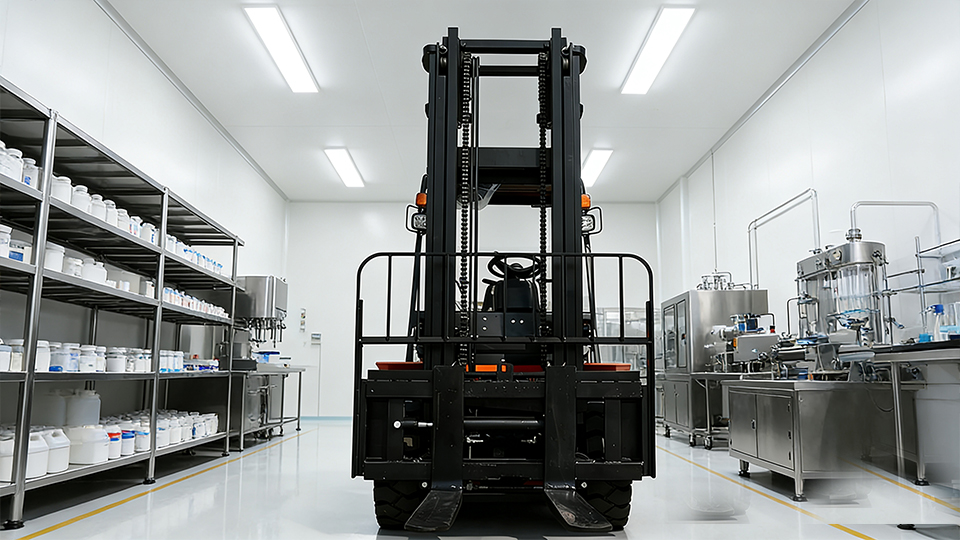
Fuel consumption calculations must distinguish between clock hours (total shift duration) and operating hours (actual engine runtime). A forklift idling during a 15-minute operator break continues to consume fuel—typically 0.5 to 1.5 liters per hour at idle depending on engine displacement—without contributing to productive work. This distinction explains why two facilities with identical 8-hour shifts may report vastly different per-shift fuel consumption based on operational discipline and idle-time management.
Capacity-Based Shift Consumption Benchmarks
Diesel forklift fuel consumption scales with rated load capacity, engine displacement, and hydraulic system demands. The following benchmarks represent typical consumption ranges per 8-hour shift under standard operating conditions, with productive utilization of approximately 6 hours per shift.
Compact Diesel Forklifts (1.5–2.5 Ton Capacity)
Small diesel forklifts equipped with 30–50 horsepower engines represent the entry point for internal combustion material handling equipment. These units typically consume 2.5 to 3.8 liters per hour during active operation.
For a standard 8-hour shift with 6 productive hours:
Minimum consumption: 6 hours × 2.5 L/h = 15 liters per shift
Maximum consumption: 6 hours × 3.8 L/h = 22.8 liters per shift
Typical average: 6 hours × 3.2 L/h ≈ 19 liters per shift
Compact forklifts are frequently deployed in retail distribution, light manufacturing, and confined-space operations where fuel efficiency takes precedence over maximum lifting power. Their smaller fuel tanks—typically 40 to 60 liters—require refueling every 2 to 3 shifts under standard usage patterns.
Standard Diesel Forklifts (3.0–3.5 Ton Capacity)
The 3-ton and 3.5-ton categories constitute the most commercially significant segment of the diesel forklift market, serving as the workhorse for general warehousing, freight terminals, and manufacturing facilities. Fuel consumption data for this segment shows variance across manufacturers and engine technologies.
Industry benchmarks indicate consumption rates of 2.5 to 5 liters per hour for 3-ton models, with modern turbocharged engines featuring electronic fuel injection and Tier 4 Final emission compliance achieving the lower end of this spectrum. For 3.5-ton capacity models, consumption generally falls between 3 and 5 liters per hour under medium-load conditions.
Calculating per-shift consumption for a 3.5-ton diesel forklift with 6 productive hours:
Conservative estimate: 6 hours × 3.0 L/h = 18 liters per shift
Moderate estimate: 6 hours × 4.0 L/h = 24 liters per shift
High-intensity estimate: 6 hours × 5.0 L/h = 30 liters per shift
Standard forklifts in this class typically feature fuel tanks ranging from 60 to 80 liters, providing 2 to 3 shifts of autonomy under moderate consumption. Facilities running 24/7 operations must coordinate refueling schedules to prevent downtime during high-demand periods.
Heavy-Duty Diesel Forklifts (5.0–7.0 Ton Capacity)
As lifting capacity increases to 5 tons and above, fuel consumption rises proportionally due to larger engine displacement and increased hydraulic power requirements. A 5-ton diesel forklift consumes between 4.5 and 6.0 liters per hour under standard working conditions, with consumption escalating to 7–8 L/h during sustained maximum-capacity operations or rough-terrain movement.
Per-shift consumption calculations for a 5-ton model:
Standard operations: 6 hours × 5.5 L/h = 33 liters per shift
Intensive operations: 6 hours × 7.5 L/h = 45 liters per shift
Heavy-duty 5-ton models engaged in continuous loading, lumber handling, or steel fabrication may see consumption approach 10–15 liters per hour during peak intensity, translating to 60–90 liters per shift under extreme conditions. These applications require fuel tanks of 100 liters or more or mid-shift refueling protocols.
Industrial Diesel Forklifts (10+ Ton Capacity)
High-capacity diesel forklifts rated for 10 tons and above feature large-displacement turbocharged engines producing 100+ horsepower. These machines are deployed in lumber yards, steel mills, shipping ports, and heavy construction sites where electric alternatives lack sufficient power density.
Fuel consumption for this category typically exceeds 10–15 liters per hour, with some models approaching 20 L/h under sustained heavy-load operations.
Per-shift consumption for a 10-ton diesel forklift:
Moderate operations: 6 hours × 12 L/h = 72 liters per shift
Intensive operations: 6 hours × 18 L/h = 108 liters per shift
The substantial fuel volumes consumed by heavy-duty units—potentially exceeding 100 liters per shift—necessitate dedicated fuel storage infrastructure, scheduled refueling contracts, and careful TCO analysis to justify operational economics against alternative material handling strategies.
The Impact of Idle Time on Per-Shift Consumption
Idle time represents one of the most significant yet frequently underestimated contributors to per-shift fuel consumption. A diesel forklift left running during operator breaks, loading delays, or coordination pauses continues to burn fuel without productive output.
Idle Consumption Rates
Diesel forklift engines at idle typically consume 0.5 to 1.5 liters per hour, depending on engine displacement and idle speed settings. A 3.5-ton forklift with a 3.0 L/h active consumption rate may still burn 1.0 L/h at idle. In a poorly managed operation where a forklift idles for 2 hours within an 8-hour shift, idle consumption adds 2 liters to the shift total—a 10–15% increase over productive-only consumption.
Auto-Idle Shutdown Technologies
Modern diesel forklifts increasingly incorporate auto-idle shutdown systems that automatically stop the engine after predetermined idle intervals—typically 3 to 5 minutes. These systems can reduce per-shift fuel consumption by 8–15% in operations with frequent idle periods, translating to savings of 2 to 4 liters per shift for a standard 3.5-ton forklift. Over 250 operating shifts annually, this reduction yields 500 to 1,000 liters of fuel savings per unit.
Operational Discipline
Beyond technological solutions, operator behavior profoundly impacts idle-time consumption. Trained operators who consistently shut down engines during breaks exceeding three minutes, coordinate with ground personnel to minimize waiting periods, and avoid unnecessary warm-up idling can achieve per-shift consumption reductions of 10–20% compared to untrained counterparts.
Duty Cycle Intensity: The VDI 60 Standard
The VDI 60 duty cycle—a rigorous German engineering standard measuring fuel consumption over 60 intensive lifting and transport cycles within a single hour—provides a standardized baseline for comparing forklift efficiency across manufacturers. However, real-world operations rarely achieve VDI 60 intensity consistently throughout a shift.
Light-Duty Cycles
Operations characterized by intermittent lifting, short transport distances, and significant idle periods—such as retail stock replenishment or light assembly support—typically achieve only 40–60% of VDI 60 intensity. A forklift rated at 4.0 L/h under VDI 60 conditions may consume only 2.0 to 2.5 L/h in actual light-duty operation, reducing per-shift consumption proportionally.
Medium-Duty Cycles
Standard warehousing operations with moderate throughput, mixed loading/unloading tasks, and average travel distances typically operate at 60–80% of VDI 60 intensity. This represents the baseline assumption for most per-shift consumption estimates.
Heavy-Duty Cycles
High-throughput distribution centers, port container handling, and continuous manufacturing feed operations may sustain 80–100% of VDI 60 intensity throughout the shift. In these environments, per-shift consumption approaches or exceeds manufacturer-rated maximums, requiring larger fuel reserves and more frequent refueling.
Environmental and Terrain Factors
Operating environment significantly modulates per-shift fuel consumption beyond capacity-based benchmarks.
Indoor vs. Outdoor Operations
Indoor operations on smooth, level concrete surfaces minimize rolling resistance and allow consistent travel speeds with optimal fuel efficiency. Outdoor operations—particularly on gravel, unpaved surfaces, or uneven terrain—increase consumption by 30–50% as engines work harder to maintain traction and momentum. A 3.5-ton forklift consuming 24 liters per shift indoors may require 32 to 36 liters for equivalent work output in rough outdoor conditions.
Temperature Extremes
Ambient temperature affects diesel combustion efficiency and engine thermal management. Cold-start conditions in sub-freezing environments increase fuel consumption by 15–25% during the initial operating period as engines require richer fuel mixtures and extended warm-up phases. Extreme heat elevates cooling system demands and may reduce air density, marginally decreasing combustion efficiency.
Grade and Elevation
Facilities with ramps, loading dock grades, or multi-level operations impose additional gravitational loads. Sustained incline operation can increase consumption by 20–40% compared to level transport, while high-altitude operations (above 1,500 meters) reduce air density and engine power output, potentially requiring higher throttle inputs to maintain performance.
Maintenance Condition and Mechanical Efficiency
The mechanical condition of a diesel forklift directly influences per-shift fuel consumption. Well-maintained equipment achieves optimal efficiency, while degraded systems impose fuel penalties.
Air Filtration
Clogged air filters restrict intake airflow, disrupting the optimal air-fuel mixture and increasing consumption by 10–15%. In dusty environments such as woodworking facilities, cement plants, or agricultural operations, air filters require more frequent replacement to maintain efficiency.
Fuel System Integrity
Contaminated fuel filters, worn injectors, or improper injection timing degrade combustion efficiency. A single malfunctioning injector can increase per-shift consumption by 5–8% while simultaneously elevating emissions and reducing power output.
Tire and Driveline Condition
Underinflated pneumatic tires increase rolling resistance, requiring additional propulsion power. Worn drive axles or improperly lubricated differentials introduce mechanical inefficiencies that manifest as elevated fuel consumption over a shift.
Hydraulic System Health
Degraded hydraulic pumps, contaminated hydraulic fluid, or leaking cylinders force the engine to work harder to achieve equivalent lifting performance. Regular hydraulic system maintenance—including fluid analysis, filter replacement, and seal inspection—preserves optimal efficiency.
Comparative Economics: Diesel vs. Electric Per Shift
Understanding diesel consumption per shift requires contextual comparison with electric alternatives, particularly as electrification accelerates in material handling.
Energy Cost Per Shift
A 3.5-ton lithium battery electric forklift consuming approximately 4.5 kWh per productive hour at an industrial electricity rate of $0.14/kWh incurs an energy cost of $0.63 per hour or approximately $3.78 per 6-hour shift.
By contrast, a comparable 3.5-ton diesel forklift consuming 4.0 L/h at a diesel price of $0.98/L faces a fuel cost of $3.92 per hour or $23.52 per 6-hour shift—more than six times the electric equivalent. Over 250 operating shifts annually, this disparity translates to energy cost savings exceeding $4,900 per unit for electric models.
Refueling Logistics
Diesel forklifts require 3 to 5 minutes for refueling from a dedicated pump or portable tank, typically performed at shift end or during scheduled breaks. Electric forklifts require 1 to 2 hours for full battery charging or 15–30 minutes for opportunity charging with lithium batteries. While diesel refueling is faster, it introduces fuel storage safety requirements, spill containment protocols, and fuel quality management responsibilities that electric charging infrastructure avoids.
Operational Autonomy
A standard 3.5-ton diesel forklift with a 70-liter fuel tank and 4.0 L/h consumption achieves approximately 17.5 hours of productive operation—nearly three 6-hour shifts—before refueling. This autonomy advantage makes diesel forklifts preferable for remote operations, multi-shift environments without charging infrastructure, or applications requiring continuous availability without interruption.
Fuel Tank Sizing and Shift Planning
Fuel tank capacity must align with shift duration and consumption rates to prevent operational interruptions.
Forklift Capacity Typical Tank Size Consumption Rate Shifts per Tank
1.5–2.5 tons 40–60 liters 2.5–3.8 L/h 2–3 shifts
3.0–3.5 tons 60–80 liters 3.0–5.0 L/h 2–3 shifts
5.0–7.0 tons 80–120 liters 4.5–8.0 L/h 1–2 shifts
10+ tons 150–250 liters 10–20 L/h 1–2 shifts
Fleet managers must balance tank capacity against counterweight distribution, chassis space constraints, and refueling accessibility. Larger tanks extend operational autonomy but add weight and may affect lifting dynamics or maneuverability in confined spaces.
Strategies for Per-Shift Consumption Optimization
Implementing systematic efficiency measures yields measurable reductions in per-shift diesel consumption.
Operator Training and Behavior Modification
Comprehensive training programs emphasizing smooth acceleration, anticipatory braking, optimal travel path selection, and strict idle-time minimization deliver fuel savings of 15–25% per shift. Operators should be instructed to shut down engines during breaks exceeding three minutes and avoid unnecessary warm-up idling in moderate temperatures.
Preventative Maintenance Schedules
Adherence to manufacturer-specified maintenance intervals preserves mechanical efficiency. Critical maintenance items include:
Air and fuel filter replacement every 250–500 operating hours
Engine oil and filter changes every 250 hours
Tire pressure monitoring and adjustment
Hydraulic fluid analysis and filter replacement
Injector calibration and valve adjustment per engine hour schedules
Telematics and Consumption Monitoring
Modern forklift telematics systems enable real-time tracking of fuel usage per shift, idle time percentages, and operator behavior patterns. Data-driven insights allow fleet managers to identify anomalous consumption, benchmark efficiency across shifts, and target interventions where consumption exceeds established baselines.
Site Layout and Task Optimization
Strategic positioning of receiving docks, storage racks, shipping areas, and staging zones minimizes unnecessary travel distances. Reduced travel distances directly translate to lower per-shift fuel consumption and improved cycle times. Consolidating tasks to minimize forklift movements—such as batch picking rather than single-order fulfillment—reduces total engine runtime per unit of material handled.
Conclusion
The question "How many liters of diesel does a forklift use per shift?" does not yield a single universal answer but rather a range dependent on equipment capacity, operational intensity, environmental conditions, maintenance discipline, and human factors. For practical planning purposes, fleet managers can reference these consolidated benchmarks for an 8-hour shift with 6 productive hours:
1.5–2.5 ton compact forklifts: 15–23 liters per shift
3.0–3.5 ton standard forklifts: 18–30 liters per shift
5.0–7.0 ton heavy-duty forklifts: 33–45 liters per shift (up to 90 liters under extreme conditions)
10+ ton industrial forklifts: 72–108 liters per shift
These figures assume standard operating conditions on level surfaces with moderate load factors. Actual consumption may vary by ±20–40% based on the variables examined in this analysis.
For procurement professionals and operations managers, accurate per-shift consumption estimation requires moving beyond generic benchmarks to analyze specific operational profiles. By implementing rigorous maintenance protocols, operator training programs, auto-idle shutdown technologies, and telematics-based monitoring, organizations can optimize diesel forklift efficiency, reduce per-shift fuel costs, and extend equipment service life. As emission regulations tighten and electrification alternatives mature, understanding the precise shift-based fuel dynamics of diesel forklifts remains essential for informed equipment selection, fuel procurement planning, and strategic fleet management in the evolving material handling landscape.
Name: selena
Mobile:+86-13176910558
Tel:+86-0535-2090977
Whatsapp:8613181602336
Email:vip@mingyuforklift.com
Add:Xiaqiu Town, Laizhou, Yantai City, Shandong Province, China
