
vip@mingyuforklift.com
+86-0535-2090977

Introduction
In an era of escalating real estate costs, urban land scarcity, and relentless pressure to maximize operational efficiency, the ability to utilize vertical space has become a defining competitive advantage in warehousing and distribution. The modern warehouse is no longer a sprawling single-story structure consuming vast tracts of land; it is increasingly a towering, multi-level facility where goods are stored, retrieved, and moved at heights that would have been unimaginable a century ago. At the center of this vertical revolution stands the forklift—a machine that has evolved from a simple ground-level lifting device into a sophisticated aerial platform capable of accessing storage elevations exceeding 50 feet.
The economics of vertical storage are compelling. Land costs in major logistics hubs have increased dramatically, construction expenses for expansive footprints continue to rise, and environmental constraints limit greenfield development. By expanding upward rather than outward, businesses can multiply storage capacity within existing or minimally expanded footprints, fundamentally transforming warehouse economics. Forklifts are the enablers of this transformation, providing the mechanical capability, precision control, and operational flexibility necessary to make vertical storage not merely possible but practical, safe, and economically advantageous.
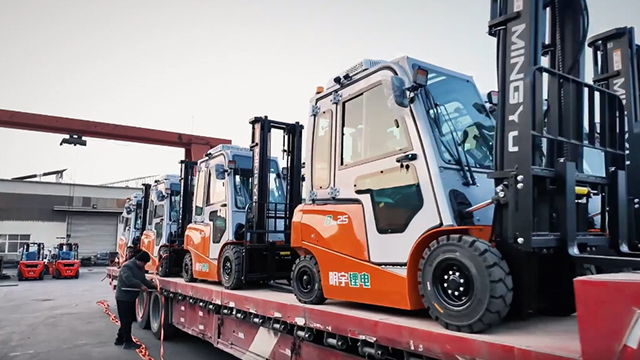
This comprehensive analysis examines how forklift technology enables vertical storage strategies, the specific equipment configurations that optimize space utilization, the operational methodologies that maximize efficiency at elevation, and the economic and strategic benefits that vertical storage delivers to modern supply chain operations.
The Physics of Vertical Reach
The fundamental capability that enables vertical storage is the forklift mast—the vertical assembly of rails, chains, and hydraulic cylinders that elevates loads from ground level to designated storage heights. Understanding mast design and capability is essential to appreciating how forklifts enable space optimization.
Standard two-stage masts consist of an outer fixed rail and an inner movable rail, providing lift heights typically ranging from 15 to 20 feet. These masts suit operations with moderate rack heights and represent the most common configuration in general warehousing. The simplicity of two-stage design contributes to reliability and lower maintenance requirements, making these masts economical for applications where extreme height is unnecessary.
Three-stage masts add a third nested rail, extending reach to 25-30 feet while maintaining a collapsed height low enough for standard door clearance and trailer access. This configuration balances extended reach with practical maneuverability, making it the preferred choice for most high-bay warehouse operations. The additional complexity of three-stage masts requires more sophisticated hydraulic systems and precise rail alignment, but the space optimization benefits justify these engineering demands.
Four-stage and full free-lift masts achieve heights of 35-50 feet or more, enabling truly vertical storage strategies. Full free-lift designs allow the carriage to rise within the collapsed mast height before the mast sections begin to extend, providing critical clearance for loading and unloading in confined spaces. These advanced masts require robust construction, precise manufacturing tolerances, and sophisticated stability management, but they unlock storage densities that transform facility economics.
The hydraulic systems powering mast extension have evolved considerably. Early forklifts used simple single-acting cylinders, while modern machines employ multi-stage telescopic cylinders, load-sensing hydraulics, and electronic control systems that provide smooth, precise movement. These advances enable operators to position loads with inch-level accuracy at full elevation—a critical capability when placing pallets in high-density rack configurations where clearance may be minimal.
Stability at elevation presents significant engineering challenges. As loads rise, the center of gravity shifts forward, reducing the stability margin and increasing tip-over risk. Forklift designers address this through counterweight optimization, wheelbase extension, and active stability systems. Reach trucks, designed specifically for high-bay operations, employ moving masts that extend forward while the truck chassis remains stationary, maintaining a stable base while positioning loads at elevation. This design enables higher reach with smaller footprints than counterbalance configurations, though it requires level floors and aisle guidance systems for safe operation.
Reach Trucks: Masters of Vertical Space
Reach trucks represent the most specialized forklift category for vertical storage optimization. These machines are engineered specifically for narrow aisle, high-reach applications where space efficiency is paramount.
The defining characteristic of reach trucks is the moving mast mechanism. Unlike counterbalance forklifts where the entire vehicle must position close to the rack, reach trucks extend their mast—and the attached load—forward from a stationary chassis. The operator sits sideways, providing excellent visibility of the load and rack location while maintaining a compact vehicle profile. After load placement or retrieval, the mast retracts, and the truck maneuvers in aisles as narrow as 7-8 feet.
This design enables remarkable space savings. Standard counterbalance forklifts require approximately 12-foot aisles for pallet handling. Reach trucks reduce this to 7-8 feet, increasing rack density by 30-40% within the same footprint. In facilities where land and construction costs dominate economics, this density improvement can justify the higher equipment cost and operational requirements of reach truck systems.
Double-deep reach trucks extend the density advantage by accessing pallets stored two positions deep in rack bays. Telescopic pantograph mechanisms reach beyond the first pallet position to retrieve or place second-position loads. This configuration increases storage density by approximately 40% compared to single-deep storage, though it requires careful inventory management since rear-position pallets are accessible only when front positions are empty. Warehouse management systems must track double-deep locations precisely, and slotting algorithms must position fast-moving items in front positions to minimize double-handling.
High-reach configurations of reach trucks achieve elevations of 40-45 feet, enabling rack systems that maximize vertical space utilization. At these heights, floor flatness tolerances become critical—variations exceeding 1/8 inch over 10 feet can cause mast sway and alignment problems that compromise safety and accuracy. Facilities designed for high-reach operations require superflat floors constructed to precise specifications, representing a significant but necessary infrastructure investment.
Very Narrow Aisle Systems: Maximizing Density
For operations seeking maximum space utilization, very narrow aisle (VNA) forklift systems represent the ultimate in density optimization. These systems operate in aisles as narrow as 5-6 feet, achieving storage densities that approach theoretical maximums for given building heights.
VNA forklifts, also known as turret trucks or swing-reach trucks, feature rotating masts or carriages that turn 90 degrees to access rack positions while the truck travels straight down the aisle. This design eliminates the need for the truck to turn within the aisle, enabling aisle widths only slightly greater than the pallet depth. Some configurations use rail or wire guidance systems that eliminate steering responsibility from the operator within the aisle, allowing focus on vertical positioning.
The density improvements from VNA systems are substantial. Compared to standard counterbalance operations with 12-foot aisles, VNA configurations can increase pallet positions by 50-60% within the same footprint. For facilities in expensive real estate markets, this density multiplier can reduce facility requirements by half, generating capital cost savings that far exceed the higher equipment and infrastructure investments VNA systems require.
Infrastructure requirements for VNA operations are stringent. Floor flatness specifications are more demanding than reach truck applications, often requiring laser-screed construction techniques and ongoing floor maintenance. Guidance systems—mechanical rails, inductive wire embedded in the floor, or optical guidance using ceiling or rack-mounted reflectors—require precise installation and calibration. Rack systems must be engineered for VNA access, with consistent bay widths and load beam elevations that accommodate the specific equipment configuration.
Operational discipline is equally critical. VNA systems function most efficiently with dedicated aisle assignments, preventing congestion and enabling continuous operation. Inventory slotting must optimize the match between item velocity and aisle accessibility, placing fast-moving items in easily accessible positions. Warehouse management system integration is essential, directing operators to specific locations and confirming accurate placement.
Order Pickers and Person-Up Applications
Vertical storage optimization extends beyond full-pallet handling to case-picking and piece-picking operations where individual items are retrieved from elevated locations. Order picker forklifts address this requirement by elevating the operator along with the load, enabling direct access to items at height.
Standard order pickers elevate operators to 20-30 feet, providing access to multiple rack levels from a single machine position. The operator platform rises with the forks, allowing manual item selection and placement into totes or containers on the platform. This design eliminates the need for ladders, scaffolding, or separate elevated work platforms, integrating vertical access with material transport in a single operation.
High-level order pickers extend this capability to 35 feet or more, accessing the upper levels of high-bay rack systems. These machines require enhanced stability systems and operator restraint devices, but they enable vertical storage strategies for piece-pick operations that would otherwise require ground-level storage or complex automated systems.
Turret stock pickers combine the density advantages of VNA systems with piece-pick capability. These specialized machines navigate narrow aisles and elevate operators to access individual items from both sides of the aisle without repositioning. The combination of horizontal density and vertical reach makes these machines exceptionally productive in high-volume, multi-level picking environments.
The ergonomic benefits of order pickers complement their space optimization advantages. Eliminating ladder climbing reduces fall risks and physical strain, improving safety and reducing workers' compensation costs. Platform designs with anti-fatigue flooring, adjustable heights, and integrated lighting enhance operator comfort and productivity during extended picking shifts.
Automated Storage and Retrieval Integration
The evolution of automated storage and retrieval systems (AS/RS) represents the convergence of forklift technology with full automation, achieving vertical storage densities and operational velocities that exceed human-operated capabilities. While traditional AS/RS uses fixed crane mechanisms, newer automated guided vehicle (AGV) and autonomous mobile robot (AMR) systems incorporate forklift functionality with autonomous navigation.
Unit-load AS/RS cranes operate in narrow aisles between rack structures, storing and retrieving pallet loads at heights exceeding 100 feet. These systems achieve storage densities far beyond forklift-accessible heights, but they require substantial capital investment and lack the flexibility to handle diverse load types or adapt to changing operational requirements. They function optimally in high-volume, predictable environments with limited SKU variety.
Autonomous forklift systems bridge the gap between traditional forklifts and fixed AS/RS. These driverless machines navigate warehouse environments using LiDAR, computer vision, and mapping algorithms, accessing standard rack systems without requiring dedicated crane infrastructure. They operate continuously without fatigue, maintain consistent performance, and integrate seamlessly with warehouse management systems. While current autonomous systems typically handle full pallet movements rather than piece-picking, their capabilities are expanding rapidly.
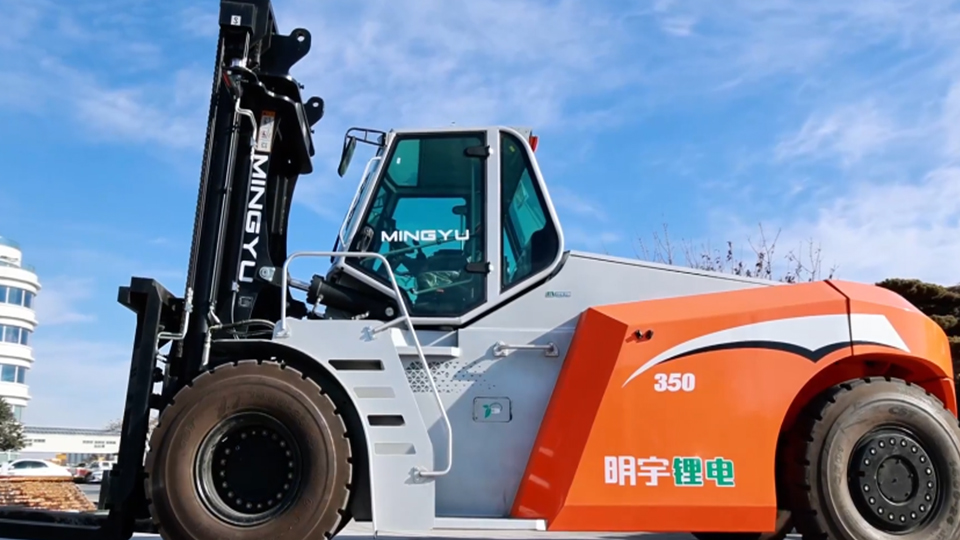
The integration of autonomous forklifts with vertical storage systems enables dynamic optimization that human operators cannot achieve. These systems can re-slot inventory automatically based on demand patterns, consolidate partial pallets to free storage locations, and optimize retrieval sequences to minimize travel time. The combination of vertical reach and intelligent decision-making creates storage systems that continuously adapt to operational requirements.
Rack System Design and Forklift Compatibility
Effective vertical storage requires careful coordination between forklift capabilities and rack system design. The interaction between equipment and infrastructure determines achievable density, operational efficiency, and safety.
Selective pallet rack—the most common configuration—provides individual access to every pallet position but requires aisle widths that accommodate forklift turning radii. This configuration offers maximum selectivity but sacrifices density compared to higher-density alternatives. It functions optimally with counterbalance forklifts in operations where inventory accessibility is more important than space utilization.
Drive-in and drive-through rack systems eliminate aisles between rack positions, allowing forklifts to drive directly into the rack structure to place or retrieve pallets. These systems increase density by 75% compared to selective rack but reduce selectivity—pallets stored in rear positions are accessible only after removing front positions. They suit applications with large quantities of identical products and last-in-first-out (LIFO) inventory rotation.
Push-back rack systems use inclined rails and nested carts that allow pallet placement from the aisle side while gravity moves subsequent pallets forward as front positions are emptied. Forklifts place pallets on the inclined surface without entering the rack structure, improving safety and reducing rack damage compared to drive-in systems. These systems achieve density improvements similar to drive-in rack while maintaining better selectivity and easier forklift operation.
Pallet flow rack systems use gravity rollers to move pallets from loading positions at the rear to retrieval positions at the front. Forklifts load at the back and retrieve from the front, enabling first-in-first-out (FIFO) rotation with high density. These systems are particularly valuable for perishable goods and time-sensitive inventory where rotation control is essential.
Cantilever rack systems accommodate long, irregular loads such as lumber, pipe, and furniture. Specialized forklifts with extended reach and appropriate attachments access these loads, enabling vertical storage of materials that would be difficult to stack or rack conventionally. The vertical capability of forklifts transforms storage economics for these product categories.
Floor Infrastructure and Building Design
Vertical storage strategies impose demanding requirements on facility infrastructure that must be addressed in building design and maintenance. Forklift operations at elevation are sensitive to floor conditions, building tolerances, and environmental factors that ground-level operations can tolerate.
Floor flatness is perhaps the most critical infrastructure requirement. Reach trucks and VNA forklifts operating at 30-45 feet amplify any floor irregularity into significant mast sway and load movement. Industry standards define floor flatness categories, with superflat specifications (FF 100 or higher) required for high-reach operations. Achieving these specifications requires specialized construction techniques, including laser-guided screeding, precise curing control, and ongoing maintenance to address wear and settlement.
Floor load capacity must support concentrated loads from forklift wheels, particularly when handling heavy pallets at elevation. Dynamic loads from forklift movement, acceleration, and braking exceed static weight calculations, requiring engineering analysis that considers operational patterns and load spectra. Inadequate floor capacity leads to cracking, settlement, and operational safety hazards.
Ceiling height and building clear span determine maximum achievable storage elevation. Modern distribution centers increasingly specify 40-foot clear heights or greater to accommodate high-bay rack systems and corresponding forklift reach. Building column spacing must accommodate rack bay widths and forklift maneuvering requirements, with wider spacing preferred for operational flexibility but requiring more substantial structural systems.
Environmental control becomes more challenging with increased storage height. Temperature stratification in high-bay facilities can create zones with significantly different conditions, affecting product quality and worker comfort. Air circulation systems, fire suppression designs, and lighting layouts must address vertical as well as horizontal dimensions. Forklift operations must accommodate these environmental systems, avoiding damage to sprinklers, lighting, and sensors mounted at elevation.
Operational Methodologies for Vertical Efficiency
Achieving the theoretical benefits of vertical storage requires operational methodologies that maximize equipment utilization, minimize travel time, and maintain safety at elevation.
Slotting optimization—assigning inventory to storage locations based on demand patterns—is critical for vertical storage efficiency. Fast-moving items should be positioned at ergonomic heights that minimize lifting and reaching, while slow-moving items occupy upper and lower positions. Seasonal and promotional items migrate through the vertical storage profile as demand patterns change. Warehouse management systems with dynamic slotting algorithms continuously optimize these assignments, but forklift operations must execute the physical repositioning.
Task interleaving combines putaway and retrieval tasks in optimized sequences that minimize empty travel and maximize vertical access efficiency. A forklift retrieving a pallet from an upper level can be directed to place a new pallet in a nearby empty position rather than returning empty to the receiving dock. This interleaving requires sophisticated dispatching systems that consider forklift position, task priorities, and rack accessibility.
Batch processing consolidates multiple tasks into single forklift trips, reducing travel frequency and improving productivity. Rather than retrieving individual pallets for separate orders, batch algorithms group orders with common storage zones, enabling single trips that satisfy multiple demand requirements. This approach is particularly effective in high-bay operations where vertical travel time is significant.
Cycle counting at elevation maintains inventory accuracy without disrupting operations. Forklifts with integrated weighing systems or RFID readers verify inventory during normal handling, counting by weight or automatic identification rather than manual piece counting. This integration of counting with routine operations preserves accuracy without the productivity loss of dedicated counting activities.
Safety Systems for Elevated Operations
Vertical storage operations introduce safety hazards that ground-level handling does not present, requiring engineered safeguards and operational protocols.
Overhead guards and operator restraint systems protect against falling objects, a critical hazard in high-bay environments where items may dislodge from upper rack positions. These structures must withstand significant impact forces, and their integrity must be verified through regular inspection.
Load backrests prevent materials from shifting backward onto the operator during elevation changes, particularly important when handling unstable or irregular loads at height. Hydraulic systems incorporate pressure relief valves and velocity fuses that prevent uncontrolled descent if hose failure occurs, protecting against dropped loads.
Proximity sensors and collision avoidance systems detect obstacles and personnel in the vicinity of elevated operations, providing warnings or automatic intervention when hazards are identified. These systems are particularly valuable in high-bay environments where visibility may be limited and consequences of collision are severe.
Operator training for high-reach operations addresses the unique hazards of elevated work, including mast sway awareness, load stability at height, and emergency procedures for equipment malfunction at elevation. Certification programs ensure that operators understand the physics of high-reach operation and can respond appropriately to unusual situations.
Economic Analysis and Return on Investment
The business case for vertical storage enabled by forklifts rests on compelling economic fundamentals that justify the substantial investments in equipment, infrastructure, and operational systems.
Facility cost reduction represents the most visible economic benefit. Vertical storage multiplies capacity within fixed footprints, reducing land requirements and construction costs per pallet position. In expensive real estate markets, this density advantage can halve facility costs, generating savings that far exceed incremental equipment and infrastructure investments.
Labor productivity improvements accompany vertical storage strategies. By concentrating more inventory in accessible locations, vertical storage reduces travel time for picking and putaway operations. High-reach equipment enables efficient access to dense storage without the congestion of sprawling layouts. These productivity gains reduce labor costs per unit handled and improve throughput capacity without proportional labor increase.
Inventory consolidation improves management efficiency by reducing the number of storage locations and simplifying inventory tracking. Fewer, larger facilities with vertical storage replace multiple smaller facilities, enabling centralized management, reduced safety stock requirements, and improved inventory visibility. These management benefits translate into working capital reductions and service level improvements.
Energy efficiency improves with vertical storage concentration. Smaller footprints reduce heating, cooling, and lighting requirements per unit stored. Modern high-bay facilities can incorporate automated lighting systems that illuminate only active areas, and climate control systems that maintain narrower temperature bands in concentrated storage. These energy savings contribute to both cost reduction and sustainability objectives.
Conclusion
Forklifts have evolved from simple ground-level lifting devices into sophisticated enablers of vertical storage strategies that transform warehouse economics. Through advanced mast designs, specialized equipment configurations, and integration with automation and management systems, forklifts unlock storage densities that multiply capacity within fixed footprints. The combination of vertical reach, operational flexibility, and economic efficiency makes forklift-enabled vertical storage an essential strategy for modern supply chain operations.
The future evolution of forklift technology promises further advances in vertical storage capability. Autonomous systems will operate at greater heights with enhanced precision, artificial intelligence will optimize storage configurations dynamically, and new power systems will enable cleaner, more efficient operation. These advances will extend the vertical storage frontier, enabling even greater space optimization and operational efficiency.
For businesses facing land scarcity, real estate cost pressures, and demand for increased inventory capacity, vertical storage enabled by forklifts offers a proven pathway to competitive advantage. The investment in equipment, infrastructure, and operational systems required for high-bay storage is substantial, but the returns—in facility cost reduction, labor productivity, inventory management efficiency, and strategic flexibility—justify these investments and position organizations for success in increasingly demanding supply chain environments.
Name: selena
Mobile:+86-13176910558
Tel:+86-0535-2090977
Whatsapp:8613181602336
Email:vip@mingyuforklift.com
Add:Xiaqiu Town, Laizhou, Yantai City, Shandong Province, China
