
vip@mingyuforklift.com
+86-0535-2090977

Introduction
The modern supply chain operates as a complex, interconnected system where the velocity and accuracy of material movement directly determine competitive advantage. At the heart of this system, forklift trucks serve as the critical execution layer that transforms strategic inventory plans into physical reality. While enterprise resource planning (ERP) systems, warehouse management software, and demand forecasting algorithms command significant attention in supply chain discourse, it is the forklift fleet that ultimately moves goods from receiving docks to storage locations, from storage to picking zones, and from consolidation areas to outbound transportation.
Understanding the role of forklifts in supply chain and inventory management requires moving beyond the simplistic view of these machines as mere lifting equipment. Contemporary forklifts function as intelligent nodes in digital supply networks, data collection points that feed inventory accuracy, and flexible assets that enable responsive operations. This comprehensive analysis examines how forklifts integrate with supply chain strategy, enable inventory management objectives, and evolve to meet the demands of increasingly complex global logistics networks.
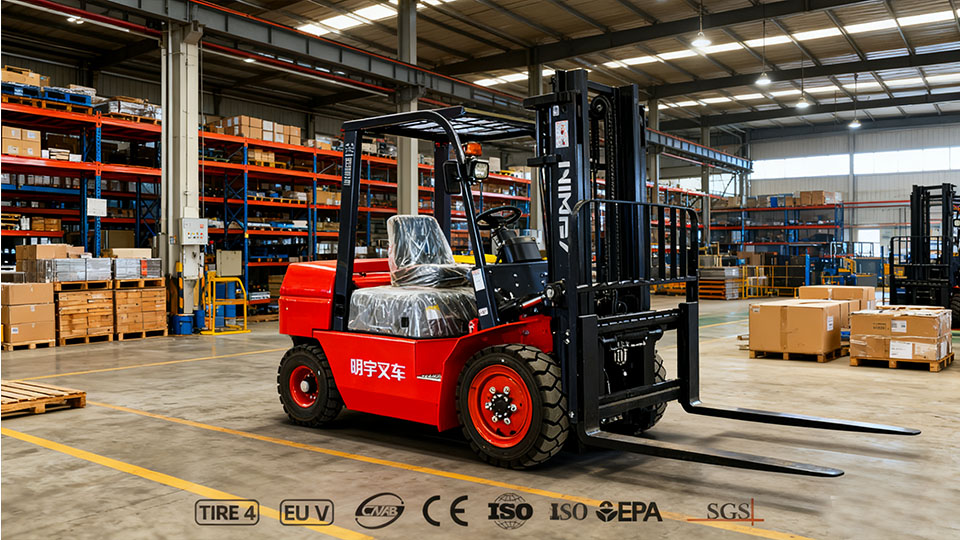
The Forklift as Supply Chain Execution Infrastructure
Supply chain management encompasses planning, sourcing, manufacturing, and logistics functions, but execution failures at any point negate strategic brilliance elsewhere. Forklifts represent the primary execution mechanism for material movement within facilities, translating digital inventory records into physical stock positioning. Without reliable forklift operations, even the most sophisticated inventory optimization algorithms cannot deliver results.
The receiving function illustrates this execution dependency. When inbound shipments arrive, forklifts perform the critical task of unloading, verifying, and transporting goods to initial staging or putaway locations. The speed of this process determines dock door turnaround times, which directly impacts carrier scheduling and transportation costs. Slow receiving creates truck detention charges, delays subsequent deliveries, and propagates disruptions through the supply chain. Efficient forklift receiving operations, conversely, enable precise appointment scheduling, reduce transportation costs, and establish the foundation for accurate inventory records.
Putaway operations—moving received goods to designated storage locations—similarly depend on forklift execution. Warehouse management systems generate putaway directives based on slotting optimization algorithms that consider product velocity, storage compatibility, and space utilization. Forklifts execute these directives, and the accuracy of their placement determines subsequent picking efficiency and inventory location accuracy. Misplaced inventory, often resulting from forklift putaway errors, creates invisible stock that appears in system records but cannot be physically located when needed.
Order fulfillment represents perhaps the most visible forklift execution role. In full-pallet picking operations, forklifts retrieve entire pallet loads for shipment. In case-picking or piece-picking environments, forklifts may bring pallets to pick zones or transport picked orders to consolidation and shipping areas. The speed and accuracy of these movements determine order cycle times, which increasingly define customer satisfaction in e-commerce and business-to-business contexts.
Replenishment operations—restocking forward pick locations from reserve storage—require precise forklift scheduling to prevent stockouts that halt picking operations. Effective replenishment balances the frequency of forklift trips against the carrying capacity of forward locations, requiring coordination between inventory planners and forklift dispatchers. This coordination exemplifies the integration of forklift operations with broader inventory management strategy.
Inventory Accuracy and Real-Time Visibility
Inventory accuracy—the alignment between system records and physical stock—represents a fundamental supply chain performance metric. Inaccurate inventory creates stockouts that disappoint customers, excess stock that ties up capital, and misdirected shipments that damage relationships. Forklifts play a central role in maintaining inventory accuracy through their interaction with inventory management systems.
Modern forklifts equipped with onboard computers, barcode scanners, and radio frequency identification (RFID) readers function as mobile data collection platforms. When operators scan pallet labels during putaway, picking, or transfer operations, they confirm inventory movements in real time. This immediate confirmation eliminates the lag between physical movement and system update that plagued paper-based processes, during which inventory records were temporarily inaccurate and vulnerable to conflicting demands.
Cycle counting—periodic inventory verification rather than annual physical counts—depends heavily on forklift support. Forklifts transport counters to storage locations, elevate them to high racks, and reposition counted stock. More importantly, forklifts with integrated weighing systems can verify inventory quantities during normal operations, counting by weight rather than manual piece counting. This integration of counting with routine material handling maintains accuracy without disrupting operations.
The location accuracy dimension of inventory management also relies on forklift execution. Warehouse management systems track not merely whether inventory exists but precisely where it resides. Forklift operators confirm locations through scanning or voice-directed systems, and their placement accuracy determines whether subsequent retrieval operations succeed. Advanced forklift systems with position verification technology—using RFID floor tags, optical guidance, or indoor positioning systems—further enhance location accuracy by automatically confirming placement positions.
Velocity Management and Inventory Turns
Inventory velocity—the speed at which stock moves through the supply chain—is a critical determinant of working capital efficiency and product freshness. Slow-moving inventory ties up capital, incurs carrying costs, risks obsolescence, and reduces return on assets. Forklift operations directly influence inventory velocity through their impact on material flow speed.
Cross-docking operations exemplify velocity maximization. In these processes, inbound goods flow directly to outbound vehicles with minimal or no storage time. Forklifts execute the rapid transfer, often unloading one trailer and loading another in continuous operations. The velocity achievable through cross-docking—measured in hours from inbound to outbound—would be impossible without forklift mechanization. Retailers and distributors use cross-docking for high-velocity consumer goods, fresh products, and promotional items where storage time erodes value.
First-in-first-out (FIFO) inventory rotation, essential for perishable goods and products with shelf-life limitations, requires precise forklift sequencing. Operators must retrieve oldest stock first, which may be buried behind newer arrivals in deep lane storage. Specialized forklift attachments and storage configurations—such as pallet flow racks and push-back racks—facilitate FIFO compliance, but forklift execution remains the critical variable. Voice-directed and scanner-verified picking systems enforce FIFO compliance by directing operators to specific pallet locations in rotation sequence.
Just-in-time (JIT) manufacturing systems depend on forklift velocity to deliver components to production lines at precise intervals. The takt time—the rate of finished product completion—determines component delivery frequency, and forklifts must maintain this rhythm without interruption. Late deliveries halt production lines, while early deliveries create congestion and inventory waste. Forklift scheduling in JIT environments resembles public transit operations, with fixed routes, timed departures, and contingency planning for disruptions.
Space Optimization and Storage Economics
Warehousing costs represent a substantial portion of total supply chain expenditure, and space utilization efficiency directly impacts these costs. Forklifts enable storage strategies that maximize the productive use of expensive facility space, creating economic value that extends beyond their material handling function.
Vertical storage is the most significant space optimization enabled by forklifts. Standard counterbalance forklifts access heights of 15-20 feet, while reach trucks and turret trucks extend this to 30-40 feet or higher. This vertical capability transforms warehouse economics by multiplying storage capacity within fixed footprints. A facility with 30-foot clear height can store approximately three times more pallet positions than floor-stacking alternatives, effectively tripling space productivity. The capital cost of forklifts capable of high-reach operation is substantially less than the cost of tripling facility floor area.
Narrow aisle configurations further enhance space efficiency. Reach trucks operating in 6-foot aisles compared to standard 12-foot aisles can increase rack density by 40-50%. Very narrow aisle (VNA) systems with wire or rail guidance achieve even greater density, though they require specialized equipment and operational discipline. The trade-off between aisle width and storage density is a fundamental warehouse design decision, and forklift capabilities determine the feasible options.
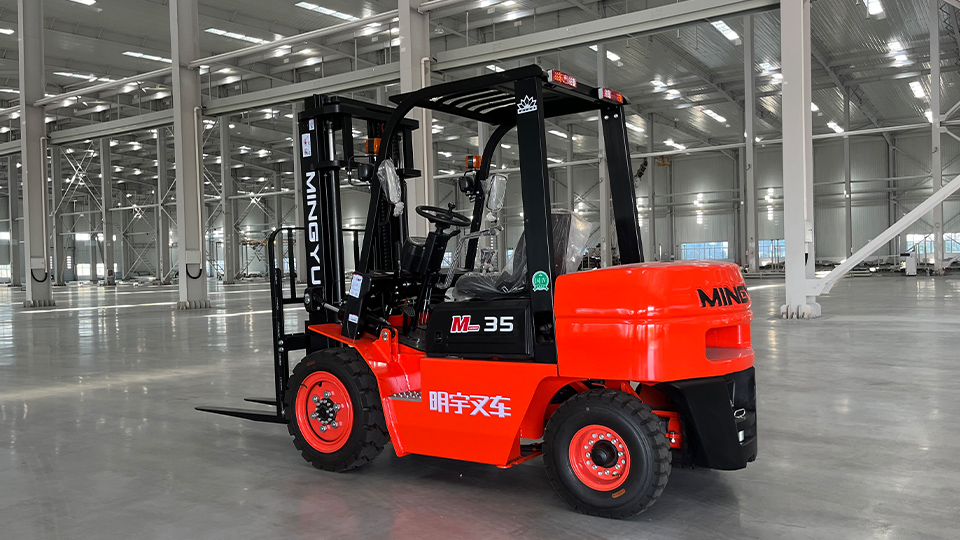
Dynamic slotting—repositioning inventory based on demand patterns—requires forklift flexibility that fixed automation cannot provide. Fast-moving items migrate to easily accessible locations; slow-moving items shift to less accessible areas. Seasonal products rotate through prime positions as demand fluctuates. Forklifts execute these repositioning moves, enabling warehouses to maintain optimal slotting configurations that minimize travel time and maximize throughput. Without forklift mobility, warehouses would be locked into static configurations that degrade efficiency as demand patterns evolve.
Integration with Warehouse Management Systems
The integration of forklifts with warehouse management systems (WMS) represents one of the most significant developments in supply chain technology. This integration transforms forklifts from isolated mechanical devices into intelligent agents that execute system-directed tasks while collecting operational data.
Task interleaving—assigning forklift operators multiple tasks in optimized sequences—exemplifies WMS integration benefits. Rather than completing a putaway task and returning empty to the receiving dock, the system directs the operator to perform a nearby retrieval task en route. This interleaving minimizes empty travel, improves asset utilization, and accelerates overall throughput. The computational complexity of optimizing interleaving across multiple operators and tasks exceeds human planning capability, making system-directed operation essential.
Voice-directed picking and putaway systems provide hands-free, eyes-free instruction to forklift operators. The system speaks commands through headsets, and operators confirm actions verbally. This interface keeps operators focused on their environment rather than paper lists or handheld screens, improving safety and accuracy. Voice systems are particularly valuable in cold storage environments where gloves make handheld devices impractical and in high-velocity operations where every second of operator attention matters.
Labor management systems (LMS) integrate with forklift operations to establish performance standards, track productivity, and identify training needs. These systems compare actual task completion times against engineered standards, highlighting operators who may need coaching and recognizing high performers. The data generated by forklift-mounted computers provides objective performance measurement that supports fair compensation systems and targeted improvement initiatives.
Flexibility and Responsiveness in Dynamic Environments
Supply chains operate in increasingly volatile environments where demand patterns shift unpredictably, supplier deliveries vary, and customer requirements evolve. Forklift fleets provide operational flexibility that enables responsive adaptation to these dynamics, a capability that fixed automation systems cannot match.
Seasonal demand fluctuations require capacity scaling that forklift fleets accommodate more readily than permanent infrastructure. Retailers facing holiday surges can supplement forklift fleets with rental equipment, add temporary operators, and extend operating hours. E-commerce fulfillment centers handling promotional events can reconfigure forklift deployment to prioritize high-velocity SKUs. When demand normalizes, excess capacity can be returned without stranded investment. This elasticity is economically essential in markets where demand variation exceeds 50% between peak and trough periods.
Product mix changes—introduction of new items, discontinuation of old products, or shifts in packaging configurations—require material handling adaptation. Forklifts with appropriate attachments handle diverse load types, from standard pallets to odd-shaped items, drums, coils, and rolls. Attachment changes take minutes, enabling rapid operational reconfiguration. Fixed handling systems designed for specific product dimensions require substantial modification to accommodate product mix changes, creating rigidity that forklift-based operations avoid.
Facility reconfiguration for operational improvement or expansion proceeds more smoothly with forklift-based operations. Racking can be repositioned, new storage areas established, and traffic patterns modified without replacing material handling infrastructure. This adaptability preserves option value and reduces the risk of operational obsolescence that accompanies fixed automation investments.
Risk Mitigation and Business Continuity
Supply chain disruptions—whether from natural disasters, supplier failures, transportation interruptions, or demand shocks—require operational resilience. Forklift fleets contribute to this resilience through redundancy, mobility, and rapid deployment capability.
Fleet redundancy provides backup capacity when individual units require maintenance or experience failure. A well-managed forklift fleet includes sufficient units that the loss of any single machine does not halt operations. Maintenance scheduling can be staggered to preserve operational capacity, and rental equipment can supplement owned fleets during peak periods or unexpected demand. This redundancy contrasts with fixed automation systems where component failures may disable entire operational zones.
Forklift mobility enables rapid operational reconfiguration during disruptions. When a facility section becomes unavailable due to equipment failure, structural damage, or contamination, forklift operations can be rerouted to alternative areas. Mobile equipment can be transferred between facilities to address regional capacity imbalances. During emergency response operations, forklifts clear debris, reposition supplies, and support recovery efforts. This mobility provides operational options that stationary infrastructure cannot offer.
Disaster recovery and business continuity planning incorporates forklift fleet considerations. Organizations maintain emergency equipment lists, identify rental sources, and pre-position spare equipment at critical facilities. Operator cross-training ensures that sufficient qualified personnel are available to maintain operations during disruptions that affect workforce availability. These preparations recognize forklifts as essential infrastructure whose continuity must be assured.
Sustainability and Environmental Impact
Environmental considerations increasingly influence supply chain strategy, and forklift operations contribute to sustainability objectives through multiple pathways. The evolution of forklift power systems reflects this environmental focus, with significant implications for inventory management operations.
Electric forklifts powered by lithium-ion batteries have emerged as the preferred solution for indoor operations and many outdoor applications. These machines eliminate exhaust emissions, improving indoor air quality and eliminating ventilation energy costs. They operate more quietly than internal combustion alternatives, reducing noise pollution that affects worker health and community relations. Energy efficiency improvements in modern electric systems reduce electricity consumption and associated carbon emissions compared to older technologies.
Fuel cell technology offers rapid refueling advantages that support continuous operation in high-throughput environments. Hydrogen fuel cell forklifts refuel in minutes, maintaining equipment availability while achieving zero-emission operation. These systems are particularly attractive in large distribution centers where battery changeout logistics create operational complexity and where sustainability commitments require emission reduction.
The sustainability benefits extend beyond equipment emissions to operational optimization. Efficient forklift routing reduces travel distance and energy consumption. Optimized storage density reduces facility energy requirements per unit stored. Reduced product damage from proper handling minimizes waste and replacement production. These systemic contributions support corporate sustainability objectives while generating operational cost savings.
Total Cost of Ownership and Economic Optimization
Organizations evaluate forklift investments within comprehensive economic frameworks that capture all cost and value dimensions. This total cost of ownership (TCO) approach supports optimization decisions that balance acquisition, operation, maintenance, and productivity considerations.
Acquisition decisions involve equipment type, capacity, features, and supplier selection. Electric versus internal combustion power, standard versus narrow aisle capability, and basic versus technology-enhanced configurations all involve trade-offs between upfront cost and operational value. Lease versus buy decisions affect capital structure, flexibility, and residual risk. Fleet standardization reduces parts inventory and maintenance complexity but may sacrifice optimization for specific applications.
Operating costs include energy, maintenance, tires, attachments, and facility modifications required for specific equipment types. Energy cost comparisons must consider local electricity and fuel prices, charging infrastructure investment, and operational patterns that affect efficiency. Maintenance costs depend on equipment quality, operating intensity, and preventive maintenance program effectiveness. These operating costs often exceed acquisition costs over equipment lifecycles, making operational efficiency a critical selection criterion.
Productivity value reflects the revenue-generating or cost-saving capability that forklift operations enable. Faster throughput supports higher sales volumes; improved accuracy reduces inventory costs and customer service failures; enhanced space utilization defers facility expansion. Quantifying these productivity benefits requires operational modeling that connects forklift capabilities to business outcomes, but the value created typically justifies substantial investment.
Future Evolution: Automation and Intelligence
The future of forklift roles in supply chain and inventory management lies in continued technological evolution. Automation, artificial intelligence, and connectivity will transform these machines from human-operated tools into autonomous or semi-autonomous supply chain agents.
Automated guided vehicles (AGVs) and autonomous mobile robots (AMRs) already operate in controlled environments, following predefined paths or navigating dynamically using sensors and mapping algorithms. These systems eliminate operator costs, operate continuously without fatigue, and maintain consistent performance. Current applications focus on repetitive, high-volume movements where predictability enables reliable automation. As technology advances, autonomous systems will handle increasingly complex scenarios, expanding their role in supply chain execution.
Artificial intelligence will enhance forklift decision-making, optimizing routing, task sequencing, and resource allocation in real time. Machine learning algorithms will predict equipment failures before they occur, enabling predictive maintenance that maximizes availability. Computer vision will improve safety by detecting hazards, verifying load integrity, and ensuring proper handling techniques. These intelligence enhancements will elevate forklift roles from execution to optimization.
Connectivity through 5G networks and industrial internet of things (IIoT) platforms will integrate forklifts more deeply into digital supply networks. Real-time data streams will enable supply chain-wide optimization rather than facility-level efficiency. Digital twins—virtual models of physical operations—will simulate forklift deployment scenarios, supporting planning and decision-making. This connectivity will transform forklifts from operational assets into data sources that drive strategic insight.
Conclusion
Forklifts play multifaceted and evolving roles in supply chain and inventory management that extend far beyond simple material movement. As execution infrastructure, they translate digital plans into physical reality with speed and precision that determines operational success. As data collection platforms, they feed inventory accuracy and visibility systems that enable responsive management. As flexible assets, they provide operational elasticity that supports adaptation to dynamic market conditions. As technology platforms, they integrate with management systems and evolve toward autonomous capability that will redefine supply chain operations.
The strategic importance of forklift operations demands executive attention and investment. Organizations that view forklifts as mere operational equipment miss the opportunity to leverage these assets for competitive advantage. Conversely, organizations that invest in modern forklift capabilities—technology integration, operator development, maintenance excellence, and fleet optimization—gain supply chain performance that differentiates their market position.
As global supply chains grow more complex and customer expectations intensify, the role of forklifts will only increase in importance. The physical movement of goods remains the ultimate execution challenge that digital systems cannot solve without capable material handling equipment. Forklifts, in their evolving forms, will continue to serve as the essential bridge between supply chain strategy and operational reality, enabling the velocity, accuracy, and efficiency that modern commerce demands.
Name: selena
Mobile:+86-13176910558
Tel:+86-0535-2090977
Whatsapp:8613181602336
Email:vip@mingyuforklift.com
Add:Xiaqiu Town, Laizhou, Yantai City, Shandong Province, China