
vip@mingyuforklift.com
+86-0535-2090977

Introduction
Storage and distribution facilities represent the critical nodes where global supply chains converge, consolidate, and redistribute the vast flow of goods that powers modern commerce. These facilities face an unrelenting barrage of operational challenges: escalating labor costs, relentless space constraints, accelerating throughput demands, stringent safety requirements, and the ever-present pressure to deliver perfect accuracy at breakneck speed. Within this demanding environment, forklift trucks emerge not merely as convenient tools but as fundamental problem-solving assets that address the core operational constraints that would otherwise cripple facility performance.
The problems that forklifts solve extend far beyond the obvious challenge of lifting heavy objects. They address systemic issues of productivity, space utilization, inventory accuracy, worker safety, operational flexibility, and economic viability that define competitive success in logistics. Understanding the comprehensive problem-solving role of forklifts requires examining the specific operational pain points they alleviate, the mechanisms through which they deliver solutions, and the evolving capabilities that expand their problem-solving repertoire in increasingly complex distribution environments.
The Labor Intensity Problem: From Manual Burden to Mechanized Efficiency
The most fundamental problem forklifts solve is the physical limitation of human labor in material handling. Manual material movement—carrying, lifting, pushing, and pulling heavy loads—imposes severe constraints on operational capacity while creating significant human costs that extend far beyond wage expenses.
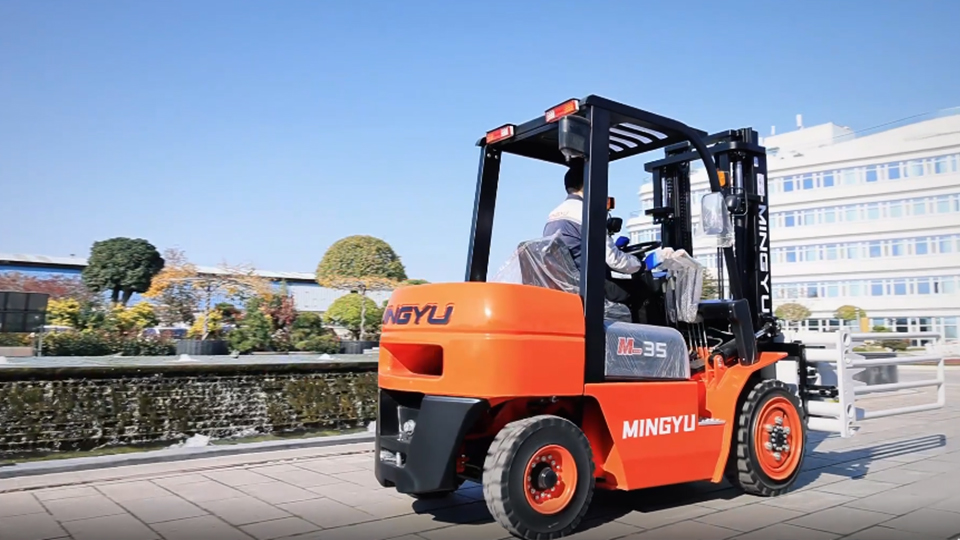
The human body possesses strict biomechanical limits that define maximum safe lifting capacity, sustainable carrying distance, and repetitive motion tolerance. Ergonomic research establishes that the average worker can safely lift approximately 50 pounds from floor to waist height under ideal conditions, with capacity diminishing rapidly as lift height increases, load dimensions expand, or repetition frequency rises. Yet distribution facilities routinely handle palletized loads weighing 2,000 to 5,000 pounds, cases exceeding 50 pounds, and products requiring movement across facilities spanning hundreds of thousands of square feet. The mismatch between manual capability and operational requirements creates an impossible burden that forklifts resolve through mechanical advantage.
The productivity differential is stark. A manual worker moving cases via hand truck might transport 50 cases per hour across moderate distances. A forklift operator handling full pallets can move 20 to 30 pallets per hour, each containing 50 to 100 cases. The productivity multiplier of 20 to 60 times eliminates the throughput bottleneck that manual operations would impose. For facilities processing thousands of pallets daily, this differential determines whether operations are economically viable or physically impossible.
Beyond productivity, forklifts solve the human cost problem of manual material handling. Musculoskeletal disorders—back injuries, shoulder strains, repetitive motion injuries—represent the most prevalent category of workplace injuries in distribution environments. These injuries impose direct costs including medical treatment, workers' compensation premiums, and regulatory compliance expenses. Indirect costs include lost productivity, replacement training, administrative burden, and morale degradation. By mechanizing the lifting and transport of heavy loads, forklifts eliminate the ergonomic hazards that generate these costs, transforming material handling from a health risk into a controlled mechanical process.
The labor availability problem compounds these challenges. Distribution facilities in many markets struggle to recruit and retain sufficient manual labor, particularly for physically demanding positions. Demographic shifts, alternative employment opportunities, and changing worker preferences reduce the available labor pool. Forklifts address this constraint by reducing total labor requirements and shifting remaining positions toward equipment operation rather than physical exertion. The skilled operator role is more attractive to workers than manual material handling, improving recruitment and retention while reducing turnover costs.
The Space Constraint Problem: Maximizing Density in Expensive Real Estate
Commercial real estate for distribution facilities has become increasingly scarce and expensive, particularly in major logistics hubs near population centers, ports, and transportation corridors. Land costs, construction expenses, property taxes, and facility maintenance represent substantial operational expenditures that demand maximum space productivity. Forklifts solve the space constraint problem by enabling storage configurations that multiply usable capacity within fixed footprints.
Without forklifts, distribution facilities are limited to floor-level storage or manual stacking heights of perhaps 6 to 8 feet. This constraint reduces storage density to approximately 4 to 6 pallet positions per 100 square feet of floor area. Forklifts with standard masts accessing 20-foot heights increase this density to 15 to 20 positions per 100 square feet. Reach trucks and high-reach equipment extending to 40 feet or more achieve densities of 30 to 40 positions per 100 square feet—a five to tenfold improvement over manual alternatives.
This density multiplication solves multiple economic problems simultaneously. It defers or eliminates facility expansion requirements, preserving capital for other investments. It reduces land acquisition needs, enabling facility placement in expensive but strategically located markets where larger footprints would be economically prohibitive. It concentrates inventory for management efficiency, reducing travel time and improving inventory visibility. It lowers facility operating costs—heating, cooling, lighting, security—per unit stored by distributing fixed costs across greater inventory volume.
Narrow aisle forklift technologies solve the space constraint at the aisle level as well as the vertical dimension. Standard counterbalance forklifts require approximately 12-foot aisles for pallet handling, consuming substantial floor area in cross-aisle travel. Reach trucks reduce aisle requirements to 7 to 8 feet, while very narrow aisle (VNA) systems operate in 5 to 6-foot aisles. These reductions increase rack density by 30 to 60 percent compared to standard configurations, transforming aisle space from necessary waste into productive storage area.
The space optimization problem extends to operational layout flexibility. Fixed automation systems—conveyors, automated storage and retrieval systems, sortation equipment—consume floor space permanently and constrain future reconfiguration. Forklifts provide mobile capacity that can be redeployed, reconfigured, or supplemented as operational requirements change. This flexibility solves the obsolescence risk problem, preserving option value and enabling adaptation to changing product mixes, demand patterns, and operational strategies.
The Throughput Velocity Problem: Accelerating Material Flow
Modern distribution operates at velocities that manual material handling cannot achieve. E-commerce fulfillment centers process orders within hours of receipt. Just-in-time manufacturing demands component delivery in precise synchronization with production schedules. Retail distribution networks replenish store shelves daily to minimize inventory investment. These velocity requirements create throughput problems that forklifts solve through speed, consistency, and continuous operation capability.
Forklift travel speeds, while modest compared to highway vehicles, are optimized for facility environments. Electric forklifts operate at 8 to 12 miles per hour, while internal combustion models reach 15 to 18 miles per hour in open areas. These speeds, combined with rapid acceleration and precise maneuverability, enable operators to traverse large facilities quickly while maintaining control. Manual alternatives—walking with hand trucks, pushing carts, or carrying items—operate at human walking speeds of 3 to 4 miles per hour, with rapid fatigue that reduces sustained performance.
The acceleration and deceleration capability of forklifts solves the intermittent movement problem that characterizes distribution operations. Forklifts move from standstill to operating speed in seconds, navigate turns efficiently, and stop precisely at target locations. This responsiveness enables rapid task switching and minimizes time lost in movement transitions. Human workers require longer acceleration periods, experience greater fatigue from repeated starting and stopping, and cannot match the precision positioning that forklifts achieve.
Continuous operation capability addresses the availability problem that limits manual operations. Forklifts operate across multiple shifts without performance degradation, exchanging depleted batteries or refueling in minutes to maintain availability. Human workers require rest breaks, experience declining productivity during long shifts, and are unavailable during vacations, illness, or turnover transitions. The consistent, continuous capability of forklift fleets ensures that throughput capacity matches demand patterns across all operating hours.
Batch processing and task interleaving capabilities solve the empty travel problem that reduces efficiency in manual operations. Warehouse management systems direct forklift operators to combine putaway and retrieval tasks in optimized sequences, minimizing unladen travel and maximizing productive movement. Manual operations lack this optimization, with workers typically completing single tasks before returning to assignment points. The systemic efficiency of optimized forklift dispatching solves the coordination problem that fragmented manual operations cannot address.
The Inventory Accuracy Problem: Enabling Precision in Physical Execution
Inventory accuracy—the alignment between system records and physical stock—represents a persistent challenge that undermines operational performance and customer satisfaction. Inaccurate inventory creates stockouts that halt production or disappoint customers, excess stock that ties up capital and risks obsolescence, and misdirected shipments that damage relationships and generate returns. Forklifts solve the inventory accuracy problem through integration with data collection systems that confirm physical movements in real time.
Manual material handling relies on paper records or memory-based tracking that introduces errors at every step. Workers misread labels, record incorrect quantities, transpose digits, and forget to document movements. These errors accumulate, creating inventory discrepancies that compound over time. Forklifts equipped with barcode scanners, RFID readers, and onboard computers eliminate these error sources by automating data capture and transmission.
When a forklift operator scans a pallet barcode during putaway, the system immediately records the inventory location, quantity, and timestamp. This real-time confirmation eliminates the lag between physical movement and system update that enables conflicting transactions. When retrieving inventory for orders, scanning confirms that the correct item, batch, and quantity are selected, preventing mispicks that generate shipping errors. When transferring inventory between locations, scanning maintains location accuracy that supports efficient subsequent retrieval.
Weight verification systems integrated into forklift hydraulics provide additional accuracy confirmation. By comparing actual load weight against expected weight for scanned items, these systems detect quantity errors, mixed loads, and product substitutions that scanning alone might miss. This dual verification—scan confirmation plus weight validation—solves the error detection problem that single-method systems cannot fully address.
Cycle counting integration maintains accuracy without operational disruption. Forklifts with counting capabilities verify inventory during normal handling, identifying discrepancies before they propagate through the system. This continuous verification solves the accuracy maintenance problem that periodic physical counts address too infrequently and too disruptively.
The Safety and Risk Problem: Protecting Workers and Assets
Distribution facilities present inherent safety hazards that forklifts both address and, without proper management, can exacerbate. The comprehensive problem-solving role of forklifts includes engineered safety features that protect workers, products, and facility infrastructure.
Manual material handling creates direct ergonomic hazards that forklifts eliminate. Heavy lifting causes back injuries, hernias, and musculoskeletal damage. Carrying loads obstructs vision, creating slip-trip-fall hazards. Repetitive motion generates cumulative trauma disorders. By mechanizing these tasks, forklifts remove workers from direct exposure to the most common and costly categories of distribution facility injuries.
However, forklift operation itself introduces risks that manufacturers have addressed through sophisticated safety engineering. Stability systems monitor load weight and distribution, warning operators when center of gravity approaches stability limits and preventing tip-overs that represent the most dangerous forklift accidents. Overhead guards and operator restraint structures protect against falling objects and ejections. Load backrests prevent materials from shifting onto operators during transport.
Visibility enhancements solve the blind spot problem created by mast structures and large loads. Panoramic mirrors, camera systems, and proximity sensors alert operators to pedestrians and obstacles in their path. Blue spotlights and red zone lights project warning zones on the floor, alerting nearby workers to forklift presence in noisy environments where audible alarms may be ineffective. These systems address the situational awareness problem that contributes to collision incidents.
Infrastructure protection features solve the facility damage problem that uncontrolled forklift operation can create. Side-shift carriages allow precise lateral positioning without truck movement, reducing rack impact damage. Soft-landing hydraulic systems minimize shock when placing pallets, protecting both products and rack structures. Electronic speed reduction in confined areas prevents corner collisions and end-of-aisle impacts that damage rack systems and create safety hazards.
The Operational Flexibility Problem: Adapting to Dynamic Requirements
Distribution facilities operate in volatile environments where demand patterns shift, product mixes change, and operational requirements evolve. Fixed infrastructure lacks the adaptability to accommodate these dynamics, creating obsolescence risk and constraining strategic options. Forklifts solve the flexibility problem by providing mobile, reconfigurable capacity that adapts to changing requirements.
Seasonal demand fluctuations require capacity scaling that forklift fleets accommodate readily. Rental equipment supplements owned fleets during peak periods; additional operators extend operating hours; equipment redeployment shifts capacity to high-demand areas. When seasonal peaks subside, excess capacity returns without stranded investment. This elasticity solves the capacity matching problem that fixed automation cannot address without permanent overinvestment.
Product mix changes—new product introductions, packaging modifications, SKU proliferation—require handling adaptation that forklifts provide through attachment versatility. Carton clamps handle appliances without pallets; drum handlers manage liquid containers; push-pull systems accommodate slip-sheeted loads; rotators invert products for processing. Attachment changes take minutes, enabling rapid operational reconfiguration. Fixed handling systems designed for specific product dimensions require substantial modification to accommodate mix changes, creating rigidity that constrains strategic flexibility.
Facility reconfiguration for operational improvement proceeds more smoothly with forklift-based operations. Racking can be repositioned, new storage areas established, traffic patterns modified, and workflow redesigned without replacing material handling infrastructure. This adaptability solves the continuous improvement problem by enabling iterative optimization without infrastructure replacement costs.
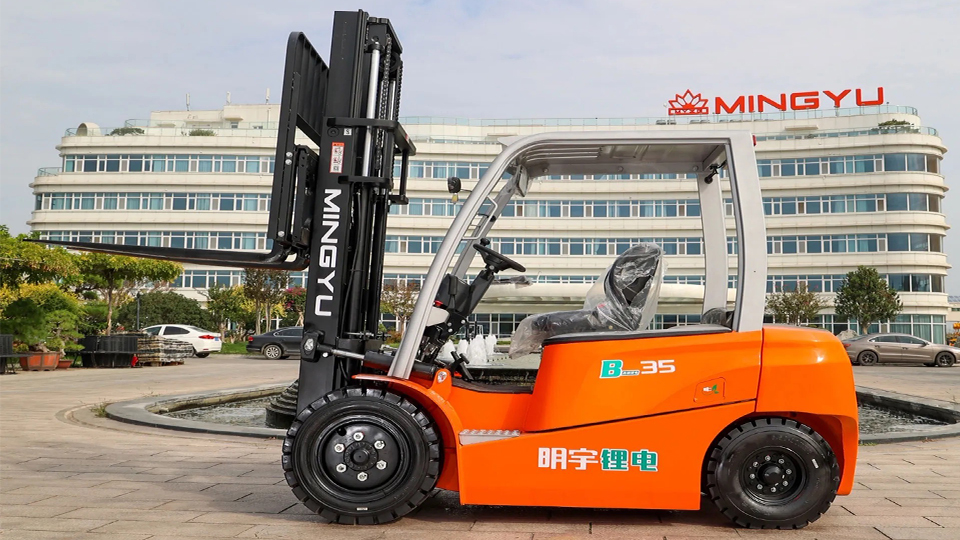
Geographic expansion and network reconfiguration leverage forklift standardization. Facilities using common equipment types share training programs, maintenance procedures, and operational best practices. Equipment can transfer between facilities to address regional imbalances. This standardization solves the network integration problem by creating transferable capability across distributed operations.
The Product Damage Problem: Preserving Quality Through Controlled Handling
Product damage during storage and distribution represents a significant cost category that includes direct product loss, replacement expenses, customer dissatisfaction, and brand reputation impact. Forklifts solve the damage problem through controlled handling that minimizes shock, stress, and mishandling.
Hydraulic lifting systems provide smooth, controlled vertical movement that eliminates the dropping, throwing, and impact associated with manual handling. Multi-stage masts with cushioned descent place loads gently into rack positions, preventing the shock damage that occurs when pallets are dropped or slammed into place. Electronic control systems modulate hydraulic pressure to match load characteristics, providing gentler handling for fragile items.
Specialized attachments address specific product vulnerabilities. Carton clamps with pressure control handle appliances and electronics without pallets, eliminating packaging damage from straps or pallet splinters. Foam-padded clamps protect delicate surfaces from marring. Drum handlers with locking mechanisms prevent container tipping and spillage. Paper roll clamps with automatic pressure adjustment handle varying roll diameters without crushing. These specialized tools solve product-specific handling problems that standard forks cannot address.
Load stability during transport prevents the shifting, tipping, and falling that cause damage. Forklifts maintain level load carriage during travel, accelerate smoothly to prevent load movement, and decelerate gradually to avoid forward shift. Load backrests provide rear support that prevents materials from sliding off forks during turns or stops. These stability features solve the in-transit damage problem that manual carrying and cart transport exacerbate.
Temperature-controlled handling preserves product quality for sensitive items. Rapid movement through refrigerated and frozen environments minimizes temperature exposure that degrades perishable products. Electric forklifts operate without exhaust emissions that would contaminate food products or compromise cleanroom environments. These environmental controls solve the quality preservation problem that extended manual handling in temperature-controlled spaces cannot achieve.
The Economic Viability Problem: Enabling Profitable Operations
Ultimately, forklifts solve the economic viability problem that defines business success. Distribution operations must generate returns that justify capital investment, cover operating costs, and produce competitive profit margins. The comprehensive problem-solving capabilities of forklifts—productivity multiplication, space optimization, accuracy improvement, safety enhancement, flexibility provision, and damage reduction—collectively enable economic performance that manual alternatives cannot achieve.
Labor cost reduction provides immediate economic benefit. Fewer workers accomplish more material handling, reducing wage expense per unit processed. This efficiency enables competitive pricing or improved margins, supporting market positioning and profitability.
Capital efficiency improves through space optimization. Higher storage density defers facility investment, reduces land requirements, and improves return on assets. The capital saved through space efficiency can fund growth initiatives, technology investments, or shareholder returns.
Inventory carrying cost reduction accompanies accuracy improvement. Precise inventory records enable lower safety stock levels, reducing working capital requirements and obsolescence risk. Improved inventory turns accelerate cash flow and reduce financing costs.
Risk cost reduction manifests in lower insurance premiums, reduced regulatory exposure, and diminished liability from workplace injuries and product damage. These risk economics improve financial performance while supporting corporate reputation and stakeholder confidence.
Customer satisfaction enhancement from accurate, damage-free, on-time fulfillment supports revenue growth and customer retention. The operational capabilities enabled by forklifts translate into service levels that differentiate competitive position and justify premium pricing.
Conclusion
Forklifts solve a comprehensive array of problems that would otherwise constrain storage and distribution facility performance. From the fundamental challenge of human physical limitation to the sophisticated requirements of inventory accuracy, safety management, operational flexibility, and economic viability, forklifts provide solutions that enable modern logistics operations to meet demanding performance standards.
The problem-solving role of forklifts continues to evolve with technological advancement. Automation, connectivity, and intelligence expand capabilities while addressing emerging challenges of labor availability, sustainability requirements, and digital integration. Yet even as technology transforms forklift functionality, the core value proposition remains constant: these versatile machines solve the physical execution problems that digital systems and strategic plans cannot address without capable material handling.
For distribution facilities navigating the complexities of modern commerce, forklift investment is not merely an operational decision but a strategic imperative. The problems that forklifts solve—productivity constraints, space limitations, accuracy deficiencies, safety hazards, flexibility gaps, and economic pressures—are the defining challenges of competitive logistics. Organizations that leverage forklift capabilities effectively gain operational advantages that translate directly into market position and financial performance, while those that fail to invest adequately in material handling capacity find themselves constrained by problems that mechanized solutions have long since resolved.
Name: selena
Mobile:+86-13176910558
Tel:+86-0535-2090977
Whatsapp:8613181602336
Email:vip@mingyuforklift.com
Add:Xiaqiu Town, Laizhou, Yantai City, Shandong Province, China