
vip@mingyuforklift.com
+86-0535-2090977

Introduction: Understanding Forklift Weight in Material Handling Operations
In the complex ecosystem of warehouse logistics and industrial material handling, forklift weight represents far more than a simple specification on a data plate. It is a critical engineering parameter that directly impacts floor loading requirements, transportation logistics, operational safety, and equipment selection. For facility managers, structural engineers, and procurement professionals, understanding forklift weight distributions across different vehicle classes is essential for compliant and efficient operations.
The question "what is the average weight of a forklift?" does not yield a single definitive answer. Forklift weights vary dramatically based on lifting capacity, power source, mast configuration, and specialized design features. A small electric pallet jack may weigh less than 300 pounds, while a heavy-duty container handler can exceed 90,000 pounds. This article provides a technical examination of forklift weight ranges across vehicle categories, the engineering principles governing weight distribution, and the operational implications of these specifications.
Defining Forklift Weight Categories
Standard Industrial Forklifts (3,000–6,000 lb Capacity)
The most commonly deployed forklifts in warehouse environments fall within the 3,000 to 6,000-pound lifting capacity range. These counterbalance forklifts represent the industry workhorse, with weights that scale proportionally to their rated capacity.
A standard 5,000-pound capacity internal combustion forklift typically weighs between 8,000 and 10,000 pounds. The weight distribution follows a roughly 2:1 ratio—meaning the vehicle weighs approximately twice its rated lifting capacity. This ratio ensures adequate counterbalance stability when lifting maximum loads at specified load centers. Electric models in this capacity range generally weigh slightly more, ranging from 9,000 to 11,000 pounds, primarily due to the substantial mass of lead-acid or lithium-ion battery packs.
The 3,000-pound capacity class, popular in light manufacturing and retail distribution, exhibits proportionally lower weights. Internal combustion models typically range from 5,500 to 6,500 pounds, while electric variants fall between 6,500 and 8,000 pounds. These weight differences between power sources become increasingly pronounced as capacity increases.
Mid-Range Industrial Forklifts (6,000–12,000 lb Capacity)
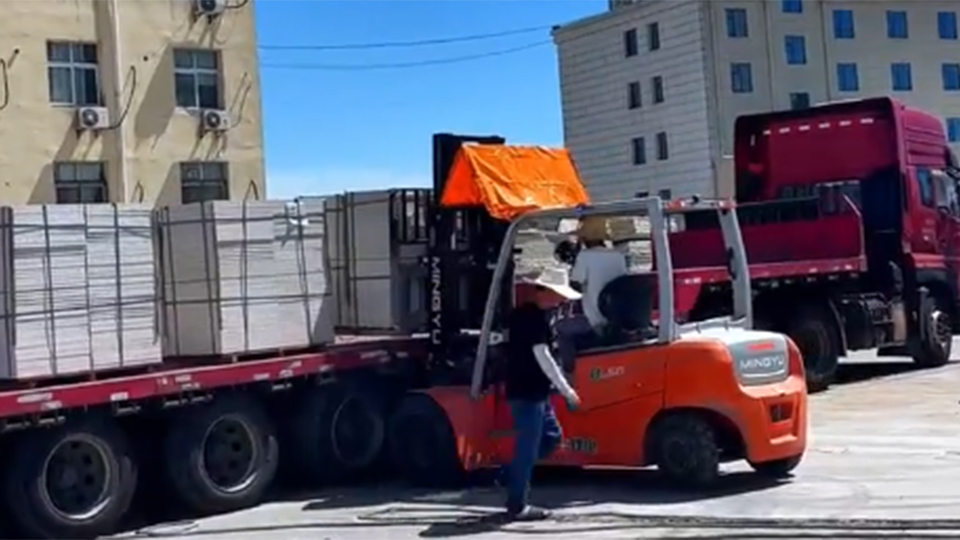
As lifting requirements escalate, forklift weight increases non-linearly due to enhanced structural requirements and larger counterweights. Forklifts in the 8,000 to 10,000-pound capacity class typically weigh between 12,000 and 15,000 pounds for internal combustion models. Electric equivalents in this range often approach 16,000 to 18,000 pounds, with battery systems constituting 25–30% of total vehicle weight.
The 12,000-pound capacity threshold marks a transition point in forklift design philosophy. Vehicles exceeding this capacity increasingly utilize dual drive wheels, reinforced masts, and extended wheelbases to maintain stability. A 12,000-pound capacity diesel forklift generally weighs between 18,000 and 22,000 pounds, reflecting the substantial counterweight mass required to prevent forward tip-over incidents.
Heavy-Duty Applications (15,000–35,000 lb Capacity)
Heavy-duty forklifts serve specialized applications including lumber yards, steel distribution, and shipping container handling. These vehicles exhibit weight-to-capacity ratios that often exceed 2.5:1 due to the extreme stability requirements when manipulating heavy loads at elevation.
A 25,000-pound capacity forklift typically weighs between 35,000 and 45,000 pounds. The chassis construction incorporates high-strength steel frameworks, and counterweights may constitute discrete bolt-on modules rather than integrated castings to facilitate transportation and maintenance. Pneumatic tires on these vehicles add considerable unsprung weight, with single tires often exceeding 500 pounds.
Specialized and Oversized Equipment
Beyond standard counterbalance designs, specialized forklift categories exhibit distinct weight characteristics:
Reach trucks, designed for narrow-aisle high-density storage, prioritize compact dimensions over weight. A standard 3,000-pound capacity reach truck weighs approximately 6,000 to 7,500 pounds—significantly less than equivalent counterbalance forklifts. This weight reduction enables operation on elevated mezzanine floors and reduces floor loading stress in high-rack warehouses.
Order pickers and turret trucks show similar weight optimization. A man-up order picker with 3,000-pound capacity typically weighs 5,000 to 6,500 pounds, with the operator platform and mast assembly representing significant portions of total mass.
At the opposite extreme, loaded container handlers and reach stackers operate in the 80,000 to 100,000-pound range. These specialized port vehicles combine massive counterweights with heavy-duty telescopic booms capable of lifting 45-ton containers to significant heights. The weight distribution on these vehicles is carefully engineered to maintain stability on uneven terminal surfaces while handling top-heavy intermodal containers.
Engineering Factors Influencing Forklift Weight
Counterweight Physics and Stability Requirements
The fundamental engineering challenge in forklift design centers on maintaining rotational stability about the front axle—the fulcrum point when lifting loads. The counterweight moment (counterweight mass × distance from fulcrum) must exceed the load moment (load mass × distance from fulcrum) by a specified safety factor, typically 1.25 to 1.5 times the rated load moment.
This relationship explains why forklift weight increases disproportionately with capacity. Doubling the rated load capacity may require tripling the counterweight mass if the load center distance increases, or if the vehicle geometry constraints limit counterweight positioning. Manufacturers optimize this relationship through computer-aided stability analysis, but physical constraints ultimately dictate minimum weight thresholds.
Power Source Impact on Vehicle Mass
The choice between internal combustion (diesel, gasoline, liquid propane) and electric power significantly influences forklift weight:
Internal combustion engines contribute 800 to 1,500 pounds including fuel systems, exhaust treatment, and cooling apparatus. However, the power density of fossil fuels means that the complete propulsion system adds relatively modest weight compared to the energy equivalent in batteries.
Electric forklifts utilizing traditional lead-acid battery technology face substantial weight penalties. A 48-volt battery pack for a 5,000-pound capacity forklift typically weighs 2,000 to 2,500 pounds. While this mass contributes beneficially to counterweight requirements, it increases overall vehicle weight and imposes floor loading considerations.
Lithium-ion battery systems offer 30–40% weight reduction compared to lead-acid equivalents, with improved energy density and cycle life. A lithium-equipped 5,000-pound capacity forklift may weigh 500 to 800 pounds less than its lead-acid counterpart, improving energy efficiency and reducing floor loading while maintaining equivalent counterbalance characteristics.
Fuel cell systems represent an emerging alternative, with hydrogen storage and fuel cell stacks generally weighing less than battery systems but more than internal combustion powertrains. Current fuel cell forklifts typically fall between electric and internal combustion weights for equivalent capacities.
Mast Configuration and Structural Components
The mast assembly—comprising outer channels, inner channels, lift cylinders, chains, and carriage—contributes 15–25% of total forklift weight depending on lift height specifications. A standard two-stage mast (12–15 feet lift height) adds approximately 1,500 to 2,500 pounds to vehicle weight. Three-stage and quad-stage masts designed for 20+ foot lifting add proportionally more mass due to additional channel sections and extended cylinder requirements.
Attachments significantly alter weight distribution. Side shifters add 200–400 pounds, fork positioners contribute 300–600 pounds, while specialized attachments such as paper roll clamps or carton clamps may add 500 to 1,500 pounds. These additions reduce effective load capacity and may require derating the forklift's rated performance.
Operational Implications of Forklift Weight
Floor Loading and Structural Engineering
Forklift weight directly impacts facility design requirements. Standard concrete warehouse floors are designed for uniformly distributed loads, but forklift traffic creates concentrated point loads that can exceed 5,000 pounds per wheel on heavy-duty vehicles.
A 10,000-pound forklift with typical 50/50 weight distribution places approximately 5,000 pounds on each axle. With dual front wheels, this creates 2,500-pound point loads per tire contact patch. However, dynamic loading during acceleration, braking, and turning can increase these forces by 50–100%, necessitating floor designs that accommodate 7,500 to 10,000-pound wheel loads in high-traffic areas.
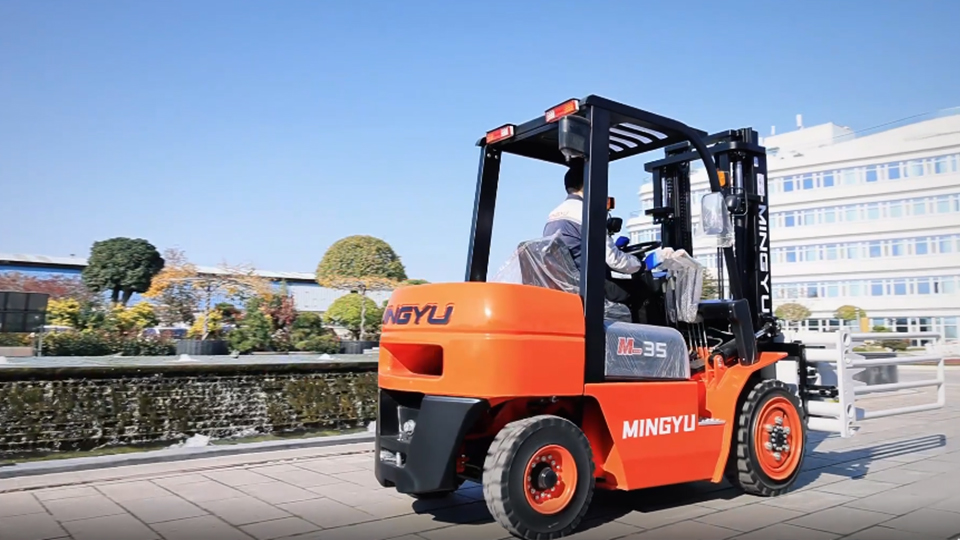
Mezzanine floors and elevated work platforms require particularly careful analysis. Standard mezzanine designs often limit forklift operations to vehicles under 8,000 pounds, with specialized lightweight designs accommodating reach trucks and pallet jacks. Exceeding design loads risks structural failure, catastrophic collapse, and serious safety incidents.
Transportation and Logistics
Forklift weight constrains transportation options and shipping costs. Vehicles under 10,000 pounds can typically transport on standard flatbed trailers without special permitting, though weight distribution across trailer axles must comply with highway regulations.
Heavier forklifts exceeding 10,000 pounds may require specialized lowboy trailers, pilot vehicles, and overweight permits for highway transport. International shipping adds complexity, as container weight limits (approximately 44,000 pounds gross for 40-foot containers) may necessitate partial disassembly or specialized equipment shipping.
Tire Selection and Ground Pressure
Forklift weight determines tire specifications and ground pressure characteristics. Pneumatic tires on heavy forklifts may require 100+ PSI inflation pressures to support vehicle weight, while cushion tires distribute loads over larger contact areas. Excessive ground pressure damages asphalt surfaces, compacts unpaved yards, and creates rutting in soft ground conditions.
Industry Standards and Regulatory Considerations
OSHA and ANSI Specifications
The Occupational Safety and Health Administration (OSHA) does not prescribe specific forklift weight limits but requires that rated capacities be clearly marked on vehicle data plates. ANSI B56.1 standards establish stability testing protocols that effectively mandate minimum weight requirements for given capacity ratings.
Data plate information must include truck weight without battery (for electric vehicles) or with minimum fuel (for internal combustion), enabling operators to calculate total loaded weights for floor loading assessments and transport planning.
ISO 3691-1 International Standards
International standards provide classification systems based on rated capacity and truck weight. ISO 3691-1 categorizes industrial trucks by design characteristics and establishes testing methodologies for stability verification. These standards ensure that forklifts meeting certification requirements possess adequate mass distribution for safe operation within rated parameters.
Weight Reduction Technologies and Future Trends
The material handling industry continues pursuing weight optimization through advanced engineering:
High-strength steel alloys and composite materials reduce chassis weight while maintaining structural integrity. Some manufacturers report 10–15% weight reduction in mast assemblies through optimized steel grades.
Integrated lithium battery designs eliminate separate battery compartments, distributing mass more efficiently and reducing overall vehicle weight by 500–1,000 pounds compared to retrofitted electric conversions.
Active stability control systems utilizing gyroscopic sensors and automatic speed reduction may eventually permit reduced counterweight mass while maintaining safety margins, though regulatory acceptance of such systems remains limited.
Conclusion: Context-Dependent Weight Analysis
The average weight of a forklift defies simple characterization due to the diversity of vehicle categories and applications. However, several general principles emerge from this analysis:
Standard warehouse forklifts (4,000–6,000 lb capacity) typically weigh 8,000–12,000 pounds, following the approximate 2:1 weight-to-capacity ratio. Electric models generally exceed internal combustion weights by 10–20% due to battery mass. Specialized equipment exhibits wider variation, with narrow-aisle reach trucks optimized for minimal weight and heavy-duty port equipment reaching six-figure weight classifications.
Understanding these weight characteristics enables informed facility planning, appropriate equipment selection, and compliant operational practices. As warehouse automation advances and energy storage technologies evolve, forklift weight optimization will remain a critical engineering priority balancing stability requirements with efficiency and sustainability objectives.
For procurement professionals and facility managers, forklift weight represents not merely a transportation specification but a fundamental operational parameter influencing infrastructure design, safety protocols, and total cost of ownership calculations.
Name: selena
Mobile:+86-13176910558
Tel:+86-0535-2090977
Whatsapp:8613181602336
Email:vip@mingyuforklift.com
Add:Xiaqiu Town, Laizhou, Yantai City, Shandong Province, China
