
vip@mingyuforklift.com
+86-0535-2090977

Introduction
Electric counterbalance forklifts have become the backbone of modern material handling across virtually every sector of the global economy. Powered by advanced battery technology—whether traditional lead-acid or increasingly dominant lithium-ion—these machines offer zero emissions, low noise operation, and significantly reduced total cost of ownership compared to their internal combustion counterparts. The counterbalance design, which uses a heavy rear weight to offset front loads, eliminates the need for outrigger legs, allowing these forklifts to operate in standard aisles while handling palletized goods with exceptional stability.
The 1-ton to 3-ton capacity range represents the most commercially significant segment of the forklift market. According to industry data, the 1.5-ton class alone accounts for over 35% of total forklift sales in China, making it the undisputed "volume leader" in the industry. This capacity spectrum spans what manufacturers classify as "small" (1.0–2.5 tons) to the lower end of "medium" (3.0–8.0 tons) forklifts, each tier serving distinct operational needs. Understanding which industries align with each capacity class is essential for procurement decisions, fleet optimization, and operational efficiency.
This article provides a comprehensive technical analysis of the applicable industries for 1-ton, 1.5-ton, 2-ton, and 3-ton electric counterbalance forklifts, examining the specific operational demands, environmental constraints, and material handling workflows that define each use case.
1-Ton Electric Counterbalance Forklifts: Precision Handling in Confined Spaces
Technical Profile
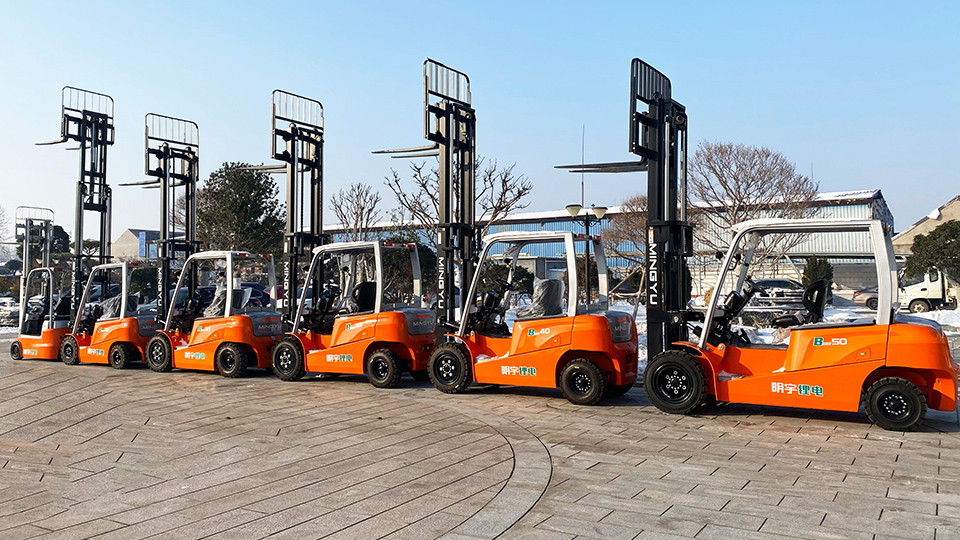
The 1-ton electric counterbalance forklift represents the entry point into serious material handling equipment. These compact machines typically feature three-wheel configurations for enhanced maneuverability, with overall widths often below 1,100 mm and turning radii optimized for tight spaces. Modern 1-ton models increasingly utilize lithium iron phosphate (LiFePO4) battery technology, offering fast charging capabilities and maintenance-free operation. Lifting heights generally range from 3.0 to 4.5 meters, making them suitable for low to medium racking systems.
Retail and Supermarket Distribution
The retail sector represents a primary application domain for 1-ton electric forklifts. Supermarket distribution centers and back-of-store operations handle relatively lightweight palletized goods—typically packaged consumer products, beverages, and dry groceries where single pallet weights rarely exceed 800 kg. The critical requirement in these environments is maneuverability within constrained spaces. Store receiving docks, narrow stockrooms, and retail floor replenishment areas demand equipment that can navigate tight corners while maintaining zero emissions and minimal noise levels to avoid disrupting customer-facing operations.
The 1-ton capacity aligns perfectly with the standard European pallet (1,200 × 800 mm) loaded with typical retail merchandise. Additionally, the compact dimensions allow these forklifts to operate in standard shipping containers for direct unloading, a capability that larger capacity classes struggle with due to space constraints.
Electronics and Semiconductor Manufacturing
Electronics manufacturing facilities—particularly semiconductor fabs and printed circuit board (PCB) assembly plants—impose stringent environmental requirements that make electric forklifts mandatory. These facilities require not only zero emissions but also minimal electromagnetic interference (EMI) and ultra-low particulate generation. The 1-ton capacity is sufficient for handling raw silicon wafers, packaged components, and finished electronic devices, where individual pallet loads typically remain well below the 1,000 kg threshold.
The precision control offered by modern AC drive systems in 1-ton electric forklifts is particularly valued in electronics manufacturing, where delicate components require smooth acceleration and deceleration profiles to prevent damage. The quiet operation also supports the cleanroom communication protocols essential in these environments.
Food and Beverage Processing (Light Duty)
Within the food and beverage industry, 1-ton electric forklifts find application in light-duty processing areas, packaging lines, and ingredient preparation zones. While finished product warehouses may require higher capacity equipment, the initial stages of food processing—handling ingredient sacks, packaging materials, and work-in-progress inventory—often involve loads well within the 1-ton range. The zero-emission characteristic is critical in food processing environments where air quality standards prohibit internal combustion engines.
Specialized variants with cold storage configurations are deployed in refrigerated and frozen food processing facilities, where enhanced insulation, cold-resistant hydraulic fluids, and battery heating systems ensure reliable operation in sub-zero environments.
Pharmaceutical and Healthcare Logistics
Pharmaceutical manufacturing and healthcare distribution centers represent another high-value application sector. These facilities handle high-value, lightweight products—pharmaceuticals, medical devices, and healthcare supplies—where load weights typically remain below 800 kg per pallet. The clean, quiet, and emission-free operation of 1-ton electric forklifts aligns with Good Manufacturing Practice (GMP) requirements and healthcare facility hygiene standards.
The ability to operate in narrow aisles between high-density pharmaceutical storage racks, combined with the precision handling required for high-value inventory, makes the 1-ton class particularly well-suited to this sector.
1.5-Ton Electric Counterbalance Forklifts: The Universal Workhorse
Technical Profile
The 1.5-ton capacity class occupies the sweet spot of the forklift market, offering the optimal balance between lifting capability and operational flexibility. These machines are available in both three-wheel and four-wheel configurations, with lifting heights extending to 6–7 meters on triplex mast variants. The 1.5-ton class represents the transition point where four-wheel designs become increasingly common, offering enhanced stability for loads approaching the rated capacity while maintaining reasonable maneuverability in standard warehouse aisles (typically 3.5–4.0 meters width).
General Manufacturing and Assembly Plants
General manufacturing facilities represent the largest single application domain for 1.5-ton electric forklifts. In automotive component manufacturing, appliance assembly, and general industrial production, these machines handle raw material delivery to production lines, work-in-progress transport between workstations, and finished goods movement to shipping areas. The 1.5-ton capacity accommodates standard industrial pallets loaded with metal components, plastic parts, and assembled subassemblies.
The versatility of the 1.5-ton class is particularly evident in mixed-model manufacturing environments, where production schedules demand handling of diverse load types throughout a single shift. The availability of quick-attach accessories—paper roll clamps, carton clamps, and push-pull systems—further extends the applicability across different material types without dedicated equipment.
Third-Party Logistics (3PL) and E-Commerce Fulfillment
The explosive growth of e-commerce has driven unprecedented demand for 1.5-ton electric forklifts in third-party logistics and fulfillment center operations. These facilities handle high volumes of individually packaged consumer goods where the average pallet weight typically falls between 800–1,200 kg. The operational profile involves continuous loading and unloading of delivery vehicles, cross-docking operations, and put-away/retrieval from multi-level racking systems.
The 1.5-ton class offers sufficient capacity margin for the occasional heavier pallet while maintaining the agility required for high-velocity fulfillment operations. The shift toward lithium-ion battery technology in this segment is particularly pronounced, as the opportunity charging capability—topping up batteries during operator breaks—supports the extended operating hours demanded by same-day and next-day delivery commitments.
Warehousing and Distribution Centers
Standard warehousing operations—whether dedicated facilities or multi-tenant distribution centers—extensively deploy 1.5-ton electric forklifts for routine pallet movement and stacking. These environments typically feature selective racking systems with beam heights of 4–6 meters, well within the operational envelope of standard 1.5-ton models. The machines handle inbound receiving, put-away, order picking support, and outbound shipping in continuous cycles.
The environmental advantages of electric power are significant in enclosed warehouse environments where operator comfort and air quality directly impact productivity. Modern 1.5-ton electric forklifts with AC motor technology deliver performance comparable to LPG-powered alternatives while eliminating fuel storage requirements and exhaust ventilation needs.
Printing and Publishing
The printing and publishing industry presents a specialized application case for 1.5-ton electric forklifts. Paper reels, while individually heavy, are often handled in partially loaded configurations during press feeding operations. Finished printed materials—books, magazines, and packaging—typically ship on pallets weighing 1,000–1,400 kg. The smooth handling characteristics of electric forklifts are particularly valued for preventing damage to printed products, while the emission-free operation is essential in facilities where paper dust creates combustion hazards for internal combustion engines.
2-Ton Electric Counterbalance Forklifts: Bridging Light and Heavy Duty
Technical Profile
The 2-ton electric counterbalance forklift marks the entry into medium-duty material handling, where four-wheel configurations become standard and chassis designs prioritize stability over absolute compactness. These machines feature reinforced masts, larger battery packs, and more robust drive systems compared to their lighter counterparts. Lifting heights of 4.5–6 meters are standard, with some models offering container mast configurations for operation within standard shipping containers. The 2-ton class increasingly incorporates high-voltage lithium battery platforms, with some manufacturers offering 300V systems that deliver performance rivaling diesel alternatives.
Heavy Manufacturing and Metal Processing
In heavy manufacturing environments—metal fabrication shops, steel service centers, and machinery assembly plants—the 2-ton capacity handles raw material inputs, work-in-progress, and finished machinery components. Metal stock, while dense, is frequently handled in partially loaded configurations or on specialized pallets where individual loads approach but do not exceed the 2-ton threshold. The robust construction of 2-ton electric forklifts accommodates the shock loads and dynamic forces associated with metal handling.
The transition to electric power in these traditionally diesel-dominated environments is accelerating, driven by total cost of ownership advantages and increasingly stringent indoor air quality regulations. High-voltage lithium battery systems address the historical concerns about electric forklift performance in heavy-duty cycles, offering sustained power output through full shift operations.
Paper and Packaging Industry
The paper and packaging industry represents a demanding application environment where 2-ton electric forklifts have gained significant traction. Paper mills and corrugated packaging plants handle heavy rolls of paperboard, stacked pallet loads of finished boxes, and bulk packaging materials. These operations historically relied on diesel forklifts due to the heavy loads and continuous duty cycles, but modern lithium battery electric forklifts have demonstrated capability to match or exceed diesel performance while eliminating exhaust emissions in enclosed production areas.
The fast-charging characteristics of lithium iron phosphate batteries are particularly valuable in paper industry applications, where "charge during break" protocols can maintain continuous operation across multiple shifts without battery change-out infrastructure.
Cold Chain and Refrigerated Logistics
Cold storage warehouses and refrigerated distribution centers present unique challenges that the 2-ton electric counterbalance forklift is well-equipped to address. The combination of heavy palletized goods—frozen foods, chilled dairy products, and temperature-sensitive pharmaceuticals—with sub-zero operating environments demands equipment with robust construction, cold-resistant components, and reliable power systems.
Lithium battery technology has proven particularly advantageous in cold storage applications, where traditional lead-acid batteries suffer significant capacity degradation. The 2-ton capacity accommodates the dense packing of frozen goods, where pallet weights frequently approach 1,800 kg, while the electric powertrain eliminates the cold-start issues and exhaust condensation problems associated with internal combustion engines in freezer environments.
Automotive and Aerospace Component Supply
Tier 1 and Tier 2 automotive suppliers, along with aerospace component manufacturers, utilize 2-ton electric forklifts for handling metal castings, machined components, and assembly subsystems. The just-in-time (JIT) delivery models prevalent in these industries demand reliable, high-availability material handling equipment capable of operating in clean manufacturing environments. The 2-ton capacity provides adequate margin for handling engine blocks, transmission components, and structural assemblies on standard industrial pallets.
3-Ton Electric Counterbalance Forklifts: Heavy-Duty Electrification
Technical Profile
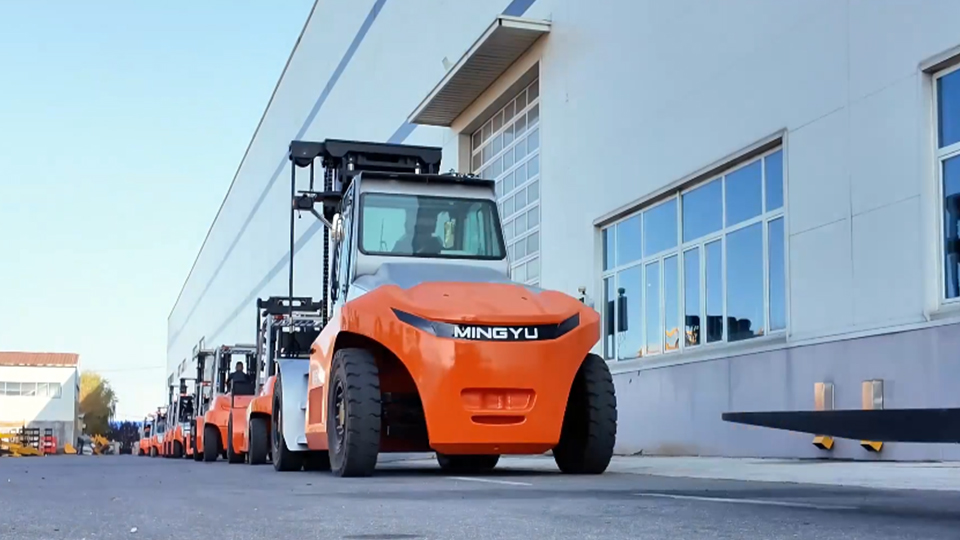
The 3-ton electric counterbalance forklift represents the upper boundary of what is traditionally considered "small" forklift capacity, bridging into the medium-duty classification. These machines feature substantial chassis designs, high-capacity battery systems (often exceeding 80 kWh in lithium configurations), and reinforced mast assemblies capable of lifting to 7 meters or beyond. The 3-ton class demands significant battery mass to achieve the stability required by ISO 22915 standards, with typical self-weights ranging from 4.5 to 5.5 tons. Dual AC drive motors and advanced electronic control systems manage the high torque requirements of heavy load handling.
Construction Materials and Building Supply
Building material suppliers, tile and ceramic distributors, and construction supply yards represent primary applications for 3-ton electric forklifts. These operations handle dense, heavy materials—cement bags, ceramic tiles, steel reinforcement, and lumber bundles—where pallet loads routinely approach or exceed 2,500 kg. The transition to electric power in these applications is driven by increasing urbanization of supply depots, where noise and emission restrictions prohibit traditional diesel equipment in areas adjacent to residential zones.
The outdoor/indoor flexibility of modern 3-ton electric forklifts, equipped with pneumatic or solid tires suitable for paved yard surfaces, enables these machines to bridge warehouse operations and outdoor loading areas. Some manufacturers offer enhanced weather protection and higher ground clearance variants specifically for building supply applications.
Chemical and Petrochemical Industry
Chemical manufacturing and petrochemical processing facilities impose some of the most stringent material handling requirements in industry. Explosion-proof (Ex-rated) electric forklifts are mandatory in zones where flammable vapors may be present, and the 3-ton capacity is required for handling bulk chemical containers, raw material drums, and finished product pallets. The inherent safety advantages of electric power—no hot exhaust surfaces, no spark-producing ignition systems, and precise speed control—make the 3-ton electric counterbalance forklift the only viable option for many chemical handling operations.
Specialized configurations with stainless steel cladding, corrosion-resistant coatings, and sealed electrical systems extend the applicability to aggressive chemical environments where equipment longevity would be compromised by standard construction.
Ports and Container Handling (Auxiliary Operations)
While mainline port operations utilize specialized container handling equipment, auxiliary port activities—empty container depots, container repair facilities, and break-bulk cargo handling—frequently employ 3-ton electric forklifts. These machines handle palletized cargo within container yards, move dunnage and lashing materials, and support vessel provisioning operations. The emission-free operation is increasingly mandated by port authorities implementing environmental compliance programs, particularly in urban port facilities and inland container depots.
The 3-ton capacity accommodates the handling of heavy machinery parts, dense cargo pallets, and equipment components within the confined spaces of container depots and port warehouses.
Agriculture and Feed Processing
The agricultural sector, particularly large-scale feed mills, grain processing facilities, and fertilizer distribution centers, utilizes 3-ton electric forklifts for handling bulk agricultural inputs and outputs. Feed ingredients, packaged seeds, and agricultural chemicals frequently ship on heavy pallets requiring the 3-ton capacity class. The transition from diesel to electric in agricultural processing is supported by the availability of fast-charging infrastructure and the cost advantages of electricity versus diesel fuel in high-utilization operations.
In grain handling facilities, where combustible dust environments create explosion hazards, electric forklifts with appropriate ignition protection ratings provide the only safe material handling solution for palletized bagged grain and processing supplies.
Cross-Cutting Considerations: Battery Technology and Industry Selection
Lithium-Ion vs. Lead-Acid: Implications for Industry Application
The choice between lithium-ion and lead-acid battery technology significantly influences the applicability of electric counterbalance forklifts across industries. Lithium-ion batteries, while commanding higher initial capital investment, offer fast charging (1–2 hours for full charge), opportunity charging capability, and maintenance-free operation. These characteristics make lithium-ion the preferred choice for high-utilization industries—3PL, e-commerce fulfillment, and continuous manufacturing—where equipment availability is critical and multi-shift operation is standard.
Lead-acid batteries remain viable in lower-utilization applications—seasonal retail, intermittent manufacturing, and light-duty warehousing—where the lower upfront cost offsets the operational constraints of longer charging cycles and required battery maintenance. However, the industry trend strongly favors lithium-ion across all capacity classes, with market data indicating lithium-ion as the fastest-growing battery segment in the forklift market.
Environmental and Regulatory Drivers
Increasingly stringent environmental regulations are accelerating the adoption of electric counterbalance forklifts across all industries. Indoor air quality standards, carbon emission reduction mandates, and noise ordinances are progressively restricting the operational scope of internal combustion forklifts. The 1-ton to 3-ton capacity range, which historically included significant LPG and diesel penetration, is experiencing the most rapid electrification as battery technology achieves performance parity with combustion alternatives.
Industries with explicit sustainability commitments—consumer packaged goods, retail, and healthcare—are proactively transitioning to electric fleets as part of broader environmental, social, and governance (ESG) initiatives, often ahead of regulatory requirements.
Conclusion
The 1-ton to 3-ton electric counterbalance forklift spectrum serves as the foundational material handling infrastructure across virtually every sector of the modern economy. The 1-ton class excels in precision, confined-space applications within retail, electronics, and light manufacturing. The 1.5-ton category, as the market volume leader, provides universal capability across general manufacturing, logistics, and warehousing. The 2-ton class bridges into medium-duty applications within heavy manufacturing, cold chain logistics, and paper processing. The 3-ton capacity addresses the most demanding loads in building supply, chemical handling, and port auxiliary operations.
As battery technology continues to advance—delivering higher energy density, faster charging, and extended cycle life—the operational boundaries between electric and internal combustion forklifts continue to blur. The industries examined in this analysis are not merely adopting electric forklifts as compliance-driven alternatives; they are recognizing the total cost of ownership, operational reliability, and environmental performance advantages that make electric counterbalance forklifts the optimal choice for material handling in the 21st century.
Name: selena
Mobile:+86-13176910558
Tel:+86-0535-2090977
Whatsapp:8613181602336
Email:vip@mingyuforklift.com
Add:Xiaqiu Town, Laizhou, Yantai City, Shandong Province, China
