
vip@mingyuforklift.com
+86-0535-2090977

Introduction: The Productivity Imperative
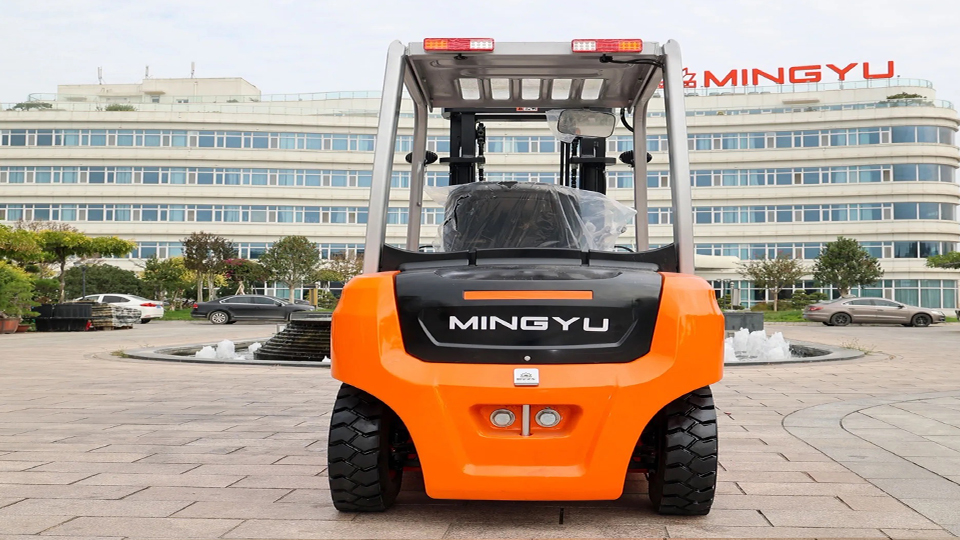
Modern manufacturing facilities increasingly operate on extended schedules to meet global demand, with two-shift operations—typically spanning 16 to 18 hours daily—becoming the norm rather than the exception in high-throughput environments. In these demanding settings, material handling equipment represents the circulatory system of the factory floor, and any interruption to forklift availability directly translates to production bottlenecks, idle labor, and diminished output. The traditional paradigm of battery-powered forklifts, dominated by lead-acid technology, has long imposed a fundamental constraint on continuous operations: the need for lengthy charging cycles and battery changeouts that disrupt workflow and consume valuable floor space. The emergence of fast-charging lithium-ion forklift systems represents a transformative inflection point, promising to dissolve the boundary between charging time and productive operation, thereby enabling genuine two-shift continuity without the logistical overhead of battery swapping infrastructure.
The Limitations of Legacy Lead-Acid Systems
To appreciate the significance of lithium fast-charging technology, one must first understand the operational burden imposed by conventional lead-acid battery systems. A standard lead-acid forklift battery requires 8 to 12 hours for a full charge, followed by an additional 8-hour cooling period before it can return to service. This 16-to-20-hour total cycle time means that a forklift operating in a two-shift environment requires at least two, often three, battery packs per truck to maintain continuous availability. The implications cascade throughout facility design: dedicated battery rooms consuming hundreds of square meters, expensive ventilation and acid containment systems, overhead cranes or forklifts specifically tasked with battery extraction, and trained personnel to execute changeouts safely. Furthermore, lead-acid batteries suffer from the "memory effect" and depth-of-discharge limitations; routinely discharging below 80% capacity significantly degrades battery life, forcing operators to swap batteries prematurely to preserve asset longevity. The result is a material handling ecosystem optimized not for productivity, but for battery management—a paradigm where the power source dictates operational rhythm rather than production requirements.
Lithium-Ion Technology: The Electrochemical Foundation
Lithium-ion forklift batteries, specifically those utilizing lithium iron phosphate (LiFePO₄) chemistry, offer fundamentally different electrochemical characteristics that enable fast-charging architectures. LiFePO₄ cathodes provide excellent thermal stability, a flat discharge voltage curve, and cycle life exceeding 3,000 to 5,000 cycles—roughly three to five times that of lead-acid equivalents. More critically for fast-charging applications, lithium-ion cells exhibit significantly lower internal resistance and can accept charge currents far exceeding lead-acid capabilities without detrimental sulfation or thermal runaway. Where a lead-acid battery might accept a charge rate of 0.1C to 0.2C (taking 5 to 10 hours for a full charge), modern lithium forklift battery packs are engineered to accept continuous charge rates of 1C or higher, enabling substantial energy replenishment in 15 to 30 minutes. This charge acceptance capability is not merely a function of cell chemistry but requires sophisticated battery management systems (BMS) that monitor individual cell voltages, temperatures, and state-of-charge (SOC) with millivolt precision, balancing cells dynamically and modulating charge current to prevent lithium plating or electrolyte degradation.
Fast-Charging Architecture and Infrastructure
Implementing fast-charging lithium forklifts in a two-shift factory requires deliberate infrastructure design that integrates opportunity charging into operational workflows. Unlike lead-acid systems, which demand complete discharge followed by full recharge, lithium-ion batteries thrive on partial state-of-charge (PSOC) cycling. This operational characteristic enables opportunity charging—brief, high-current charging sessions during natural operational pauses such as shift changes, meal breaks, or loading/unloading intervals. A typical fast-charging installation for a two-shift facility comprises high-power chargers rated between 15 kW and 30 kW, strategically positioned at high-traffic transition points rather than centralized in a remote battery room. These chargers communicate with the forklift's BMS via CAN bus protocols, negotiating charge parameters in real-time and adjusting output based on battery temperature, current SOC, and historical usage patterns. The charging infrastructure itself demands three-phase industrial power distribution capable of sustaining multiple simultaneous high-current sessions, often necessitating electrical service upgrades and load management systems to prevent demand charge penalties from utility providers.
Operational Dynamics in Two-Shift Environments
The operational model for fast-charging lithium forklifts in continuous two-shift factories diverges substantially from traditional battery management paradigms. Rather than scheduling production around battery availability, charging becomes an ambient background process woven into the operational fabric. Consider a typical scenario: a forklift operates the first shift from 6:00 AM to 2:00 PM, during which intermittent opportunity charging during dock loading operations maintains SOC between 40% and 70%. During the 30-minute shift change at 2:00 PM, the forklift connects to a fast charger, replenishing 20% to 25% of total capacity—sufficient to power the second shift until the 10:00 PM conclusion. Overnight, the fleet undergoes a full balancing charge at reduced current, preparing for the next operational cycle. This model eliminates the 20 to 30 minutes of daily downtime per truck previously consumed by battery changeouts, accumulates to substantial productivity gains across a fleet of 20 or more units, and removes the safety hazards associated with manual handling of 2,000-pound battery packs.
Thermal Management and Safety Considerations
Fast-charging generates significant thermal energy within battery cells, and managing this heat is paramount for both safety and longevity. Lithium forklift battery packs incorporate active thermal management systems—liquid cooling loops or forced-air convection—maintaining cell temperatures within the optimal 15°C to 35°C range during high-current charging events. The BMS continuously monitors temperature gradients across the pack, throttling charge rates if localized hotspots develop. From a facility safety perspective, lithium-ion systems eliminate the hydrogen gas evolution inherent to lead-acid charging, removing explosion risks and the requirement for specialized ventilation systems in charging areas. However, facilities must implement appropriate fire suppression systems designed for lithium battery chemistries, including clean agent systems or water mist installations capable of addressing thermal runaway scenarios, however rare in properly managed LiFePO₄ systems. Personnel training must also evolve; rather than acid spill response and specific gravity testing, maintenance teams require education on high-voltage safety, BMS diagnostics, and thermal event protocols.
Economic Analysis: Total Cost of Ownership
The business case for fast-charging lithium forklifts in two-shift operations extends far beyond operational convenience to fundamental economic restructuring of material handling costs. While lithium battery packs command a 2.5 to 3.5 times premium over lead-acid equivalents on initial acquisition, the total cost of ownership (TCO) over a 10-year operational lifespan typically favors lithium by 20% to 40%. Key cost drivers include the elimination of battery changeout labor—estimated at 15 to 20 minutes per truck per shift—and the removal of dedicated battery room infrastructure and maintenance personnel. Energy efficiency improvements of 30% to 40% result from lithium-ion's superior charge acceptance and lack of maintenance charging requirements. Additionally, the extended cycle life of lithium systems means that a single battery pack often outlasts two or three lead-acid replacements, reducing capital expenditure on replacement batteries and disposal costs for hazardous lead-acid waste. When amortized across the extended operational hours enabled by two-shift continuous operation, the productivity gains—measured in additional pallets moved per day, reduced dock congestion, and elimination of battery-related production delays—frequently deliver payback periods of 24 to 36 months for high-utilization fleets.
Fleet Management and Telematics Integration
The transition to fast-charging lithium forklifts coincides with the broader digitization of material handling equipment, creating synergies that enhance two-shift operational visibility. Modern lithium forklifts integrate telematics platforms that communicate battery SOC, charge history, thermal status, and operational metrics to centralized fleet management software. This data enables predictive charging optimization, where algorithms analyze historical usage patterns to recommend optimal charging windows that minimize electricity costs while ensuring sufficient charge for upcoming shifts. In two-shift environments, this intelligence prevents scenarios where operators inadvertently deplete batteries during high-demand periods or miss opportunity charging windows. Fleet managers gain real-time visibility into which trucks require priority charging during shift transitions and can identify operators whose driving patterns disproportionately consume battery capacity. Over time, this data-driven approach refines charging infrastructure placement, identifies training opportunities for energy-efficient operation, and supports predictive maintenance by flagging batteries exhibiting abnormal charge acceptance or thermal behavior before failure occurs.
Implementation Challenges and Mitigation Strategies
Despite compelling advantages, deploying fast-charging lithium forklifts in two-shift factories presents implementation challenges requiring strategic planning. Electrical infrastructure represents the most significant hurdle; facilities must assess whether existing three-phase service can support the aggregated demand of multiple 30 kW chargers operating simultaneously. Load management systems that stagger charging initiation across the fleet can mitigate peak demand charges, but may require electrical engineering consultation and utility coordination. Operator behavior modification presents another challenge; personnel accustomed to lead-acid protocols may resist opportunity charging, fearing "memory effect" degradation, or may neglect to connect chargers during breaks. Successful implementations incorporate comprehensive training programs emphasizing that lithium systems are designed for frequent partial charging and that maintaining higher average SOC improves rather than degrades battery longevity. Finally, facilities must evaluate whether their operational patterns genuinely include sufficient intermittent downtime for opportunity charging; applications involving continuous high-power demand with minimal pauses may still require supplemental battery capacity or hybrid approaches.
Environmental and Sustainability Implications
Beyond operational and economic benefits, fast-charging lithium forklifts align with escalating corporate sustainability mandates. Lead-acid batteries contain toxic materials requiring specialized recycling streams, and their shorter lifespan generates substantial hazardous waste over a facility's operational life. Lithium iron phosphate batteries, while requiring their own recycling infrastructure, contain no toxic heavy metals and offer significantly longer service life, reducing per-unit material consumption. When paired with renewable energy sources—such as on-site solar generation directed to charging infrastructure—fast-charging lithium fleets can substantially reduce the carbon intensity of material handling operations. The elimination of battery changeout equipment and dedicated battery rooms also reduces the facility's physical footprint, contributing to more efficient land use in industrial developments. As environmental regulations increasingly target industrial emissions and waste streams, the transition to lithium-based material handling represents proactive compliance positioning.
Future Trajectories and Technological Convergence
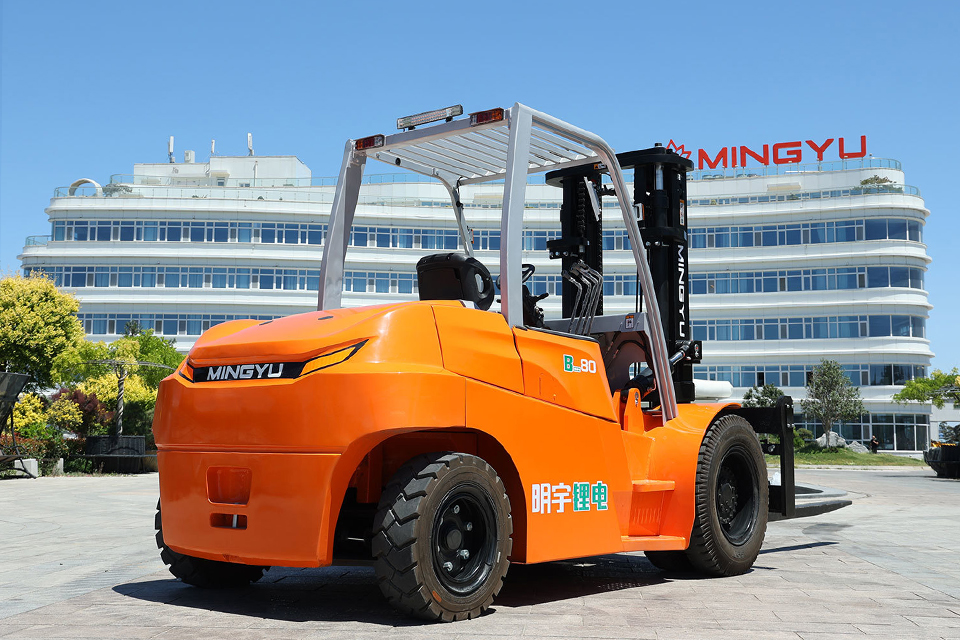
The evolution of fast-charging lithium forklift technology continues to accelerate, with several emerging trends poised to further enhance two-shift operational capabilities. Solid-state lithium battery technologies, currently in advanced development, promise even higher energy densities and faster charge rates while eliminating liquid electrolyte safety concerns. Wireless inductive charging systems embedded in factory floors could enable continuous charging during transit along defined routes, effectively creating perpetually powered forklifts without deliberate charging stops. Vehicle-to-grid (V2G) integration may allow forklift fleets to serve as distributed energy storage resources, discharging stored energy back to the facility during peak demand periods and recharging during off-peak hours—creating revenue streams that offset operational costs. Autonomous mobile robots (AMRs) utilizing lithium fast-charging are increasingly converging with traditional forklift operations, suggesting future material handling ecosystems where charging is entirely automated and invisible to production workflows.
Conclusion
Fast-charging lithium forklift technology has matured from an emerging alternative to a proven enabler of continuous two-shift factory operations. By dissolving the traditional constraints of battery changeout cycles, opportunity charging architectures allow material handling to synchronize with production demands rather than dictating them. The electrochemical advantages of lithium iron phosphate, combined with intelligent battery management and strategic infrastructure placement, create operational models where charging becomes an ambient, non-disruptive process. While initial capital investment and infrastructure requirements demand careful planning, the cumulative benefits—eliminated changeout downtime, reduced labor costs, extended battery longevity, enhanced safety profiles, and improved energy efficiency—deliver compelling returns for high-utilization manufacturing environments. As manufacturing continues its trajectory toward 24/7 operational models to remain globally competitive, fast-charging lithium forklifts represent not merely an equipment upgrade, but a foundational reimagining of how industrial facilities power their most critical material handling operations. The question is no longer whether lithium fast-charging can support two-shift continuous operation, but how quickly facilities can transition to capture the productivity advantages this technology affords.
Name: selena
Mobile:+86-13176910558
Tel:+86-0535-2090977
Whatsapp:8613181602336
Email:vip@mingyuforklift.com
Add:Xiaqiu Town, Laizhou, Yantai City, Shandong Province, China
