
vip@mingyuforklift.com
+86-0535-2090977

Introduction: CeMAT as the Barometer of Material Handling Evolution
The CeMAT exhibition floor has always served as the global pulse-check for intralogistics innovation, and this year's showcase confirms a decisive inflection point in warehouse forklift design. Walking through the sprawling halls of the Hannover Fairgrounds, one observation dominates: the combustion engine, once the default powertrain for even the smallest warehouse trucks, has been effectively banished from the compact forklift segment. In its place stands a new generation of compact electric warehouse forklifts that are not merely electrified versions of their predecessors, but fundamentally reimagined machines optimized for the spatial, operational, and sustainability constraints of modern distribution centers. These vehicles represent the convergence of advanced lithium battery chemistry, integrated automation architectures, and human-centric design philosophies that collectively promise to redefine how goods move within the four walls of the warehouse.
The Compact Revolution: Why Size Matters More Than Ever
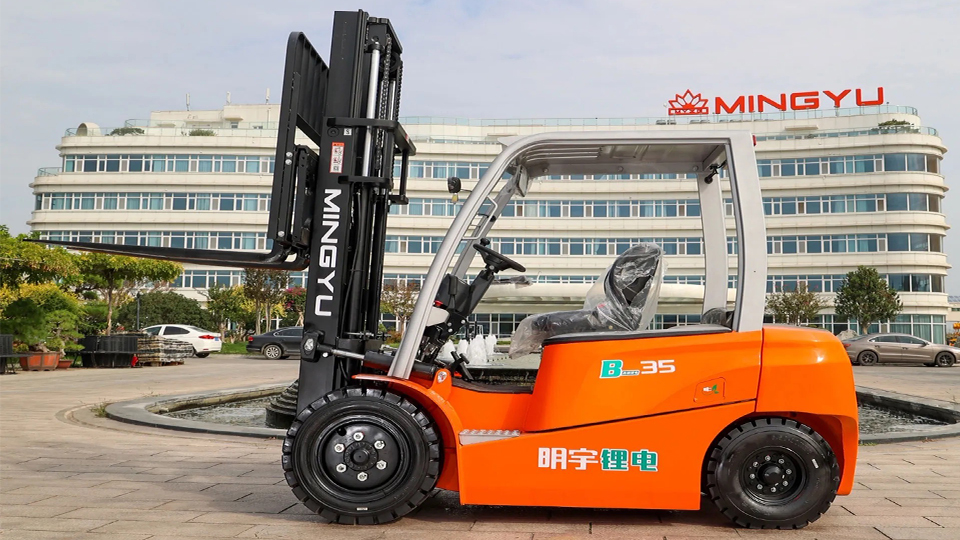
The driving force behind this generational shift is the relentless optimization of warehouse real estate. E-commerce fulfillment networks and just-in-manufacturing supply chains have compressed storage densities to unprecedented levels, with aisle widths shrinking from the traditional 3.5 meters to 2.5 meters or less in high-density racking configurations. Legacy compact forklifts, typically measuring 2.2 to 2.4 meters in length with substantial turning circles, struggle to operate efficiently in these constrained environments. The new generation showcased at CeMAT addresses this through radical dimensional optimization. Multiple manufacturers have introduced three-wheel electric counterbalance trucks with overall lengths below 1.9 meters and turning radii under 1.7 meters—dimensions that would have been inconceivable for stable load handling just five years ago. This dimensional revolution is enabled by repositioning the battery pack as a structural element within the chassis rather than a bolt-on counterweight, allowing designers to redistribute mass lower and more centrally while simultaneously reducing the physical envelope of the truck.
Powertrain Architecture: Beyond Simple Electrification
The electric powertrains on display at CeMAT reveal a sophistication that transcends the straightforward replacement of internal combustion with electric motors. The new compact warehouse forklifts feature dual-motor drive systems with independent wheel control, replacing the traditional single drive motor and differential arrangement. This architecture delivers two critical advantages in warehouse environments: first, electronic differential functionality enables true zero-turn-radius maneuvering, allowing operators to pivot the truck within its own footprint when navigating dead-end aisles or congested dock areas; second, regenerative braking energy is captured independently at each wheel, improving overall energy efficiency by 15 to 20 percent compared to single-motor configurations. The drive motors themselves have evolved to high-torque-density permanent magnet synchronous designs, often integrated directly into the wheel hubs to eliminate drivetrain losses and reduce maintenance points. Rated continuous outputs of 5 kW to 8 kW with peak capabilities exceeding 15 kW provide acceleration and gradeability performance that matches or exceeds equivalent internal combustion trucks, dispelling lingering perceptions of electric forklifts as underpowered.
Battery Technology: The Lithium Standard Solidifies
If previous CeMAT exhibitions featured vigorous debate between lead-acid and lithium-ion battery technologies, this year's floor leaves no ambiguity: lithium-ion has become the unequivocal standard for new generation compact electric warehouse forklifts. What has changed is the diversity of lithium chemistries and form factors on display. Lithium iron phosphate (LiFePO₄) remains the dominant chemistry for counterbalance applications due to its thermal stability and cycle life, with multiple exhibitors demonstrating packs rated for 4,000-plus cycles and equipped with active liquid cooling systems that maintain optimal cell temperatures during high-duty-cycle operations. More intriguing are the introductions of lithium manganese oxide (LMO) and nickel manganese cobalt (NMC) variants optimized for reach trucks and order pickers where energy density and fast-charging capability take precedence over absolute cycle longevity. Several manufacturers showcased modular battery architectures allowing field replacement of individual modules rather than entire packs, reducing lifetime maintenance costs and enabling capacity upgrades as operational requirements evolve. The integration depth has also advanced; batteries are no longer removable boxes but structural chassis elements, with some designs incorporating the battery enclosure as the primary load-bearing frame component, contributing to the dimensional reductions while improving torsional rigidity.
Charging Infrastructure: Opportunity Charging as Default Design
A conspicuous trend across the CeMAT exhibition is the normalization of opportunity charging as the default operational paradigm rather than an optional feature. New generation compact electric forklifts are designed with charge ports positioned for rapid connection during natural operational pauses—located at ergonomic heights on the overhead guard or rear chassis rather than requiring hood opening or battery compartment access. Charging power levels have escalated significantly, with 15 kW to 25 kW onboard chargers becoming standard and external fast-charging stations reaching 50 kW for brief high-current replenishment during shift changes. Several exhibitors demonstrated wireless inductive charging pads embedded in warehouse floor sections at high-traffic transition points—picking staging areas, shipping docks, and cross-docking zones—allowing trucks to charge automatically during routine stops without operator intervention. This infrastructure evolution is supported by intelligent charge management systems that communicate with warehouse management software (WMS) to optimize charging schedules based on predicted workload, electricity pricing tiers, and battery health metrics. The practical implication for warehouse operations is the elimination of dedicated battery rooms and the associated floor space, ventilation, and safety infrastructure that consumed valuable square meters in facilities running lead-acid fleets.
Automation Integration: The Path to Autonomous Operation
While fully autonomous forklifts occupy a prominent position at CeMAT, the more pervasive and immediately impactful innovation is the integration of automation-enabling technologies into manually operated compact electric trucks. The new generation features comprehensive sensor suites—including 2D and 3D LiDAR, ultrasonic arrays, and stereo camera systems—that serve dual purposes. In manual operation, these sensors enable advanced operator assistance functions: automatic speed reduction in confined aisles, collision avoidance with dynamic obstacle detection, and precision positioning assistance for pallet entry at height. The same sensor infrastructure provides the perception foundation for future autonomous operation, with several manufacturers offering clear upgrade pathways from assisted manual to semi-autonomous to fully autonomous modes through software licensing and minimal hardware additions. This evolutionary approach acknowledges the economic reality that most warehouses will operate hybrid fleets for the foreseeable future, with automation deployed incrementally in high-volume, repetitive lanes while manual trucks handle variable, exception-driven tasks. The electric architecture proves essential to this automation roadmap; the precise torque control of electric drive systems enables the millimeter-level positioning accuracy required for autonomous pallet handling, while the high-voltage electrical bus powers the substantial computing and sensor payloads without compromising operational runtime.
Ergonomics and Operator Experience: The Human-Machine Interface
Recognizing that warehouse productivity ultimately depends on operator performance and retention, manufacturers at CeMAT have invested substantially in ergonomic refinement and interface design. The compact dimensions of new generation trucks have not come at the expense of operator space; instead, cabin designs leverage the absence of an internal combustion engine and exhaust system to expand legroom and improve sightlines. Low-entry step heights—reduced to 300 millimeters or less—minimize musculoskeletal strain during the frequent mount-dismount cycles typical of warehouse operations. Steering systems have transitioned to electric power steering with adjustable effort mapping, reducing operator fatigue during extended shift operations. The most visible ergonomic evolution is the digitization of the operator interface. Traditional analog gauges and mechanical switches are replaced by configurable touchscreen displays providing real-time feedback on battery status, fault diagnostics, productivity metrics, and task instructions integrated directly from the warehouse management system. Some exhibitors demonstrated augmented reality (AR) implementations projecting pallet alignment guides and rack location information directly into the operator's line of sight through transparent display panels, reducing the cognitive load of high-velocity picking and putaway operations.
Connectivity and Fleet Intelligence: The Digital Forklift
The new generation compact electric warehouse forklift is, at its core, a connected industrial computer on wheels. Every major exhibitor at CeMAT emphasized telematics and fleet analytics capabilities as standard rather than premium features. These systems transmit operational data—including utilization rates, energy consumption, fault codes, impact events, and operator access logs—to cloud-based fleet management platforms in near real-time. For warehouse managers overseeing two-shift or three-shift operations, this visibility transforms forklift fleet management from reactive maintenance to predictive optimization. Algorithms analyze utilization patterns to identify underused assets that can be redeployed or eliminated, predict battery replacement timelines based on actual usage rather than calendar schedules, and detect operator behaviors—such as aggressive acceleration or excessive braking—that correlate with increased maintenance costs or safety incidents. The connectivity architecture also enables over-the-air software updates, allowing manufacturers to deploy performance enhancements, new automation features, and security patches without requiring physical service visits. This digital foundation positions the forklift as an integrated node within the broader warehouse Internet of Things (IoT) ecosystem, exchanging data with automated storage and retrieval systems (AS/RS), conveyor networks, and robotic picking solutions to coordinate material flows with unprecedented synchronization.
Sustainability and Lifecycle Considerations
Environmental performance has transitioned from marketing differentiation to procurement mandate, and the CeMAT exhibitors have responded with comprehensive sustainability narratives extending beyond zero tailpipe emissions. The manufacturing processes for new generation compact electric forklifts increasingly incorporate recycled aluminum and steel in chassis components, bio-based plastics in non-structural body panels, and responsibly sourced rare earth materials in motor magnets. Lifecycle assessment tools displayed at several booths allow prospective buyers to model the total environmental impact of forklift acquisition decisions, comparing carbon footprints across manufacturing, operational, and end-of-life phases. Battery end-of-life management receives particular attention, with manufacturers establishing closed-loop recycling partnerships that recover lithium, cobalt, and nickel from depleted packs for reuse in new batteries or alternative applications. The extended operational lifespan of electric powertrains—typically 15,000 to 20,000 operating hours with minimal drivetrain maintenance compared to 10,000 to 12,000 hours for internal combustion equivalents—further reduces the environmental intensity per unit of material handled. For warehouse operators facing corporate carbon reduction targets or regulatory emissions constraints, these lifecycle advantages provide quantifiable contributions to sustainability scorecards.
Safety Innovations: Protecting People and Product
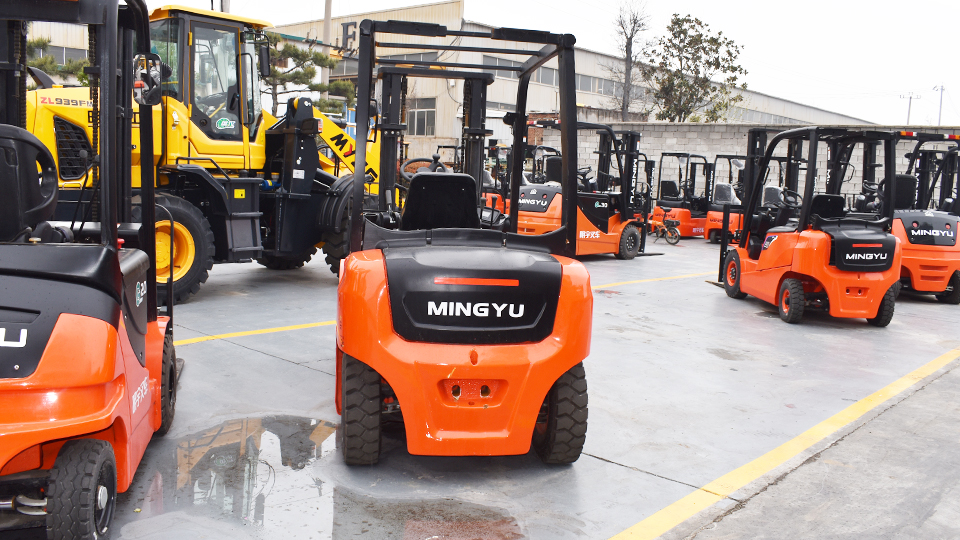
Safety technology showcased at CeMAT reflects the unique hazards of compact warehouse operations, where tight clearances, pedestrian traffic, and high-rack storage create complex risk profiles. New generation compact electric forklifts incorporate multiple redundant safety systems. Load weight and height sensors automatically enforce derated capacity curves, preventing the dangerous practice of lifting beyond rated capacity at extended mast heights. Stability control systems utilizing gyroscopic sensors and accelerometers detect impending tip conditions in real-time, automatically limiting travel speed and hydraulic functions to restore stability before an incident occurs. Blue spot warning lights and pedestrian detection alerts have become standard, with advanced systems using machine vision to distinguish between static obstacles and human pedestrians, applying graduated warning and intervention responses accordingly. The electric architecture enables precise inching control during pallet engagement, and automatic parking brakes engage whenever the operator leaves the seat, eliminating runaway incidents on sloped dock plates or ramps. These integrated safety systems not only reduce incident rates but also contribute to lower insurance premiums and compliance with increasingly stringent occupational safety regulations.
Market Implications and Adoption Trajectories
The innovations displayed at CeMAT signal a market transformation with significant implications for warehouse operators, equipment dealers, and facility designers. The total cost of ownership (TCO) advantage of new generation compact electric forklifts has reached a tipping point; when factoring in eliminated fuel costs, reduced maintenance, extended asset life, and the operational productivity gains from elimination of battery changeout downtime, electric models now demonstrate payback periods of two to three years compared to internal combustion equivalents in typical two-shift warehouse applications. This economic reality is accelerating fleet replacement cycles, with many exhibitors reporting order backlogs extending twelve to eighteen months. For facility designers, the compact dimensions and elimination of battery room requirements enable higher storage densities and more flexible layout configurations. Equipment dealers are restructuring service capabilities, investing in high-voltage technician training and diagnostic equipment while reducing inventory of engine components and exhaust aftertreatment systems. The competitive landscape is also evolving, with established manufacturers facing pressure from agile newcomers leveraging electric-native architectures unconstrained by legacy internal combustion design paradigms.
Conclusion: A Defining Moment for Warehouse Material Handling
Departing the CeMAT exhibition halls, the trajectory of compact warehouse forklift technology appears unmistakably clear. The new generation of electric trucks on display represents not an incremental improvement but a fundamental reconstitution of the product category. These machines are smaller yet more capable, simpler yet more intelligent, and mechanically conservative yet digitally sophisticated. They are designed for the operational realities of modern warehouses—dense storage, rapid throughput, extended operating hours, and integrated automation—while addressing the strategic imperatives of sustainability, safety, and total cost optimization. For warehouse operators evaluating fleet strategies, the message from CeMAT is unambiguous: the future of compact material handling is electric, connected, and compact, and that future has already arrived on the exhibition floor, ready for deployment in distribution centers worldwide. The transition is no longer a question of technological readiness but of operational commitment to capturing the competitive advantages these new generation forklifts deliver.
Name: selena
Mobile:+86-13176910558
Tel:+86-0535-2090977
Whatsapp:8613181602336
Email:vip@mingyuforklift.com
Add:Xiaqiu Town, Laizhou, Yantai City, Shandong Province, China
