
vip@mingyuforklift.com
+86-0535-2090977

Introduction
Modern logistics and warehousing centres operate as precision-engineered ecosystems where material flow velocity directly determines profitability. Within these environments, forklifts serve not merely as lifting equipment but as critical nodes in the supply chain network, interfacing between inbound receiving, put-away, storage, order fulfilment, and outbound shipping. The configuration of forklift fleets—encompassing chassis specification, mast geometry, powertrain selection, attachment integration, and telematics architecture—fundamentally dictates warehouse throughput, slot density, labour productivity, and total cost of ownership.
Yet forklift procurement frequently defaults to historical precedent or capital expenditure minimisation rather than systematic operational optimisation. A reach truck specified for a 9.5-metre racking system performs inadequately when retrofitting to 11-metre very narrow aisle (VNA) configurations. A standard counterbalance forklift optimised for outdoor container unloading becomes a liability in refrigerated environments where condensation and battery chemistry interact unpredictably. This article presents a technical framework for configuring forklift solutions that align precisely with the operational, spatial, and environmental demands of contemporary logistics facilities.
Warehouse Layout and Aisle Configuration as Design Constraints
Forklift configuration begins not with equipment catalogues but with warehouse geometry. The interplay between aisle width, racking height, and load dimensions establishes non-negotiable constraints that eliminate certain equipment categories while mandating others.
Standard counterbalance forklifts require aisle widths of 3.5 to 4.5 metres for pallet handling, including manoeuvring clearance. While versatile and capital-efficient, they impose significant spatial penalties. In facilities where land and construction costs dominate economics, this aisle width translates directly into reduced pallet positions per square metre. For a 10,000-square-metre warehouse, reducing aisle width from 4.0 metres to 2.0 metres through VNA equipment can increase storage capacity by 40-50%, fundamentally altering the facility's economic viability.
Reach trucks accommodate aisles of 2.6 to 3.0 metres while accessing racking heights exceeding 11 metres. Their pantograph mechanisms extend loads forward without moving the chassis, enabling retrieval in confined spaces. However, reach trucks demand level, high-quality flooring—typically flatness tolerances of ±3 millimetres over 3 metres—to maintain stability at elevation. Uneven floors in older facilities may preclude reach truck deployment without substantial slab remediation.
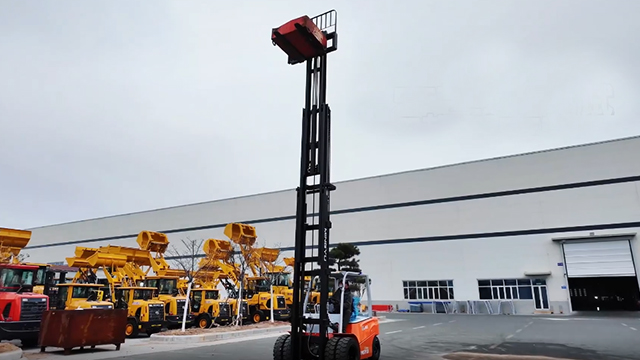
Very narrow aisle (VNA) trucks, including turret trucks and man-up order pickers, operate in aisles as narrow as 1.5 to 1.8 metres. These machines typically run on floor-guided or wire-guided rail systems, eliminating operator steering error in constricted spaces. VNA configuration demands precise rack alignment, floor flatness within ±2 millimetres, and often dedicated aisle infrastructure. The capital investment increases substantially, but the storage density dividend frequently justifies the expenditure in high-rent markets.
For facilities handling mixed pallet and case-pick operations, articulated forklifts present a hybrid solution. Articulated steering enables operation in 2.0-metre aisles while maintaining outdoor yard capability, eliminating the need for separate indoor and outdoor fleets. This configuration proves particularly valuable in cross-dock operations where trailers, receiving docks, and narrow-aisle storage coexist.
Mast Configuration and Load Handling Geometry
The mast constitutes the most mechanically stressed and operationally critical forklift component. Mast configuration must reconcile lifting height, collapsed height, load centre capacity, and visibility requirements.
Triplex masts, featuring three stages of lift, dominate warehousing applications by minimising collapsed height while maximising lift capability. A typical triplex mast for a reach truck collapses to approximately 2.5 metres while lifting to 10.5 metres, enabling passage through standard doorways and container openings while accessing high-density racking. Quad masts extend this capability to 12+ metres but introduce additional mechanical complexity and reduced forward visibility.
Free-lift configuration—where the inner carriage rises without extending the outer mast—proves essential in facilities with low overhead obstructions such as door headers, sprinkler systems, or mezzanine floors. Full free-lift masts provide complete lift height before outer mast extension, enabling pallet retrieval in confined vertical spaces. Partial free-lift configurations offer cost savings but may prove inadequate in facilities with frequent height restrictions.
Load centre ratings must align precisely with pallet dimensions and load distribution. Standard 600-millimetre load centres accommodate European pallets (1200 × 800 mm), while 500-millimetre centres suit North American pallets (1219 × 1016 mm). Configuring a forklift for the wrong load centre creates dangerous capacity derating. A forklift rated at 1600 kg at 600 mm may safely lift only 1300 kg at 700 mm—a discrepancy that leads to tip-over incidents when operators handle non-standard loads.
Mast tilt functionality, while standard on counterbalance trucks, requires careful evaluation in high-rack applications. Forward tilt during elevated travel shifts the combined centre of gravity forward, reducing stability margins. Many reach truck configurations limit or eliminate forward tilt above certain heights, relying instead on fork-level indicators and camera systems for pallet engagement.
Powertrain Configuration: Electric, LPG, and Hydrogen
The selection of propulsion technology for warehouse forklifts has evolved dramatically as environmental regulations tighten and energy economics shift.
Electric forklifts, powered by lead-acid or lithium-ion batteries, now dominate indoor warehousing applications across developed markets. Their zero-emission operation eliminates ventilation requirements and enables deployment in cold storage, food processing, and pharmaceutical environments where air quality standards are stringent. Lithium-ion configurations, while commanding 40-60% capital premiums over lead-acid, deliver operational advantages that frequently justify the investment: opportunity charging during breaks eliminates battery change rooms, consistent voltage output maintains performance throughout the shift, and 3,000+ cycle lifespans eliminate mid-life battery replacement.
For facilities lacking electrical infrastructure for large fleets, LPG forklifts remain viable alternatives. Modern LPG engines with closed-loop fuel injection and three-way catalytic converters produce emissions profiles acceptable for many indoor applications, though ventilation and carbon monoxide monitoring remain mandatory. LPG configuration suits multi-shift operations where battery change infrastructure would require prohibitive capital investment.
Emerging hydrogen fuel cell configurations represent the frontier of warehouse powertrain technology. Fuel cell forklifts combine the rapid refuelling of IC engines (3-5 minutes) with the zero-emission profile of electrics. For operations running 20+ hours daily across three shifts, hydrogen eliminates the productivity losses associated with battery changes or opportunity charging downtime. However, hydrogen infrastructure—electrolysis or steam methane reforming plants, high-pressure storage, and dispensing systems—requires substantial capital investment and regulatory compliance that currently limits deployment to large-scale distribution centres operated by major logistics providers.
Attachment and Accessory Configuration
Standard forks handle approximately 70% of warehouse pallet movements, but the remaining 30% demands specialised attachments that must be configured at the point of procurement or retrofit.
Carton clamps enable unit-load handling of appliances, electronics, and other palletless goods. Clamp configuration requires specification of clamp force, arm length, and pad surface material. Excessive clamp force damages packaging; insufficient force drops loads. Pressure-regulated clamps with automatic force adjustment based on load weight optimise handling while minimising product damage.
Push-pull systems convert standard forklifts into slip-sheet handlers, eliminating pallet costs in high-volume shipping operations. Configuration requires fork carriage modification, hydraulic quick-disconnect fittings, and often a dedicated faceplate. The conversion reduces pallet inventory and disposal costs but requires operator retraining and maintenance of slip-sheet gripper mechanisms.
Multiple pallet handlers—double, triple, or quadruple configurations—increase throughput in applications with high volumes of identical products. A triple pallet handler enables simultaneous movement of three pallets, reducing travel time by 60% in bulk put-away and shipping operations. However, these attachments increase load length substantially, requiring aisle width verification and often mandating side-shifting fork positioners for precise alignment.
Side-shifters, while seemingly minor accessories, deliver disproportionate productivity gains by enabling lateral fork adjustment without truck repositioning. In VNA operations where aisle space precludes manoeuvring, side-shifters reduce pallet engagement time by 15-20 seconds per cycle. When multiplied across thousands of cycles daily, this configuration element generates substantial throughput improvement.
Ergonomic and Operator Configuration
Warehouse labour represents the largest operational cost category in most facilities, and operator fatigue directly correlates with productivity, accuracy, and safety incident rates. Forklift configuration must prioritise ergonomic optimisation.
Adjustable suspension seats with lumbar support, weight adjustment, and vibration damping reduce musculoskeletal strain during 8-12 hour shifts. For reach trucks and order pickers where operators frequently shift between seated and standing positions, adjustable floor-height configurations accommodate operator stature variations, reducing knee and back stress.
Visibility optimisation through mast design, camera systems, and overhead guard geometry directly impacts operational speed and safety. Triplex masts with optimised channel profiles and hydraulic hose routing maximise the operator's sight lines to fork tips and pallet openings. Camera systems mounted on carriages, forks, or overhead guards display real-time video on cabin monitors, enabling precise high-rack engagement without neck strain from upward gazing.
Control configuration has evolved from mechanical levers to electronic mini-levers and joystick controls. Multi-function joysticks integrating lift, lower, tilt, and auxiliary functions into single-hand operation reduce operator movement and fatigue. Programmable performance parameters—acceleration curves, lift speeds, and travel speeds—can be configured per operator skill level or application zone, restricting novice operators to conservative parameters while enabling experienced operators to maximise throughput in clear aisles.
Environmental and Specialised Configuration
Warehousing encompasses diverse environmental conditions that demand specialised forklift configurations.
Cold storage operations (-20°C to -30°C) require comprehensive cold-package configurations. Standard batteries lose 30-40% capacity at -20°C; cold-storage batteries feature enhanced electrolyte formulations and insulated battery boxes. Hydraulic oils must transition to low-viscosity synthetic formulations that maintain flow characteristics at extreme temperatures. Electronic control systems require heated enclosures to prevent condensation and component failure during temperature transitions between freezer and ambient zones.
Explosion-proof configurations for hazardous material warehousing—flammable solvents, aerosols, or chemical feedstocks—mandate complete electrical system encapsulation, static-dissipative tyres, and temperature-limited motors. These configurations require certification to ATEX or IECEx standards and fundamentally alter maintenance procedures to preserve safety integrity.
Outdoor yard operations, even when incidental to primary warehouse functions, require pneumatic or solid pneumatic tyres, enclosed motors, and often weatherproof electrical connectors. Configuring indoor-only equipment for occasional outdoor use accelerates corrosion, degrades traction, and voids warranties.
Fleet Management and Telematics Integration
Modern forklift configuration extends beyond mechanical specification to digital architecture. Telematics systems—integrating GPS positioning, impact detection, operator identification, and operational data logging—transform forklifts from isolated equipment into networked assets.
Impact monitoring with configurable thresholds detects collisions with racking, products, or infrastructure. Real-time alerts enable immediate incident response, while historical data identifies high-risk zones requiring engineering controls or operator retraining. Operator access control through RFID or biometric authentication ensures that only trained, certified personnel operate equipment, reducing unauthorised use and associated liability.
Battery monitoring systems for electric fleets track charge cycles, temperature profiles, and state-of-health metrics. Predictive algorithms identify batteries approaching end-of-life, enabling replacement scheduling that avoids unexpected failures during peak operations. For lithium-ion systems, integrated battery management systems communicate with chargers to optimise charge rates and thermal management.
Fleet optimisation software analyses travel patterns, idle times, and lift cycles to right-size fleet composition. Facilities frequently discover through telematics analysis that they have over-specified counterbalance trucks when reach trucks would suffice, or that certain aisles generate disproportionate travel time, suggesting layout reconfiguration.
Configuration for Automation and Robotics Integration
The trajectory of warehouse technology points toward increasing automation, and forklift configuration must accommodate this evolution.
Automated guided vehicles (AGVs) and autonomous mobile robots (AMRs) require infrastructure configuration including floor-mounted magnetic tape, laser reflectors, or vision-based navigation markers. When configuring manual forklift fleets in facilities planning future automation, maintaining aisle widths and floor conditions compatible with robotic navigation prevents costly retrofitting.
Hybrid fleets—manual forklifts operating alongside autonomous units—require safety system configuration including zone-based speed limiting, pedestrian detection systems, and traffic management protocols. Forklifts equipped with telematics can communicate with warehouse management systems (WMS) to receive dynamic task assignments, optimising travel paths and reducing congestion.
Total Cost of Ownership in Configuration Decisions
Optimal forklift configuration balances acquisition cost against operational economics over the equipment lifecycle. A reach truck with lithium-ion power, camera system, side-shifter, and telematics may cost 80% more than a base-model counterbalance with lead-acid batteries. However, when the configuration enables 40% more pallet positions per square metre, eliminates battery change labour, reduces rack damage by 60%, and extends equipment life through predictive maintenance, the total cost of ownership frequently favours the premium configuration.
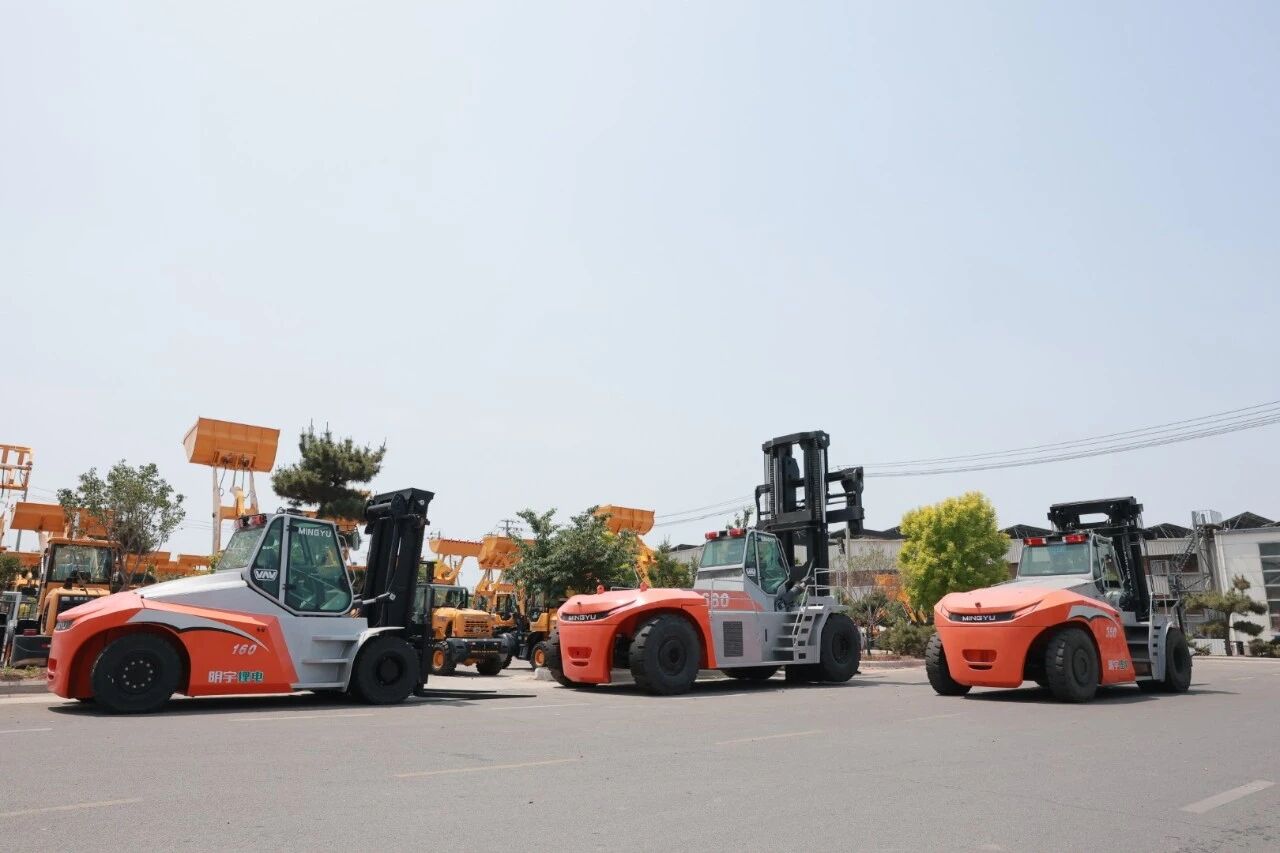
Configuration decisions should be modelled using 5-7 year TCO analysis incorporating capital cost, energy, maintenance, labour productivity, space utilisation, and residual value. Sensitivity analysis should test assumptions around energy price escalation, labour inflation, and utilisation rates to ensure robustness.
Conclusion
Forklift configuration for logistics and warehousing centres demands systematic engineering analysis rather than procurement convenience. The optimal solution emerges from rigorous evaluation of warehouse geometry, throughput requirements, load characteristics, environmental conditions, and workforce ergonomics. As warehousing operations intensify in response to e-commerce growth and just-in-time inventory pressures, forklift configuration increasingly determines competitive advantage. Facilities that treat forklifts as strategically configured assets—integrating appropriate mast geometry, powertrain technology, attachments, ergonomics, and digital systems—achieve superior throughput, safety, and economic returns. In the precision choreography of modern logistics, there is no substitute for equipment configured precisely to the task.
Name: selena
Mobile:+86-13176910558
Tel:+86-0535-2090977
Whatsapp:8613181602336
Email:vip@mingyuforklift.com
Add:Xiaqiu Town, Laizhou, Yantai City, Shandong Province, China
